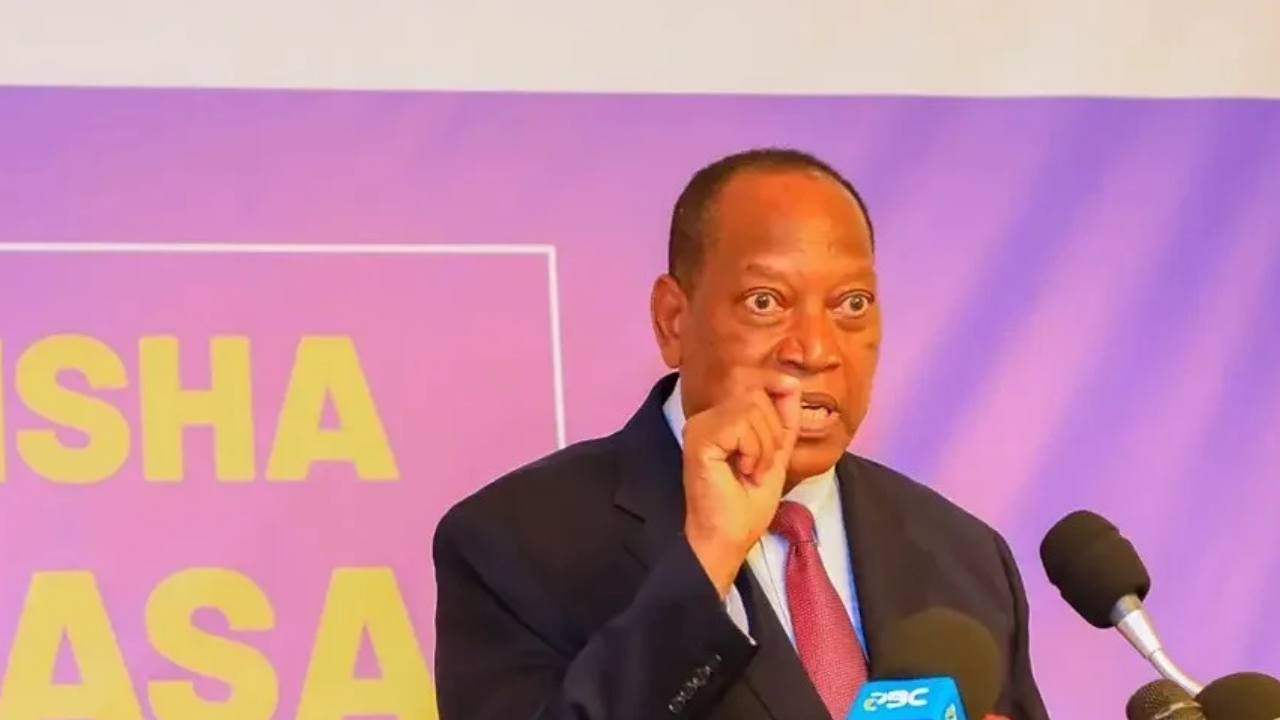

Dar es Salaam – The contempt prosecution of Advocate Peter Michael Madeleka has placed a familiar feature of courtroom reporting at the centre of a growing dispute between advocates and the judiciary: whether lawyers may brief journalists after a case is adjourned or decided, and where the line lies between public explanation, criticism and interference with justice.
A charge sheet dated August 20, 2026, alleges that Madeleka committed five counts of contempt of court under section 114(1) of the Penal Code. It follows a June notice from the High Court Registry asking advocates to avoid media interviews within court buildings and precincts, and not to comment on the progress of active matters.
Madeleka has denied disrespecting judicial officers and argues that the directive relied on an overbroad reading of the law, while the judiciary and the Tanganyika Law Society have framed their interventions around the need to protect courts from commentary that may affect impartial decision-making or undermine their authority.
Legal and media practitioners across the country are concerned about whether the established practice of explaining court proceedings to the public can continue at court premises—and, if so, what legal standard should distinguish a factual briefing from a statement that prejudges an active case, misrepresents a hearing, or pressures a judicial officer
Five counts
The charge sheet, seen by The Chanzo, was filed in the Resident Magistrate Court of Dar es Salaam at Kisutu as Criminal Case No. 18711 of 2026. It names Madeleka, 46, as the sole accused and refers to the ongoing High Court Economic Crimes and Corruption Division case, Republic v Wendy William Ishengoma and Four Others.
Four counts cite section 114(1)(a) of the Penal Code, which criminalises speech or conduct showing disrespect to a judicial proceeding or judicial officer within the court premises or precincts.
One count cites section 114(1)(d), which concerns publication during pending proceedings that misrepresents the case, may prejudice a party, or is calculated to lower the authority of the person hearing it.
The prosecution alleges that Madeleka made statements to online platforms, including Jambo TV, on July 27, July 28, August 7 and August 13, while he was acting for the defence in the Ishengoma case. The August 7 allegations are split into two counts, one of which says he misrepresented proceedings in an online statement.
Under the Penal Code, a person convicted under section 114(1)(k) may face a fine of up to Sh100,000 or up to six months’ imprisonment. Madeleka appeared before the court on Thursday, where the charges were read to him before he was released on bail pending a scheduled hearing date.
Madeleka said in an August 18 press conference that he was arrested at the High Court on August 14 while attending the Ishengoma case, detained at police stations in Dar es Salaam, and later released on bail. He said he had not been informed of an order made on July 27 or August 13 that he was alleged to have breached.
READ MORE: Tanzanian Police Surround Lawyers’ Association Headquarters to Quash Planned Protest
Those accounts are Madeleka’s description of the events. The formal charge sheet was signed by the State Attorney on August 20, six days after the arrest he described.
A practice under scrutiny
For years, advocates in high-profile criminal, civil, constitutional and electoral cases have routinely spoken to reporters outside courtrooms after hearings. The interviews can explain what was argued, why a matter was adjourned, what an order means, or what lawyers intend to do next.
That practice has become more consequential as court clips and advocates’ comments circulate quickly on television, YouTube, TikTok, Facebook and X. It gives journalists a source of immediate legal interpretation, but it also allows parties and their counsel to shape public understanding of a live dispute before a judgment is delivered.
On March 31, 2026, the TLS Secretariat wrote to members that it had received complaints from stakeholders about advocates briefing journalists on court premises. It said some lawyers had criticised judges or magistrates for decisions, discussed the progress of active matters and stated expectations about their outcome.
The Society acknowledged the constitutional freedom to hold and express opinions, but advised members who needed to speak to journalists after an adjournment or conclusion to do so outside court buildings and precincts. The letter stated that a judicial ruling is a decision of the court, rather than a personal decision of the judicial officer who delivered it.
READ MORE: Lawyers in Tanzania Decry State’s Interference With Their Right to Work
The High Court Registry notice, dated June 12 and signed by Registrar C. M. Tengwa, reiterated the concern in calling on advocates, including state attorneys, to avoid media interviews in court buildings and surrounding court areas.
It cited Rule 137 of the Advocates (Professional Conduct and Etiquette) Regulations, 2018, as well as Article 30 of the Constitution, which permits restrictions on constitutional rights to protect, among other interests, the authority and freedom of the courts.
The notice did not purport to prohibit every public statement by an advocate. Its stated focus was media engagement at or around court premises, and it referred to advocates who disclose the progress of court cases or issue comments directed at court decisions.
Competing legal arguments
Madeleka has challenged both the notice and its legal basis. In a statement released on August 14, he quoted Rule 137 as saying: “An advocate shall not comment on a specific case that is pending before the court in a manner that prejudges the outcome of such case.”
He argued that the rule does not bar a lawyer from discussing an active case unless the comment prejudges the outcome. He also said Article 18 of the Constitution protects the freedom to seek, receive and impart information, and that individual lawyers who cross an ethical line should be dealt with through professional discipline rather than through a general restriction.
“I will not respect an illegal order,” Madeleka said in the August 14 statement. He argued that criminal trials are ordinarily held in public and that citizens are entitled to understand how state prosecutions are conducted.
However, the TLS letter identifies the concern from the judiciary’s side: remarks that attack particular judicial officers, make predictions about ongoing cases, or present contested court events in a way that may intrude upon the judiciary’s decisional independence.
Lawyers that The Chanzo spoke with believe that Madeleka’s prosecution will allow the courts to differentiate between explaining litigation to the public and statements considered to scandalise, threaten or undermine a judicial officer.
It may clarify the reach of section 114, the procedural route for alleged contempt outside a sitting court, and the relationship between judicial authority, advocates’ ethical obligations and the public’s right to receive information about proceedings conducted in its name.
Both legal and media practitioners hope that the case’s result could shape where advocates speak to the press, what they may say about pending matters, and whether legal explanation after a hearing remains a routine component of public access to justice or becomes a source of criminal and disciplinary risk.