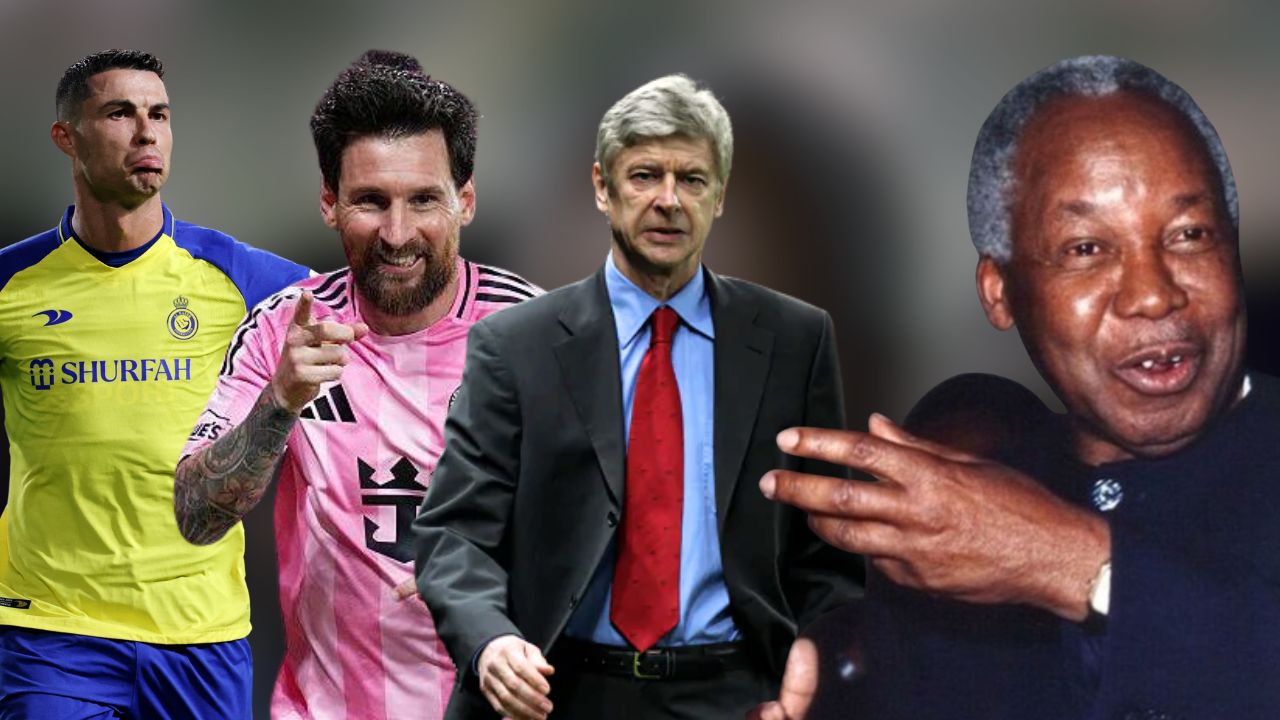

A young person opens X and begins scrolling through posts under the hashtag #DearNyerere. People remember Mwalimu Julius Nyerere, share photographs, recall his leadership, and explain what they would want to tell him if they had one more chance to speak to him.
One video, shared by a tweep named Kalage Jr., shows Nyerere addressing the United Nations General Assembly in New York on Friday, September 27, 1985. His voice carries the weight of a man preparing to leave the presidency but not to abandon the principles he believes in.
He is speaking about peace, justice, freedom and dignity: “To be silent when we see danger, to refrain from attacking policies which we see as contrary to the interest of peace and justice, to do these things, would be to surrender our freedom and our dignity. That we shall never do.”
More than four decades after those words were spoken, they had found their way into the conversations of a new generation. Tanzania has many reasons to remember Nyerere. He helped lead the country to independence, became its first president and placed national unity, self-reliance and public service at the centre of his political vision.
A living test
His legacy, like that of any political leader, can be debated. We can examine his policies, question his decisions and disagree with aspects of his leadership.
READ MORE: Marking Nyerere’s Centennial: Reflecting the relevance of Self Reliance Policy Today
Respecting history does not require us to treat a historical figure as perfect. His 1985 speech offers something more important than an opportunity to celebrate his personality.
It offers a standard against which we can examine our own conduct. Nyerere did not say that freedom and dignity were preserved simply by praising the nation, respecting its leaders or avoiding uncomfortable conversations.
He spoke about refusing to remain silent when he saw danger and challenging policies he believed threatened peace and justice. Nyerere delivered those words at the United Nations, an institution established around the promise of international peace, cooperation and human dignity.
He was speaking about how Tanzania understood international events and the responsibility of a country to challenge policies it considered unjust. His argument was not that every disagreement must become a fight.
It was that peace should not be used as an excuse to ignore injustice. That lesson remains relevant to public life in Tanzania, particularly when we consider freedom of expression and political participation, accountability and the treatment of people who challenge those in power.
Some concerns
Some people may worry that strong criticism can create division, weaken trust in public institutions or give people an opportunity to spread misinformation. These concerns should not be dismissed.
Peace is valuable. No responsible citizen should celebrate violence, spread unverified allegations or encourage conflict for political gain.
Journalists, activists and ordinary social media users have a duty to check facts, distinguish evidence from rumours and consider the consequences of their words. But there is a difference between protecting peace and avoiding accountability.
Peace does not mean that everyone must agree. National unity does not require citizens to abandon their questions.
And criticism is not automatically an attack on the country. In fact, allowing people to raise concerns peacefully, investigate problems and seek remedies through fair institutions can help prevent grievances from growing into more serious conflicts.
Nyerere’s words suggest that peace and justice should not be treated as enemies. His warning was that abandoning one in the name of avoiding discomfort could also put freedom and dignity at risk.
As a young Tanzanian, I find the video especially important because it challenges us to think about the kind of citizens we want to become. Young people are often described as the future of the nation.
READ MORE: “A Visionary Public Servant”: Tanzania Remembers Edwin Mtei
Yet we are also citizens of the present. Decisions made today affect our education, employment, freedoms and opportunities.
Taking part
We cannot leave every difficult national conversation to older generations and then complain that our interests are not represented. The hashtag #DearNyerere offers a glimpse of how social media can connect generations through history.
But its value should not end with sharing a powerful video. We should use that moment to ask what we can learn, what needs improvement and what responsibilities we carry.
There is something striking about the fact that a speech delivered in 1985 can still provoke reflection among people who were not even born when it was made. It reminds us that political speeches do not belong exclusively to the moment in which they are delivered.
Their meaning can change as new generations confront new problems. We should not assume that Nyerere would have agreed with every political position held today, or use his words to claim that he would automatically support a particular party or movement.
We cannot know how he would have responded to every contemporary situation. What we can do is take his stated principles seriously and apply them honestly, even when doing so challenges our own political loyalties.
READ MORE: Maji Maji: The Unspoken Beginning of Tanganyika’s Independence Story
Perhaps the most important question raised by #DearNyerere is not what we would tell Mwalimu if he could hear us. It is what we would be prepared to do after hearing him.
Would we defend the right of someone whose political opinions differ from ours to speak? Would we demand evidence before accepting allegations, and accountability when credible evidence reveals wrongdoing?
Would we support a journalist asking a difficult question even when the answer might embarrass a leader we admire? Would we insist that justice matters even when the person seeking it is not someone we know or support?
Nyerere ended his 1985 address with a declaration: “That we shall never do.” Those words were spoken by a president representing a nation before the world.
Today, they can also serve as a challenge to citizens who want a country where peace, freedom and justice reinforce one another. We do not honour Nyerere merely by repeating his words.
We honour the values behind them when we practise them, defend them and hold ourselves accountable to them.
#DearNyerere, if silence means surrendering our freedom and dignity, what are we doing to ensure that we do not surrender ours?
Mariam Gichan is an archaeologist and journalist based in Dar es Salaam. She can be reached at mariamgichan@gmail.com or on +255 754 215 690. The opinions expressed here are the writer’s own and do not necessarily reflect those of The Chanzo. If you are interested in publishing in this space, please contact our editors at editor@thechanzo.com.