
Good morning! The Chanzo is here with a rundown of major news stories reported in Tanzania over the weekend.
Tanzania, Burundi Kick Off Landmark Standard Gauge Railway Project
On August 16, 2025, Tanzanian Prime Minister Kassim Majaliwa and Burundian President Évariste Ndayishimiye laid the foundation stone for the construction of a Standard Gauge Railway (SGR) line linking Uvinza in Kigoma, Tanzania, to Musongati in Burundi.
The cross-border project will cover 240 kilometers of main track and 60 kilometers of passing loop, with a total investment estimated at USD 2.154 billion. It will include a 190-kilometer section from Uvinza to Malagarasi in Tanzania and a further 110 kilometers from Malagarasi to Musongati in Burundi.
Speaking during the groundbreaking ceremony in Musongati, Prime Minister Majaliwa, who represented Tanzanian President Samia Suluhu Hassan, said the project is part of the two countries’ development agendas as well as the African Union’s Agenda 2063.
“This modern railway will not only ease the movement of passengers and cargo but also unlock new opportunities for investment and trade between Tanzania and Burundi,” Majaliwa noted.
The railway, which will be powered by renewable electricity, will be constructed by Chinese contractor CRCG Ltd and financed by the African Development Bank (AfDB). Completion is expected within 72 months.
Once operational, the line will connect to Tanzania’s Central Corridor SGR network through Tabora and Dodoma to Dar es Salaam, giving Burundi direct access to the port of Dar es Salaam.
Continue reading here
Seven Rescued in Shinyanga Mine Collapse
The number of miners rescued following the Nyandolwa mine accident in Shinyanga District has risen to seven, after 25 workers were trapped underground when a section of the mine collapsed on August 11, 2025.
According to preliminary reports from local authorities in Shinyanga Region, the accident occurred when the ground suddenly caved in, causing debris to bury workers who were carrying out maintenance work in three different shafts numbers 20, 103, and 106.
Of those rescued, four were pulled out alive, although one later died while receiving treatment. Three others were recovered but were pronounced dead.
Rescue operations are still ongoing as security forces, assisted by local residents, continue searching for the remaining trapped workers. The condition of those still underground remains unknown.
Police Detain 10 CHADEMA Leaders in Kibaha Over Alleged Criminal Plot
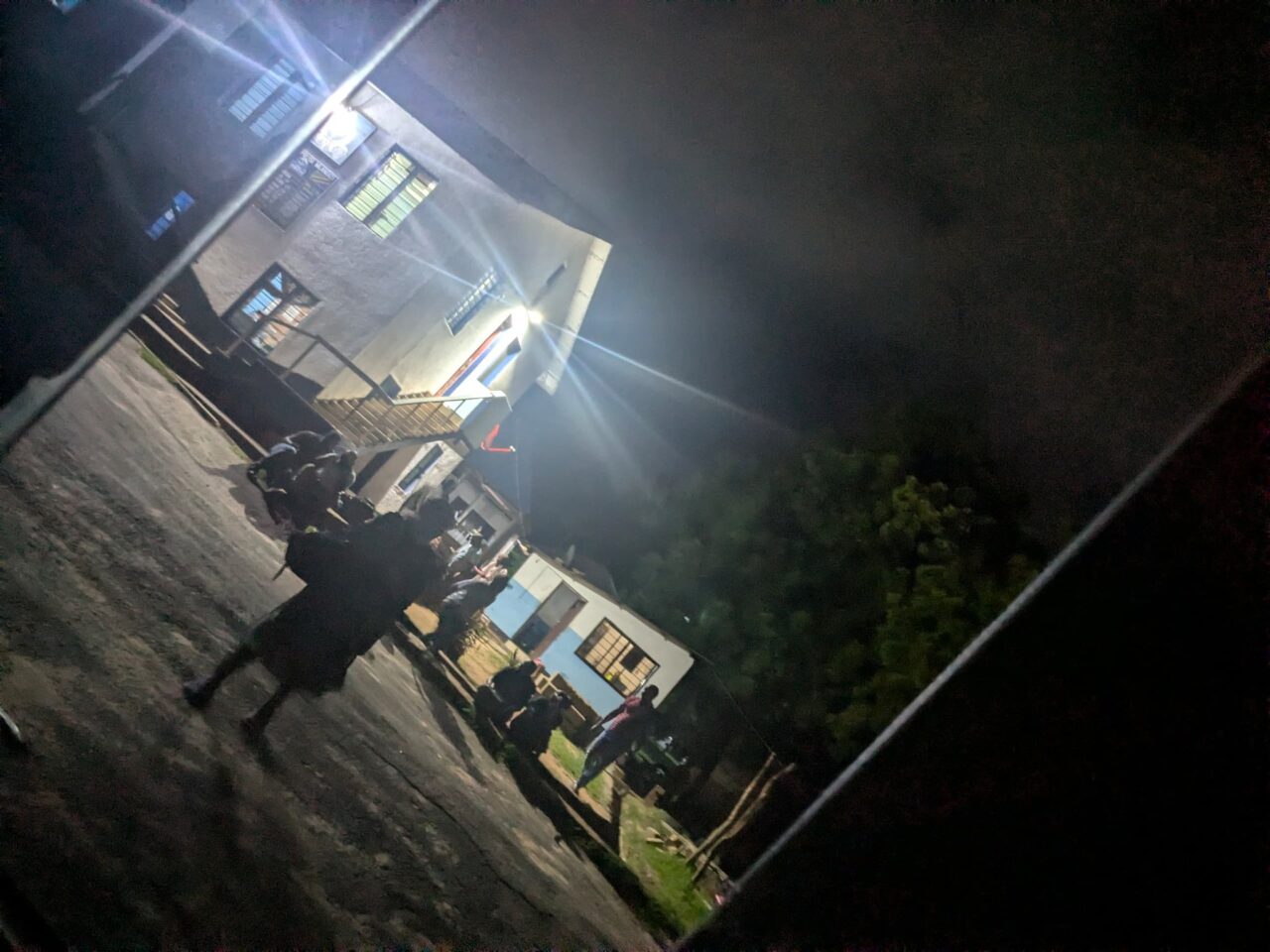
Police in Pwani region are holding ten leaders of the opposition party CHADEMA after raiding an internal meeting that the leaders were conducting on Saturday at Mwitongo Hall, Maili Moja School, in Kibaha district in the region.
According to a police statement issued on Sunday, those detained include Upendo Winni Msechu, residing at KCMC, Moshi; Upendo Parsons Mwalushwa, residing at Mbezi, Dar es Salaam; Pendo Raphael Mwasomola, residing at Nzovwe, Mbeya; Focus Laurent Kasaka, residing at Kisesa, Mwanza; and Furaha Noel Mbise, residing at Ubungo, Dar Es Salaam.
Others are Mazmbia Amon Kabuje, residing at Kijenge, Arusha; Mkombozi Emmanuel Hatibu, residing at Maili Moja, Kibaha; Samson William Rabani, residing at Tangini, Kibaha; Abdallah Adam Mazengo, residing at Mwanama, Arusha; and Harouna Shanang Zangina, residing at Goba, Dar es Salaam.
“The Police Force is conducting thorough interrogations of the suspects, and further legal actions will follow upon completion of the investigation,” read the statement.
The police statement came following that of CHADEMA, which strongly condemned the arrest of its leaders and demanded a public explanation from law enforcement authorities for raiding the party’s internal meeting and detaining its officials without any legal justification.
Continue reading here
Op-Ed: A Critical Review of Tanzania’s Development Vision 2050
A critical review of Tanzania’s Development Vision (TDV) 2050 points to risks to its success where previous development policies have failed. It is worth noting that Tanzania has consistently missed development targets since independence, despite various policy approaches.
The current vision acknowledges key issues including persistent poverty, the dominance of the informal economy, and the failure to process raw materials like cashews as some of the main bottlenecks for economic transformation in the country.
Vision 2050 sets the ambitious target of turning Tanzania into a trillion-dollar economy from the current baseline of US$86 billion driven primarily by the private sector and Public-Private Partnerships (PPPs), with the government transitioning to an enabler of business.
The first pillar
The first pillar of the vision targets a strong, inclusive and competitive economy built on macroeconomic stability and predictability, fiscal sustainability, innovative and diversified financing. It identifies as key drivers of this economy an enabling business and investment environment, efficient state-owned enterprises, a vibrant private sector and strategic regional and global opportunities.
It is important to point out that Tanzania is far from being a truly market-driven economy, with a proliferation of state-owned enterprises and regulatory bodies. It is also important to question the effectiveness of Foreign Direct Investment in priority sectors like mining, which has historically led to exclusion of Tanzanians in participating in their own economy, inequality and limited job creation.
Continue reading here
This is it for today, and we hope you enjoyed our briefing. Please consider subscribing to our newsletter (see left), following us on X (Twitter) (here), or you can support us (here). And if you have any questions or comments, please drop a word to our editors at editor@thechanzo.com.