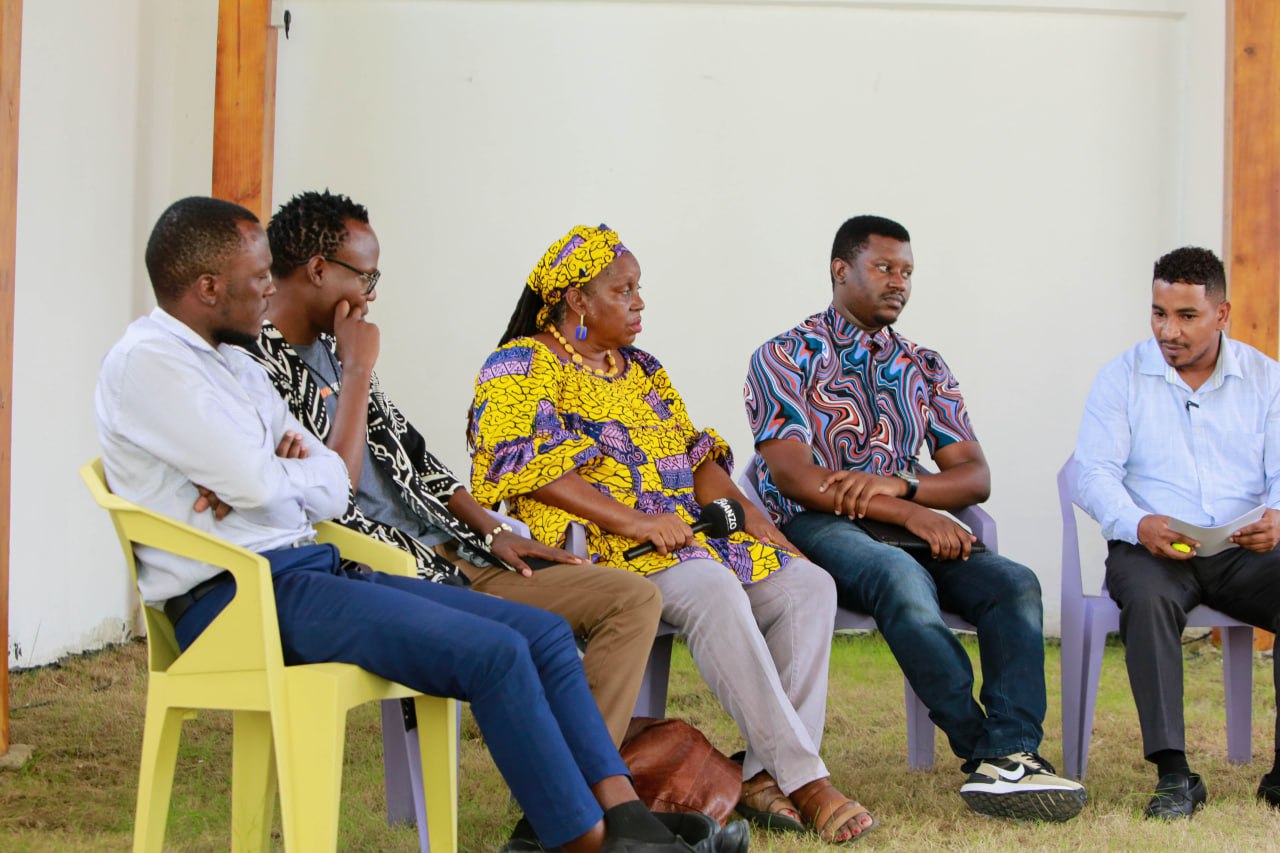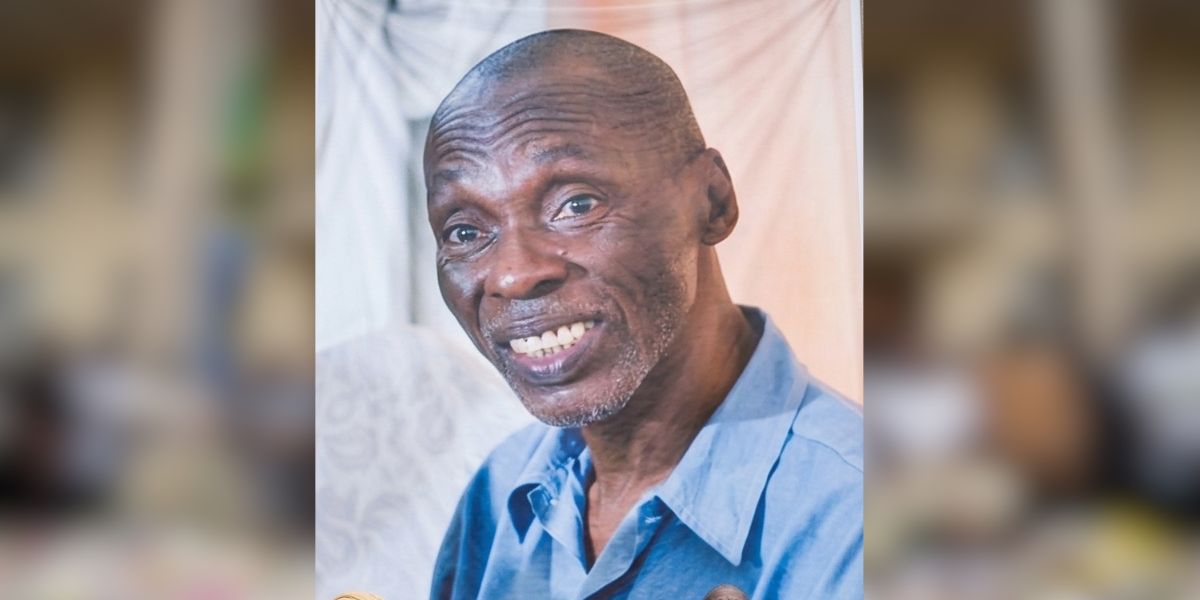

The following is an interview between the Secretary General of the Tanzania Episcopal Conference (TEC) and journalists. The interview was conducted at the TEC offices in Kurasini and was published on December 1, 2025.
Journalists: This is a special discussion with the Secretary General of the Tanzania Episcopal Conference (TEC), Father Dr. Charles Kitima. Today we have had the opportunity to come and speak with him regarding various issues currently taking place in our country. Father, first of all, thank you for giving us journalists the opportunity to come and greet you and also to get a few insights.
Father Charles Kitima: Thank you. I appreciate it.
Journalists: First, last week after the appointment of the Prime Minister of the United Republic of Tanzania, Honorable Mwigulu Lameck Nchemba, we saw that you had an opportunity to meet and talk with him in his office in Dar es Salaam.
After that meeting, there have been developments. As you are aware of the current political situation in our country, yesterday we heard our Prime Minister, Dr. Mwigulu, while in Arusha Region, saying that the government has now begun engaging with stakeholders, including the Catholic Church. He said that there are issues you discussed with the Prime Minister, and he strongly emphasized that the country and its citizens should engage in dialogue regarding several events that have occurred. He clearly stated that steps have already been taken to reach out to various institutions, including religious institutions, and he specifically mentioned the Tanzania Episcopal Conference (TEC).
So when we connect these events—the meeting between you and the Prime Minister and yesterday’s statement—what exactly is going on between the government and the Catholic Church, particularly the Episcopal Conference which you lead?
Kitima: Thank you very much. First, I am grateful that you have sought this opportunity so that we can talk about this issue, because it is a matter that affects the nation. It affects the nation because what happened on October 29, 2025 were major events. There was an election event, but there were also demonstrations in many parts of the country. So when you ask about what is going on between the government and the Catholic Church in the country, or with the Episcopal Conference, as you have seen in the media, your question is legitimate. And it is good—you have done well to seek to understand what the Church has said and what the government has said regarding this situation.
First of all, let me acknowledge that the Bishops began their meeting on the 11th. They have been in meetings, committee meetings and others, but on the 13th, 14th, and 15th they issued their reflection, in which they explained the issues related to what happened on the 29th. The Bishops focused more on what has brought sorrow and damaged the history of our country, especially what happened in terms of killings. Killings were the main issue we spoke about.
Now, returning to my meeting with the Prime Minister: first of all, the Prime Minister and I come from the same region, and he has had very good relations with the Catholic Church for a long time, it’s not something that started yesterday. When he asked me to go and see him, I knew it was simply my brother in the sense that he is now our leader, a senior leader. But being a senior leader does not remove humanity, humanity remains, social bonds remain.
So I went in that context, knowing him as someone we are familiar with. He told me to come to his office, I don’t know whether he has a residence in Dar es Salaam or not, because I knew him as being based in Dodoma when he was Minister of Finance. He told me to see him in his office; he personally called me because he wanted to meet me. I said I could not refuse. When you are called by a government leader, he is our leader, he has already been announced as Prime Minister, he is a leader, and the country is run by the government.
The country is run by the government. We say the government is the machinery of the state, the machinery of the state. A country cannot function otherwise. As you know, a country consists of people, territory, and governance by those people. The country is that territory with its borders and its people, and the self-governance of those people, that is what constitutes a country. Now the government is the engine that makes the country alive, recognized, and able to carry out its activities.
So when you are called by a government leader, you must respond. I went, and in our conversation we spoke honestly. The discussions were personal; they were not discussions between the Episcopal Conference and the government. No, they were personal discussions. And personal discussions are open. We touched here and there on what happened on the 29th. So what will you do? What now? We were simply talking as usual. There is sorrow, so what should we do? How can we help each other?
I told him that we continue to pray, but that the Episcopal Conference has already issued a statement, which I believe you have seen, Your Excellency. So that was essentially the nature of our conversation. We did not go there to discuss what the Conference is saying in detail, or what position the Conference is taking, or what should be done about the situation. It is clear, the Conference has already spoken through its reflection. The Bishops met; all the Bishops sat together and issued their reflection.
So, in short, I would say that I simply went to see him because he invited me, and he just wanted us to talk as brothers and such. And during our conversation, there was not even any of his assistants present. The only time others came in was when he called them and said, “Let’s take a photo.” We said, “Alright, let’s take a photo,” and there was that picture of Nyerere there, so we sat in front of Nyerere, above his head there, that picture of Nyerere.
And even that picture of Nyerere did not come out in the [posted photo]. You journalists are clever, even the picture of Nyerere didn’t appear. I just left, it was only him and me, and then we were congratulating each other there. After all, when your brother gets a promotion, you are a bit happy, aren’t you? [laughs] So, in brief, these were not institutional discussions; they were personal discussions. And I cannot go anywhere without being sent by the Bishops, nor can I act as a spokesperson on their behalf.
According to the constitution of the Episcopal Conference, the official spokesperson—the one who issues statements and declares, “This is the position”—is the President of the Episcopal Conference. He is the one who issues statements, and all others do so only after being delegated by him. So even if I were to go in that capacity, I would first seek permission from the President of the Conference—His Excellency the Bishop, the President of the Episcopal Conference. I would tell him, “I have been called by the Prime Minister and he has requested to see me,” and he would ask, “Has he sent you a letter? What is the agenda?” None of that existed.
Therefore, I did not go in an institutional capacity; I went as myself. As for how journalists have used the photos, honestly, I do not know.
Journalists: In his speech in Arusha Region, the Prime Minister said that the government has begun dialogue with religious institutions, and he described the discussions as friendly. This statement, we think, might suggest that there is something official taking place.
Kitima: It is clear in the current circumstances—when you listen to the speeches of leaders these days—you can clearly see that District Commissioners, Ministers, and even the Prime Minister himself are all speaking in the same way. This is because of the killings that occurred, which have deeply saddened Tanzanians. Everyone is in mourning; everyone is grieving—anyone who values and respects fellow human beings.
Because Tanzania was built on a belief in human dignity, and that is why we Tanzanians love one another, because we have built our nation on respect for human dignity. Now, that human dignity was deliberately violated. People were intentionally killed, deliberately. It is not as if they were killed by an earthquake.We have seen disasters before: two years ago, a landslide on Mount Hanang killed people. We were saddened; we lost our people. Accidents happen, road accidents, where 60 people may die. But these were killings that were carried out; they involved deliberately taking away a person’s life.
That is what has caused the nation to be in mourning. Right now, Tanzanians are in mourning, and in such a climate of grief, it is clear that government leaders must console the citizens. That is what is happening. That is exactly what is happening. And we are responding to that call.
However, in a situation where people are mourning, they also ask themselves: what caused these deaths? What caused these deaths? In the Catholic Church, our Bishops have stated that the deaths resulted from killings. To use the word killings means to take life intentionally. It means killing with intent and planning—that is what happened. And if you listen to the speeches that have been given by several Bishops, you will hear this clearly.
Remember, the first person to speak was Archbishop Ruwa’ichi of the Archdiocese of Dar es Salaam. He spoke that day and said that killings had occurred even inside people’s homes. People were followed and shot inside their homes. Young people were targeted, if you follow the various reports, the facts are clear: family members and relatives were killed in front of others who witnessed it.
In sorrow such as this, it is clear that the government must console the people. And what they are doing now is exactly that—leaders are listening to the citizens. I think you remember from the media that a young man once spoke openly in front of the Regional Commissioner of Njombe. The young man spoke very truthfully there. Even now, there is a Minister going around listening to people. When the Prime Minister himself travels, he listens.
So you can see that this is a way of listening to the truth and offering consolation. And for us as a Church, our work is also to console. However, what we are saddened by up to now, what we are saddened by up to now, and what Tanzanians are saddened by, what is still causing pain to Tanzanians, contrary to the customs and traditions of all the tribes of Tanzania, is the failure to acknowledge the truth about who killed those who were killed. And if the killer is said to be unknown, then how is it that the institutions responsible for preventing killings failed to prevent them? That is what is causing deep sorrow.
That is why, in the Bishops’ reflection, it is made very clear that those who were involved in the killings must take responsibility—and if they do not take responsibility themselves, then they must be held accountable. The government must understand that it has institutions mandated to protect the lives of Tanzanians in accordance with Article 14 of the Constitution of the United Republic of Tanzania, which the Bishops quoted there. The Constitution states that every human being in this country—every citizen of this nation, every person in this country—has the right to life and to the protection of that life within this country.
On the 29th, this was not the case for those who were killed. And up to now, people are living in fear. People are living with great fear in Tanzania right now. People are afraid—fear. Therefore, failing to acknowledge the truth about who killed these people is a very serious wrongdoing.
And Tanzanians will not forgive that mistake. Let me tell you the truth: Tanzanians will not forgive the failure to acknowledge it. You may silence people, you may do what is being done, you may continue killing those who speak, but Tanzanians will not forgive.You must acknowledge the truth. We Christians who follow the Christian faith, which uses the Holy Bible, the Old Testament and the New Testament—know that God does not forgive a person without confession. You must confess before God. Not before people, before God. And not through theatrics or pretence. It must be before God. You confess.
And in confessing, you accept the truth that people were killed. People were deliberately killed. That is why we speak of confession. Up to now, there has been no confession. The highest authorities have not done this. They have not made that decision. They have not confessed. And without acknowledging the truth, this will not move forward.
That is why, my brother, during the time of reconciliation in South Africa, when Mandela came out of prison, the very first thing was to acknowledge that apartheid—the philosophy of racial segregation in South Africa, was a grave mistake. They confessed, and that is how they reached a turning point. After confession comes forgiveness, and reconciliation with one another.
So now, in Tanzania today, we are speaking openly. You talk, and you have information about many things that were lost, many things that were destroyed—but human life appears to be valued less than property. Human life is not considered more valuable than things.
Even in the rights related to property ownership, those are addressed under Article 20 and subsequent provisions, which state that everyone has rights and responsibilities regarding property and so on. But the right to life is among the very first and most fundamental rights. When human rights begin in the Constitution—Articles 12, 13, and then Article 14 of the Constitution of the United Republic of Tanzania—that is where the right to life is placed first. So when you begin talking about property without talking about the life of a Tanzanian, that is a problem. In Tanzania, people value human life more than anything else.
And let us remember, my brothers and sisters, that all this has been badly nurtured by what has happened over the past two or three years—abductions and enforced disappearances. People speak out, people complain, but they are not listened to. Those who have been abducted—people have lost their relatives; many people have disappeared, nearly I don’t know how many, as the media has reported. They are not listened to. Now human life is in danger.
Therefore, what happened on the 29th was a sign of where our country has reached—where it stands. And if we do not acknowledge the truth, we cannot be forgiven. And the one who forgives here is the Tanzanian citizen, not anyone else. Those who forgive are the citizens of Tanzania. The one who should be asked for forgiveness is the Tanzanian citizen. This ordinary person whom you may think has no importance—if you do not ask them for forgiveness, it will cost you. It will cost you for your entire life; even a hundred years from now, it will still cost us.
When a person lives with resentment, they live with deep sorrow. It is like with God: if you do not ask God for forgiveness after wronging Him, you will end up in hell—you will not live with Him eternally. You will dwell where He is not, and that place is what we call hell. It is the same with the citizen: if you do not ask the citizen for forgiveness, they will not forgive you.
So I wanted to explain that a little regarding this matter. And therefore, in our discussions with the government, if and when they take place, these are exactly the issues we talk about, and we will not change our wording. Our statement, the Bishops’ reflection of the 15th—remains exactly as it is, with all its provisions, just as you see them there. All of them remain unchanged.
And we urge Tanzanians to understand that even if we engage in dialogue with the government, we will not depart from the reflection issued by the Bishops. They began by condemning the killings. After condemning the killings, they expressed condolences. After that, they asked: why did the killings happen, and why did the demonstrations occur? They explained this by pointing to abductions, the collapse of democracy in the country.
Elections in Tanzania today have no real meaning. There is no point in holding elections in Tanzania anymore, because when you go to vote, there is already someone who will win with 99%. For your information, in February last year, 2024, foreign ambassadors were promised by the Government of Tanzania that local government elections would be free and fair. In April, citizens were again promised the same—that there would be peace and that the elections would be free and fair. But the elections were not fair.
On November 27 [2024], we witnessed irregularities that have never occurred in this country since its founding—since the time of Chief Mkwawa up to just recently, such things had never happened. Ninety-nine percent of village or sub-village chairpersons—this is not our custom or tradition. Every tribe had its own way of choosing a clan leader or community leader; there was a system. Those systems are no longer respected. You are simply told, “Your chairperson will be this person,” not another. You are told who to vote for and who not to vote for.
Tanzanians are complaining. We said this especially regarding the youth: no matter what you do, young people learn from fellow young people. And today’s world is interconnected—the world shares knowledge. Young people today are connected globally because of how information and knowledge spread. They are united across the entire world.
So they know how other countries operate—how other nations do things here and there. In other words, they are learning. And the world of the 21st century is called a knowledge society, a knowledge-driven society. Knowledge gives you power—the power to govern, to be self-reliant, to become a prosperous nation. It is knowledge, technology—it is knowledge.
Therefore, it is important that we also understand this context: that today’s citizen, who must be asked for forgiveness, lives in a community that is at the same time connected to the entire world.
Journalists: What has happened has already happened, and after it happened, we have truly seen several steps taken by the government, starting from the highest leader of the country, namely the President and her aides. Do you think these steps that you see the entire government taking, starting with the President, will help us avoid a recurrence of what has already happened?
Kitima: It is true that there are some efforts which one might say appear to suggest that we should not return to the situation that occurred on the 29th. But let us look at our country—we have become liars; we have been liars. We told people that the elections would be fair, and they were not.
We told citizens that abductions would stop, yet people continue to be abducted. Just the other day—on the 26th [of November]—a young woman was abducted in Mwanza. To this day, we have not been given information about who abducted her. A report was made to the police; she is a young woman associated with a religious congregation of nuns. They were apparently looking for a sister wearing a veil; when they did not find her, they took that young woman instead, and later dumped her there, this happened on the 26th last week.
So when we say that efforts are being made, those efforts must be matched with actions. This is not a matter of speaking; it is a matter of acting.And Tanzanians are accustomed to seeing leaders who make promises and then fulfill them. That is what Tanzanians are used to. When you make promises and do not act, Tanzanians will not trust you and they will not follow you. Tanzanians dislike that behavior.
That is why there is a word used, perhaps uniquely, where a leader is called a “msanii.” What does msanii mean? An actor. You do not find other countries calling their leaders actors. It is only in Tanzania that people use the term msanii, meaning a clever liar, a trickster. If there is another country that uses this term in the same way, I do not know it, you can tell me if there is
Journalists: Now, regarding these efforts you are talking about—efforts that you say are meaningless without acknowledgment—there is, for example, a commission that has been formed. If the commission comes back with its findings, and those findings show that indeed there were areas where the government or the security organs made mistakes, wouldn’t that itself amount to acknowledgment? That acknowledgment would then come after we have first understood what actually happened.
Because even the President herself has said that she does not yet know why these events occurred. So if the Head of State, the person to whom we have ultimately entrusted the authority to ensure our protection, does not yet know what happened, how can she acknowledge wrongdoing before first being informed of the truth? Why don’t you think that once this commission completes its work and presents its results, that will be the point at which leaders, or all of us, can say, this is where we went wrong and saying sorry to follow.
Kitima: We are talking about killings that happened during demonstrations—people were shot in broad daylight while they were protesting. People were followed and killed in their own neighborhoods, in broad daylight and at night. So should we wait for a commission to investigate before acknowledging this? Should it come and tell us to acknowledge that killings took place? Confess the truth—what we call truth admission, to admit the truth—the truth is already clear to everyone.
Do you really think that the 70 million Tanzanians are foolish, that they do not know what happened? This is a lack of humility. Truth goes together with humility, my friends. That is why when the President was inaugurating Parliament, she said that we should stand and pray for those who died.
Journalists: Isn’t that an acknowledgment?
Kitima: No. It must be explicitly stated. Confession is verbal—it must be spoken. To confess is to declare. You must state it clearly. There were people who were killed. Many parliaments have been inaugurated before, and whenever parliaments are inaugurated, there are sometimes accidents and people die. When that happens, when you go to mortuaries, we pray for those who died before the inauguration of Parliament. We pray for them. But acknowledgment requires an explicit statement; there must be words spoken.
Journalists: The Prime Minister has spoken—he has said that many police officers died.
Acknowledging the truth means saying, for example: a certain number of police officers, a certain number of civilians—just as they did when they spoke about what? About what things? About the 600 items they mentioned—what numbers were those? I don’t know—police stations, various facilities, vehicles, motorcycles, bicycles, I don’t know what else, bus stations—about 600 things.
That, you know. But when it comes to human life, you say you do not know how many people died. Mentioning numbers does not increase people’s anger. Stating how many people died does not increase anger. Tanzanians know how many of their relatives have died. Every neighborhood knows how many people were buried. Every sub-village knows how many people were buried. Every village knows how many people were buried.
Some people died in Dar es Salaam and were taken [by family] to be buried in Moshi; others died in Arusha and were taken to be buried in Singida or Mbeya [in their hometown].Others were told that their relatives had died, yet the bodies were never seen. But let us set aside the issue of numbers and figures. The first thing, which we Tanzanians must not depart from, is the truth: we must acknowledge who killed these people. Who killed them? Who used live ammunition? Firearms were used to kill people in many regions. The major regions and districts that suffered the greatest harm are well known. And people were killed in a particular manner—the bullets struck specific parts of the body. Tanzanians buried their relatives; they saw the bodies with their own eyes.
We own hospitals—for example here in Ukonga, at Cardinal Rugambwa Hospital. A police officer went there and told the sisters, “Do not treat these people. We want to see them in the mortuary. Do not treat them; they were causing unrest.” But when a person comes injured, having been shot, we must treat them. And afterward, according to the law, the law allows us, even if the person does not have what you call a PF3 form, we are permitted to treat them first. After that, we ensure that we report to the police: “This person came here having been shot; we do not know who shot them, but we saved their life.”
Because the first priority is to save life. The law is very clear and very good on this point: you save life first, and afterward other procedures will follow their proper course. We refused that order. The sister had to call the Bishop, who is the owner of that hospital in the Dar es Salaam Diocese, and he said, “Treat them; do not abandon them.”
Others were even more severely injured. One woman was shot in the stomach in the morning—shot in the stomach. We are talking about the following day, not the 29th itself. These things happened, and we have hospitals; we received bodies. So when you say we should not acknowledge, no, we must acknowledge that people were killed by gunfire. We are not talking about those who may have been cut with machetes; we do not know if there are such cases—that is something the police can tell us, perhaps that commission will clarify. I am speaking specifically about gunfire. But there may also be those who were cut with machetes or subjected to other forms of violence.
Therefore, there is no issue of saying we should wait for a commission. Acknowledging the truth does not require waiting. In fact, forming a commission is itself a sign that some truth is already known, but there is reluctance to state it openly. And these 70 million Tanzanians want to hear the words: people were killed. We acknowledge that killings occurred using firearms—using live ammunition.
Let the commission come and tell us who exactly was responsible—that is its role. Because it is possible that some people were wearing certain uniforms and may not have been police officers or may not have been who we think they were. We do not want to go too far into that ourselves. But at the very least, there must be an acknowledgment that people were killed using live ammunition.
And who is responsible for protecting life? The President swore an oath to uphold the Constitution of the country, and one of the key elements of that duty is protecting life—Article 14—which she swore to uphold. So when it happens that people are killed, there must be acknowledgment. One must say plainly: I promised to protect your lives, and I promised to protect your lives using these institutions. I regret to inform you that on the 29th and on these other dates, people were killed using live ammunition. If that is stated, then people can begin to say, now we are speaking as human beings. This is the truth. Let us sit down, reflect on the truth, and decide how to move forward. That is how I will put it—and our Bishops have spoken clearly on this very issue.
Journalists: When it comes to offering consolation to the citizens, if we look at the way you are speaking now, and considering that you recently met with the Prime Minister, it appears that there is a significant difference in perspectives. For example, yesterday the Prime Minister spoke about a young man who was allegedly given more than nearly five billion shillings, suggesting that this was a motivation to continue creating what appears to be unrest in Tanzania. But if you also observe the Prime Minister closely and follow his statements in detail, you will notice that he does not acknowledge certain things; instead, he continues to frame the situation as one in which young people were mobilized and encouraged to carry out what happened. As a spiritual leader, we would like you to give us a brief assessment: what do you think actually happened? Were young people influenced by being paid money, as suggested by the Prime Minister, or was there some other form of motivation?
Kitima: Thank you for that question. Let me say one thing clearly: to say that young people were bought in order to demonstrate, that they were paid to protest, is not correct. How they were mobilized, however, is another issue, because you cannot deny that they were mobilized. The very fact that demonstrations took place on the 29th means that someone mobilized them, doesn’t it?
How were they mobilized to go into the streets across more than five regions? And even at the district level, you take a district like Tunduma, where very serious killings occurred. But when you go there, you are told the bodies are, say, eight, or two, yet we are talking about serious loss of life. Tarime, Katoro, Kahama, when I mention these places, major killings occurred there.
There were demonstrations in some areas, and there were also regions where no demonstrations occurred. But when you mention regions like Dar es Salaam, Arusha, Mwanza, Mbeya, and Geita, those are the regions. And then you look at the specific districts within them, and those are the places where events occurred, and where killings took place, hundreds of people. We are not talking about two or three people being killed. We have not even mentioned Dodoma. In Dodoma, there were killings too, but perhaps four people or so.
But for killings on such a massive scale, to say that someone was bribed to organize demonstrations—young people are not that foolish. How were those alleged sums of money distributed to all those youths who demonstrated, and to those who were killed in their homes—were they also given money? If such people existed, perhaps that could be discussed. But we must not deny the truth about why young people demonstrated.
If you ask young people, even now, even you journalists who are here, we are not safe. People are being abducted, people are disappearing, people are being killed. This has been going on for more than two years now. Young people are tired of enduring this. Democracy no longer has meaning. Holding elections has no meaning, because when you run, even your agent will not be approved. And we held a meeting here and advised the government on the night of April 30, the same night when they decided to kill me, and that is when we passed those resolutions. And importantly, those resolutions were also submitted to the government on August 27, even though the plan was simply to submit them.
We said that if these issues are not addressed, the country will not be safe. We are heading in a bad direction. Jambo TV here reported this, go and watch the clip I referred to. We said we are heading in a bad direction; the country is deteriorating. Follow those clips; they are there. We spoke and warned that the nation was heading toward trouble, we had already seen it coming. But ignoring religious leaders is very dangerous, because religious leaders have no personal interests when it comes to matters concerning human life. When we speak about the sanctity of human life, we have no personal interests at all.
We are concerned with the life of the person who is here now and the one who will come tomorrow. Therefore, saying that people were bought or bribed is not true. There are fundamental problems in the country that have not been addressed. People are being abducted, people are disappearing, people are being killed. There are more than 80 people according to reports we have seen from the Tanganyika Law Society (TLS) and other reports from the Legal and Human Rights Centre, and the number may be increasing.
Look at the abductions that began in an attempt to prevent the demonstrations of the 29th—there were abductions. We are thankful that some of those abducted have been found, but others have not been found to this day. When you ask, you are told, “We do not know who abducted them.” But who made the promise to protect people in this country? And those who abduct people arrive in vehicles—are they poor people? These are wealthy people abducting the poor. What problem do they have?
Meanwhile, young people have built capacity through Tanzania’s improved education system, especially secondary education. Young people now have the ability to question issues. With this ward-level secondary education we provide, we have more than 7,000 secondary schools in this country, with capacity for more than one million students to enter Form One each year. Every year, this country produces young people who can think critically. When they finish Form Four, you cannot expect to simply drag them along without allowing them to question, no, that will not work.
They will question, because this country belongs to them. They will question when something is not right. They will ask: why are we being abducted? Why are people disappearing? Why are people found brutally murdered? There are brutal killings taking place, so brutal that when you see them, it breaks your heart.
Why are people being attacked? Let me give you one example. In Mwanza, around Nyegezi, at a street corner where young people usually gather, there was a young boy who praised, who was it? That soldier who spoke on TV, what was his name? Captain Tesha. The boy said, “In this country, the only important person is Tesha.” He was a very young boy. It wasn’t anything political—just the way a child might admire Maradona or some famous player these days, or say, “Samata, you’re the best footballer,” you know. [laughs] The boy was simply praising him.
The next day, or the day after, the boy was found killed. Yet he was just showing off like a child, a very young child, let’s say of secondary school age. How do you kill a child like that simply for praising Tesha? If he did something wrong, take him to the police station or detention, that is what we are used to. Someone breaks the law, they are taken through legal procedures and held in custody.
So we would say that there are fundamental problems that have not been addressed; they have piled up, and we have chosen to stop standing on the truth. People are being abducted, and there is no solution, and it appears that there is a force with power greater than the military and greater than our police, who are supposed to prevent abductions. Those abductors are simply referred to as unknown assailant. Now, when young people see that there is a force more powerful than the police, why should they not complain? Why should they not demand answers?
There is no democracy, there is no choosing the leader you want. Today, a leader is imposed on you. Whether you like it or not, this is the person who will be your leader. And he will get the votes. I myself have seen a Member of Parliament receive 99% of the votes. That has never happened in Tanzania. An MP getting 99% of the vote, it does not exist. Ninety-nine percent of all voters in his constituency. Everyone who went to vote supposedly voted for him, the entire constituency, 99%. So you ask yourself: where are we heading?
Journalists: Based on your words and on statements from the government, does this mean that the government is talking about factors that it claims caused these events, while you clearly see that those factors are not involved at all?
Kitima: I did not say that those factors are not involved. The Bishops’ assessment is very clear. They laid out three major reasons why the demonstrations occurred. And they stated that demonstrations are not a crime. And to argue they should have written [their demands]—Tanzanians have written it in their hearts.
People are being abducted, and they have repeatedly demanded an end to abductions. They have said many times, “We do not want abductions.” When you take that demand to a government that leaves people with nowhere else to turn, there are serious issues. The Bishops pointed this out clearly: the pillars of the state are not functioning, the media is not functioning in this country, and that is why young people now rely on social media for their information.
If the media were functioning properly, they would question the youth and allow them to explain themselves—just as we recently saw when the Prime Minister spoke to the media. It is only now, after about four years, that I am hearing journalists ask questions that genuinely touch on issues affecting the people of this country. The questions asked by journalists when they met the Prime Minister were the kind of questions Tanzanians were used to hearing from the media.
But now, there is no media outlet that can publish or broadcast those questions and say, “The Prime Minister answered this way, but we know this and that.” That does not exist anymore. So where do you expect young people to turn?
When you tell me, “The government is saying this, you in the Church are saying that,” I say no—I think each side has its own approach. For us, we stand on the truth. The Church stands on the truth: people are disappearing, people are being abducted. We expected to hear something like this: starting today—because the President once said, at one point, when there was an issue involving the police in Mtwara—the President said, “You cannot be the police, commit wrongdoing, and then investigate yourself.” The President said that. So why is that statement not being applied today? Why do we not hear it now?
When you say, for example, that an investigation should be carried out and the government has formed a commission and we should wait—how can you investigate yourself when your job is to protect people, and people have been killed? You have failed to protect them. So if you have failed to protect them, shouldn’t someone else come in from outside, so that we can know whether it was you who failed to protect the people, or whether there was another force that caused you to fail?
Journalists: The government, through the Prime Minister, has said that what happened were not demonstrations but riots.
Kitima: They were demonstrations. I acknowledge and accept that there was vandalism and destruction, there was damage to property; I do not deny that, just as they have acknowledged it. But if they acknowledge that, they should also acknowledge that there were killings. Demonstrations did take place, because young people had already heard that there would be demonstrations on the 29th. That is why, across the entire country, security organs prepared themselves to manage the situation. Perhaps the information did not go through in the formal way we know, because normally, if you want to demonstrate, you must follow certain procedures. But when people have nowhere to turn, when they have no trust in institutions that are supposed to listen to them, then you must ask: where should they go?
And this is not something new. Social media—what do we call it, social networks—are now leading the world. In 2011 it happened in Tunisia, then in Egypt, then in Sudan (Khartoum), then in Kenya, then in Bangladesh, then in Madagascar, then in Nepal. Now do you think Tanzania is an island, my brother? People may not announce things on radio or television, but they have their own ways of communicating. Today’s world operates in a way where truth must prevail. When we avoid the truth—as we are warned by our religious leaders, that is when we create problems for ourselves.
Journalists: Now perhaps we can look at all of this starting from Mtwara, where the President acted and formed another commission to investigate those killings. But I also want to speak about you personally—you yourself are a victim; you were attacked, which was…
Kitima: I was attacked—it was an attempt to kill me.
Journalists: When the Church speaks with the government, what do you think you bring that is new, so that at least these commissions of inquiry that are being formed can actually work and be seen by society to have truly done their job?
Kitima: The role of the Church is to teach the truth in order to help human beings attain well-being in both their physical and spiritual lives—truth. Therefore, we will continue to speak the truth. We will continue to speak the truth. We ourselves, as the Church, are victims. Right now, there is a strategy of abductions. I told you that since August we were already given warnings. I think you even saw recently a warning on social media, saying the President of the Episcopal Conference should be careful, that he is being targeted, that he will be disappeared, that something will be done to him. That appeared just the other day on social media. We do not dismiss it.
Even in my own case, decisions were made in November [2024] that I should be killed. I received that information in December. I was then attacked in April. And it may still be ongoing. But it is not only me—there was also the abduction of a priest in Mafinga. You hear them saying, “This priest has this problem and that problem,” and later it turns into claims that the priest abducted himself. But the priest left the bank, got into a car, then other people got into the car, and events continued as they did—later he was found in detention.
There was a second case involving Father Nikata. Then, just the other day, on Wednesday the 26th—a female religious trainee, a student of the Sisters’ congregation, was abducted in Mwanza. As we speak now, that was just this past Wednesday the 26th; today is the first, four days have passed.
So when we speak about matters like these, and someone says perhaps the government has put strategies in place to stop this, we as the Church believe that our duty is to speak out. Whether we are listened to or not, we will speak. And if these issues are not acted upon, you citizens will at least know that your spiritual leaders warned you. We believe in dialogue. And dialogue begins with truth. Without truth, there is no dialogue. And you, as a religious leader, or even you here, anyone with a good heart—you cannot speak meaningfully by deceiving one another. You must stand on the truth. Without truth, you cannot say anything meaningful.
And this is not about tricks, saying, “I will trick him, I will fabricate a question, I will intimidate him.” No. Even if we are threatened, the Catholic Church will continue. We have experience living under all kinds of governments around the world. There was once a fellow Catholic named Adolf Hitler, who created his group of “unknown persons,” known as the Gestapo.
For twelve years he persecuted the Church and killed priests and religious sisters; he killed them and smeared their names—claiming they had abducted themselves, that they had debts, that they had lovers, that they had this or that. Fine, he is a human being. But why kill all of them? In Tanzania we have nearly 3,000 priests. So if Father Kitima is the problem, then deal with Kitima alone—arrest him, take him into custody, detain him, remove him. Why target everyone?
I want to say this clearly: the Church will continue to stand for the truth—whether it is accepted or not, we will continue. But what we ask of Tanzania is this: we used to be truthful. Tanzania used to be truthful in political matters—we were truthful up until 2015. After that, Tanzanians have been living in political falsehood. And if we do not abandon falsehood, we will destroy the nation; we will destroy the country.
No one dislikes leading. Article 8, everyone wants to be involved and to govern this country. And everyone has the right to express that intention to govern and to be given consent by others.
When you prevent people from governing through tricks and manipulation, through oppression, you create problems. That must be stated clearly. If these issues are not addressed, you could even place guards on every street and it might appear to work for a while, but if you do not resolve the problem by standing on the truth, you are only building a much bigger problem.
Journalists: You mentioned a fellow Catholic, Adolf Hitler—you’ve inspired another question for me related to that.
Kitima: Yes, Hitler was a Catholic—a committed Catholic. He was originally from what is now Austria, but at that time Austria and Germany were closely connected, and the area he came from was part of that context.
Journalists: You are saying that when Hitler was in power, he oppressed even his fellow Catholics?
Kitima: He dealt with them harshly because the Church had influence. He targeted Catholics directly—and he did so by killing them.
Journalist: Did the Church stand up and oppose that?
Kitima: It did stand up and speak out.
Journalists: Because there is a narrative being created that the Catholic Church sees itself as a superior Church, a powerful Church—and therefore, when leaders in various countries do not want to align with it, or appear to deny the Church certain interests, it then becomes a thorn in the side of those governments.
Kitima: What interest do we have in standing for the truth, if not to represent God? When we stand for the truth, we stand for God—because God is truth. God is truth. God is the Word; He is life; He is existence. He created us in His own image and likeness. So when we speak about the truth, what personal interests are we pursuing?
For example, I am grateful you mentioned this. We established what is called the Christian Social Services Commission (CSSC). We entered into an agreement with the government because our fellow Christians in Germany—Catholics and Lutherans—at a time when the country’s economic situation was very bad, around 1992, said: “In order for us to help you, we in Germany receive funds from our government as Catholics and Lutherans so that we can support you.”
But the German government wanted to see that the social services provided by Catholics, Lutherans, and all Protestants in Tanzania would benefit all Tanzanians—not just those two denominations. So they said, “Put an agreement in place.” That is why we entered into an agreement, and the funds come from Germany. We do not receive money from the Tanzanian government. To this day, what the government provides us with is tax exemption only—and that itself is based on long-standing agreements.
Since independence, when this country gained its freedom, many institutions—schools and hospitals—were owned by churches. Around 1967 to 1969, President Nyerere said: “We do not have enough schools. The British colonialists did not build enough schools. You missionaries have many schools. We do not have the capacity to build all these schools ourselves.As the Catholic Church, many of our schools were taken over by the government, and we were not compensated for them.
We are grateful that now, if we request them, some are being returned to us—others we have already let go for the sake of serving the nation. In total, there were more than 1,300 schools, from nursery schools through primary and secondary levels and beyond. At that time, the government itself did not even have 100 schools.
Journalist: During Nyerere’s time? Your fellow Catholic?
Kitima: Yes, he did take them from us—but it was done through discussion and request in 1969. We said, “Alright, take them,” but we told him, “Hospitals—no.” And he said, “I will not take the hospitals, but I will provide you with doctors when you need them, and nurses, and I will exempt you from taxes.”
When we speak of tax exemption, for example, when you buy medicines and normally you would pay 18% tax, we are exempted. But in return, we must provide services without discrimination. Even if we charge fees for services, we may charge, but we are reminded that the government also has its priorities—such as being told, “Treat this elderly woman and this child without charging,” and we do so.
So when someone says our interests have been affected—what interests of ours are being affected? Serving any patient? If you go to any hospital in Tanzania, are you ever asked which church you belong to? Are you asked which denomination you are from? When you take your child to school—yes, it is true that nowadays, because of quality issues and other factors, and because the government has built enough schools, the schools we run must sustain themselves, so we set fees. But we also provide scholarships here and there. Therefore, when the Catholic Church stands on issues, it is not seeking Catholic interests. It is seeking the well-being of the people. But those who do not understand, and those who have ill intentions toward the Church, are the ones who think that we are fighting for ourselves.
Hitler was being confronted and told, your authoritarian rule in Germany is not acceptable. At that time, Germany under Hitler was divided into two major Christian denominations—Catholics and Lutherans. And we Christians said: Under your leadership, we would like to see the following things.
Respect for human dignity and fundamental human rights must exist. The well-being of the people must exist. Social solidarity must exist. People’s participation in self-governance must exist, and lower-level institutions must be respected. Hitler said, no. I am the one who gives orders. These Jews whom you have welcomed—we do not want them. They told him, No—these are human beings. Father, stop. The sin of discrimination is evil. We saw what happened when Hitler went after the Jews. The result was that it escalated into a world war.
Now, you wanted to kill me—but the result of not listening is that now we are killing one another across the entire country. Simply because we refused to listen. If we had listened to what religious leaders of all faiths said on April 30, the country would not have reached where it is today.
Journalists: Now, what is being talked about, and what is clearly being given priority at the moment, is reconciliation. Do you think this is the right time for reconciliation?
Kitima: You cannot talk about reconciliation before there is acknowledgment. And reconcile with whom? Reconciliation is between citizens and the government—but the government is an instrument of the citizens. The issue is for people to sit down and say: this situation that occurred—what must be done so that it does not happen again?
The agenda of reconciliation comes after people acknowledge the truth. That comes later. First step: acknowledge the truth—both the people and the government must acknowledge it. People were killed with live ammunition. Others were followed and killed in their neighborhoods or at their parents’ homes. There is one village—if you go there—called Ndaga in Mbarali; go and investigate what happened there.
You know, I don’t know if you are aware how the Catholic Church is organized. In the Catholic Church, we have what we call small Christian communities. Every family—whether Catholic or not—belongs to a particular small community. So I was asking one journalist here, and he told me, “I’m not Catholic; I’m a Seventh-day Adventist,” but we live in one area, in several houses within that neighborhood.
When the scheduled day comes, you see chairs being brought out in the morning. People pray, they read the Word of God, they share their issues with one another, and life goes on. There are Muslims there as well. So every family in this country—among us Catholics—is part of a small community. And it is there that we are meant to show one another kindness, to help one another, regardless of religious ideology or affiliation.
Therefore, in order to demonstrate what you call reconciliation, we must first acknowledge that people were killed with live ammunition—and by whom. When that question is answered, then we will need a truly independent commission of inquiry, one that is not connected to those suspected of being involved in the killings.
Our Bishops have clearly explained how such a commission should be formed. They have said that this commission must include various civil society organizations. This is because those who demonstrated and were killed were not a single type of group; they were not members of one particular political party. Young people from many different parties were killed, as well as young people with no party affiliation at all. Most importantly, most of those who were killed were young people. Most of those who were killed were young people—remember that. If we do not acknowledge this truth, we will be doing a great injustice to the youth of this country. We must acknowledge it.
After acknowledging it, then we ask the next question: how did we get here?
In asking how we got here, there must then be an independent commission to tell us clearly what happened—so that people are allowed to choose freely, not be appointed or selected through manipulation, and so that those responsible can be investigated by an independent body.
It will be formed by a person, yes—but there must be a clear procedure for selecting those people. We have said this must be an independent commission. This country did not start existing today. During the time of Nyerere, commissions were formed and came here; major international organizations came. When Father Evaristi Mushi was killed, the investigation that helped us discover who was responsible—was he a Tanzanian? Here in Zanzibar in 2012—these things did not start today.
Perhaps you journalists are still young and do not remember, but during Nyerere’s time, commissions used to come here. They would say, “Bring Scotland Yard,” or bring this or that team. When buildings were burned, a commission would be formed; another incident would happen, another commission would be formed. It is not only about outsiders—it is about mixing both internal and external people: people who show no signs of hiding the truth, so that we return to the truth that we have already stated.
Journalists: There seems to be confusion here. Those who oppose this commission say that it has already been formed by people who themselves are being accused—in other words, those in power. On the other hand, those in power say this is a sovereign country. We have not reached a point where we are unable to manage our own affairs to the extent that we need to be investigated by outsiders. How do we bring all these groups together?
Kitima: Those who were killed were civilians, and they were killed in a deliberate, strategic manner using live ammunition. I don’t know if you are aware—do you know who imports bullets in Tanzania? Do you know who sells ammunition in Tanzania? Unlike some other countries, bullets are not bought in shops like pens. Ammunition is sold through a special, controlled process. Who sells ammunition? Who sells firearms in Tanzania? Who issues licenses for firearm ownership in this country?
Now, if someone was killed using bullets, those investigating should [be independent]. Our Bishops have said that government leaders should be present on one side, but there must also be representation from citizens on the other side. And citizens are saying this based on experience: we have been lied to by the government. We were told votes would not be stolen, yet they continue to be stolen. We were told that people who did not win elections would not be declared winners, yet that continues to happen. As we have said, one of the causes of the demonstrations was the lack of free and fair elections. May be we can conclude this is what has driven young people to take to the streets, or it is not that.
So what is the problem with involving external actors to work together with the government’s side? Why do you want to rely only on internal actors? External actors have already been mentioned, haven’t they? People talk about the Commonwealth and others. But then you appoint someone whose interests are also not fully trusted. These things require the involvement of internal actors whom citizens trust—but when you tell citizens, “Bring your representatives,” how do you identify them? How do you select them from 70 million people?
If we had a truly multiparty Parliament, that would be different. But Parliament as it stands now is essentially a committee of one party. So how do you find people to carry out such a task? In the past, if Parliament had been independent, you could say, “Let Members of Parliament choose that committee.” And we have seen such committees before—committees that investigated issues like the Escrow scandal, the Richmond case, and others. Those committees were accepted because they were chosen by Members of Parliament who came from different political parties and were themselves elected by the citizens.
Now, when you have a Parliament that has been strategically put in place, we have seen what it has done—for example, in approving the port agreement. Citizens did not want it, yet it was passed. The KIA issue was passed. The rapid transit project was passed. And now we are waiting for yet another one to be passed. So how can you say this Parliament is a Parliament of the people? A Parliament of the people is one that listens.
There was a time, during privatization, when citizens spoke out loudly and said the country was privatizing everything. You remember that even the Father of the Nation complained about how NBC was privatized. Citizens complained, saying everything was being privatized, and that soon they would even come to privatize people themselves.
When our Bishops heard this, they invited President Mkapa right here to the Conference. They said, “Your Excellency, listen to how citizens are complaining.” He said, “Yes, it is true—during my second term, we planned to privatize Air Tanzania (ATC), to be taken over by South African Airways.” He said, “Bishops, this company is making only losses. For it to operate commercially, I ask that we privatize it.”
The Bishops told him, “The citizens have rejected this. It is their company—leave it.” He said, “If I leave it, it will die.” They replied, “Let it die, because the citizens themselves have decided—it is theirs.” And indeed, the airline remained only as a name, burdened with many debts, until it was later revived by the Fifth Phase Government. So when citizens themselves are involved, they make much better decisions. But the condition is this: they must stand on the truth.
Journalists: Young people are angry, young people are in pain, and young people are facing many challenges. What is your message to the youth of this country?
Kitima: What I say to young people is this: do not lose hope. Do not lose hope. Right now, young people should stand on the truth by speaking out. And we, as institutions that do not seek to rule—that is, institutions that are not meant to operate like the government, must listen to young people and help them by offering proper guidance, so that they can find solutions to their problems.
You cannot ignore the fact that every year God blesses this country with more young people reaching the age of 18, last year alone, more than two million. That is wealth. Countries around the world today are looking for people, citizens. Many nations now say that rich countries are those with people. And a country becomes even richer when it empowers its youth to create wealth for their own nation.
There are small countries nearby that have invested in their youth despite having difficult economies and limited natural resources. Yet because there is a good system in place, you do not hear those young people protesting excessively. Politically, they may not be completely free, but because the poverty affecting young people has been deliberately addressed, you do not see favoritism, and you do not see some people benefiting from the country more than the youth. Right now, when benefits come, it is not the youth who benefit, others have the money, while young people have nothing. Yet young people have dreams of building themselves economically, and they have failed to achieve those dreams.
Do you know, I don’t know whether you have done research—why the demonstrations began in Sinza? Have you researched why the demonstrations started in Sinza, why they started around what you call Tiptop? I personally was only following through WhatsApp; I don’t know all the other details. Why did the demonstrations start in Sinza? You are told that in those areas you find many educated young people—people riding motorcycle taxis who hold degrees, even master’s degrees. I myself have met a man with a Master’s degree, with a family. He studied education but failed to get a job. Now he works carrying bricks and cement. He says, I cannot beg, and I cannot go back to the village. I decided to stay in the city and do construction work.
He did not study a technical trade, and even if he were to study one, he might not have the natural aptitude for masonry or similar skills. So he carries cement. By carrying cement for 15 to 20 days a month, at the end of the month he earns three or four hundred thousand shillings. Life goes on, he supports his family.
So, young people, do not lose hope. Restore your courage to engage in dialogue with the government so that you can govern your own country. And ensure that a free and fair electoral system is restored. Ensure that free and fair elections return. You will get better leaders and you will solve your problems—because you yourselves, as young people, will be part of the governance of the country.
European countries once ignored young people, thinking they were few. Now, if you go to any European country, there are political parties that have been formed specifically for young people.
Just recently I was invited by the Parliament of the European Union. I was in Brussels the other day—even the Prime Minister called me while I was there. They had decided to cancel loans, and I told them, “If you cancel loans like this, you are killing us.” One Member of Parliament responsible for youth affairs in Germany said, “We have decided that we will not cancel loans that affect investment in youth in your country, so that our youth and your youth can stand together.”
I told them, “We still ask that you do not cancel loans related to health and education—especially basic and secondary education.” They accepted this, and other countries also agreed.
Countries like the United Kingdom have agreed as well. They said they will not cut funding for health, education, the environment, or disaster response. They said, “If all aid is cut and then an earthquake or floods occur and people die, who will help them?” So they said, “We will not cut that.” Each country has spoken—ambassadors have spoken. It is true that some aid and some loans are being withdrawn, but they are being withdrawn because we did not listen to young people, we ignored young people, we ignored the truth spoken by religious leaders, and we ignored the truth spoken by citizens. That is how we reached this point.
Journalists: You said you were in Brussels, how is Tanzania viewed from outside the country?
Kitima: Our situation is bad, because even our fellow Africans who are abroad are asking us, “Has Tanzania really reached this point?” Earlier this year, from February 24 to 27, the Bishops here were visited by a special committee of Bishops from Congo (DRC), Rwanda, and Burundi. They came here from the 27th to the 28th to discuss how peace and people’s governance could be restored in eastern Congo. They held discussions here and asked the Episcopal Conference to help them meet with our President.
Our President agreed, but she was traveling in Tanga at the time, so she sent her Vice President instead. The Vice President received them and told them, “We will help you.” Now those Bishops are asking—just recently, and they call almost every day—you know DRC, Rwanda, and Burundi, we are brothers—so they are saying, “And now you yourselves—where will you go? Who will you turn to?”
The image—the reputation—of Tanzania internationally has been badly damaged, very badly. We are struggling to clean it up, saying, “We made mistakes, we will correct ourselves.” But how do we correct ourselves when we put lies first—when you say, “I will do this,” and you do not do it? And then you attack those who are trying to bring fairness—for example, during elections you undermine competition. There is no election without competition.
Young people love competition. Young people have creativity; they are innovative. When you choose one group of young people and lift them up while leaving another group behind, you create injustice.
We have accepted that we are a multiparty country—a multiparty democracy. If we want a one-party democracy, then we should return to countries that practice one-party democracy, like China, where things run very smoothly. In 1989, China killed young people—just as we killed young people recently. At Tiananmen Square, hundreds of young people were killed because they were young people with critical thinking. They were youths who could not be easily deceived.
Young people today understand issues; they question things. And when they question, they do not want to be lied to—they want the truth. If you speak falsely, they will tell you, “But yesterday you said this—how can I trust you today?” So young people, truly, will restore the dignity of our country. They will rebuild our country. It is young people who will rebuild our country.
Let us listen to them and walk with them. And young people should not lose hope. They should not lose hope. Let us sit down, talk, listen to them, and do what they are asking for.
Journalists: Young people have been told—have been advised—to be patient, even…
Kitima: The issue is not patience. This is not a matter of telling people to endure. You deny someone their rights today, and then you tell them to be patient? Tell them that starting tomorrow, no one will be abducted. Let young people be free—go about your activities freely. If you have an issue, the media exists—speak through the media. Do not be forced to speak only outside the country or only on social media. Speak through these channels here.
Give young people the space to speak. The ethics of journalism exist. Allow the media to do its work. Even in universities today, you cannot hold public debates the way it used to be done.
In the past, we were used to the University of Dar es Salaam being the brain of the country—a place of broad-minded thinkers. Every Saturday there used to be a major public forum broadcast on television; at that time, ITV would air it for three hours. On Saturdays everyone would sit and watch debates on the economy, on mining. I myself was involved in discussions on natural resources. We talked extensively, and out of those discussions eventually came the mineral concentrates law.
I remember being invited to the University of Dar es Salaam. One day I was invited there; I presented a paper, another expert presented a paper, and we discussed openly. But those debates ended. The last debate I remember participating in at the university was when Magufuli was invited. During that debate at the University of Dar es Salaam, I asked him, “Your Excellency, why are you sacking everyone?” At that time, every District Commissioner or Regional Commission were getting sacked. I said, “We would understand if at least one person was dismissed for a clear reason—but now it is everyone. Isn’t this chaos?” He replied, “We have received your concern, Father. We will work on it.”
The young people who were present there heard and learned. University debates that question national issues—debates that address matters that trouble citizens—no longer exist. The media is not there. Silencing the media is very dangerous. Even worse is the absence of the rule of law. The rule of law in this country does not exist right now. Where there is rule of law, there is no oppression. But we have seen how people are being manipulated and sabotaged. Political parties are being sabotaged and deregistered. Others are abducted and deceived.
So you ask yourself—this is why young people are losing hope. Restore the political environment to what it was in 2015. Go back to where we were when we decided on multiparty politics—from 1995 elections up to 2015. Let us return to those conditions. They were not perfect; they were not ideal. But we began multiparty elections in 1995. The opposition won seats in Parliament—23 MPs, then 26, then 41, then in 2010 there were 84, then in 2015 there were 112. In 2020—only eight MPs. What happened?
Journalists: Father, young people r have eached the point of losing hope to the extent of burning the country
Kitima: When people are not listened to, some will use their minds to express their ideas and feelings in constructive ways, while others will step outside the rule of law. When there is a strong rule of law, we have seen peaceful and orderly demonstrations. Take, for example, the CHADEMA demonstrations last year—they took place nationwide. Did you hear of any building being burned? Or when people went to collect nomination forms—remember the time of Lowassa? Or when Tundu Lissu returned to contest in 2020, weren’t those events peaceful? Nothing was burned.
So why now do people start by burning things? Why must things be burned? That is a question we must ask. And when things are burned, you find that many Tanzanians lack accurate information. Someone burns a bottle thinking it belongs to Father Kitima, when in fact that bottle was given to me by Marwa.
Accurate information is lacking because the media is not providing it. Then people develop anger—but the issue is not hatred toward a particular person or a particular institution. The issue is that we must return and solve our problems, and the country must be run through institutions and systems. A country should not be run by one person.
I have said before: this country belongs to more than 70 million Tanzanians—past generations, the present generation, and future generations. It is their country. So when someone begins to act as if they alone are the country—no. When we give you a position—whether as a village chairperson or a sub-village chairperson—we also give you responsibilities. Respect the responsibilities we have entrusted to you. That is how we know that we have truly entrusted you with authority. And that is what we call the rule of law.
And when young people see that a village chairperson or a sub-village chairperson is doing their job properly by following the law—even if it is painful—they will obey. And if someone refuses to obey and action is taken against them and they are taken in, they will say, “Honestly, that person was in the wrong,” and even their peers will agree.But if they see that the law is too tough they will ask for amendments, normally children and youth are supposed to be represented through Members of Parliament whom they elected. Now, if they do not have MPs whom they themselves sent to Parliament, what are they supposed to rely on? MPs are simply imposed on them.
Because in Tanzania today, there is no longer an election, there is selection. I don’t know if you understand that. There is no election anymore. The culture of elections has already died. What we now have is a culture of selection.
Journalists: All these issues—all these problems that are happening—ultimately point to the Head of State, simply because she is the one with authority. If you were given the opportunity to advise the Head of State, who constitutionally is also supposed to protect you, what would your words be?
Kitima: This is not something new in Tanzania. Look at Nyerere’s history. When killings occurred in places like Shinyanga, those who were responsible were held accountable—the person in charge, their assistants, and those under them. When such accountability happens, it heals the nation and restores its international reputation.
But holding only lower-level officials accountable while the person at the top refuses to acknowledge the truth is a problem. Refusing to acknowledge the truth, refusing to say that people were killed by live ammunition—that is the problem. How will the person who used live ammunition resign, and on what basis, if we do not first acknowledge the truth?
When young people entered Parliament in Kenya, they caused serious unrest. They stormed Parliament, caused chaos, and damaged property. Yes, property was damaged, as happens in many demonstrations—those are the outcomes you are talking about. But human life matters more than property.
What did the President of Kenya do? He dissolved the Council of Ministers—he dissolved the Cabinet. The youth said that was not enough and continued. But when one of the officials responsible for policing stepped aside voluntarily, the demonstrations took on a different character. And up to now, you can see that dialogue has begun.
That is when the President of that country began engaging directly with the youth. He said to them, “You are telling me to step down—if I am to step down, give me someone to hand over the office to.” They replied, “Hand it over to all of us.” He said, “That procedure does not exist—you must either belong to a party or—” and they replied, “We have no trust in parties; we do not want them.” So he told them, “Then organize yourselves, and I will hand over.” And to this day, they are still organizing themselves. (laughs)
Our Bishops have already said that people must make decisions to resign. And this is not the first time I have said this. It has happened before in Tanzania. A journalist named Mwangosi was killed in Iringa. The President at the time publicly stated that the person who killed him must be found. He was found, taken to court, and prosecuted. Did citizens continue blaming the President after that? Ask Kikwete—he is still alive.
When it comes to controlling riots or demonstrations, remember when citizens in Mbeya caused unrest at a certain market. The municipal guards went and failed. The police went and failed. Youth from SUMA and even JKT went and failed. Eventually, the army was sent in. But what did President Kikwete tell them? “I do not want to see the blood of any person.” Ask Kikwete—he is here. And no one was killed. Those market riots and strikes ended, and the problem was resolved. Yes, military force was used, but no one was killed there, at least not openly, as far as we know. The President gave a clear order: “I do not want to see blood being shed.” That order came from the President.
So here, our Bishops have said that those responsible must take responsibility themselves—or be held accountable by those above them.
Journalists: The security and defense organs?
Kitima: I did not say all security and defense organs. I am referring to those who were involved in the killings—those who were involved in killing. Because killing people using live ammunition—if it was done by those who were stopping demonstrations—yet demonstrations are not a crime. Demonstrations are not a crime. A person is allowed to express their feelings through protest. Demonstrations are not a crime. The Bishops have said this clearly: demonstrations are not a crime. And those who killed people using live ammunition must be held accountable—must be held accountable.
But because we do not have a culture of truthfulness, a culture of acknowledgment, a culture of repentance when wronging powerless citizens—we do not have that culture. What we are building instead is a culture of oppressing the weak until they break. That is the culture we are building right now, and it is very dangerous. The weak person, my brother, has their own way of defending themselves.
Our Bishops stated clearly that bullets have never solved problems in any country—never. You may have a population of 70 million; you may kill three million or four million, but in the end you will not defeat those you are killing.
Journalists: Let me ask briefly about the shutdown of social media at the time when we had already received information from the police restricting people from going out. What was the reasoning behind that decision?
Kitima: It is clear that social media was shut down because it is now the primary means of communication. Even looking at what happened on the 29th, some of us did not believe it at first, because we did not see people sitting together openly planning demonstrations. So you ask yourself: how did they organize so effectively? It became clear that social media had enabled the demonstrations to take place on a large scale. When you ask, you are told it started on TikTok in one region, then spread to another region, and eventually exploded nationwide. Therefore, shutting down the internet was likely seen as one of the strategies by the security organs—perhaps they considered it necessary—to control communications that could cause demonstrations to spread further or continue.
Journalist: What about curfew?
Kitima: If the instruction for people not to go outside was intended to prevent demonstrations—and because the demonstrations on the 29th had already shown serious harmful consequences—then one could say that for that particular day, and perhaps for a few days afterward, it had some justification.
But look at what happened: people decided to stay indoors, yet they were still being pursued. On the 30th and 31st, people were being shot. People were hunted down in villages. For example, I told you about a village called Ndanda in Mbeya—go and ask about what happened there. A child and two others were found inside a house and all three were shot inside that house. Inside the house. Why not arrest them and tie them up?
So telling people not to go outside was supposedly meant to prevent further killings and further destruction—that would have made sense. But we were shocked to see that people stayed indoors and were still being killed in the streets and in their homes. So we asked ourselves: what was the point of telling people to stay inside if killings were still continuing?
But we leave that to the security organs—I assume they have their own methods in situations where so many lives have been lost.
I believe you have seen the bodies that were in various mortuaries. I don’t know if you are aware that the Catholic Church runs health facilities ranging from dispensaries to hospitals—more than 400 in total. I don’t know if you fully understand the scale of this in our country. So what happened—for example at Mwananyamala—we have direct experience. We have enough firsthand knowledge to explain what the situation was like in our hospitals: how it was, how many bodies we received…
Journalists: What was it like?
Kitima: It was exactly as you saw there—the mortuaries were full. When bodies were brought to our hospital facilities, they were full. When bodies were taken elsewhere, those places were also full. We are not allowed to compile or announce figures, because counting is officially done by the government.
Journalists: After that, how were those bodies removed from your hospitals?
Kitima: That is a very good question. There were situations where we refused to release bodies to people who were not their relatives. We refused to release bodies in certain places where relatives had not yet been found, yet we were being told, “Release the unidentified bodies.” How can you release bodies when the country is under a shutdown and people are being told not to go out?
How are relatives supposed to come and identify bodies? And you also know that in Dar es Salaam today there are about six million people, but if you look for those who were actually born here, they may not even reach three million. The remaining three million came from elsewhere. So how would their relatives know that someone is being looked for? You call their phone and they are unreachable, and you start wondering: could they be among those who were killed?
There were places where we refused—I already gave you an example—where a police officer came and said, “Do not treat these people; we want them in the mortuary. We don’t want them in the ward.” We refused. And when we refused, they respected that. But in hospitals that are not ours, we do not know what happened.
Journalists: May I ask about the condition of Father Nikata—how is he doing?
Kitima: Thankfully, Father Nikata is recovering well in terms of health. But we now know that he was abducted. And then just the other day, this female religious trainee was abducted as well. This is meant to send us a message. We understand these methods. I told you—these are methods that were used by people like Hitler, who used a force known as “unknown assailants.” These methods were used before the Second World War. Mussolini also used them—our fellow Catholic—he used them for 21 years. Mussolini did this; his force was called CEKA.
Journalists: There are reports circulating on the streets—some of which may not be very accurate—but some reports suggest that his condition may not return to what it was before. What is the truth regarding that?
Kitima: Based on what we have been told by his Bishop and by the doctors, at least he is speaking well, he is fully conscious, and he is able to explain what happened on the day he was abducted. He says he was sprayed with some substance. At that time, he was traveling the following night, around seven o’clock or so, when he went to buy bread because he was traveling from Songea to Mwanza and had gone to his diocese.
He had delivered a sermon in Mwanza on the day of prayer that we designated—a day of prayer for fairness in an elections—on August 23. He led the prayers and gave a deep analysis to those attending the service. He asked: why do we pray? We pray because there is also a security problem—people have been abducted. He analyzed each case, including those listed by the Tanganyika Law Society. He explained each one of them, he had conducted research—he has a doctorate in the field of journalism, and after the sermon he disappeared. So on that day, he was sprayed with a substance; he lost consciousness, and after ten days we found him in that condition.
But we give thanks for the efforts of mutual cooperation, including with the government. Still, we ask ourselves questions about these “unknown assailants.” When you connect this with what he said on August 23, and with the questions some people were asking us, and with information that was released by the Regional Police Commander without first questioning him, because if he had not been abducted, where did that information come from?, there are many issues. But for now, we entrust him to God and pray that God helps him.
Journalists: And how is your own condition?
Kitima: As for me, I am still continuing to cope with my condition. I still have challenges. Once you are injured, you are injured—especially when the brain is affected, problems do not disappear quickly.
But I trust that God is good, and my life belongs to God. He created me for Himself, and I exist for Him. So I will continue to serve my country. My patriotism remains unchanged, and I will not retreat. I told another journalist that I would increase my skills, and indeed I have truly increased my skills—especially in speaking and doing this work. That is why now I can explain that the phenomenon of “unknown assailants” did not start here; it began earlier. At first, I did not understand it, but later I realized that those who came to attack me first cut off the electricity—TANESCO cut the power—so that I could be killed. Now you ask yourself: why do these methods seem so systematic and planned?
When they came to see me in the hospital, I initially refused to speak to anyone involved in investigations or inquiries. I told them, I do not want to speak to you; leave me alone, I came here to receive treatment. Later, after I was discharged from the hospital, I spoke to them. So I am doing well, and I thank God. I will continue doing my work as usual; I will not retreat. But we are destroying this country if we do not remove this filth that has crept in—the belief that we can straighten people out by killing them. We will destroy the country very badly. And you cannot fight against the youth and win. I ask that the government understand this.
Journalists: Up to now, there has been no report regarding the attack on you, is that correct?
Kitima: They have their own reports there. I have not been given any. They have them, perhaps the government has them, or maybe they have been given to my superiors. I personally have no information. What matters most is that I am alive and continuing with my work.
Journalists: We are very grateful for the opportunity you have given us.
Kitima: Thank you very much. I also want to encourage all Tanzanians that the statement issued by our Bishops is aimed at healing the nation. And healing the nation begins with acknowledging the truth about what happened. And the one who must acknowledge the truth on behalf of all Tanzanians is the government