
Tanzanian President Samia Suluhu Hassan on Tuesday, December 2, 2025, presented her government’s perspective on the October 29 protest, offering an alternative narrative on key issues, including the cause of the protest, the use of force that resulted in civilian deaths, and the government’s response to internal and external pressure.
The address was delivered before a gathering of the elders of Dar es Salaam. The event drew some criticism online, with commentators questioning the legitimacy of the “elders,” noting that many are perceived as supporters of the ruling party. In her introduction, however, President Samia explained the significance of the gathering.
“I felt it necessary to speak with you because of what has happened in our country. I thought it best to continue the tradition set by our leaders who came before us, that when major events occur in the nation, they go and speak with the elders. So I, too, want to continue that tradition. Through the elders of Dar es Salaam, I wish to speak to the entire nation,” President Samia told the gathering.
Key Perspectives
President Samia began by challenging the characterization of the October 29 events, arguing that what occurred was not a protest but a riot and, according to her, one with the intention of overthrowing the government.
“What happened was an orchestrated event, and those who orchestrated it had serious intentions. They intended to topple the government of this country, our country. If you look at some previous clips, you will see that our youth were turned into parrots and made to chant. They were told that what happened in Madagascar should also happen here,” she explained.
Local and international rights organizations have criticized the government for the killings that occurred on October 29, with some describing the events as a massacre. Reports indicated that some victims were shot in their homes, shops, or while fleeing, raising concerns that the excessive force used was indiscriminate. These concerns contributed to the filing of charges at the ICC. In her review, President Samia defended the security forces’ actions, insisting that force was necessary to counter what she described as an attempted government overthrow.
“Now, when we are told that we used excessive force on that day, then what would less force have looked like? Should we have simply watched protesters who were prepared to carry out an overthrow [of the government] until they succeeded?,” President Samia asked.
She continued: “Would there still have been a functioning state? That is not how a state operates, and this is not unique to Tanzania. We have already seen in other countries that when protesters take to the streets, and the government sees that the demonstration is headed in a wrong direction, they deploy strong force.”
“So when they come back to blame us [saying] we used excessive force, what exactly did they want? We must ask ourselves: are those the same people who sponsored what happened? Did they want us to stand by and watch the mob succeed in carrying out what they had funded and instructed? No. We took an oath to protect this country and its borders,” she emphasized.
In the speech President Samia, made a reflection on parents, arguing that they should have done more to stop their children from joining the demonstrations.
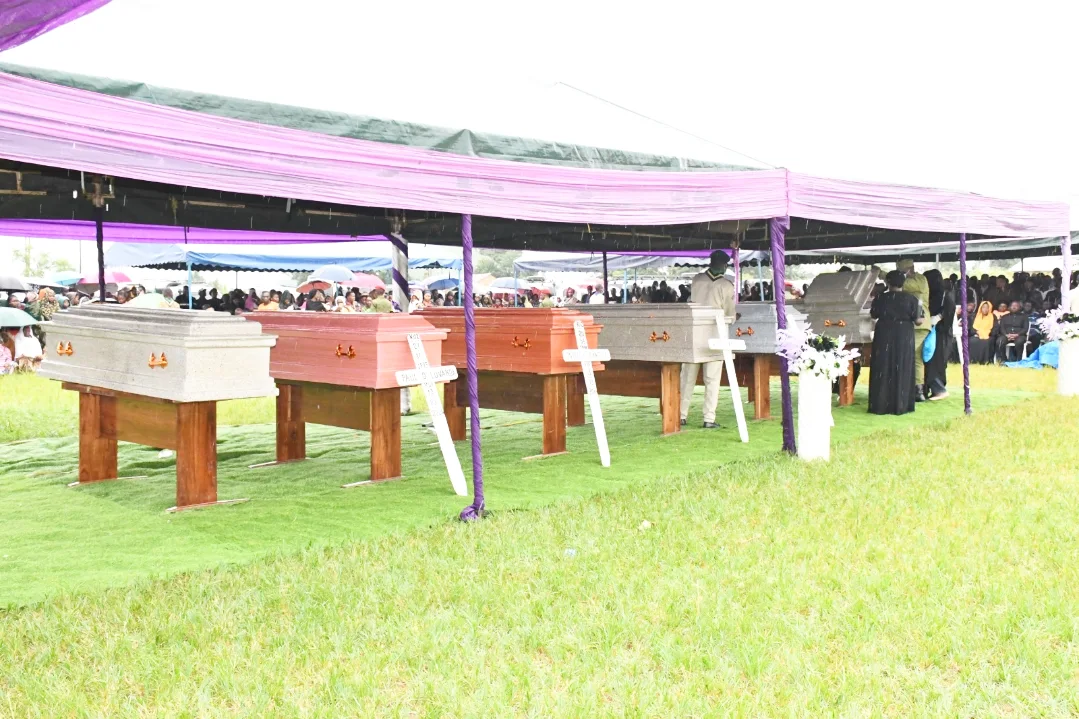
“Today, you an elder returns home and cries because your child has been injured in the leg [or] unfortunately your child has died, what stopped you from preventing them from going out? What stopped you from speaking wise words to stop them?” she asked.
These remarks sparked widespread debate online especially ahead of the commission set to investigate the incidents. While analysts, civil society groups have pointed to disappearances, abductions of critics, and the collapse of competitive multiparty politics as key drivers of the protest, President Samia offered a different explanation. She attributed the unrest to envy of other nations, lack of patriotism among diasporas, and the vulnerability of youth to manipulation through online content and payments.
“Our young people were led into the streets and made to sing a song they don’t understand. They claim they were demanding their rights. Which rights? Pull aside just one young person and ask, ‘You went out to demand rights, what rights exactly?’ They cannot explain. And why could these rights not be demanded in any other way except by going into the streets and causing violence? Being paid to burn stations, being paid to commit the acts they committed, what kind of right is that,” President Samia analyzed.
Before the curfew, protesters cited grievances including the need for an independent electoral commission, free elections, and an end to abductions. Analysts, including government officials also pointed to youth unemployment and economic hardship as key driver, claims President Samia rejected.
“Another thing they were made to carry is this idea that they went into the streets because of hardship. Astaghfirullah. Let us return to God. They [youth] have no reason. [They are speaking of] ‘hardship’ while living comfortably,” she said, urging researchers to study hardship levels in neighboring countries.
President Samia concluded that the protests resulted primarily from a lack of patriotism education, which she argued the newly formed ministry of youth would address.
Halt of Competitive Politics
President Samia also addressed accusations that her government blocked participation by Tanzania’s main opposition party, CHADEMA. She denied this, insisting the party opted out due to internal problems. She emphasized that she had extended goodwill to the opposition, including providing personal support.
“Their issue is within themselves. And now they want to push the problems they have there onto us. No one stopped them from participating in anything,” she said.
“I extended a hand of mercy: ‘Come, you who are Tanzanians, let us sit together, let us talk, let us move forward in the direction we desire. They arrived empty-handed, with nothing, and we provided our own money to help them start their lives afresh here in Tanzania,” she recalled, referring to opposition leaders’ return in 2021 and 2022.
Following the 2024 civic elections, in which the ruling party won 99% of seats, CHADEMA adopted a “no reform, no election” policy, citing killings of candidates and widespread irregularities. Throughout 2025, the party has faced court battles, disappearances of its youth members, and increasing repression. Its chairperson has been jailed on treason charges since April 10, 2025. The party’s activities were suspended by a court order on June 10, 2025, and it was barred from the ballot after refusing to sign ethics forms in April.
President Samia also responded to questions about winning 97% of the vote in an election with reported turnout equivalent to 92% of the adult population, figures widely criticized by observer missions.
“Let me tell you: even their own followers voted for Chama cha Mapinduzi. They voted for Chama cha Mapinduzi. Those who question, ‘Why 97%?’, that is simply what happened. It is 97% of those who voted, not 97% of all Tanzanians. Of those who cast their votes, 97% voted for CCM,” she explained.
She added: “Work was done, campaigns were conducted, and people understood, they voted. And God is great, because their planned chaos began at around eleven or noon, when many people had already gone early in the morning, cast their votes, and left. God is great. Especially in the towns, they did not disrupt voting everywhere, especially in the major towns. So, my brothers and sisters, we are Tanzanians. Tanzania will be built by Tanzanians.”
Observer missions from the African Union (AU) and the Southern African Development Community (SADC) were critical of the elections, citing fundamental flaws in the overall process.
While CHADEMA was barred in April, the presidential candidate from ACT-Wazalendo was initially blocked by the electoral commission; although the court later reversed the decision, the Attorney General subsequently intervened, thwarting the candidacy, a move the party said was orchestrated by the ruling party.
President Samia argued that the absence of major challengers explains her overwhelming victory. “As the Swahili say, paukwa pakawa, they were not there. And the sixteen who did participate were very small. Those who would have challenged CCM, they were not there. There was no CHADEMA, there was no ACT. Those are the parties we had prepared ourselves to face competitively. They were absent. So what were citizens supposed to do?”
Several international actors, including the European Parliament, the U.S. Senate Foreign Relations Committee, and human rights activists, have condemned Tanzania’s political trajectory, citing civilian killings and the crackdown on the opposition. Some activists have taken the matter to the ICC.
President Samia dismissed these criticisms as colonial interference. “Out there, they sit and say, ‘Oh, Tanzania must do this, must do that, must do the other, then it will be like this. Who are you?,” she asked. “They still think they are our masters, that they are our colonizers. For what reason? Because of the small amounts of money they give us?”
President Samia also took a moment to warn religious leaders to remain in their lane, specifically mentioning the Catholic Bishop Conference, which has called for an independent international inquiry over the killings.