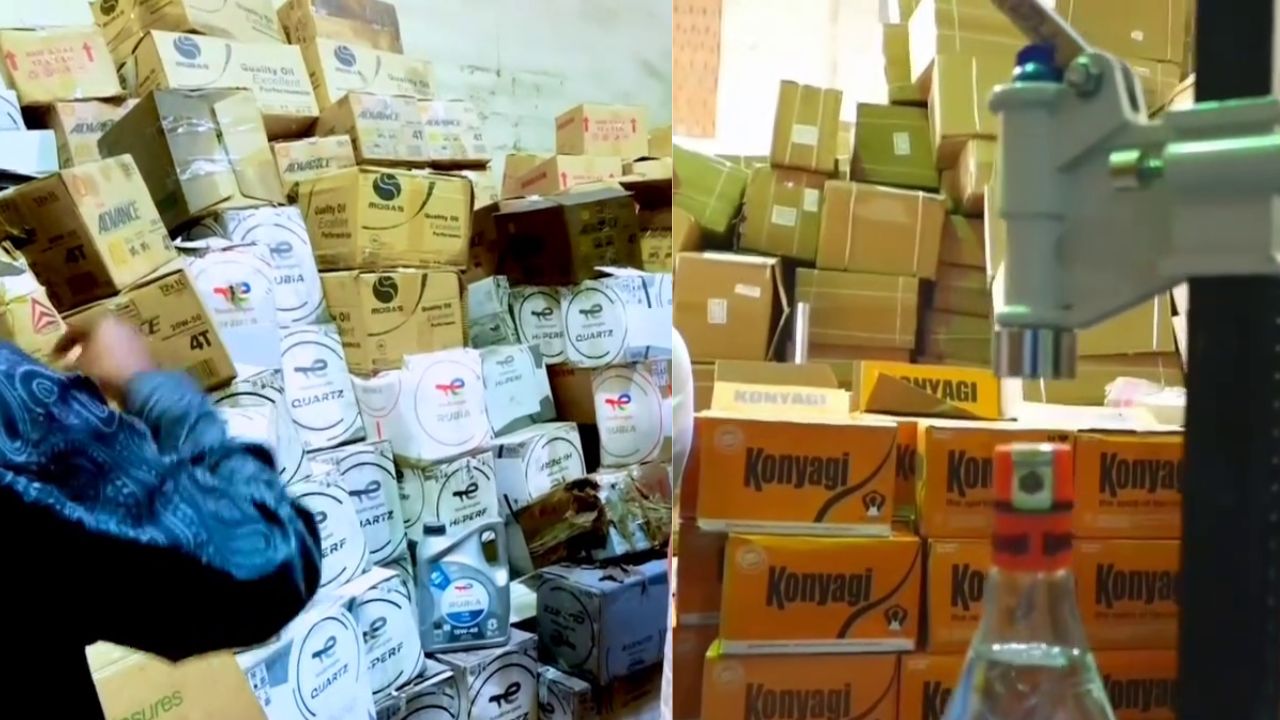

Dar es Salaam – The Tanzania Revenue Authority (TRA) has announced significant progress in its battle against counterfeit goods, having seized illicit products worth Sh95 billion in 2025.
This development comes as the country, along with its East African neighbours, grapples with a pervasive counterfeit market that undermines economies and endangers public health.
TRA Commissioner General Yusuph Mwenda revealed the figures during the International Customs Day celebrations on January 27, 2026, where he also noted a substantial increase in monthly revenue collection.
The customs department now collects an average of Sh1.2 trillion per month, a significant rise from Sh800 billion, attributed to stricter enforcement and investments in modern technology, including the acquisition of 57 scanners valued at US$90 million to detect smuggled and hazardous goods.
The scale of the counterfeit problem in the region is vast. A 2023 study by the Confederation of Tanzania Industries (CTI) and the Global Organised Crime Index found that over 50 per cent of goods consumed in Tanzania are counterfeit, a figure that includes a staggering 30 per cent of all medicines available on the market.
READ MORE: Counterfeit Goods in Tanzania: A Crisis Eating Away at the Economy, Public Health
The economic impact is equally severe, with annual tax losses estimated to be between 15 and 25 per cent of domestic income, amounting to between US$343 million and US$566 million.
In response, Tanzania has been bolstering its technological arsenal. The TRA has deployed an AI-powered Electronic Tax Stamp (ETS) system to combat fake stamps in real-time. Since its adoption in November 2023, the system has enabled digital market surveillance, leading to a fourfold increase in inspection scans in 2024.
The number of manufacturers registered under the ETS has surged by 900 per cent, and declared production has increased by over 300 per cent since 2019. Furthermore, a mandatory trademark recordation system for all imported goods is set to take effect from December 1, 2025, to further fortify brand protection.
Recognising that the fight against counterfeits cannot be won in isolation, regional cooperation has become a cornerstone of the strategy. A renewed partnership between Kenya’s Anti-Counterfeit Authority (ACA) and Tanzania’s Fair Competition Commission (FCC) aims to intensify efforts to disrupt cross-border trade in counterfeit goods.
The East African Community (EAC) has an annual counterfeit market share of Ksh 180 billion, according to a 2017 report by the International Peace Institute.
READ MORE: Authorities Dismantle Tanzania’s Major Drug Rings in Sweeping Operations
A 2025 study on the Namanga border between Kenya and Tanzania confirmed that EAC integration and multisectoral partnerships have a significant positive effect on tackling counterfeit trade. However, the study also noted that the goal of full cooperation among member states has not been completely realised.
Experts advocate for a multi-pronged approach to address the cross-border challenge. This includes strict enforcement of electronic tax stamps, better control of entry points, and public education to help citizens distinguish genuine from fake products.
A report by legal experts JEE Africa highlights the need for a harmonised legal framework across the continent, leveraging the African Continental Free Trade Area (AfCFTA) to establish unified regulations.
Other proposed solutions include strengthening enforcement mechanisms, public awareness campaigns, capacity building for law enforcement, and greater adoption of technologies like RFID and track-and-trace systems.