
Dar es Salaam – The treason trial of CHADEMA national chairperson, Tundu Lissu, resumed at the High Court of Tanzania on Monday, February 9, 2026, after an 88-day hiatus, with the proceedings immediately consumed by a detailed and contentious legal argument over the use of a fully concealed prosecution witness.
The session, before a three-judge panel led by Judge D. Ndunguru, picked up where it left off on November 12, 2025, when Mr Lissu first raised a formal objection to the state’s plan to have a witness, identified only as ‘P11,’ testify from a special booth, or kizimba, that obscured them from view.
State Attorney Nassoro Katuga, representing the prosecution, argued that the measure was permissible under the 2025 Witness Protection Rules and a prior court order. However, Mr Lissu, representing himself, launched a multi-pronged assault on the legality and fairness of the procedure.
“Your Honours, with my own eyes, the witness there cannot be seen by the judges, and I cannot see him,” Mr Lissu stated, arguing that the booth’s setup prevented even the judicial panel from assessing the witness’s demeanour.
He contended this was a fundamental breach of a fair trial, declaring, “Allowing evidence of this kind will be a mockery of justice. If you allow this procedure that they want to bring here, then we must forget about a fair trial.”
READ MORE: Treason Trial Paralysed by Tundu Lissu’s Legal Challenge to ‘Secret Witness’
Mr Lissu further dismantled the legal basis for the witness’s protection, arguing the order was obtained on “insufficient grounds” because the state’s application failed to name the witnesses or detail the specific threats against them.
He also challenged the legitimacy of the 2025 Witness Protection Rules themselves, claiming the parent legislation was never properly published in the Government Gazette or tabled in Parliament as required by law.
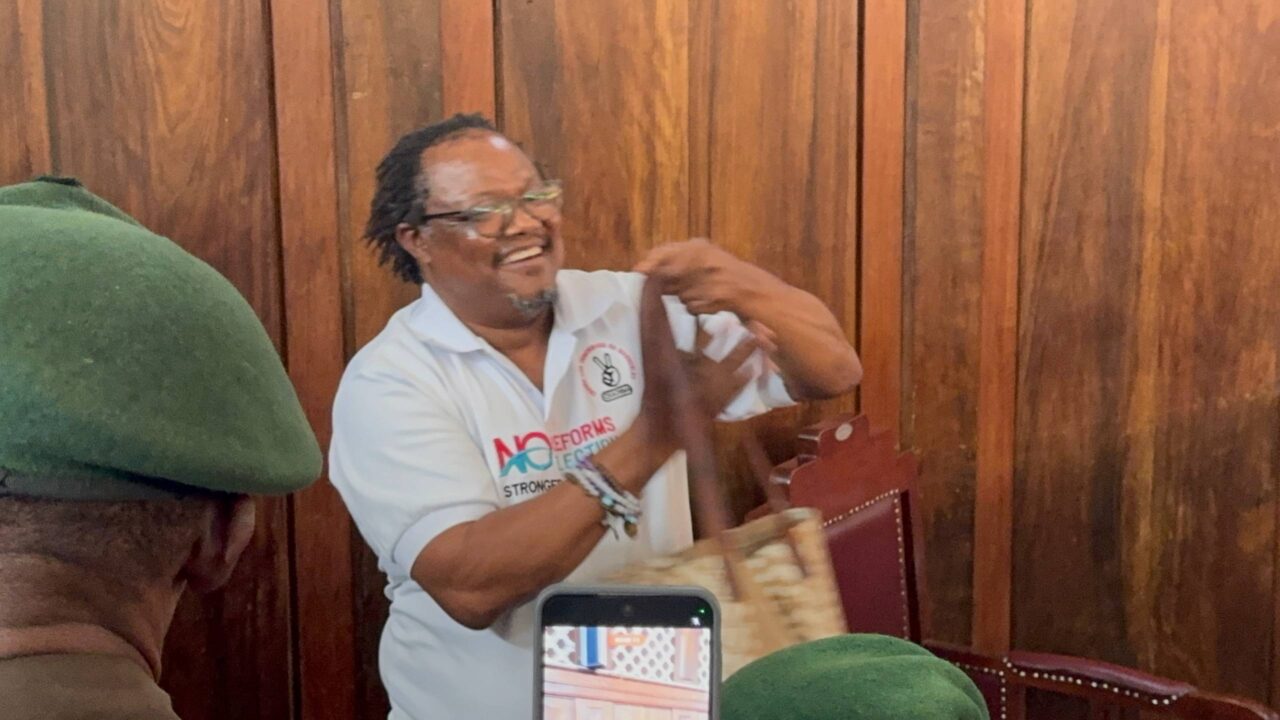
Before addressing the central legal issue, Mr Lissu, who arrived in court to shouts of “Rais! Rais!” (President! President!) from supporters, used his platform to raise grave concerns about his detention.
Citing his right as a prisoner to inform visiting justices of his conditions, he alleged that prison officials were illegally monitoring his confidential conversations with his lawyers.
He also stated that since his last court appearance, he has been barred from receiving visits from fellow CHADEMA party members and leaders, a move he described as unconstitutional discrimination based on political affiliation.
He highlighted the slow pace of the trial, noting he has been in custody for 307 days, during which the case has been heard for only 15 days. “Justice delayed is justice denied,” Mr Lissu said, contrasting his case with previous, more rapidly concluded treason trials in the nation’s history.
He pointed out the absurdity of the current pace, which elicited laughter even from the judges: “At this speed of 10 months for three witnesses… we will get to 2030 if you have not yet retired.”
In his rejoinder to the prosecution, Mr Lissu passionately defended his vigorous approach. “I am not ready yet to die,” he told the court. “Life is sweet. If there is something to say, I will say it… I am not threatening the High Court judges. I am in prison. But what I want is for the judges to look at these matters, considering the gravity of this case.”
The court has adjourned the matter until Wednesday, February 11, 2026, when it is expected to deliver a ruling on Mr. Lissu’s objection. The decision will be a critical turning point, potentially determining the admissibility of key prosecution evidence in a case that has captured national and international attention.