
President Samia Suluhu Hassan’s launch on November 20, 2025, of a Commission of Inquiry into the reported atrocities surrounding the October 29, 2025, elections was framed as a decisive step toward truth, reconciliation, and national stability. The Commission was constituted under the Commissions of Inquiry Act, Cap 32 2023, with a three-month mandate to investigate violence, its causes, and institutional responses.
By design, what has been established is an executive tool serving at the President’s discretion, which is different from a judicial inquiry into the events of October 29. Yet when assessed against international transitional justice standards—particularly those articulated by the United Nations and the African Union—the Commission raises concerns regarding legality, legitimacy, and accountability. Rather than consolidating public confidence, its structure and framing risk deepening mistrust in an already fragile post-electoral environment.
As the commission proceeds with its inquiry, it is imperative to reflect on its challenges and prospects ahead of the completion of the task by looking at international standards, the principles of legality, legitimacy, and accountability, but also its inherent structural risks. In an ideal world (which we don’t live in), it is also important to highlight what remedial pathways to address the observed anomalies could look like.
Transitional justice standards
The 2015 UN High Commissioner for Human Rights Commissions of Inquiry and Fact-Finding Missions on International Human Rights and Humanitarian Law (Guidance and Practice) Handbook (2015) outlines five essential criteria for fact-finding commissions: independence (legal mandate, dedicated funding, expert selection, freedom from executive interference); victim-centered approach (safe, confidential, meaningful participation, protection, psychosocial support); transparency (full, immediate publication of findings and recommendations); and an accountability mechanism (judicial or political) to ensure outcomes like prosecution, reparations, and institutional reform.
The African Union’s 2019 Policy Framework on Transitional Justice, rooted in structural transformation, sets five core standards: a victim-centered approach (prioritising rights, needs, and dignity); fundamental structural reform of security institutions (professionalism, accountability, civilian subordination); gender-sensitive and inclusive methodologies; transparency (open engagement with civil society and victims’ groups); and comprehensive institutional reform (legislative and judicial changes) to dismantle the architecture of past abuses and prevent recurrence.
Legality
The Constitution of the United Republic of Tanzania (1977) anchors state authority in popular sovereignty, accountability, and respect for human dignity. The Commissions of Inquiry Act requires clarity of mandate and specificity of subject matter. Owing to the provisions of the law, the appointment of the commission provides no scope of public participation.
READ MORE: Tanzania Government Announces 8-Member Team to Investigate Events Around October 29 Election Protest
The key arguments against the commission’s legality, when measured against UN and AU standards for human rights inquiries, centre on a fundamental misalignment between the stated mandate and the gravity of the alleged violations.
The Terms of Reference define the inquiry as investigating “incidents of violence and breaches of peace.” This framing narrows the legal lens to public order infractions, effectively overlooking credible reports of gross human rights violations such as arbitrary detention, enforced disappearances, torture, extrajudicial killings, and internet shutdowns, the compounding of which contributed to the implosion witnessed in October 2025.
UN Guidance provided under the Commissions of Inquiry and Fact-Finding Missions on International Human Rights and Humanitarian Law (Guidance and Practice) Handbook (2015) requires a credible inquiry to have a clear legal mandate and specific, coherent Terms of Reference.
Characterising gross violations as mere “breaches of peace” compromises this requirement, risking an incomplete factual record. In principle, the use of language that focuses on “breaches of peace” risks presupposing protester culpability, thereby undermining procedural fairness and the presumption of innocence.
From a transitional justice perspective, the lack of definitional clarity is foundational as it has bearing in establishing an authoritative historical record or providing support for accountability/prosecutions, as required for serious violations.
Legitimacy
The commission’s composition faces significant challenges to its legitimacy when measured against regional and global standards, which demand that such bodies not only be impartial but also perceived as impartial.
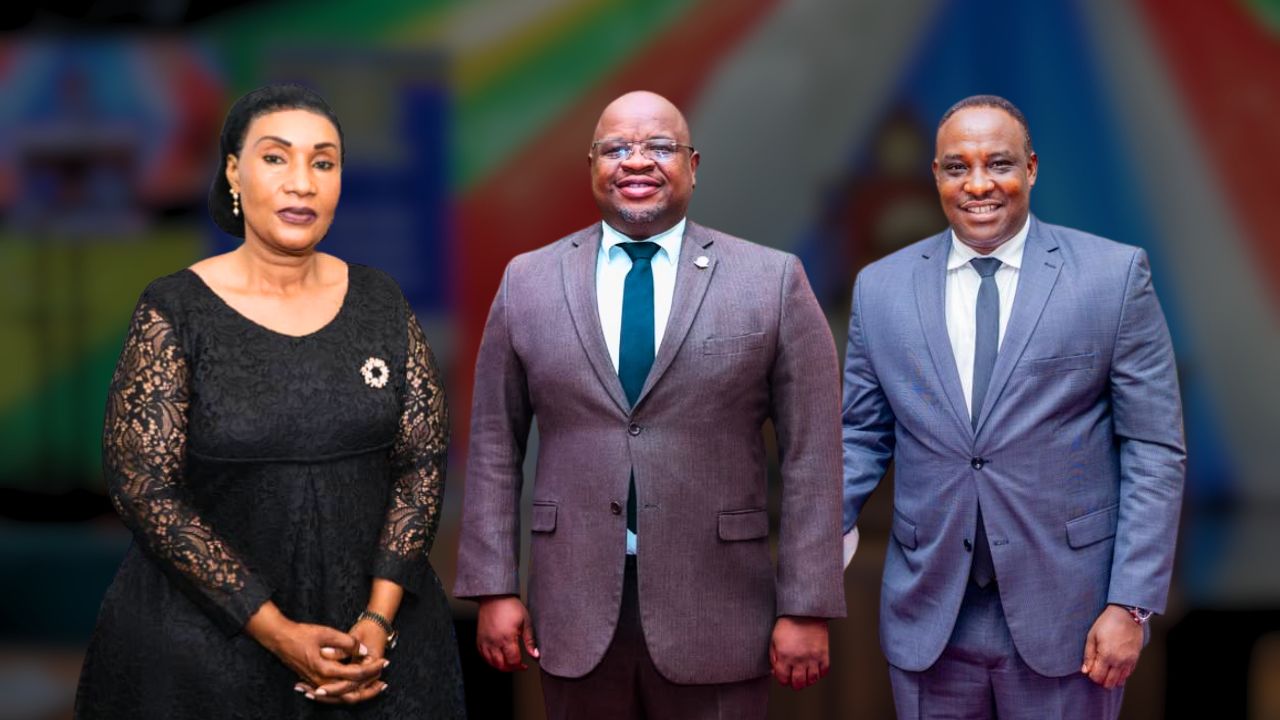
The inclusion of figures deeply embedded in the state apparatus—such as former Chief Justices, senior diplomats, military figures, a former Inspector General of Police, and perhaps more critically, the outgoing Minister of Defence—creates a structural conflict of interest.
This violates the African Charter on Democracy, Elections and Governance and the African Union Transitional Justice Policy (AUTJP), which explicitly require post-crisis mechanisms to ensure independence from implicated institutions and avoid conflicts of interest.
Transitional justice doctrine rejects the notion that individuals proximate to alleged violations can credibly adjudicate those same events, particularly when officials whose subordinates were allegedly involved in the operations under investigation are part of the body.
Ultimately, a commission perceived as establishment-controlled risks undermining the AUTJP’s goal of restoring public trust and addressing the structural causes of violations, potentially entrenching narratives of impunity instead of securing justice that is seen to be done.
Accountability
The cardinal rule for Transitional justice rests upon four pillars: truth, justice, reparations, and guarantees of non-recurrence. The UN’s framework for accountability in serious human rights contexts mandates the protection of victims and witnesses, independent prosecutorial pathways, the suspension or recusal of implicated officials, and transparent public reporting.
However, the situation in Tanzania presents several complicating factors, including the continued detention of protestors on serious charges, public denials of wrongdoing by authorities, the absence of an announced witness protection framework.
A further complication emerges from the fact that the leadership of the security forces remains in office when the commission is expected to interrogate their conduct during the recent atrocities.
In February 2022, while on a tour of Mtwara, the President called for the suspension of four police officers accused of the murder of a businessman in the region, while assigning the Prime Minister to lead a probe into the matter.
READ MORE: Tanzanian President’s Election Probe Faces High Court Challenge Over Claims of Bias and Illegality
Furthermore, the current framework lacks a clear mechanism for transmitting truth-seeking findings to independent prosecutorial authorities or for creating special mechanisms, meaning that, without enforceable consequences, the commission risks being merely symbolic.
Structural risks
The current commission structure faces three interrelated structural risks. First, there is a risk of Executive Influence due to a conflict of interest, as the executive branch—whose agencies are under scrutiny—established the commission, potentially leading to findings being suppressed or weakened.
Second, the Narrative Framing is problematic, as the inquiry’s focus on “foreign interference” and opposition actors may create a security-centric narrative, diverting attention from systemic human rights violations and potentially leading to expanded surveillance powers rather than enhanced civil liberties.
At her swearing in on November 3, 2025, President Samia acknowledged the “loss of lives” and asserted that “it was not a surprise that those arrested were from other countries.” Meanwhile, Prime Minister Mwigulu Nchemba alleged on November 24, 2025, that Tanzania is being destabilised because of its natural resources, linking the recent election-related unrest to the country’s newly discovered deposits, including natural gas.
It will be instructive to see, therefore, if the commission will indeed address itself to the observations made by the leaders of the executive and its implications for public perception of the atrocities.
Third, there is an Absence of Protective Infrastructure, with no public articulation of essential components like secure channels for confidential testimony, robust witness protection, and psychosocial support, which is crucial for an effective and ethical transitional justice mechanism and risks further harm to victims and witnesses.
Is there a way out?
To genuinely align with UN and AU standards, the Commission requires critical reforms based on global lessons. Its mandate must prioritise gross human rights violations, avoiding the dilution of an overly broad focus.
READ MORE: The Full Text of President Samia’s Address at the Launch of the Commission of Inquiry
To ensure impartiality and public trust, independent civil society and international experts are vital to counter political interference. Transparency demands public hearings for victims, and a statutory guarantee for full publication of findings is non-negotiable.
The Commission must incorporate a robust prosecutorial referral mechanism to ensure accountability, moving beyond mere truth-seeking. Immediate, effective protective measures for detainees and witnesses are essential for security and truthful testimony.
Finally, establishing security sector vetting/suspension mechanisms is necessary to signal institutional reform and break impunity. Without these components and adherence to best practices, the Commission risks being viewed as political damage control, not a credible accountability mechanism.
Conclusion: Inquiry or insulation?
The October 2025 events, as reported, implicate core constitutional rights and potentially grave international law violations. Transitional justice standards—whether under the United Nations or the African Union—do not treat such allegations as matters of mere “breach of peace.” They demand clarity, independence, and pathways to justice.
In failing to meet global and regional transitional justice benchmarks, the Commission may inadvertently entrench impunity rather than dismantle it. As such, the ultimate test is not whether a commission exists—but whether it can produce truth, justice, and guarantees of non-recurrence.
On that measure, substantial confidence-building measures appear necessary before public trust can be obtained to allow for a meaningful inquiry through the commission. It is daunting that the commission proceeds with the inquiry whilst those with command responsibility over public safety remain in office, when aggrieved parties, including opposition leaders, remain in custody, and young people are structurally excluded from leading the inquiry.
The October 2025 events raise serious constitutional and international law concerns, which transitional justice standards require be addressed with clarity and pathways to justice, not as mere “breach of peace.”
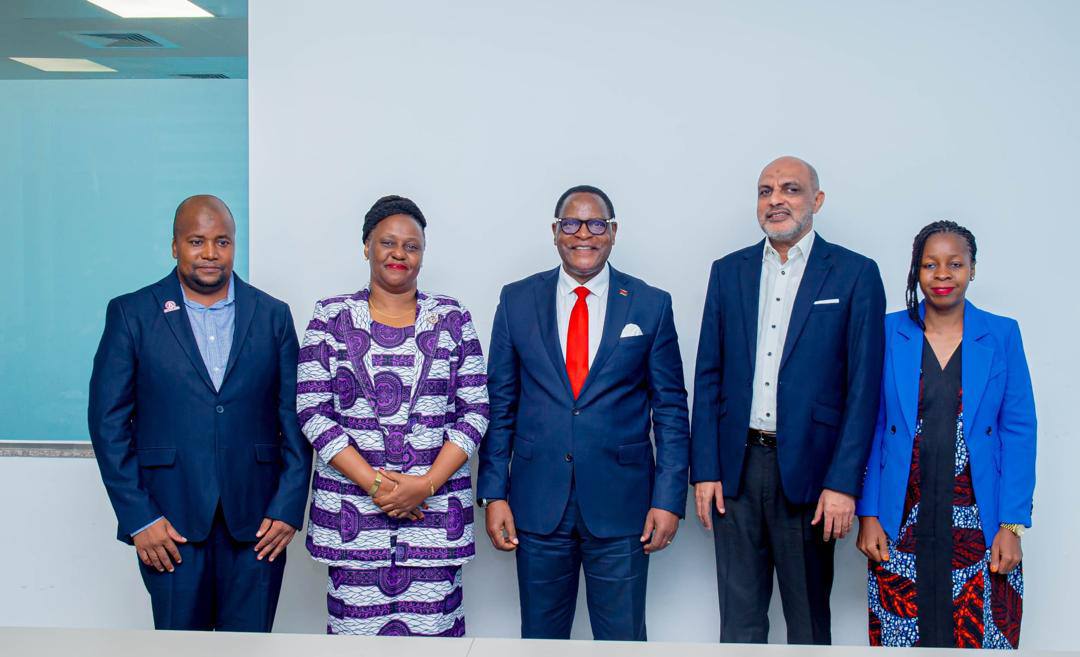
READ MORE: Chakwera Speaks After Appointment by Commonwealth for Tanzania’s Mediation Effort
The Commission faces three core challenges: On one hand, its mandate is ambiguous and may minimise its true authority. On the other hand, its composition is too close to the implicated institutions, creating a conflict of interest.
Meanwhile, no enforcement mechanism exists for its recommendations, and the lack of political accountability for the October events undermines its credibility. As such, failing to meet global and regional benchmarks risks entrenching impunity.
Substantial confidence-building measures are needed, as the inquiry proceeds, while those with command responsibility remain in office, aggrieved opposition leaders are detained, and youth are excluded from leadership.
Despite these flaws, the Commission could still pull a surprise by courageously exceeding its terms, taking inspiration from comparable inquiries like that led by Justice Mohamed Saeid in Uganda during Idi Amin’s era. Until the outcome of the inquiry is published, questions will continue to linger.
Andrew Karamagi is a Ugandan international human rights lawyer and advisor on governance and human rights, specialising in international humanitarian law, social justice, and democratic resilience. He’s available at karamagiandrew@gmail.com. Deus Valentine Rweyemamu is the Chief Executive Officer of the Center for Strategic Litigation. He’s available at deus@strategiclawcentre.org. The opinions expressed here are the writers’ own and do not necessarily reflect those of The Chanzo. If you are interested in publishing in this space, please contact our editors at editor@thechanzo.com.