
Pwani – A prominent Catholic bishop has delivered a powerful rebuke of Tanzania’s political trajectory, warning that a culture of sycophancy and a departure from truth are destroying the nation’s moral fabric.
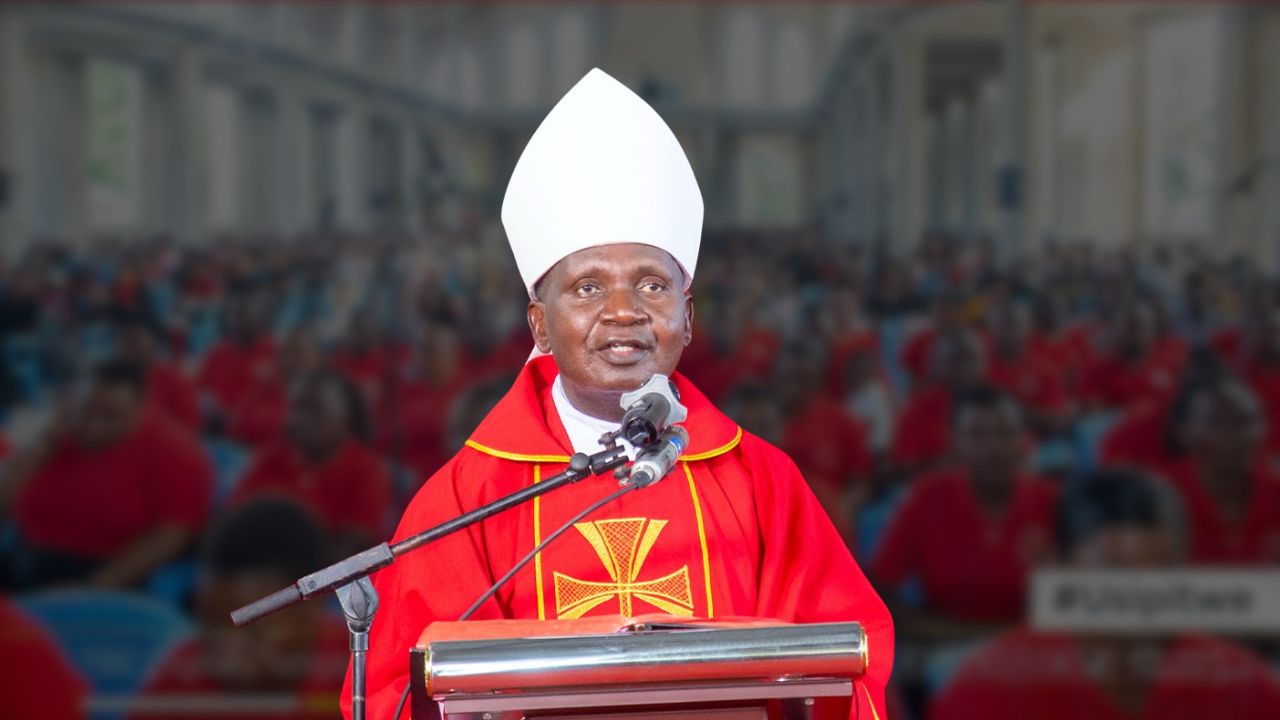
Bishop Stephano Musomba of the Bagamoyo Diocese used his Good Friday sermon on April 3, 2026, to address the deepening national crisis, urging citizens and leaders alike to confront the uncomfortable realities facing the country.
Speaking at the Bikira Maria wa Mlima Karmeli Parish in Bunju, the bishop drew parallels between the biblical trial of Jesus Christ and the current state of justice in the nation. He challenged his congregation to reflect on their own roles in society, asking whether they stand with truth or succumb to the pressures of political expediency.
“Truth is the reality of things as they are, and not as we want them to be,” Bishop Musomba told the faithful. He emphasised that truth remains constant regardless of personal desires or political narratives, noting that even when individuals are falsely accused or persecuted, the truth cannot be forced to change.
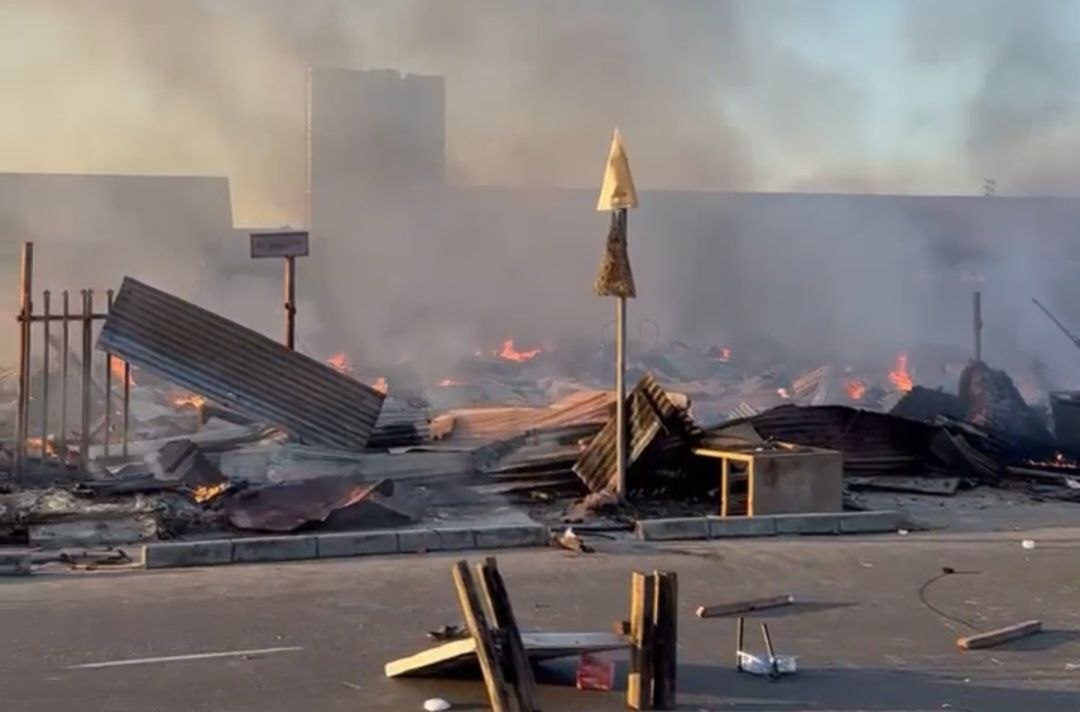
The bishop’s remarks come against the backdrop of a severe political crisis following the disputed October 29, 2025, general elections. President Samia Suluhu Hassan claimed victory with nearly 98 per cent of the vote, which coincided with unprecedented nationwide protests.
The government’s subsequent crackdown resulted in hundreds of deaths and widespread allegations of human rights abuses by security forces.
Sycophancy
A central theme of Bishop Musomba’s sermon was the destructive nature of political sycophancy, which is referred to using the Swahili term ‘uchawa’ (a phenomenon) and ‘chawa’ (a person). He warned that the proliferation of these political flatterers is actively harming the country’s development and governance structures.
READ MORE: Catholic Bishop Condemns Police for Tear-Gassing CHADEMA Women at Musoma Cathedral
“We are producing many chawa,” the bishop stated. “These chawa live in an area that will not help you. It is only because of your money, it is because of your position that they are like this. Once you leave that position, they have no business with you anymore.”
He lamented that this culture of endless praise has infiltrated all levels of society, including the national legislature. The bishop noted that parliament has become filled with sycophants who fail to hold the government accountable, a stark contrast to previous eras when leaders were forced to resign when confronted with the truth.
“If you go to parliament now, you see that parliament is also full of chawa,” Bishop Musomba observed. “We want you to oversee the government, not to be sycophants. In the past, there was accountability, and in history, we saw people being held accountable by being told the truth and stepping down from their positions. Now it is just complaining. How long will we complain?”
The bishop warned that elevating any human being to the status of a deity through constant praise is a grave mistake. He stressed that only God is deserving of such uncritical adoration, and that human leaders require honest feedback and constructive criticism to govern effectively.
A crisis of conscience
Bishop Musomba also addressed the broader moral decay within society, pointing to a disturbing trend where citizens celebrate the deaths of political figures. He described this as a profound departure from traditional African values, which hold human life and death in deep reverence.
“Today we complain a lot because we avoid the truth,” he said. “It is not normal in our African traditions for someone to die today, and you celebrate. It is not normal; we cry. We cry until they carry you. But today, everyone is celebrating.”
In recent days, there has been a growing trend among certain segments of the citizenry to celebrate the deaths of government officials and members of the ruling CCM party.
This reaction stems from a belief that such deaths are divine retribution for the perceived injustices that those in power are alleged to have committed against the public.
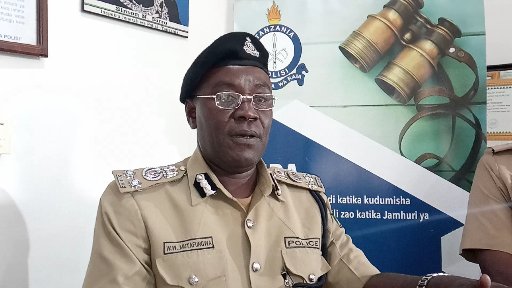
The trend resurfaced prominently following the death of veteran CCM politician William Lukuvi, prompting the authorities to issue a strong warning against those engaging in such behaviour.
But in his sermon, Bishop Musomba urged the congregation to look beyond the immediate symptoms of this societal sickness and examine the root causes. The bishop suggested that this unnatural reaction to death stems from a deep-seated sense of injustice and a feeling among the populace that their rights have been ignored or violated.
“Let us sit down and discuss together where we went wrong,” Bishop Musomba pleaded. “Perhaps I am celebrating because no one is looking at me, perhaps my rights have not been done, which is why I am celebrating. Therefore, let us look at what is the source that makes us the way we are, why we have reached this state.”
The bishop’s call for introspection echoes the sentiments of other religious leaders who have spoken out since the election crisis began. The Catholic Church has been vocal in its condemnation of the violence, with Archbishop Jude Thaddaeus Ruwa’ichi of Dar es Salaam previously warning that there can be no peace without justice.
Role of the Church
Addressing criticism that religious leaders should not involve themselves in political matters, Bishop Musomba mounted a robust defence of the Church’s duty to speak out against injustice. He rejected the notion that faith and politics can be neatly separated when moral issues are at stake.
READ MORE: Outspoken Catholic Priest Dr Charles Kitima Hospitalised Following An Attack
“There is a saying spoken even in our society: ‘Religious leaders are mixing religion and politics,’” the bishop noted. “So, who is my Christian, and when does he become my Christian? Should I leave this Christian of mine to peek into hell because of his evil deeds?”
He argued that a person’s faith must inform their actions in all spheres of life, including the political arena. The bishop insisted that it is his responsibility to correct and guide his flock, regardless of their profession or political affiliation.
“When he goes to church, he wears a church shirt; when he goes to politics, he wears a political shirt,” Bishop Musomba said, describing the hypocrisy of some believers. “But this one who is the image and likeness of God is whole. And that is why, when we look at something called social justice, we must ensure that there is equality; all human beings are equal.”
The bishop’s outspoken stance carries significant risks in the current political climate. Following the October elections, several religious leaders who criticised the government’s actions have faced intimidation and arrest.
Despite these dangers, Bishop Musomba maintained that the truth must be spoken, even when it is painful.
Call for unity and healing
In his concluding remarks, Bishop Musomba called for national unity and an end to the divisions that have fractured the country. He reminded his listeners that all human beings are created in the image and likeness of God, and that political differences should not lead to enmity or discrimination.
READ MORE: Tanzania’s Catholic Church Denies Issuing Peace Statement Amid Pre-Election Heat
“Let us get out of paranoia and move towards metanoia, from the lower mind to the highest mind, where we become critical, where we will correct all our perspectives,” he urged. “When I see my companion, he is my brother, not an enemy. Because I receive him, whatever party he belongs to, whatever he is, I receive him.”
The bishop warned that continuing on the current path of division and sycophancy will only lead the nation backwards. He called on professionals, politicians, and ordinary citizens to use their education and positions for the betterment of the country, rather than for selfish gain.
“Truth brings development. Truth brings security, and when it brings security, it makes us confident as a nation, and it will bring unity because we will cooperate well,” Bishop Musomba concluded.
“But if there is no truth, we will scatter, we will not have unity. Where and where is politics a fight? We say unity in diversity; we enrich each other in our differences. But if we hold guns against each other, it will torture us. We are lost, and truly we are lost.”