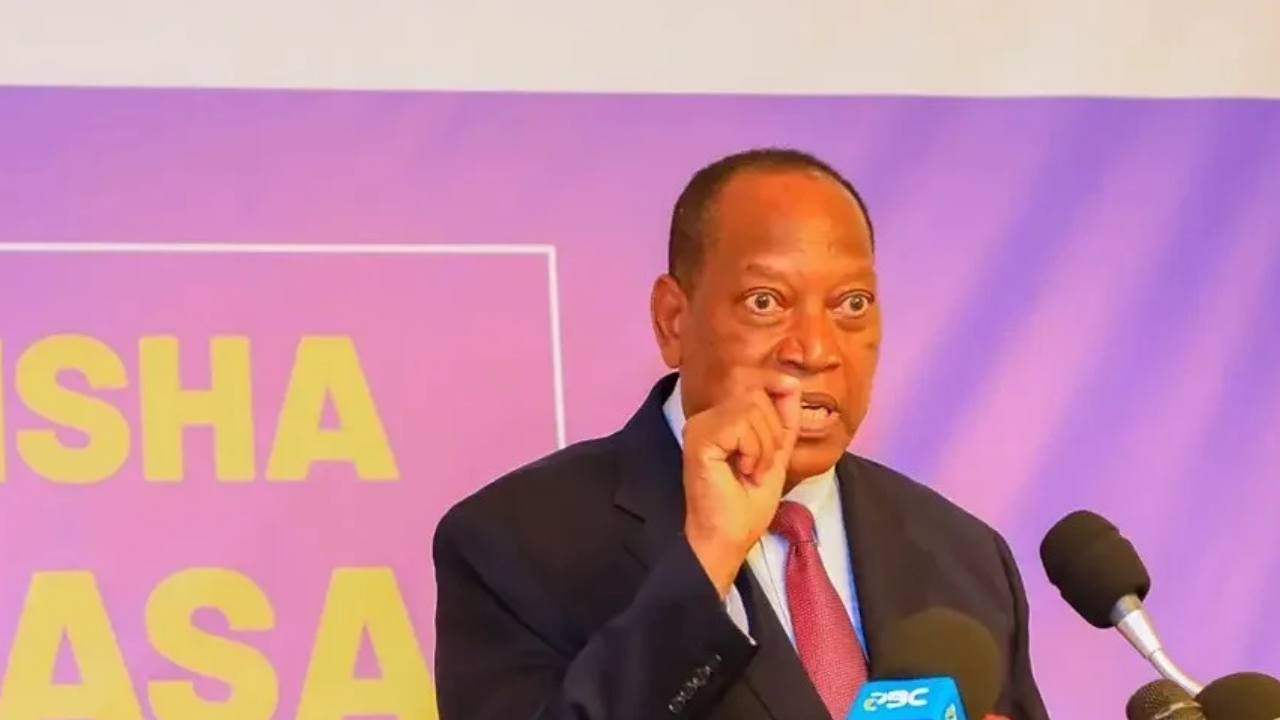

President William Ruto commenced his state visit to Tanzania on Monday, May 4, 2026. One of his key agendas was the proposal of building an oil refinery in Tanga, Tanzania. The proposal was first publicly floated during the African Infrastructure Summit in Nairobi on April 23, 2026.
“We’re going to have a joint refinery in Tanga to benefit all of us,” President Ruto told the conference. During the same discussion, Aliko Dangote, owner of the largest refinery on the continent, indicated that the plan could be realized in less than five years if there is commitment among regional leaders.
“My commitment today is that if we agree with the three or four governments here about the refinery, we will lead,” Dangote said. “We’ll make sure that refinery is built within the next four or five years.”
The refinery proposal comes at a time when three East African nations have successfully united to host the Africa Cup of Nations 2027, popularly dubbed the “Pamoja Bid”, an initiative widely seen as a demonstration of regional unity and cooperation.However, one key voice was initially missing from the refinery discussion: Tanzania’s.
Speaking during President Ruto’s state visit, President Samia hinted that she had not been part of the initial conversation.
“I pressed Ruto,and I told him you went on and announced a refinery in Tanga and I didn’t know about it. He will explain this himself on why he announced that refinery,” President Samia said as she welcomed President Ruto for his remark.
The case for Tanga refinery
Eastern Africa is considered the most refining-deficient region on the continent, holding only 4% of Africa’s total refining capacity despite its significant population and growing demand. Most of Africa’s refineries are concentrated in Northern and Western regions, with the new Dangote refinery being the largest on the continent and with plans to become the largest in the world.
Many existing refineries across Africa are small and lack upgrading capacity. Combined with limited local demand and the inability to compete with large refineries in the Middle East, India, or Singapore, this makes them commercially unviable. As a result, imported refined products are often more affordable. This explains why many smaller refineries, including those that once operated in Kenya and Tanzania, have been shut down.
READ: Africa’s Gas Giant Sleeps While the World Burns
In East Africa, the most advanced refinery plan is in Uganda. The project is already underway, with an anticipated capacity of 60,000 barrels per day and an estimated cost of $4 billion. It is intended to serve both the domestic market and neighboring countries, including Tanzania. Speaking at the April 23, 2026 conference, President Yoweri Museveni expressed openness to the Tanga refinery idea.
“Our strategy is already clear, we shall build a small refinery which we had planned of 60,000 barrels. This was for the internal market of Uganda and for parts of Tanzania and Kenya near Uganda. But surplus we shall contribute to the East Africa refinery, the one of Tanga,” President Museveni said.
He continued: “As I have told you, this just from 40 percent from one of the five wells. We have more oil, so when that more oil come, we shall contribute to the refinery in Tanga. But also we must own it, it can not be owned by the costal states only.”
During his remarks in Tanzania, President Ruto linked the refinery proposal to shifting global geopolitical dynamics, arguing that African countries must find solutions to meet their own energy demands rather than relying heavily on imported refined products.
“We all realize that it’s time for us to use the resources that we have to industrialize our region. It makes absolutely no sense for us to export crude oil to all manner of places and then we go struggle to import finished product,” President Ruto said.
“With the challenges in the Strait of Hormuz and all the other places,it makes absolute no sense for us to do that,” he continued.
Recent challenges in the Strait of Hormuz have reignited conversations across Africa about building refining capacity to meet domestic demand. Similar discussions have taken place before in countries like Angola, where efforts to attract investment from SADC countries into refinery projects have faced delays and limited success.
Although the Tanga proposal is still in its early stages, it has already received backing from two presidents. Tanzania is expected not to oppose the initiative, and Rwanda has also reportedly expressed a positive outlook.
“Tanzania you are lucky that we are discussing how to build a refinery in Tanga. It is an investment that the government of Kenya is willing to invest, the government of Uganda is willing to invest I hope Tanzania is also willing to invest,” President Ruto said.
Unanswered Questions
The idea of establishing a refinery in Tanga is closely tied to the EACOP pipeline, which creates incentives for both Tanzania and Uganda to consider the proposal. Kenya has also emerged as a willing partner. Together, these three economies have the capacity to drive the project forward, but they also have diplomatic and strategic geographical advantage to entice surrounding countries on the benefit of the initiative.
However, several critical questions remain. The first concerns Tanzania’s official position. The country has yet to make a clear public commitment to the proposal. However, given ongoing efforts to develop the Port of Tanga, a positive response is widely anticipated.
The second question relates to existing investors, particularly those involved in EACOP. Uganda has already committed its surplus oil to Total. It remains unclear whether a new refinery would affect the original economic assumptions behind the pipeline. A similar concern applies to the Hoima refinery project, backed by UAE-based Alpha MBM Investments. Whether the Tanga refinery would complement or compete with these projects will significantly influence Uganda’s level of commitment.
The third issue involves political and financial risk. At the same forum where the refinery was discussed, regional leaders also outlined plans to clampdown on youth in the region and foster their type of democracy. This introduces political risk, which can translate into higher financing costs. The key question is whether the project will remain commercially viable, especially given that these governments are already financing other major infrastructure projects through public funds.
The fourth concern is the availability of crude oil. Since the launch of the Dangote refinery, even Nigeria, one of Africa’s largest oil producers, has faced challenges in securing sufficient crude supply. Tanzania has yet to discover commercially viable oil reserves, although prospects exist. This raises a fundamental question: how will the participating countries guarantee a stable supply of crude, particularly if the refinery operates at a scale comparable to Dangote’s?
However, despite these questions, when compared to the challenges that Dangote faced in implementing his project in Nigeria, from land disputes to issues such as sabotage and theft of items, Tanga appears to be in a much stronger position, which could significantly reduce project costs if it moves forward.