
The Swahili word ghasia means chaos in English, but the meaning could never fit more precisely with the current state of democracy across much of East Africa.
It is not that democracy is being murdered by coup or revolution, but rather leaders sworn to protect it have individually and methodically suffocated it. This phenomenon deserves a name: Democracyghasia – a system that has the appearance of democracy but lacks its substance.
Democracy as defined by Abraham Lincoln – government of the people, by the people, and for the people – has been almost gutted and disguised as something completely different. Authoritarianism in East Africa has taken a higher dimension not by eliminating democratic institutions but by militarising them.
The contempt towards constitutionalism was evident when Tanzanian President Samia Suluhu Hassan declared that the constitution was “just a booklet,” with nothing to do with good governance. When the constitution is just a booklet at the highest level, authoritarianism has been planted.
President Samia initially appeared as a reformer, rolling back measures from President John Magufuli’s era. She unbanned opposition rallies and relaxed media regulation. However, reforms have slowed and pro-regime elements have returned. The constitutional review has been pushed back till an unknown date, though officially promised.
Elections as war zones
Uganda’s system is characterised by sheer brute force. With President Yoweri Museveni running for his seventh term after forty years in power, the 2026 election trail is marred with violence: intimidations, false arrests and use of live ammunition on political opposition.
“It is a war zone,” said opposition candidate Bobi Wine. Museveni’s son and Chief of Defence Force Muhoozi Kainerugaba bragged in May 2025 about interrogating Bobi Wine’s chief bodyguard after arresting him.
Electoral violence normalisation is alarming. In 2021, 3,000 abductions were documented alongside 54 deaths. The 2026 cycle mimics this trend: hundreds arrested, rallies attacked, the press assaulted. An election cannot be legitimate if it is a military operation against opposition.
Cross-border repression is more disturbing. Ugandan oppositionist Dr Kizza Besigye was kidnapped in Kenya in November 2004, taken to Uganda and arrested for treason. Kenyan and Tanzanian lawyers have been barred from observing the trial. This represents a regional authoritarian alliance where regional organisations become tools to target opposition politicians.
Kenya, long considered the “beacon of democracy,” is not immune. Sixty Kenyans died during the 2024 Gen Z protests, with six hundred wounded. Many were abducted and extrajudicially killed. By January 2025, Kenya’s National Commission logged 89 enforced disappearances and 63 extrajudicial killings since June 2024.
Incumbent minister Justin Muturi accused Kenya’s National Intelligence Service of kidnapping his son during protests. This accusation cost him his seat. Where intelligence services become death squads, democracy has passed into DemocracyGhasia.
In Burundi, ghasia exists quietly but murderously. One party dominance and presidential monopoly are institutionalised through intelligence services and youth organisations who harass, threaten and kill opponents, carry out forced disappearances and administer prisons with total immunity.
How DemocracyGhasia works
Where DemocracyGhasia differs from other forms of dictatorship are its results. Elections are not cancelled; they are stolen. Constitutions are not discarded; they are ignored.
Political parties are not outlawed; their leaders are kidnapped, their registrations revoked, their members attacked until participation becomes impossible. The facade of democracy remains, and its essence is murdered.
This is advanced democratic backsliding: not a coup by the military but a coup by the constitution; not censorship of the press, but the kidnapping of the press; not cancellation of elections, but a campaign rally that becomes a battle.
The human cost is immense. Children have been killed at opposition rallies, parents search for disappeared sons arrested during demonstrations, opposition leaders remain in military prisons and journalists withdraw reporters from election coverage. The general public face unemployment, high inflation and government consolidation of power despite their misfortune.
The economic cost is equally serious. Burundi faces inflation exceeding 35 per cent and external debt above 80 per cent of GDP. For Uganda, where annual graduate output is 700,000, only 90,000 secure formal sector jobs. DemocracyGhasia is an economic disaster rather than merely a political crisis.
Reversing DemocracyGhasia requires constitutional guarantees of rights against presidential privilege. Legal frameworks must resist presidential and regime moods.
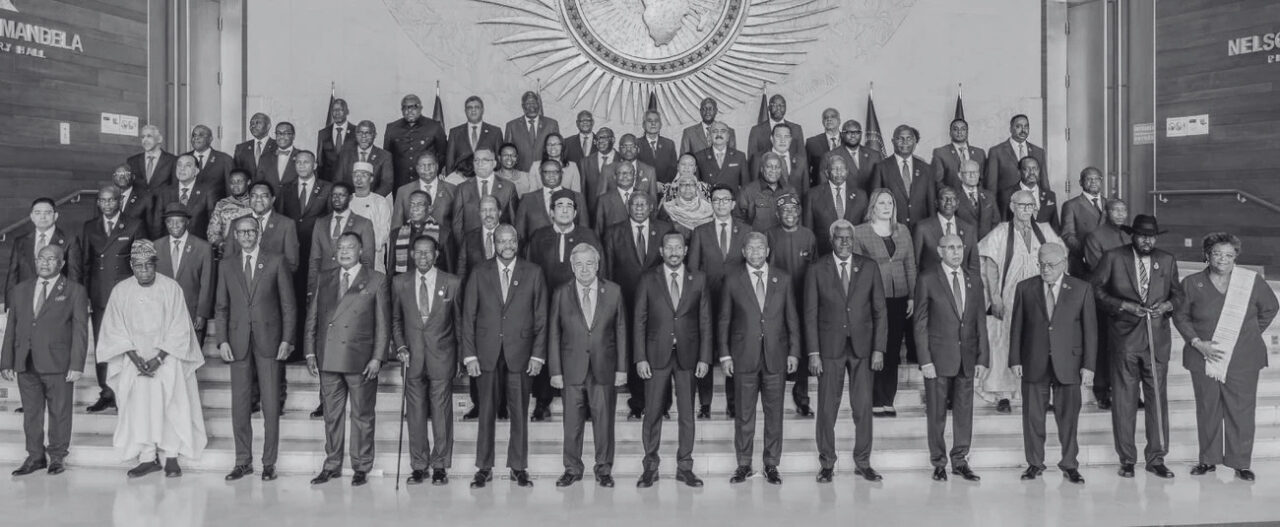
Regional accountability is essential. The AU and EAC must penalise member states that flout term limits and abduct opponents. The AU Charter on Democracy must be enforced.
Civic society, free press and youth support are crucial. Youth must have space to organise and elect themselves without fearing abduction.
External support must have consequences. Development partners must hold aid to democratic standards. Violence around elections should trigger real consequences, not diplomatic expressions of concern.
A radical proposition
Lincoln’s democracy rested on a radical proposition: that ordinary people could govern themselves. DemocracyGhasia inverts this, using popular sovereignty’s language to govern populations into submission.
It holds elections to legitimise predetermined outcomes, writes constitutions to ignore them, promises prosperity while delivering its opposite.
The transformation of authoritarianism in East Africa is approaching completion. What remains uncertain is whether regional and international actors will treat DemocracyGhasia as acceptable adaptation or resist it as the fundamental betrayal it represents.
Democracy in East Africa is not dead. It is held hostage. The question is whether anyone will attempt rescue.
Peseo Lao Pio is a Tanzanian national currently pursuing a Master of Arts degree in Political Science at the Indonesian International Islamic University in Depok, Indonesia. He’s available at pio.peseo@gmail.com. The opinions expressed here are the writer’s own and do not necessarily reflect those of The Chanzo. If you are interested in publishing in this space, please contact our editors at editor@thechanzo.com.


4 responses
I did enjoy this article and the courage that it has been published with… however i think the most critical point that is missing is the link to BIG BUSINESS and that shift is reflected in the USA (where opposition is also threatened and crushed) and other countries, where the billionaire shape-shift has and continues to take place and big business must feed the monster at the helm of the new crusade of wealth. the amounts of imaginary wealth being created by overvalued IPOs and other manipulations is being paid for by the commoners and reducing wealth and welfare across the board. A second cruelty (that largely goes unnoticed) is the tax regime that commences at 300,000/= which is modern slavery. How can “lawmakers” – as they are often referred to in Tanzania – who earn upwards of TZS 18m and much more with all the allowances and travel, etc thrown in – make sure their fellow Tanzanians are taxed from a paltry 300,000/= ?
immediately after making a comment this morning i came across this in the dail newsletter of Nature Briefing:
Communities should shape the economy
In The Common Good Economy, economist Mariana Mazzucato sets out how communities can actively shape economic decisions and not just endure their consequences. Mazzucato challenges the idea that economic policy should remain the exclusive domain of detached experts and corporate elites and calls for markets and governments to reorganize their systems around social needs. If her vision was put into practice, “it would directly confront today’s economic power structures, thus opening the path towards political transformation”, writes economist Clara Mattei in her review. “That is a good thing.”
Nature | 7 min read
IT COVERS EXACTLY MY POINT in my comments, but much more elegantly…. if you have ever heard of Mazzucato you may know how well respected she is
Well said @Peter Byrne. Reading your two comments awakens the minds to search for more information beyond what is currently happening in East Africa–and that is the beauty of writer-reader engagement as the writer cannot cover everything for media 4-minute read article. Your contribution and debate here is highly appreciated.
The cost of pushing back against authoritarianism is great and even more difficult is to gather the will and determination to build democracy back. There is such widespread and well-founded fear among the population that resistance can take more than one generation to take hold in a way that will bring a meaningful result. Death and injury are inevitable if there is to be a successful movement to dislodge a corrupt militarized government. My heart breaks for the people of Tanzania many of whom were innocent before the government crackdown last year. I thank you for your article and pray that something less than tragedy will bring peace and justice to Africa.