
Dar es Salaam-The treason trial of opposition leader Tundu Lissu continued on August 11, 2026, where he continued his cross-examination of the case’s chief investigation officer, Amin Mahamba. Lissu began by targeting procedural issues in the course of the investigation, then broadened the scope of his questions to link the case to freedoms guaranteed by the constitution, using the witness to showcase the police’s understanding of the key issues.
As he was finishing the day, Lissu brought up his years of interaction with the police, underscoring that the trend never stopped since 2002, when he was arrested in Bulyanhulu for “defending small-scale miners,” alongside his party’s Chief Lawyer, Rugemeleza Nshala, and opposition politician Augustino Mrema.
“For nearly a quarter century, the police force has greatly persecuted me through arresting me and filing false cases against me,” Lissu told the court. “I have been greatly wronged by the Police Force. There has been a campaign of systematic persecution for more than 25 years, I have been persecuted like the way I am currently being persecuted in this case.”
Lissu went into detail on each of the cases over the years, using the phrase “tell the Judges if you know…” as he cross-examined the state witness. He started with the first case, in Bulyanhulu in 2002, then the 2011 case in Nyamongo, both linked to activism for small-scale miners. He then highlighted the 2012 and 2015 arrests in Arusha, and singled out the most intense period, between 2016 and 2017, when he was arrested about eight times.
“For all those years, I have never been convicted of a single offence; I have no criminal record. After all efforts failed, unknown assailants were sent to attack me outside my home in Dodoma,” Lissu said, reminding the court of his 2017 assassination attempt.
“To this day, the Tanzania Police Force has never once asked me what happened. While I was shot, the Police Force banned people from even praying for me to God,” Lissu said in a satirical voice, prompting the court audience and even the witness to laugh. “Even those who volunteered to donate blood were forbidden by the Police Force, so it ended up being Kenyans who had to donate the blood.”
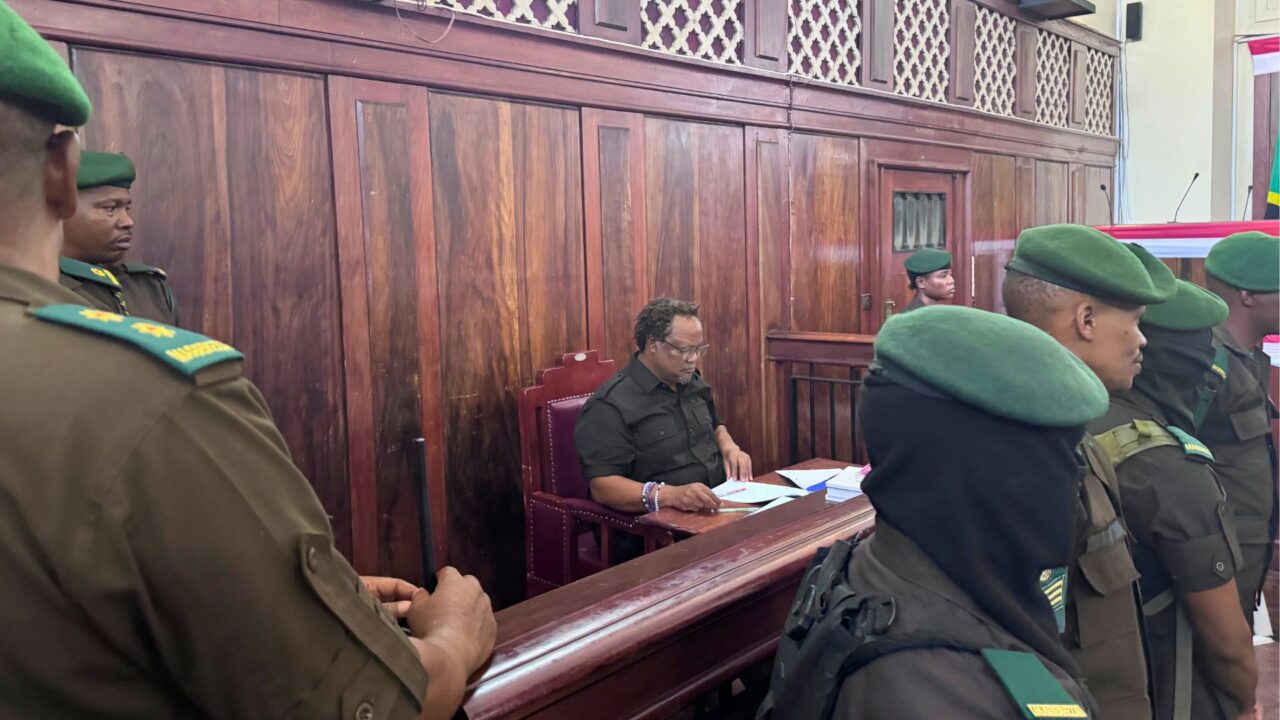
As Lissu was detailing his ordeal, the prosecution lawyer interjected and questioned its relevance, citing that the witness did not know about any of the issues. Lissu responded by saying the witness had correctly answered that he did not know. Lissu underscored that all the cases filed against him were withdrawn midway by the police, and that none of the cases ever stuck.
Procedural Issues
Early in the morning, Lissu started by tackling procedural issues in the course of putting together the case, including who had the mandate to coordinate the investigation, and the key documents used.
One of the issues raised was challenge on prosecution argument that witnesses were threatened, prompting the prosecution to ask the court to hide their identities. In his cross-examination, Lissu challenged the affidavit that had allowed a witness’s identity to be kept secret. Lissu pointed out that during the course of the case, he had asked the witnesses if they had ever received threats, and none of them said yes.
Lissu also went on to challenge the way the witness statement of the Chief Investigator, who is on the stand, was recorded.
Lissu: Exhibit number D15, explain who wrote that statement.
Witness: I wrote it myself.
Lissu: Tell the Judges whether a witness has the authority to write his own statement.
Witness: For any witness, their statement is taken down by a Police Officer, but the relevant provision does not clarify, if the Police Officer is the witness himself, how does it work?
Lissu: So you decided to just write? In that statement, who is it that gave you the caution statement as witness?
Witness: I cautioned myself.
Lissu: That caution statement, was undertaken before which Police Officer?
Witness: I wrote it myself.
Lissu: Is there a section showing the signature of the person giving the statement, did you sign it?
Witness: I signed it.
Lissu: Is there a section for the Police Officer?
Witness: It’s left blank.
Lissu went on to challenge the claim that he had published the video at the center of the case. Using the Cybercrimes Act’s definition of the word “publish”, defined as distributing, transmitting, circulating, and delivering, Lissu asked the witness whether he had done any of the mentioned acts, were the witness said he did.
Lissu: Am I a Director, Employee, or Staff member of Jambo TV?
Witness: I’m not sure.
Lissu: State whether I am a photographer/cameraman or broadcaster for Jambo TV.
Witness: I’m not sure.
Lissu: State whether I have a password to log into Jambo TV’s Youtube
Witness: I’m not sure.
Lissu: You were the Chief Investigator, and you’re not sure about any of this?
Lissu went on to detail that witnesses P and P1 had already confirmed that they livestreamed the video. He also noted that other media outlets were in the room, including Azam TV, ITV, Mwananchi Digital, Arusha One Digital TV, Clouds Media, and Chanzo TV, and asked whether any of them had reported treason to the police.
Lissu: All the journalists who were present broadcasted the meeting through their TVs?
Witness: They broadcasted [it] from Jambo TV.
Lissu: They heard and broadcast these words you’re talking about. A person who receives information about treason is required to report that information to the police, true or not true?
Witness: True.
Lissu: A person who knows about information of treason and [fails to report it] has committed the offense of misprision of treason, Penal Code [Section] 41, is there even one person who reported information about statements of treason?
Witness: There is none.
Lissu: Is there even one person who was arrested by the Police Force for concealing treason?
Witness: There is none.
Lissu: There were many CHADEMA members who were listening at the meeting, state whether even one of them brought forward a report.
Witness: No one did
Lissu: State whether even one of them has been arrested and charged with concealing treason.
Witness: There is none.
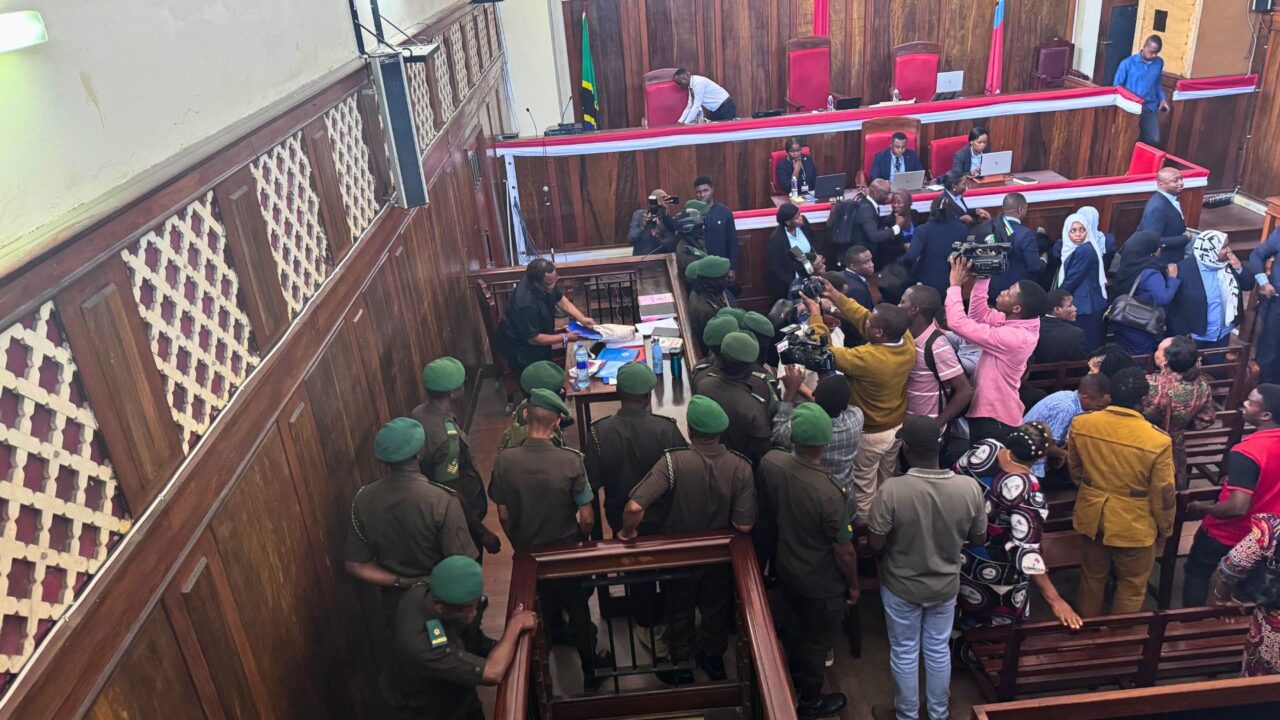
When asked, the chief investigator said he did not involve the Regional Security Officer, officers of the Tanzania Intelligence and Security Service, Dar es Salaam’s regional security committee, State House, the Vice President’s Office or the Prime Minister’s Office in his investigation.
READ MORE: Court of Appeal Deals Blow to Prosecution, Dismisses Revision Bid in Lissu Treason Trial
Asked to identify the DPP official who coordinated the investigation, Mahamba said the DPP had appointed somebody from Dodoma, but he could not remember the official’s name.
Tundu Lissu: Which DPP or which State Attorney coordinated the investigation?
ACP Amin Mahamba: It was the DPP himself. He appointed someone. I said yesterday that I do not know his name. He came from the DPP’s office in Dodoma and had an African name that I have forgotten.
Tundu Lissu: We will go to DPP Mwakitalu for that name. These are serious matters.”
There was laughter in the courtroom following the exchange. Mahamba also said this was his first investigation into a political case, a treason case, or a case involving a Member of Parliament and party leader.
When asked about cybercrime cases, he initially named only the discontinued prosecution involving former CHADEMA chairperson Freeman Mbowe and former party secretary general Dr Wilbrod Slaa. He later said he had handled other cases but could not remember them.
Constitution
In his argument, Lissu put into context key constitutional rights and freedoms, highlighting Articles 15, 18, and 19 of the Tanzanian Constitution, which guarantee the right to freedom and to live as a free person, and freedom of opinion and expression.
He highlighted that his party had called the meeting, at which its chairperson gave remarks, as guaranteed under Article 20(1), which protects a person’s freedom of association. The witness responded to this line of questioning with “I don’t know,” and on the issue of freedom of opinion, he said Lissu’s remarks were meant to intimidate the government.
Lissu spent time detailing his speech, highlighting areas where he said the election system was set up to favor the ruling party, and that since 1995, opposition politicians have faced challenges, including being bombed and killed. He argued that he had said “No reform, no election,” meaning they would not go into an election unless there were changes. For most of Lissu’s questioning on this issue, the witness responded that he did not remember.
Lissu: Do you know the meaning of ‘uasi’ [rebellion]?
Witness: The word “uasi” is the act of betraying your country.
Lissu: Tell the Judges where you got that definition/interpretation from.
Witness: That is the interpretation
Lissu: Here is the official Swahili dictionary, read the meaning of the word “uasi,” read it aloud.
Witness: “An act of breaking the law carried out by a group of people with the aim of changing the political system of the country. An act of opposing those in authority or opposing laws and procedures.”
Lissu: Allow me to read Section 63 of the Penal Code: “A person who, to any assembly, makes any statement likely to raise discontent amongst any of the inhabitants of the United Republic or to promote feelings of ill-will between different classes or communities of persons of the United Republic, commits an offence…”
Lissu went on to read the exceptions set by that same law where it is not considered an offence: to show that the Government has been misled or mistaken in any of its measures; to point out errors or defects in the Government or its policies or the Constitution of the United Republic as by law established, or in any legislation or in the administration of justice with a view to remedying those errors or defects; to persuade any inhabitants of the United Republic to attempt to procure by lawful means the alteration of any matter in the United Republic.
Lissu: If you say “we are tired of being killed because of elections,” that is not an offence under this law? Do you agree with my interpretation or not?
Witness: I do not agree.
Lissu went on to point to Sections 55(1) and 55(2) of the same Penal Code, showing the areas where such actions, when carried out, do not amount to incitement. In his line of questioning, Lissu entered into an argument with the witness over whether the April 3, 2025, internal meeting of CHADEMA was legal.
Lissu: Do parties like CHADEMA have the right to hold public rallies and internal/private meetings?
Witness: They have that right.
Lissu: Tell the Judges whether the meeting of April 3rd was a lawful internal meeting.
Witness: I don’t recall whether it obtained lawful clearance.
Lissu: Is a political party like CHADEMA not permitted to hold an internal meeting without permission?
Witness: Yes, they need clearance/permit in accordance with the PGO [Police General Orders].
Lissu: Give him the PGO, show us.
Judge: You may proceed [with questioning], since the Court will have the opportunity to verify [this later].
Lissu: This is the Chief Investigator in a treason case, it is only proper that he shows us where it is written. If an ACP [Assistant Commissioner of Police] doesn’t know, that’s exactly why we’re being killed.The witness then continued searching through the PGO.
Witness: PGO 402, paragraph 06: “The party or candidate shall inform the local police authorities of the venue and time of any proposed meeting well in time so as to enable the police to make necessary arrangements for controlling traffic and maintaining peace and order.”
Lissu: If a senior police officer like you believes that holding a Central Committee meeting must require permission/clearance, then we are a dictatorship.
An exchange continued, with Lissu highlighting that the PGO is a set of police rules written by the police chief, while the witness pointed to the fact that it is written as part of police law. In the end, Lissu showed that the provision in the PGO falls under the title “Political Parties Election Campaign,” meaning it was not meant to be applied to the day-to-day operations of the party, which are instead governed by political party law.
Lissu also took time to highlight several of the treason cases related to October 29, underscoring that hundreds of them had been removed from court, linking that to the police’s “lack of competence,” as he quoted findings from the Presidential Commission on Criminal Justice Reform.
Outside the proceedings, early in the afternoon, Tundu Lissu asked the court for permission to speak and laid out his frustration that he was not being allowed to talk to party leadership, some of whom are his lawyers. He argued that the majority of them form part of his witness list, and questioned whether the trial could be considered fair if the situation continued.
“I have been completely blocked from speaking with these witnesses of mine, not at the Ukonga prison, not here [either]. Every time I come here, I am put in the lock-up. I am requesting guidance on how I can speak with them, please direct/order that those I need to speak with be [permitted], whether through a court order,” Lissu argued.
For its part, the prosecution responded by asking the judge to treat the matter as off the record, but cautioned that for the judges to act on it now would be to get ahead of the case, since it is only after the prosecution has closed its witness list that the court will decide whether there is a case to answer.
The court also assured Lissu that the matter would be resolved when the time came.