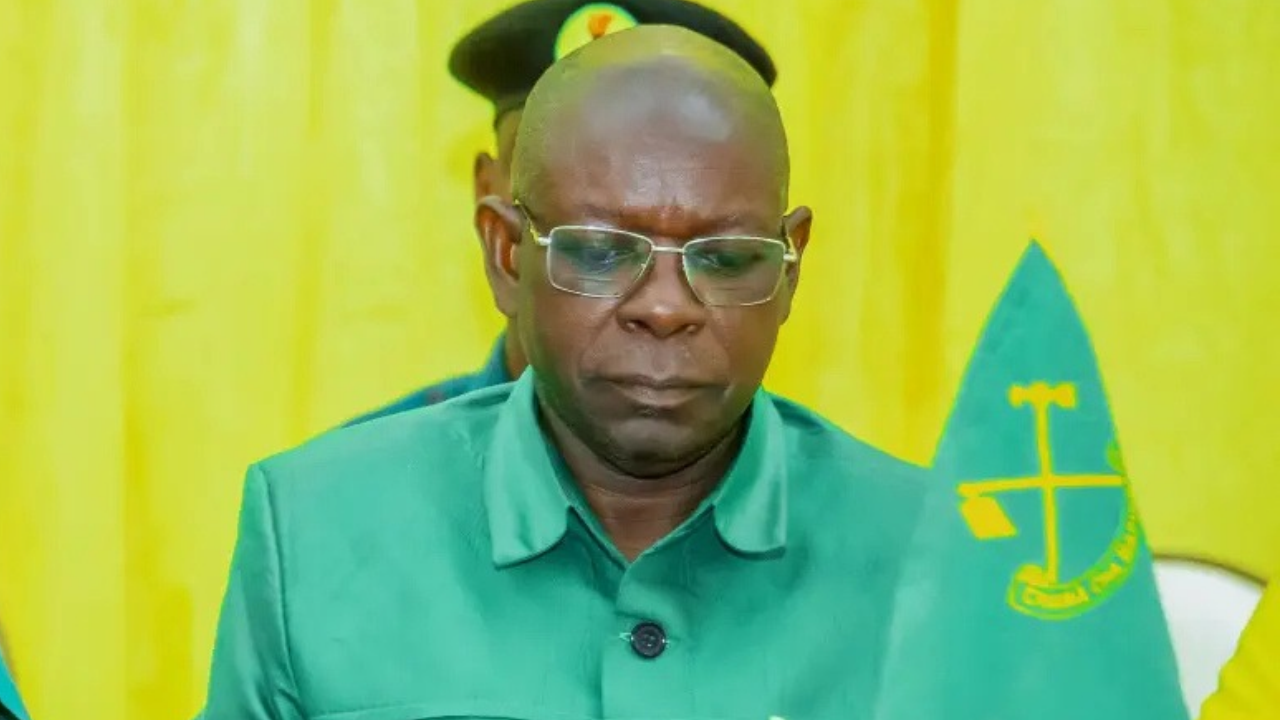

Dar es Salaam — Tundu Lissu’s defence on Wednesday sought to place the treason charge in the context of CHADEMA’s long-running campaign for electoral reforms, with deputy secretary general Amani Golugwa telling the High Court that the party adopted its No Reforms, No Election policy after what he described as “serious failures” in the 2024 local government elections.
Golugwa, called as the third defence witness after CHADEMA secretary general John Mnyika completed his testimony, said regional party secretaries reported problems ranging from the collection and return of nomination forms to the exclusion of opposition agents from polling stations.
He said the reports led party leaders to conclude that CHADEMA should not enter another election without changes to election laws and systems.
The prosecution did not begin cross-examining Golugwa before the court adjourned. State Attorney Ajuaye Zengeli stopped the examination as the witness began referring to reports by international election-observation bodies, and the three-judge panel led by Justice Dunstan Ndunguru ordered the case to resume on Thursday, September 3, at 9 a.m.
The day began with Lissu re-examining Mnyika after the prosecution’s cross-examination.
Lissu first returned to the prosecution’s effort to connect his April 3, 2025 speech to the violence that occurred around October 29, 2025. Mnyika said the suggested connection made no sense because Lissu had been arrested on April 9 and was still in remand custody when the October events occurred.
Job Mrema: “You agree with me that the charge sheet says the position signalled rebellion. What about the events of October 29, 2025?”
John Mnyika: “They have no connection at all with the accused. He was arrested on April 9, and the election events occurred when he had been in prison for a long time. Where does the connection come from?”
Mnyika repeated the defence position that the party’s electoral-reform agenda had been adopted by CHADEMA’s organs and that Lissu did not need to consult him individually before explaining it to aspirants.
READ MORE: Mnyika Rejects Bid to Link CHADEMA’s Reform Campaign to Election Violence
He also maintained that legal and constitutional challenges are not the only means of pursuing political rights. In response to questions about why CHADEMA had not filed a constitutional case, Mnyika referred to a case involving Saed Kubenea, saying it supported his view that political disputes can be pursued politically.
Job Mrema: “The only way for a civilised and sensible person dissatisfied with something is to take it to court, is it not?”
Mnyika: “I do not agree with you.”
The prosecutors questioned Mnyika about the party’s internal structures, a purported CHADEMA ward secretary named Ishengoma Mutembei Barongo, and claims made in a video clip that CHADEMA planned the October 29 violence. Mnyika said he did not know the individual or the clip and could not comment on it.
Mnyika: “It is amusing that government lawyers identify CHADEMA members better than the CHADEMA secretary general.”
Dispute over courts, party funds
Mrema also raised CHADEMA’s small-donation fund, known as ToneTone, asking Mnyika about allegations that more than Sh39 million was disbursed on August 18 and 19 and whether the money had been allocated unfairly. Mnyika said he was hearing that figure from the prosecutor and rejected the suggestion of discrimination.
He said that, because CHADEMA had been barred from activities and its state funding suspended, the party had faced serious constraints. He told the court that paying a security guard who worked daily at the office did not amount to discrimination against other staff.
John Mnyika: “The people practising discrimination are you in government, who stopped CHADEMA’s money. That is why we fight for public funds to remain safe.”
The evidence was not tested with financial documents during Wednesday’s hearing. Mnyika said the party’s accounts were known to the authorities, while maintaining that party officers would have to establish who had authorised any particular payment and why.
READ MORE: Mnyika Tells High Court Lissu’s Speech Carried CHADEMA Policy, Not a Private Plot
Mrema also challenged Mnyika’s view of previous cases involving CHADEMA figures, asking whether he had produced charge sheets or case numbers in support of his claims that the cases were fabricated. Mnyika replied that he had not produced those documents, saying he was not a prosecution witness.
Job Mrema: “Did you bring the charge sheets?”
Mnyika: “I did not. I am not a witness for the Republic.”
Mnyika completes his evidence
After the prosecution finished its questions, Lissu began re-examination. Mnyika read a provision of the Media Services Act and said it protects journalists’ freedom to seek, publish or decline to publish information, which he said made media workers, rather than politicians, responsible for publication decisions.
Tundu Lissu: “You were asked about how the Jambo network broadcast the coverage, and you said the decision to broadcast was the journalists’ decision, not yours?”
Justice Karyemaha: “We recorded that the witness said publication was their own decision and that nobody compelled them.”
Lissu: “So you record proceedings very well. Let us proceed. I am charged with treason; I am in no hurry.”
Mnyika also said the phrase uasi can refer to resistance within an institution or opposition to an oppressive system, rather than only rebellion against the government. He maintained that his account of the October election was distinct from Lissu’s April speech, which he said addressed CHADEMA’s call for reform.
John Mnyika: “The aim was to unite Tanzanians and stakeholders so that the government would agree to enable a free and fair election, and if it did not agree, the position was ‘No Reforms, No Election.’”
READ MORE: Court Allows Lissu to Re-examine Himself as Mnyika Opens Defence Case
Mnyika explained that he was nominated by the party chairperson but confirmed by CHADEMA’s Governing Council, and said he is accountable to the Central Committee and Governing Council rather than personally to the chairperson. He also said seeking political power is among, but not the only, objectives of the party.
Justice Ndunguru released Mnyika after the re-examination, allowing him to resume his other duties. The court then adjourned for about 90 minutes to allow Lissu to prepare the next witness.
Golugwa opens up
On the court’s return, Golugwa took the oath. He described aspirants as CHADEMA members who either had contested or been cleared to contest for councillor, parliamentary or presidential positions in 2020 and retained that ambition, or intended to seek nomination in the party’s 2025 internal processes.
He said the April 3, 2025 meeting was convened to explain the No Reforms, No Election position to those aspirants. According to Golugwa, he was serving as CHADEMA’s Northern Zone secretary when regional secretaries were asked to report on the 2024 local government elections and recommend what the party should do.
Amani Golugwa: “Because of the nonsense I saw, the party should not participate in any other election without pressing for changes in the electoral system.”
Justice Ndunguru asked Golugwa to repeat the phrase, and the witness restated it. He said regional secretaries from other areas delivered reports with similar concerns, after which the Central Committee considered the reports and adopted the party position.
READ MORE: Lissu Tells Treason Court He Has No Faith in Judges on Election Disputes
Golugwa said former chairperson Freeman Mbowe announced the position publicly on December 10, 2024, using the English phrase No Reforms, No Election. This chronology differs slightly from Mnyika’s earlier account, which placed the Central Committee’s emergency meeting on December 2 and 3, 2024; neither was examined on the apparent date difference during Wednesday’s session.
Exclusion and irregularities
Golugwa alleged that opposition candidates in the 2024 local government elections encountered obstacles at several stages. He said electoral officials at times avoided giving nomination forms to CHADEMA candidates or refused to receive completed forms, and that party candidates were disqualified through what he described as manufactured objections.
Amani Golugwa: “A candidate writes 1971, and they add a 9 and tell them they were born in 1979. They disqualify them. Others were told they could not read or write, or that they were not citizens.”
He further said the campaign schedule favoured CCM and that opposition meetings were sometimes placed in remote areas. His testimony alleged that CHADEMA polling agents who had been sworn in did not find their documentation at polling stations, while CCM agents had the necessary papers.
Golugwa said this left CHADEMA agents outside voting locations while the process continued. He told the court that, in his view, ballots were then inserted while opposition agents were absent.
Golugwa: “Our agents were stopped from entering polling stations and remained outside. During the time they were not inside, that is when the nonsense of putting in ballots happened.”
READ MORE: Lissu Cross-examination Opens With Clash Over Speech, Publication and the Limits of Protest
He said CCM won 99.2 per cent of villages, streets and hamlets nationally, with opposition parties taking 0.8 per cent, and that CCM won 98.7 per cent in the Northern Zone.
Election-reform argument
Lissu then asked Golugwa whether he had seen similar problems in past general elections. Golugwa said he had witnessed comparable difficulties in 2015 and 2020 and in what he called the 2025 “so-called election,” particularly concerning nomination forms and the disqualification of opposition candidates.
He told the court that local government election regulations were made by the minister responsible for the President’s Office, Regional Administration and Local Government, and that district directors and local government officers supervised aspects of the elections. He said those officials and the minister were appointed under the executive branch.
Golugwa started to refer to 2025 reports by the Southern African Development Community, African Union, European Union and the Thabo Mbeki Foundation. He alleged that the African Union report found Tanzania’s election fell short of democratic standards and that observers saw voters being handed ballots by officials.
State Attorney Zengeli asked to adjourn before the evidence on the reports could be developed. Justice Ndunguru granted the request and ordered the case to resume on Thursday, September 3, at 9 a.m., with Golugwa’s evidence continuing.