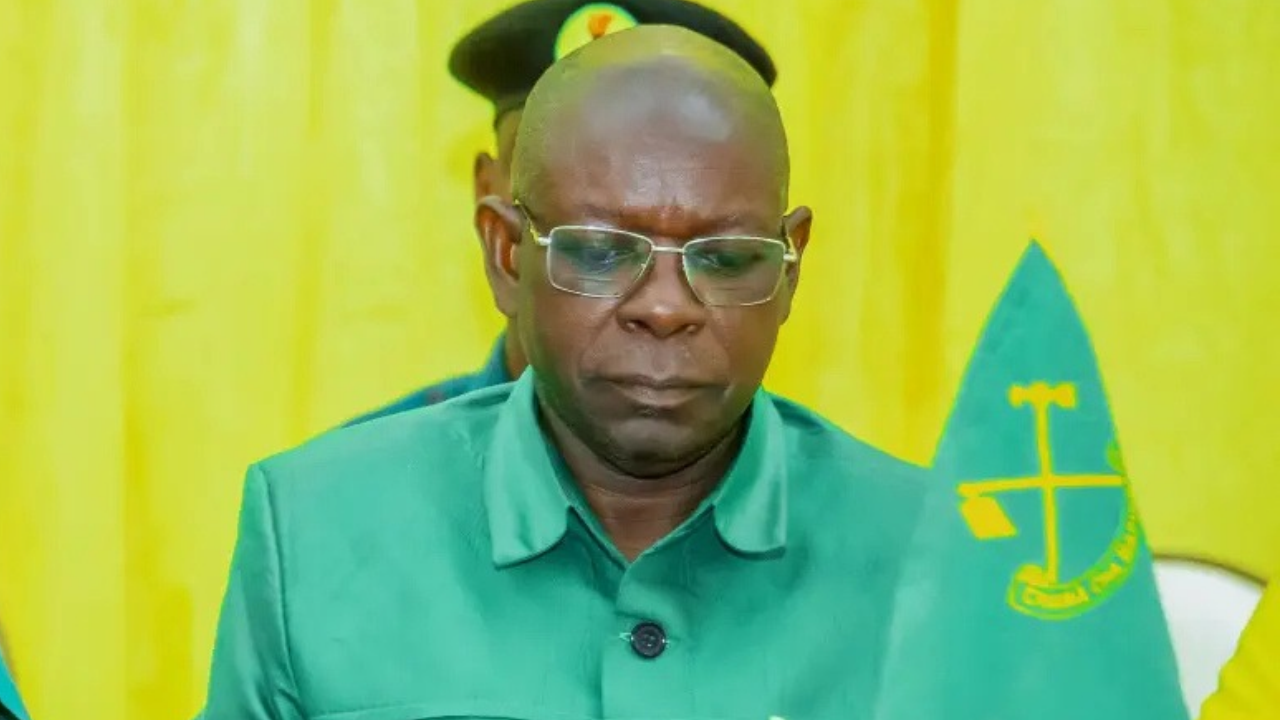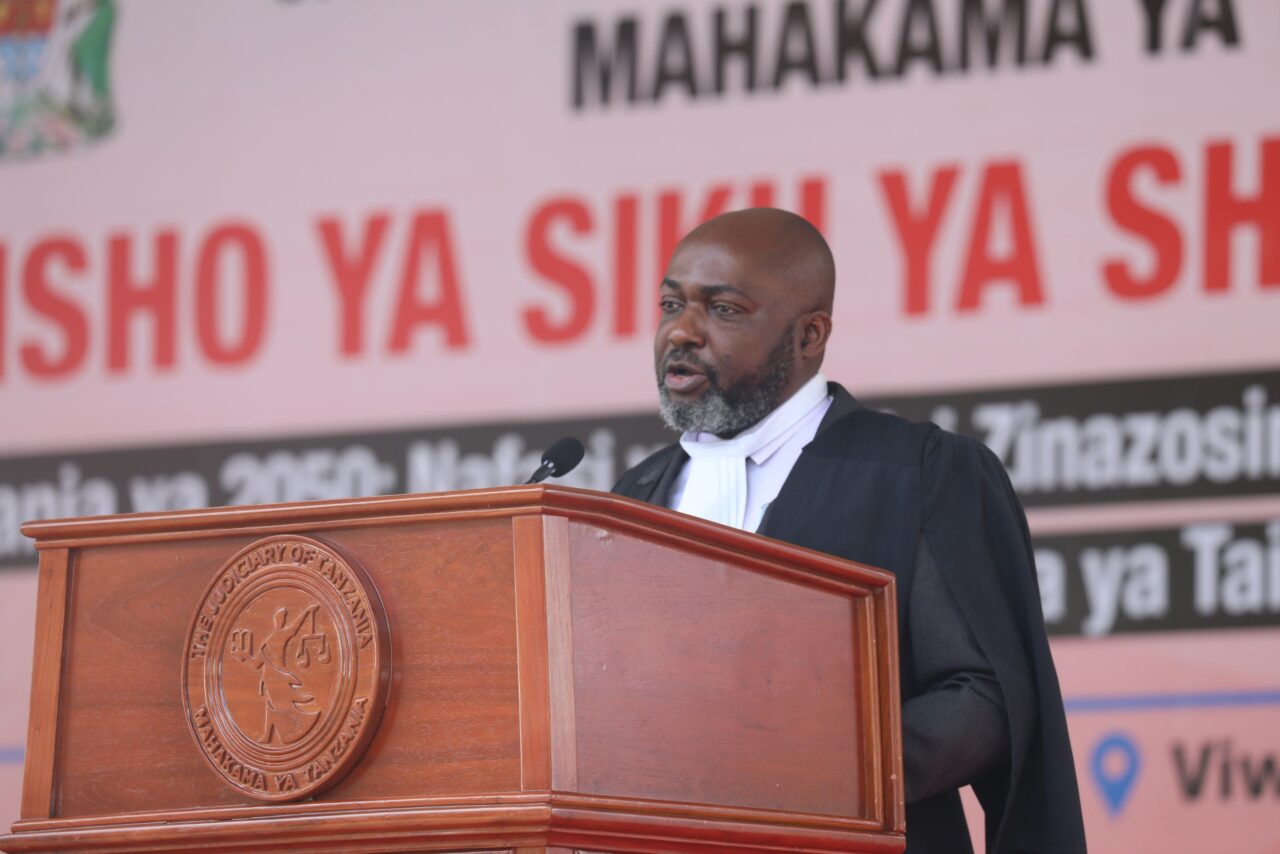

Zanzibar – President Hussein Ali Mwinyi on Tuesday swore in ACT-Wazalendo national chairperson Othman Masoud Othman as Zanzibar’s First Vice President at State House, completing the appointment that restored the opposition party to the Government of National Unity.
The ceremony followed President Mwinyi’s September 18 reappointment notice and was confirmed by the Zanzibar State House. Othman took the constitutional oath of allegiance and further oaths of office and Revolutionary Council service.
The appointment makes Othman the President’s principal adviser and a member of the Revolutionary Council, while leaving the detailed functions of the office to be assigned by the President.
Under Article 39 of Zanzibar’s Constitution, the President appoints the First Vice President after consulting the qualifying party that came second in the presidential election; the office is distinct from the Second Vice President’s role as leader of government business in the House of Representatives.
Othman, a lawyer and former Zanzibar Attorney General, previously served as First Vice President from 2021 until the 2025 election. He returned after ACT-Wazalendo’s National Leadership Committee selected a nominee on September 16, a process followed by the President’s formal appointment two days later.
READ MORE: Othman Returns as First Vice President, Restoring Zanzibar’s Unity Government
The office had remained vacant while ACT initially stayed outside the unity-government arrangement following the 2025 election, whose outcome the party disputed. ACT’s presidential candidate was recorded second in the official result, a position that made the party constitutionally central to the First Vice President appointment process.
CCM and ACT signed a joint reconciliation declaration on July 9, after months of dialogue. President Mwinyi later launched a joint dialogue committee to take the agreement forward, but its detailed terms, timetable and proposed institutional reforms have not been made public.
At the ceremony, Mwinyi described the oath as the result of the parties’ reconciliation and as an important step in applying the 1984 Constitution, as amended in 2010. He said the Government of National Unity had now been formed, but added that reconciliation was not the end of the journey, but rather the beginning of work.
“Reconciliation is not the end of the journey,” President Mwinyi said. “Reconciliation is the beginning of work. We have done the work of building a political bridge. Now is the time to cross that bridge and move together in building Zanzibar.”
The President said the government should now concentrate on economic growth, youth employment, women’s empowerment, tourism, the blue economy, investment, infrastructure and social services. He also credited the dialogue to Zanzibar’s own political leaders and said all political parties should support broader reconciliation.
READ MORE: Joint Committee Takes Up Zanzibar Reconciliation Agenda
“Something to be proud of is that this reconciliation was reached without involving any person or institution from outside the country,” Mwinyi added. “Indeed, this is proof of our genuine commitment to putting the nation’s interests first.”
Othman used his first address to argue that the Government of National Unity should not be understood as a mechanism for political parties to share posts. “It was not, and is not, the purpose of the Government of National Unity to be an instrument for sharing positions among political camps,” he said shortly after being sworn in.
He described the arrangement instead as a vehicle for “genuine reconciliation, solidarity and national unity,” recalling the 2010 constitutional changes that first created the unity-government structure. He said filling the government after the ceremony and appointing ministers would not complete Zanzibar’s political journey, but begin work requiring commitment, truth, understanding and public participation.
In a metaphor drawn from togwa, a fermented millet drink whose water and grain separate when left still, Othman urged Zanzibaris not to allow political differences to divide them. He called on political parties, civil servants, lawmakers, courts, local authorities, religious leaders, media and civil society to carry out their respective responsibilities.
READ MORE: Ruling Party and Opposition Sign Major Reconciliation Deal in Zanzibar
“This is not a political process for the benefit or advantage of parties,” Othman cautioned. “It is a process of looking at the state of the world, changes in global politics, major economic changes, changes in the financial system and technological changes moving at great speed.”
The ceremony was attended by former President Ali Mohamed Shein, Second Vice President Hemed Suleiman Abdulla, senior CCM and ACT leaders, diplomats and religious representatives. It also began with a minute of silence for Fatma Karume, the wife of Zanzibar’s first president, Abeid Amani Karume, who died on Monday.
The oath gives the reconciliation process an institutional expression and restores the constitutional power-sharing arrangement. Whether it delivers the dialogue, trust-building and reform envisaged in July will depend on the parties’ next steps, including the still-undisclosed work of their joint committee.