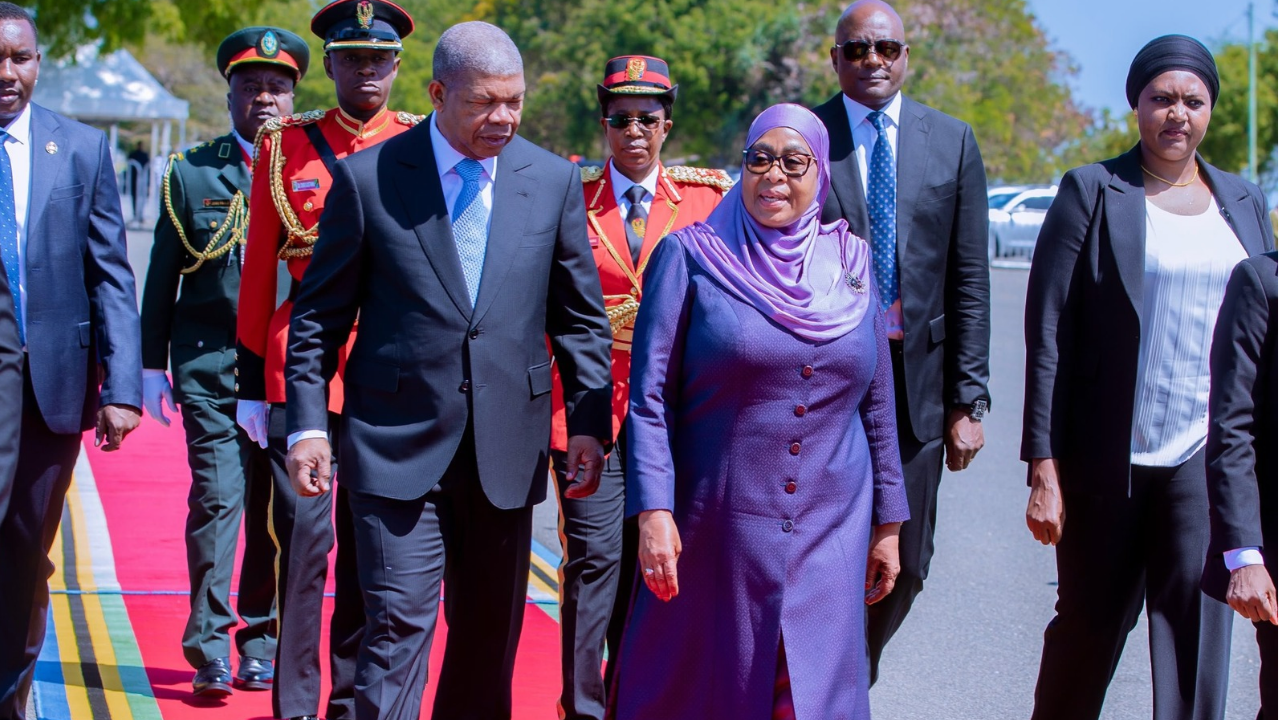

Moscow – African leaders at the Third Russia–Africa Summit pressed for investment that creates jobs, transfers technology and processes the continent’s resources locally, setting an exacting test for the new partnership plan discussed as Prime Minister Mwigulu Nchemba represented President Samia Suluhu Hassan.
“Africa did not come to ask for help,” Burundi President Évariste Ndayishimiye, the African Union chairperson, told the plenary. “Africa came to strengthen partner ties with its friend, the Russian Federation.”
His message, echoed by leaders from across the continent, was that Africa wants partnerships which turn agricultural, mineral and energy resources into domestic production, skills and higher-value exports. It was a central theme at the Moscow gathering, held under the banner For Peace, Security and Development.
The summit was the third since the Russia–Africa Partnership Forum began in Sochi in 2019, and followed the 2023 St Petersburg meeting. African Union and Russian officials had said in July that they were reviewing the previous 2023–26 framework, identifying gaps and preparing a new 2027–29 action plan for Moscow.
President Vladimir Putin presented Russia as a partner in food, energy, education, technology and security. He said Russia–Africa trade had exceeded US$27 billion in 2025, that Russian universities had about 40,000 African students, and that Russia had supplied more than 15 million tonnes of grain to the continent last year.
READ MORE: Tanzania’s PM Mwigulu Nchemba to Represent President Samia at Russia–Africa Summit in Moscow
He also said Russia would adopt a declaration on cooperation in artificial intelligence and continue work in health, epidemic response, agricultural technology and logistics.
Ndayishimiye set a different measure of success: productive investment, faster infrastructure, agriculture and energy schemes, skills exchange and market access. He said Africa had to move beyond exporting crude materials and build value chains that allow its young population to find work at home.
“Africa will never be satisfied with merely exporting crude materials,” he said. “We have to develop our own potential, modernise agriculture, strengthen the energy sector [and] logistics routes.”
The same demand came from other delegations. Central African Republic President Faustin-Archange Touadéra called for plants, roads, schools and hospitals, while Namibia’s President Netumbo Nandi-Ndaitwah said the relationship must move “beyond conference rooms and declarations of intent” towards joint ventures, technology transfer and skills.
The agenda has a direct domestic context for Tanzania as its bilateral relations with Russia, formally established in 1961, cover education, defence, trade and investment, tourism, aviation and cultural exchange.
READ MORE: Putin Calls for Stronger Russia–Tanzania Trade as Samia Visits Moscow
But trade is heavily weighted towards purchases from Russia. The Tanzania-reported UN Comtrade series for 2024 recorded US$295.3 million in imports from Russia, compared with US$9.0 million in exports.
The figures use different import and export valuations, but they illustrate why calls for manufacturing capacity, market access and investment carry particular weight.
The proposed 2027–29 action plan is intended to be the summit’s implementation vehicle. The previous 2023–26 plan already envisaged business missions, investment-promotion and protection arrangements, collaboration with the African Continental Free Trade Area Secretariat, national-currency settlements, transport links and cooperation on mineral beneficiation.
The question for governments and businesses is whether the next plan produces projects that meet those ambitions. No Tanzania-specific investment, trade or technology agreement was announced during the plenary.
The areas discussed nevertheless overlap with those Tanzania and Russia set out at their second intergovernmental commission in 2025: trade, logistics, transport, energy, agriculture, investment, tourism and education.
READ MORE: Tanzania’s Top Diplomat Meets Russia’s Sergey Lavrov
For agriculture, the summit’s emphasis on fertiliser, machinery and technology speaks to productivity and food-security concerns; for universities and young people, the discussion of scholarships, science and AI points to human-capital cooperation.
Putin said 85 per cent of Russia–Africa settlements were now in roubles and described this as protection from what he called “outside pressure.” He also said Russia had military or military-technical agreements with 45 African countries, while reiterating Moscow’s support for “African solutions to African problems.”
Peace and security ran alongside development throughout the summit. Speakers referred to conflicts in Sudan, eastern Democratic Republic of Congo, the Sahel, Libya, the Horn of Africa and Cabo Delgado in northern Mozambique, arguing that insecurity blocks investment and economic transformation.
The African Union and Russia had already identified those questions, alongside food security, health, energy and infrastructure, in their July consultations. They also reiterated support for Africa’s position on reforming the UN Security Council and international financial institutions.