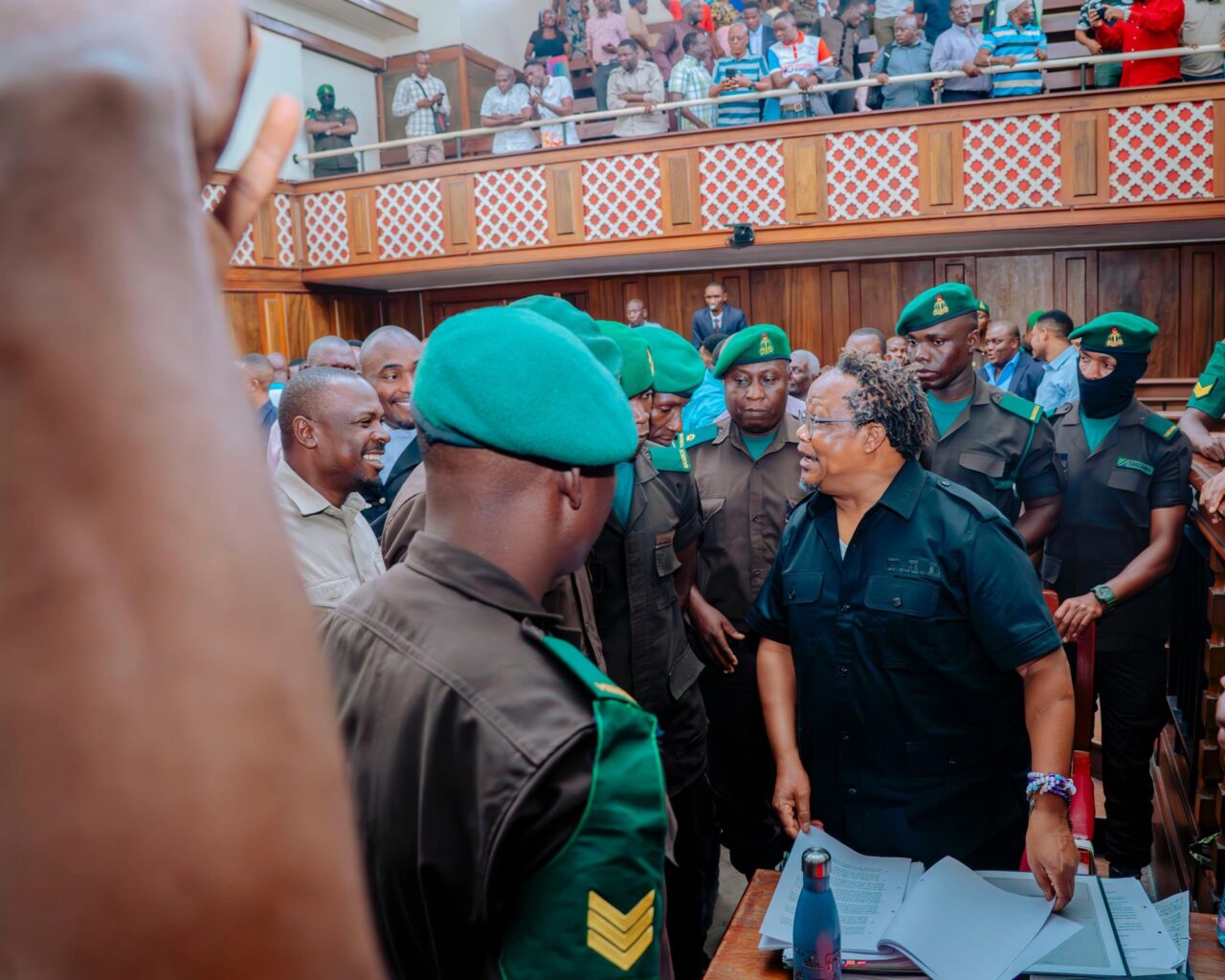

Zanzibar – President Hussein Ali Mwinyi has reappointed ACT Wazalendo national chairperson Othman Masoud Othman as Zanzibar’s First Vice President, filling an office left vacant after the party initially declined to enter the Government of National Unity following the disputed 2025 election.
The appointment took effect on September 18, and Mr Othman is due to be sworn in at State House on September 22, according to the official announcement from the Zanzibar Revolutionary Council.
The move is the clearest institutional consequence so far of the reconciliation process between the ruling Chama cha Mapinduzi (CCM) and ACT Wazalendo.
It follows ACT’s September 16 National Leadership Committee meeting, at which the party selected its nominee, and President Mwinyi’s September 14 launch of a joint CCM-ACT dialogue committee to implement their political agreement.
Mr Othman is a lawyer, former Zanzibar Attorney General and civil servant of about three decades.
READ MORE: Joint Committee Takes Up Zanzibar Reconciliation Agenda
He was First Vice President from March 2021, after the death of ACT Wazalendo national chairperson Seif Sharif Hamad, until the 2025 general election; he was also the party’s presidential candidate and remains its national chairperson.
What the office means
The First Vice President is central to Zanzibar’s constitutional power-sharing structure, although the office holder acts within functions assigned by the President.
Article 39 of the 2010 consolidated Zanzibar Constitution provides that the President appoints a First Vice President after consulting the party that placed second in the presidential vote, provided it secured at least 10 per cent of the vote.
The Constitution describes the First Vice President as the President’s principal adviser. By contrast, the Second Vice President, who comes from the President’s party, is also a principal adviser to the President and leader of Government business in the House of Representatives, making the First Vice President’s executive role dependent on duties allocated by the President.
The constitutional arrangement emerged from the 2010 referendum that created the Government of National Unity, or GNU. It worked from 2010 to 2015, but collapsed after the 2015 poll was annulled, and the opposition boycotted the 2016 rerun.
Why ACT joined late
ACT disputed the October 2025 election that returned President Mwinyi to office and initially did not nominate a First Vice President, although it had secured the constitutional basis to participate in the GNU.
READ MORE: Ruling Party and Opposition Sign Major Reconciliation Deal in Zanzibar
Under Article 39A, the President may leave that office and opposition ministerial positions vacant if the eligible party does not provide a nominee within seven days of taking office.
The party did not state a detailed reason for its change of position in its September 17 public notice, which confirmed only that its national leadership had made a nomination.
However, the decision followed eight months of talks facilitated by retired presidents Amani Abeid Karume and Ali Mohamed Shein, and the July 9 Joint Statement committing CCM and ACT to dialogue, trust-building and institutional reforms.
That agreement did not allocate Government posts. Instead, it contemplated a joint committee to examine an agreed agenda and later the establishment in law of an implementation mechanism, with possible reforms to the constitution, election management, justice delivery, the civil service and local government.
The 10-member dialogue committee now has three months, with a possible limited extension, to organise its work and report to President Mwinyi. Its detailed terms of reference and the sequence of any proposed reforms have not been made public.
READ MORE: Zanzibar’s New Maridhiano – Peace Pact or Managed Accommodation?
Mr Othman’s return, therefore, completes a constitutional step that had been delayed since the election and gives ACT a formal place in the administration while the dialogue continues.
It does not, by itself, settle the questions that the joint accord identifies, including how reforms will be designed, whether a statutory implementation body will be created, and how citizens and civic organisations will participate.
For Zanzibar, the appointment reconnects the GNU to the party competition that the 2010 constitutional changes were intended to manage.
President Samia Suluhu Hassan attended the July signing, giving the process wider national political weight, but the GNU remains a Zanzibar constitutional arrangement for the archipelago’s non-Union government.
The immediate test is whether the appointment and the committee’s work produce publicly defined reforms and a durable implementation mechanism.
Earlier reconciliation agreements, including the 1999 and 2001 Muafaka accords and the 2010 Maridhiano settlement, show why implementation has mattered as much as political agreement in Zanzibar’s history.