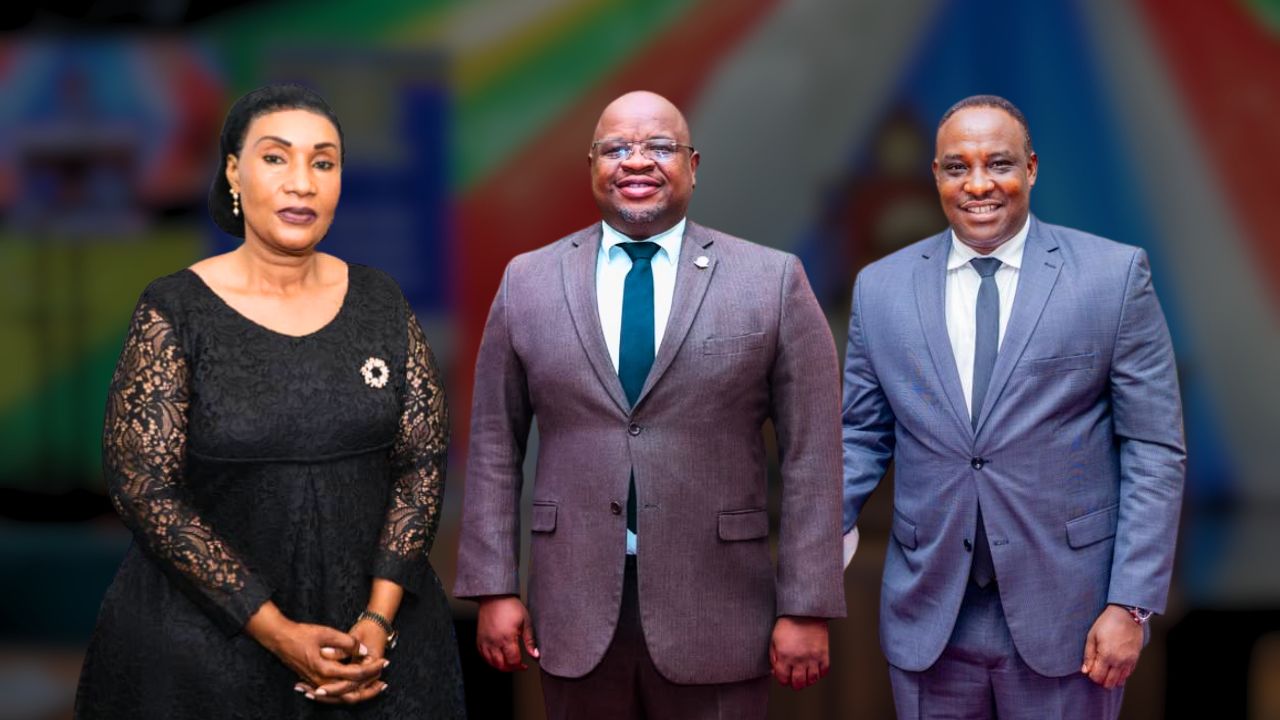

Dar es Salaam – Two prominent Tanzanian lawyers have taken the significant step of challenging the legality of the nation’s recent general election before the East African Court of Justice (EACJ).
In a detailed reference filed in Arusha, advocates Tito Elia Magoti and Bob Chacha Wangwe argue that the October 29, 2025, polls were marred by widespread irregularities that contravene the East African Community (EAC) Treaty’s core principles of democracy, rule of law, and transparency.
The reference, a copy of which has been reviewed, names the Attorney General of Tanzania and the Secretary General of the EAC as respondents. It alleges that the actions and omissions of the state during the electoral process amounted to a serious violation of Articles 6(d), 7(2), and 8(1)(c) of the EAC Treaty.
These articles obligate partner states to uphold good governance, democracy, and human rights, and to refrain from actions that could jeopardise the Community’s objectives.
The lawyers detail a litany of alleged failures by the Independent National Electoral Commission (INEC) and the Zanzibar Electoral Commission (ZEC). These include the “systemic and strategic breakdown of electoral machinery,” evidenced by the widespread failure of biometric verification systems, the issuance of multiple ballots to single voters, and the deliberate obstruction of independent observers.
READ MORE: Tanzanian President’s Election Probe Faces High Court Challenge Over Claims of Bias and Illegality
The reference also points to the last-minute relocation of polling stations and the failure to produce granular, station-level results (Form 21) to verify the final tally.
These allegations echo the widespread concerns that followed the contentious election, which saw significant unrest and a deadly crackdown on opposition protests on October 29, 2025.
The aftermath of the election was marked by mass arrests, treason charges against hundreds of youths (many of which were later dropped), and the establishment of a government commission of inquiry by President Samia Suluhu Hassan into the violence.
The events prompted international concern, with the Commonwealth appointing former Malawian President Lazarus Chakwera to mediate the political crisis.
A key complaint in the legal filing is the hostile environment created for election observers. The reference claims that both local and international monitors were systematically obstructed, with some being denied accreditation or receiving it too late to be effective.
READ MORE: Tanganyika Law Society Sues Tanzanian Government Over Post-Election Curfew
Party agents, particularly from the opposition, were allegedly prevented from entering polling stations in key areas like Dar es Salaam, Arusha, and Zanzibar, or had their observation time arbitrarily limited. The lawyers argue that this “dismantled the essential oversight mechanisms required for a genuine democratic exercise.”
The filing also questions the independence of the electoral commissions, noting that their top officials are appointed by the President, who was also a candidate in the election. This, the applicants contend, raises serious doubts about the impartiality of the electoral management bodies.
Speaking to The Chanzo on January 7, 2026, Mr Magoti explained the decision to approach the regional court. He cited limitations within the domestic legal system, where presidential election results cannot be challenged in court and the judiciary is restricted from hearing cases arising from the electoral commission’s decisions.
“We believe that violations of the Treaty must be examined by that organ, which is the East African Court of Justice,” Mr Magoti stated.
“We are also concerned that in the context of our courts, it raises doubts about our courts’ ability to examine any issue arising from elections,” he added. “Our expectation is that justice will be done. The court [EACJ] has an important duty to protect the values that have been outlined in the Treaty establishing the Community.”
The case represents a significant test for the EACJ’s role in upholding democratic principles within member states. By framing electoral integrity as a regional treaty obligation, the lawyers are seeking to hold the government accountable to standards that transcend national legal barriers.
The reference asks the court to interpret whether the alleged conduct amounts to a violation of the EAC Treaty and its foundational commitments to good governance.