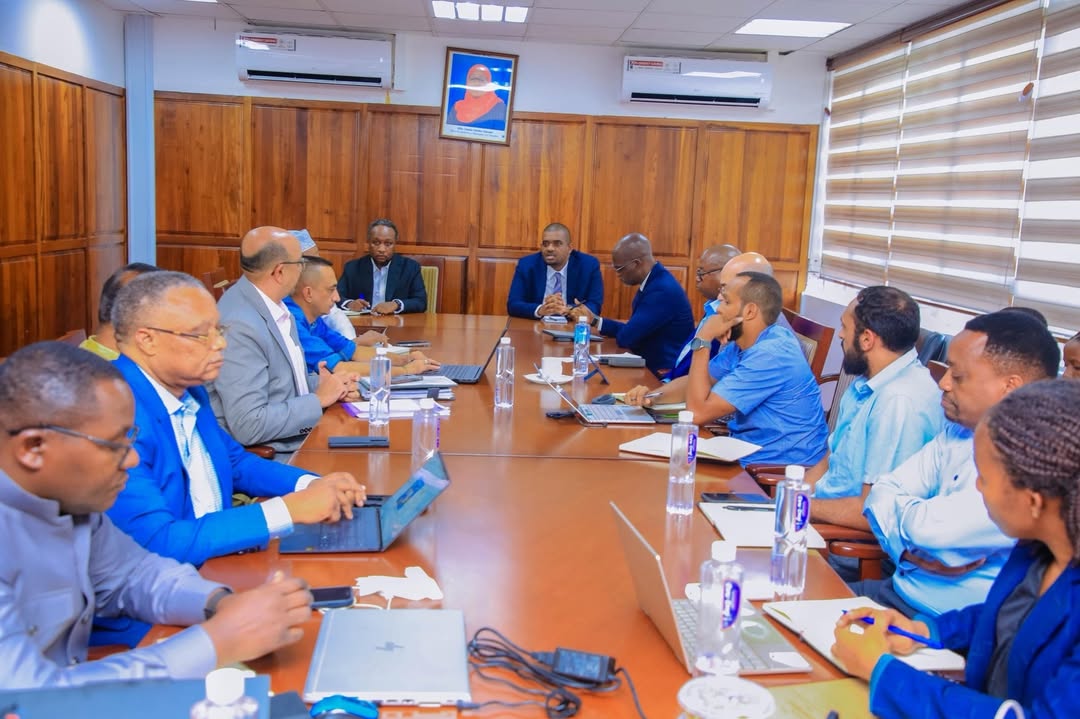

Dar es Salaam. The Government of Tanzania has launched a national programme to strengthen collaboration between employers and vocational training institutions and universities, aimed at producing graduates equipped with practical, market-relevant skills and accelerating Tanzania’s industrial and economic transformation.
Speaking at the launch held at the Julius Nyerere International Convention Centre, February 9, 2026, Vice President Dr. Emmanuel Nchimbi said the initiative lays a strong foundation for building a generation of graduates who can secure employment, create their own jobs and contribute meaningfully to national development.
“The programme is designed to transform education from a theory-based model to one that emphasizes skills, practice, innovation and wealth creation,” Dr Nchimbi said. “At its core, it promotes competency-based training and broad participation of the productive sector, while ensuring close alignment between education delivery and the country’s economic priorities.”
He added that the partnership will enable the private sector to support education through funding research, offering scholarships and providing training opportunities aligned with labour market needs.
Dr Nchimbi noted that about 34 per cent of Tanzania’s population is aged between 15 and 35, and more than 2.1 million students are currently enrolled in higher education, technical and vocational institutions.
“This places a responsibility on Government and stakeholders to ensure our education system produces competent graduates who are employable, entrepreneurial and capable of driving national progress,” he said.
READ MORE: New Strategy Aims to Tackle Foundational Learning Crisis in Tanzania’s Primary Schools
The programme seeks to expand hands-on training opportunities for students, stimulate innovation and boost productivity in local industries, thereby strengthening the national economy.
Dr Nchimbi emphasized that in today’s world, universities can no longer operate as “islands of theory,” and industries cannot grow without a skilled workforce able to adapt to technology and market competition. He said the Government has prioritized developing skills, knowledge and employability across all education levels, recognizing that sustainable development depends on a well-educated and capable human resource base.
The launch comes as Tanzania continues implementing a new curriculum for primary and secondary schools under the Education and Training Policy of 2014 (2023 Edition), which emphasizes self-reliance and practical life skills.
Education Minister Adolf Mkenda said the programme was developed in consultation with multiple stakeholders, including the Vocational Education and Training Authority (VETA), employers and curriculum experts. He stressed that strong collaboration is essential to ensure graduates acquire skills demanded by the job market.
“We are already seeing results of industry collaboration,” Prof Mkenda said, citing VETA Moshi graduates who have secured employment both locally and in countries such as Namibia, Guinea-Conakry, Mauritania, Congo and Ghana. He added that the new programme will encourage more employers to participate, help parents appreciate the value of skills training, and ultimately contribute to economic growth.
Meanwhile, Tanzania Startups Association (TSA) Chief Executive Officer Zahoro Muhaj urged the Government to introduce incentives for employers to take on more trainees.
“Many employers say they incur costs training young people, only for them to leave for other jobs,” Muhaj said. “It is important to design policy incentives that make it worthwhile for companies to invest in training. In countries like South Korea, government support plays a key role in sustaining university–industry partnerships.”
The Government says the new partnership framework marks a major step toward building a skilled, innovative and competitive workforce for Tanzania’s future.