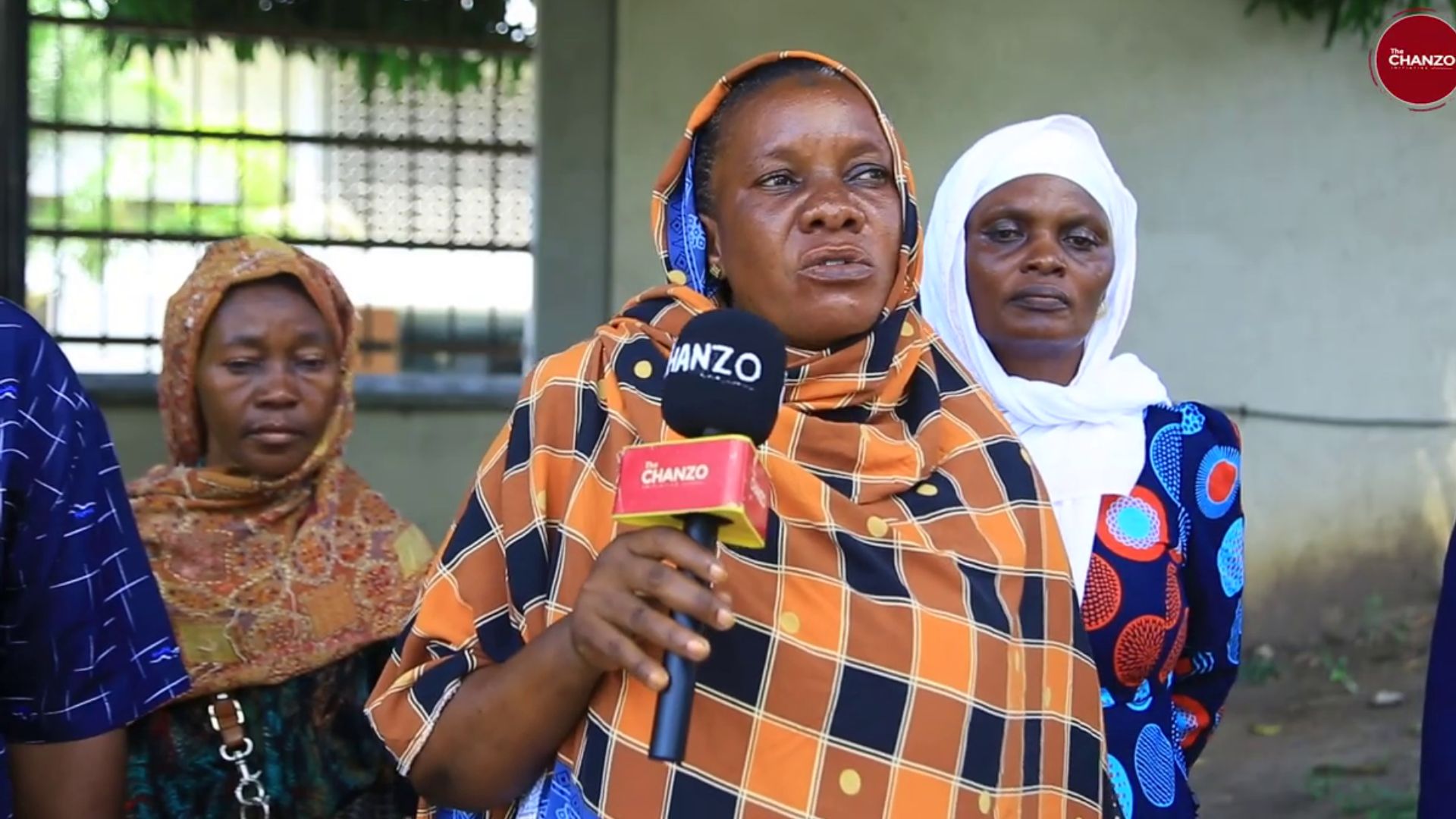

In the bustling town of Kibaha, in Tanzania’s Pwani region, the air in a community meeting is thick with unspoken grief and simmering resentment. Rehema Magesa, a mother of seven-year-old twins, takes a microphone to speak. Her voice is steady, but her words carry the weight of a burden borne alone.
“I am everything—I am me, I am the father, I am the mother,” she says, her testimony captured during a community dialogue in the village of Boko Mnemela hosted by The Chanzo, in partnership with the European Union Delegation to Tanzania.
Her sons do not go to school. While primary education is state-funded, the cost of uniforms and books is a mountain she cannot climb. “The children stay home because I can’t afford the expenses,” she explains. The father, she says, “has already abandoned us.”
Husna Musa, another mother at the meeting, echoes the sentiment. The father of her children? “He fled to another country. He doesn’t provide any support.”
Their stories are not isolated anecdotes; they are the human face of a national crisis. In Tanzania, 28 per cent of all households are now headed by women, a significant increase from 23 per cent at the turn of the millennium.
A staggering 40 per cent of children born to a married couple will experience the absence of their father by the age of 10.
When the young men at the meeting were challenged, their responses were a cocktail of defensiveness and despair. They don’t deny their absence, but they point to a different culprit: an economy that has locked them out.
“Young women say we truly don’t have anything,” one man retorts, blaming a lack of jobs for their inability to settle down and build a family.
The provider’s paradox
Experts describe this as “the provider’s paradox.” Across East Africa, the traditional definition of manhood is inextricably linked to the ability to provide financially.
Yet, with youth unemployment as high as 26 per cent and nearly 72 per cent of the workforce in the precarious informal sector, that ideal is increasingly unattainable. For many men, the shame of being unable to provide is so profound that they retreat from the family altogether.
READ MORE: Do I Have Children?
Research from across sub-Saharan Africa confirms this trend, describing a state of “waithood” where men are stuck in a prolonged adolescence, unable to afford the transition to marriage and fatherhood.
This economic disempowerment, as one seminal study puts it, leads to a “lack of social value and self-esteem” that corrodes the very foundation of family life.
“The focus on fatherhood stems from its importance as an entry-point to address gender inequality,” notes the groundbreaking State of Tanzania’s Fathers Report by MenEngage Tanzania, the first comprehensive study of its kind in the country.
The report argues that achieving “equitable involvement of male caregivers is not only important, but necessary” for social transformation.
The ripple effect
The consequences of this retreat from fatherhood are devastating, creating a cycle of poverty and disadvantage. Children in single-parent households face a higher risk of food insecurity, school dropout, and emotional distress.
READ MORE: Women and Girls Are Rising in Tanzania: Are Boys Being Left Behind?
The absence of a father figure is not just an emotional void; it is an economic catastrophe for the family unit.
While Tanzania’s Law of the Child Act (2019) legally obligates both parents to provide for their children, enforcement is weak and inconsistent. The legal framework exists, but it often fails to bridge the gap between a father’s legal duty and his economic inability.
In the void left by absent fathers and insufficient state support, non-governmental organisations have stepped in.
Initiatives like “Mama Hodari” offer skills training and emotional support, while the World Bank’s Conditional Cash Transfer programme has shown success in alleviating extreme poverty in female-headed households. These are vital lifelines, but they treat the symptoms, not the cause.
The dialogue in the Boko Mnemela village of Kibaha makes it clear that a lasting solution requires a dual approach. It demands a societal reckoning with outdated models of masculinity and a robust economic strategy that provides young men with a viable path to becoming the providers they are still expected to be.
Until then, the silent epidemic of fatherlessness will continue, leaving mothers like Rehema and Husna to carry the weight of a nation’s future on their own.