
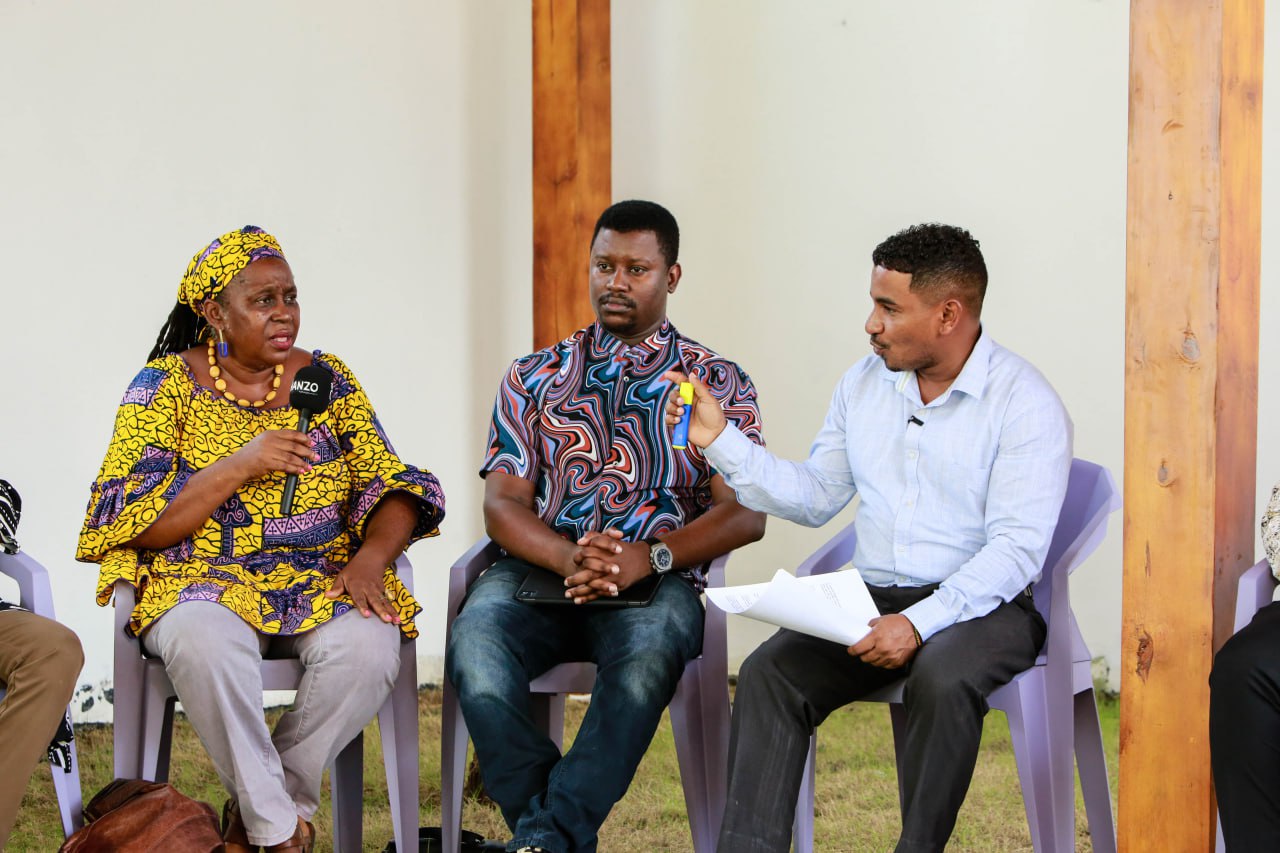
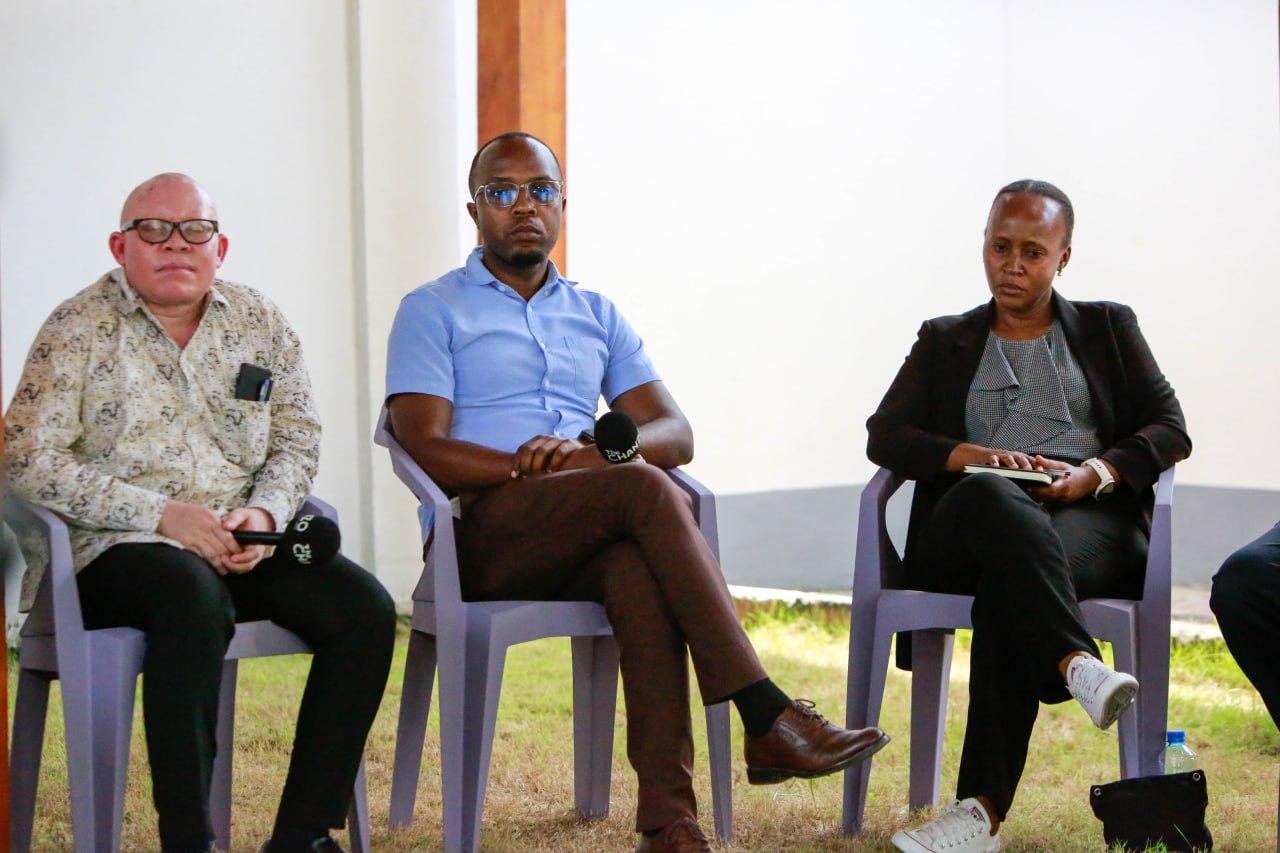
In this episode of Kivulini Talks, we examine the state of the media in Tanzania. The panel included various media stakeholders: Robert Majige, a lawyer who serves as Policy and Civic Tech Lead at the Tech and Media Convergence; Rosemary Mwakitwange, a seasoned media executive and activist; William Maduhu, an Advocate of the High Court and Programme and Advocacy Officer at LHRC; Innocent Mangu, Information Integrity Lead at Jamii Forums; Fausta Msokwa, Country Programme Manager at International Media Support; and Kennedy Mmari, Chief Executive Officer of Serengeti Bytes. Also featured were The Chanzo analysts Joel Ntile and Tony Alfred K.
Khalifa Said (Moderator): Hello, welcome back. Once again, we meet at Kivulini to discuss various issues happening in our country and the world at large. And today, I am fortunate to be surrounded by people—these senior figures, important people who contribute in various ways in the media industry and communications. And today we are going to ask a question which has been asked repeatedly by various stakeholders regarding the media sector in Tanzania, and we ask: Is Tanzania’s media sector alive, ill, or dead?
My name is Khalifa Said, and I will be hosting this conversation on behalf of the whole team behind the camera. We warmly welcome you. Everyone, welcome to The Chanzo.
Participants: Thank you.
Khalifa Said (Moderator): Alright, now just for a brief introduction, very important, and my first question that I want everyone to answer very briefly: From your perspective, when looking at our media sector in Tanzania, is it alive, ailing, or dead? I will start with brother here.
Robert Majige: Thank you. Honestly, looking at the state of the media in the country, it is in a state that is hard to understand. Hard to understand because today, before I came here, I had time to go through at least today’s newspapers to see in what way journalism has evolved, and comparing it to how it was in the 2000s—those newspapers that were coming out and how the writing was. I have seen that first of all, the style of the writing itself has declined, the professionalism, the presentation of arguments. Looking from the bottom up, from ordinary people, has declined, and the news mostly comes from the top. Similarly, if you look at news reports, if you check on social media, what do we see? Let’s see what we find on our Facebook pages, let’s see what we hear from our radios. It shows that we are in a state that we do not understand—
Khalifa Said (Moderator): Is it alive, ailing, or dead?
Robert Majige: It is ailing and heading to death.
Rosemary Mwakitwange: It is dead and gone. It is dead and gone, thank you.
Kennedy Mmari: Let me not answer briefly, but I will answer while trying to reduce the length of the reply, so that we can know whether it is alive, ailing, or dead. We must first know if it was ever alive. I would say there was a time it showed signs of life. The current time is a time where it is ailing. We can say it is ailing, but a transitional period where it should reflect on whether it is heading towards death or if it will return to those particles—the particles of life. Thank you.
William Maduhu: I think I do not want to say that it is dead straightforward, but I think if I say it is ailing, it will be fair because of the environment itself. Because if you look now, consumers, most of them seem to have lost faith in media outlets. They trust individuals more. I mean, you Khalifa, if you post certain information now, citizens trust your information more than information from a media outlet. If the information is posted by a person who is not even a journalist, maybe just an activist, about certain news, citizens have more trust in that person’s news than the news from a media outlet. So if you look at the need to conduct research to see that the media sector in this country—I am not saying it is dead, but at least I can say it is ailing, it is ill.
Innocent Mangu: My opinion will also not be different from the lawyer here—it is ailing, like a patient in ICU who, God willing, can recover, or if God decides otherwise, they will pass away. So I think it is ailing. S
Fausta Msokwa: I will say it is alive, but it is also ailing at the same time. I will explain if you give me a chance. On average, it is that “ailing” dominates, which is a good thing, but I just hope it is not ailing to the end. It is a good thing because it is between alive and dead.
Khalifa Said (Moderator): My next question for all of you— before we deep dive, why we are discussing this: Why do we have these conversations about the media being alive or weak? Media—is it alive or ailing? It cannot be that it is just another step for journalists to seek self importance, … Why do we have this conversation? Why is it important to have these conversations that concern life, or weakness, or death of a media outlet? Sister Fausta, maybe we start there.
Fausta Msokwa: Thank you. I think even in answering this, I will explain why I said it is alive but it is also ailing. We need to have these conversations because media outlets are like… if democracy is a heart, so media outlets are like the blood vessels that sustain democracy. That is why we have these discussions and we discuss the state of media outlets and the media sector. Because first of all, there are different perspectives. There are people who will tell you media is alive, completely safe, and it is important—to understand why they say that.
And there are those we would say there is a problem. Media outlets are not fulfilling their responsibilities, or they are not working properly. That is why we must have conversations like this—to solve the challenges that media outlets face. And it is for its importance in democracy.
Kennedy Mmari: I think it is because it is the desire of many humans, yes, to be involved, and it is the desire of many humans to develop through democracy. Now they say democracy dies in the dark, and if you think quickly about the state of media everywhere in the world now, tyranny still dominates and takes its power. So let us ask ourselves: if there was complete darkness in the media, then what would be the state of ordinary humans? Therefore, it is important to discuss because—democracy dies in the dark.
Rosemary Mwakitwange: Let’s agree, partly with those who say maybe they are giving themselves importance. But I think I will answer that question first by going back to genesis. Why media outlets? It is because primarily they had one very important role: to be a watchdog—a watchdog of the government, because that is the authority we gave them to regulate us, to make us, the citizens, live in a certain way that we agreed on. But secondly, to hold us accountable as a society, to be able to live in a way that we are expected to live. So its role is that it is a watchdog, yes, which gives it importance.
And saying that—whether why I see that literally they have died. It is because of the importance of having a watchdog, meaning oversight, correction, which is scientific because it uses evidence to give guidance on information that is now set as a national agenda. Because it has the ability to research, it has the ability to go far, it has the ability to respond—that’s it. Unlike one individual whose capacity prevents that impact at scale.
Khalifa Said (Moderator):You have witnessed the media sector or the journalism industry in Tanzania over different periods, probably even the One-Party System period, the period you know—Kikwete, Fourth Term, Fifth Term, Sixth Term. Now, from your experience, the issue of freedom of press—has it been more important than it is now, or maybe now it is because we are in a period where the issue of media freedom is very significant, which has not been addressed and has never happened before?
Rosemary Mwakitwange: Media freedom has continued to truly decline—downhill, I mean continuously—since those times, even during the One-Party period, but also during Mkapa’s era, the era of the Habari Corporations where I worked. We came and saw it continued to decline even during Kikwete’s time, but at least during Kikwete’s era there were institutional frameworks that could have allowed—even when talking about a media outlet, it had an address, meaning you could define that this is a media outlet. Now, I see that everything is there—you don’t know who is an influencer , you don’t know who is a content creator, you don’t know who is a journalist, you don’t know who is a reporter. What has happened? I think it’s fear.
Like I said, because I go back to say that the number one job of journalism is to be a watchdog, to monitor and expose things that are not right—the one who does wrong and causes serious consequences, definitely is the government. So it has decline, because people who are supposed to be monitored have been able to have tools to intimidate media outlets, to the extent that media outlets lose hope. And that is why we continue to lack integrity, when they lack opportunity, when they lack space—they don’t have the room to do their work. Media outlets nowadays are not doing their job, and I speak with authority because of evidence. There are very few that persist, but once there are so few, you cannot say you are a sector—you become individuals. And therefore professionalism becomes difficult; scale is not there, and even reaching people becomes impossible.
So unfortunately, the media outlets themselves have failed to have self-awareness unlike in our time. They have failed to recognize their role, and that is why they are placed where they are. Okay, media outlets would actually—and I quote you here, you are my authority here—should not even be regulated. How can you be regulated by someone you go to to regulate?
Khalifa Said (Moderator): We will discuss that.
And I wanted to ask you: who do you think is affected when media outlets fail to perform their duties properly? Is it the journalists, is it the media outlets, or the citizens? And that can be seen how—for example, if we want to see it in how society is affected when media outlets fail to fulfill their duties properly, how do we see it?
Tony Alfred K: I think I can use the theory of the Accountability Cycle—the cycle of accountability. When media outlets fail, the first to be affected is the citizen. But at the end of the day, everyone suffers. I remember there is one country in Africa—one president was being heavily criticized for suppressing the media. The day came, and what happened, happened. He started going on Facebook, TikTok, saying “I am here at State House, help me,” but he had created an environment where no media outlet could help him. In the accountability cycle, citizens start being affected, but at the end of the day, even those who created the environment for media outlets to die, they also end up being affected. So as Fausta said, it is like the blood that drives the life of democracy. So if it dies, I think it is the first step of the death of the life of democracy in the relevant area.
Khalifa Said (Moderator): Okay, okay. So this question I want our lawyers there, Mr. Maduhu and Robert, help us. So us in Tanzania, we have an independent media council which is called the Tanzania Media Council, which exists to do what Mama Rosemary mentioned a short while ago—self-regulatory, meaning self-management. But Robert and Maduhu, you would know that the Media Services Act of 2016 gives the government power to regulate the ethics of journalism.
When a media outlet in Tanzania faces a problem, whether financial or legal, where should it go to?
Robert Majige: I’ll start answering this as a junior [lawyer] so that, when a senior comes and speaks—or maybe explains further
Khalifa Said (Moderator): sorry—to explains further, do you think self-regulation can co-exist with statutory regulation. Meaning, you have a media council which says its duty is to regulate media ethics, but at the same time you have the government, for example through the Accreditation Board, doing the exact same thing. Can these things co-exist, or is the idea of self-regulation dead permanently?
Robert Majige: The concept of self-regulation for media in our country is an idea that cannot be implemented because media outlets have so many areas where they are accountable to. That is, the media sector as a whole—each individual journalist—is accountable to the Accreditation Board to get accreditation. Media outlets are accountable to various authorities, for example TCRA, if they have issues with licensing, compliance, online matters, etc.
There are also content issues which are reviewed by other bodies. There are also ethics issues which are reviewed by other bodies. And nowadays we go even further—we look at media outlets also being monitored by security agencies because sometimes some media outlets are being labeled as inciting or bringing about certain ways of encouraging violence, things that could endanger peace in the country.
READ: Kivulini Talks: Tanzania After October 29—Where Do We Go From Here?
Looking at this environment of media and the way regulation has become extensive—not just for the outlets established by law—sometimes there are issues raised by individuals in authority. They can pressure a journalist or pressure a media outlet: “I want you to remove this news,” or “I want this not to be done.” That shows how media outlets function in a difficult environment, and self-regulation or existing regulation cannot help or cannot make media to be free. How do we proceed from there? I think Maduhu will talk about it
Khalifa Said (Moderator): We will discuss how we can solve that. But Maduhu, you heard what Robert is saying. When you were contributing, I want you to help me with the implication of what Robert said, because Robert says that self-regulation cannot work in an environment where there is statutory regulation. What is the effect of that?
William Mduhu: I think, Khalifa, for Tanzania media, I can say that it goes through, let’s say, a difficult period because today, for example, you see some media whose journalists in the country mostly are leading now in discussing and reporting news about Iran, U.S., and Israel. The same journalists act as if they have blocked their ears—they do not see and do not hear what is happening in their country.
That alone is a clear sign that journalists are more comfortable because there is no international regulation. Meaning, if there were an agency to regulate journalists on international issues—maybe even the issues regarding Israel, the U.S., and Iran—we would not see this. Because there is no international control, transboundary media regulation, you see journalists prefer to report on foreign news rather than local news.
But secondly, you see today these regulatory bodies being established now move to individuals one by one, even in the situation when a journalist has used their freedom as an individual. The journalist uses their freedom—let’s say they are a passenger, they are frustrated with ATCL or frustrated with some people in the Tanzania Railways Corporation.
The journalist complains as a citizen, as an ordinary citizen. The authorities convert those complaints about their passengers into regulation. They summon them to the board saying you gave opinions, but I gave opinions just as Khalifa—I was frustrated with TRC’s poor service. I didn’t report as a journalist. He is now being told, he is warned: next time we will suspend you.
Khalifa Said (Moderator): You infer it is easier and safe for a journalist to do that rather than discuss local issues?
William Maduhu: Now I told you, Khalifa, that because there is no transboundary, there is no international control, the journalist sees it as very safe to discuss news from Iran, news from Kenya, news from the U.S. and Israel. Because if I speak on issues focusing on the country, I will be called to the Certification Board. Tomorrow they call you and tell you, next time I will revoke your license.
Khalifa Said (Moderator): Journalists—who do you work for? Who do you work for? I ask you this because there is evidence here in Tanzania that privately owned newspapers receive their revenue between 40 to 80 percent from government advertisements, and those who seem to not toe the line, their resources are withheld. We have seen this happen repeatedly. In that context, would you say honestly, in Tanzania, we have independent media?
Innocent Mangu: I’m not the journalist, but I will answer your question. To the question you asked truthfully, journalists and these media houses work for the citizens. Because before someone becomes a journalist, they are first a citizen. They are supposed to work to serve the interests of the citizens, which is the society around us. Now there has been a major conflict between serving citizens and media houses following legal requirements, along with financial issues, as you have said. As you truthfully said, sponsorships and advertisements have reduced a lot, so it becomes difficult to sustain themselves.
So from my side, what I would say is that perhaps there is a need for media houses to think of alternative ways to sustain themselves rather than continue depending on advertisements, which the world is now moving away from. Even if you try to look, it is that—I’ve heard many people talk about the issue of influencers. Mama [Rosemary] said nowadays it’s difficult to know who is the editor, who is the journalist, who is the influencer. And truly, I know brother Kennedy has his own company, and when he wants to do advertisements, it’s obvious he will look at who has large numbers to reach the citizens, even if it’s not their profession.
So I think it’s important to consider other mechanisms for these media to monetize and build an economy rather than depending on old ways, for example government advertisements. Where here, since our discussion started, we’ve been talking about many laws, and almost all of them are regulated by the government—and that’s who we rely on to give us advertisements. So truthfully, freedom remains like a story that is hard to live with in our media houses.
Khalifa Said (Moderator): Fausta, you have been in the sector for a long time. You have practiced as a journalist, but you have also worked in media development—how media houses can continue and what they can do. The committee which was formed in 2024 and submitted its report regarding the economy of media houses—which, as we mentioned earlier at the beginning, was led by the chairman, a veteran journalist, Tido Mhando—it noted that newspaper advertisements had declined by forty-four percent, and radio advertising also decreased by 33% between 2018 and 2022. For example, he said that three newspapers together lost about 4.2 million copies in circulation between 2020 and 2023.
I want to ask you: what do you think caused or is causing this decline? Is it really just a technology issue, or are there political issues, or maybe those entrusted with running the media houses don’t have the capacity?
Fausta Msokwa: Okay. Looking at the whole world, there are big changes in the media sector. And even these changes, if we look at them by certain criteria of the sector, which are sometimes considered places where media houses are free and performing, there has still been that decline—these changes have occurred. So those are the changes which I think Kennedy has somewhat explained, that the environment we have has changed. There have been technological changes, and they have led to other changes.
But at the same time, we’ve seen some media outlets that at certain times at least can expand, grow greatly in terms of circulation, reach, and people’s interest. So in the environment we have, there are still media outlets that attract people to follow them. And this is why—because they respond to the needs of the audience. And responding to audience needs depends on your audience. So if your audience is going through economic challenges, political challenges, and you are able to look at these things, as Rosemary said, as a watchdog, you are able to focus on those issues, then you will attract people’s attention. People will prefer to follow your media outlet, and you may get an increase in circulation if it’s a newspaper, radio, or TV—then followers, audience, and so on.
So this issue of these changes has many different aspects. Now also let’s look at it in the Tanzanian context. We talked a little about—and I think she also touched on this, Rosemary—that in those years of the 2000s, there was a different situation in the country. Media outlets were popular, but if you look, it wasn’t just that media outlets were popular and they had appeal as an institution. There were many institutions, and maybe it was because historically, at that time we entered multiparty politics. So even political parties, even media outlets—there were many things at the time that back then attracted people to participate, to follow, and even to contribute.
So that also gives us a picture that to some extent, maybe back then, because we had opened the doors, even the media themselves were opening. Around that time, that’s when we began to have media outlets that were not state-owned. So it was a peak period for the media sector, but after that peak, now we are in some sort of decline. Let’s say a decline because, as you said, media outlets lose money, they lose appeal, and we need to investigate what it is.
Another thing I can touch on is the legal environment. I’m not a lawyer, but we have discussed the law—2016, this Media Services Act. This is a law that created a different environment for media outlets. If you, as a media outlet, fear every day that someone might come—the regulator can come to regulate you—and you are a media outlet, and you must operate in an environment which is supervised with the freedom of expression, freedom to access information—if a regulator comes, then there is a way for you yourself to self-regulate before they come. Exactly, yeah.
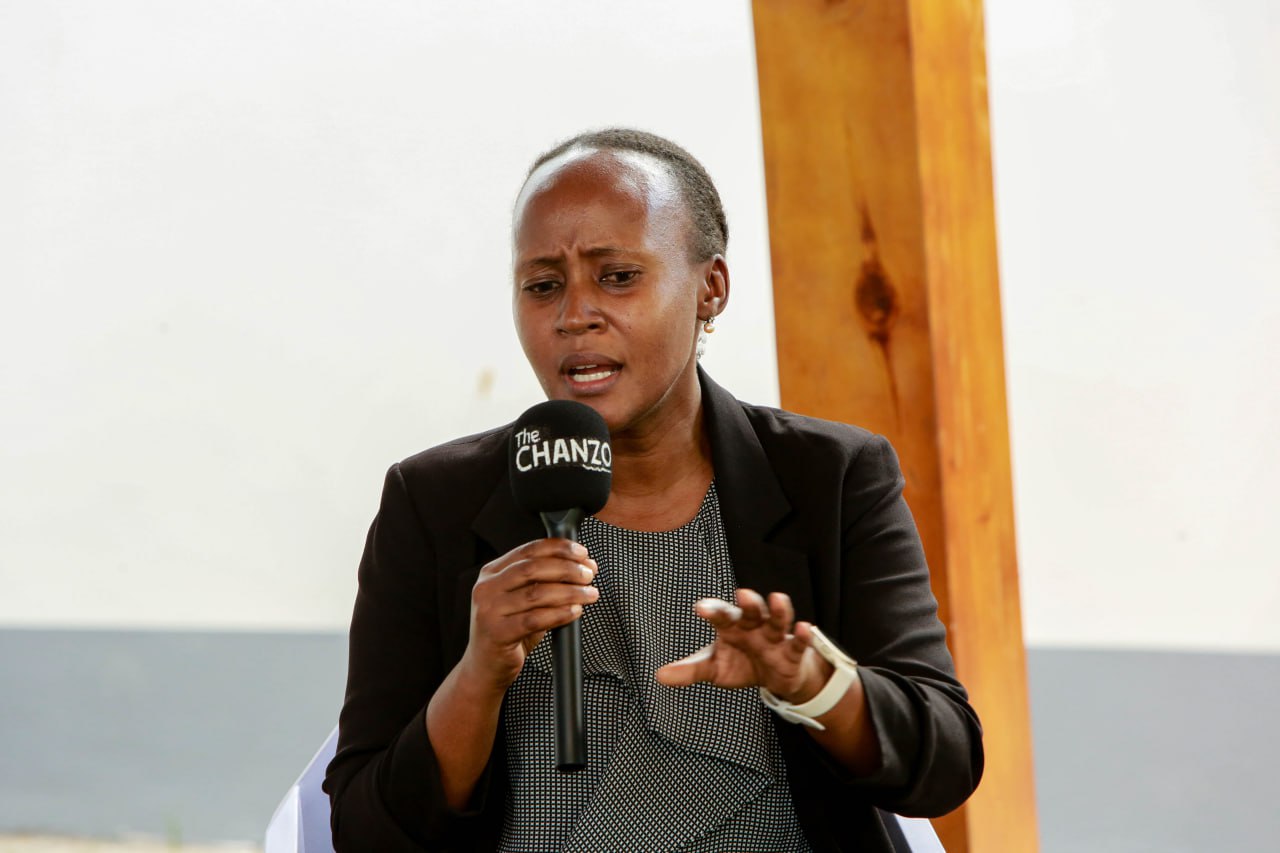
Khalifa Said (Moderator): Okay Joel, please take the mic. So in that same report by Tido—it’s now being called the Mhando Report—it stated that a large percentage of journalists in Tanzania are paid less than 500,000 shillings per month. There is a report that states that some journalists are paid up to 2,000 shillings per story. I wanted to get your opinion. What do you think contributes to that decline we see in the media?
Joel Ntile: First, the issue of journalists’ welfare. If you look at it broadly, it’s like what Felista said—that after things opened up and entry into liberalization, we also had major problems regarding the welfare of workers generally. In all sectors, if you go to factories, there is a cry. If you go to service sectors, there is a cry. And even in the media, there is a significant cry at a large level. Now, this existence of a large group of journalists whose welfare is in doubt—leaving aside the salary issue—there is also the issue of contracts. There was a very large percentage of journalists working without contracts. So at the end of the day, the effect is significant.
READ: Kivulini Talks: Reconciliation Talks in Tanzania After October 29—Ruse or Genuine Intention?
On that question you asked colleagues there about who journalists work for—who do they work for? Who do they work for? Now that affects, because even in content creation it has become part of monetizing content. Today, any story a journalist wants to follow, they want it to have a chain of financial value for them to benefit, so that the source they follow also becomes a part that pays them, but also for it to be published. Even if they want to balance someone being complained about with the source, they can also have the source paying the journalist so they can produce content. So if we look broadly, you will see that this also directly affects content production, especially those that are of public interest.
Kenny, you must have heard here when they spoke, for example Joel, when he was speaking about why it is important to have this conversation. He said that because media outlets are saturated with other types of content which are not in the public interest. And our brother here also mentioned that nowadays every journalist seems to be in Iran or Tel Aviv giving breaking news, and yet they are the same ones. That, of course, relates to what brother Tido Mhando said when presenting the report—that we now have “comedic journalism.” Why is that? Is it a survival strategy or a surrender?
Kennedy Mmari: Khalifa, that is among the difficult questions you’ve asked today. But I would like to look at maybe three or four issues so we can return to whether it is surrender or a survival strategy. Let us consider that there are psychological factors, there are sociological factors, there are economic factors, and also political factors in this situation we see today. We understand that people today do not consume content in the same way they used to twenty years ago, and this is influenced by global changes, especially technological ones. So people want to consume information in a different way than before twenty years ago, simply because of psychological reasons and how our society has been programmed or shaped—or even global society now. People now consume information in bits—that is psychological. We all have that dopamine to get content quickly and move on with life. So society has already changed. Now there are political factors.
Our politics shape what kind of media we have. Politics brings legal frameworks that affect the ability of media, for example, to continue producing human-interest stories, to continue producing news that serves deep public interest. So if we have a society and an environment like this, that means we have an environment that forces these media or news outlets to go into survival mode—ensuring that we keep surviving with the hope that things will change in the future. The last issue is the economic issue. Revenue has dropped and that is something evident in various reports, and not just in Tanzania but worldwide. And to be able to survive economically, you must adapt or live according to the conditions of that time.
Khalifa Said (Moderator): Rosemary, do you agree with Kennedy?
Rosemary Mwakitwange: Don’t make me fight with my neighbor. Because Kenny says that we must do that to survive, otherwise we will die. I think there are limitations. First, even where we are now, we think our consumers are homogeneous, that there are certain people who are the same—that’s why we want to address them in the same way. Secondly, we are very inward looking. We think that because media houses have no money, then people have no money. Khalifa, walk around this Dar es Salaam, from here go all the way to Bagamoyo, anywhere—look at the mushrooming of indicators, the economy is not that bad. But thirdly, we assume that running a media organization is something to be done for us. We will be given— salaries are low, benefits are not there—where will better benefits come from? A media organization is a business organization, whether the business being done is to generate income or to be so attractive that people are ready to pay to listen to you.
Let me just say this, Khalifa, I proudly say I was a media leader, I am a proud one, but my background is in business. I come from a business family, I studied business, I have an MBA, I have worked on commercial projects. When I took over the leadership of Habari, I didn’t go looking at how to handle this journalist, but let me remind you again—the value of a journalist who does their job is not something to be exploited without pay.
When I was in the news, we flew somebody, a Tanzanian journalist who was in Kenya—we flew him, we chartered a plane and brought him. Why? Because we were always looking—there was this piece of the puzzle that was so important in the delivery mode of our platform. So let me just go back and say there is no way operational principles— I’m glad we are here with the CEO and that’s why maybe today Chanzo is doing well, relatively—thank you—but that’s because there are these principles that you cannot mix up. Yes, you cannot mix them.
Let me finish with one last point. So when we talk about, oh, someone writes and it’s—we say that people want short news. Who are they? Who want short news? Who are ready to pay beyond that three-thousand monthly bundle or weekly? There are decision makers. Last time when he talked about the media report, you were there, Fausta, Mzee Warioba said that when he was a leader, he used to read opinions of the people in Rai newspaper. You can’t get that people’s opinions in something that browses in one minute. And we say because media is supposed to set the agenda—we did set the agenda in our time. That’s why today you’re feeding us cheap agendas, bubble gums, yellow, whatever, because that’s what you’re providing to the audience. That’s why even today no one sees you and trusts you.
My neighbor, let’s love each other but also disagree. They trust you as influencers because you have two million followers. When the message I want to send is a serious message, I can’t have it posted by an influencer because they might undress in public or sing something where, if I want to listen, I have to make sure the kids are asleep. So I decide to send my serious message through a serious person like Khalifa. There is still a reason, and I’m glad Fausta is here—internally, the media has to re-engineer itself by asking: do we have space, do we have a place in this space? Thank you very much.
Fausta Msokwa: Khalifa—am I allowed to jump in? Because as Sister Rosemary was speaking, I was thinking about the fact that a couple of years ago we had a World Press Freedom Day theme: information is a public good. I’m not an economist, but what I know about public goods is that they are hard to commercialize. Yes, and even if you follow the discussion we’ve had here, it has been based directly on the idea of the media sector delivering something like a public good. And that’s why it was even mentioned that the challenge lies in delivering information that serves the public interest.
Now let’s look at the citizen in Tanzania whose interests require—well—I don’t know whether to be advocated for or highlighted in the media. Like this person—sorry Rosemary—if this person has money to contribute to a Chanzo membership or has money to buy a newspaper every day, if the newspaper even reaches them—it might not reach them—or even if they have the ability to read and write, or beyond reading and writing, if they have the ability to analyze information in the environment we have, where there is information and there are platforms that produce propaganda, others that spread misinformation. So the information environment we have is complex. Well, it’s good if there is a media outlet that can generate revenue through news, but also we must accept that generating revenue through the media sector is difficult. Yes, it’s not that easy. So that issue is not easy to solve, so that we can get news that serves the public interest.
Khalifa Said ( Moderator): Thank you very much, Fausta. Tony, please take the mic—The Chanzo has been praised here, you’re being applauded a lot. I wanted to ask, so how do you do it? And another thing is that, I mean beyond Chanzo, are there other models, other people? Because I think one mistake we sometimes make is that we tend to focus on the negative side and ignore the side where people are doing well. So Chanzo, yes of course you’ll tell us what you do, but are there other places we can look and say they are doing well? Why is this working so that we can build from it, build on what others are already doing? Welcome, Tony.
Tony Alfred K: So, if I take from what has been said, especially on global changes, with global changes people have gone digital. And in Tanzania, actually we have something that works very well—a Tanzanian platform, Jamii Forum. For example, Americans have Facebook, they have Twitter, they have YouTube—you see, Russians have Telegram, even though they say it’s not theirs—but basically it is. Every country has its own platform. There are major media outlets like BBC in the UK, CNN—these influence the direction of the world. Now in Tanzania, we have something that was created locally called Jamii Forum. That was already a platform aside from using Facebook pages or Instagram. Jamii Forum was already a platform—it was built and has more than, I think, millions of daily visitors. So that is an example of success.
But what happened to Jamii Forum—we know up to now it has been blocked and is not accessible. Why do I give that example? Because in my imagination, I think about this world which has huge competition. We see geopolitics—every country tries to find a place where if things go haywire, it can have a platform digitally. Maybe my citizens will use this. You see Americans fight hard to make sure Instagram and WhatsApp continue everywhere. Ideally, it should be, for example, in Tanzania, Jamii Forum because it already has an audience. The government should have invested to enable it, for example, to go to other markets. Markets in West Africa—why haven’t they reached there? Markets in North Africa—why haven’t they reached there? South Africa. Because it already has a certain audience. But what the government does is block it. That is a big problem, and it’s like scoring an own goal because you can’t.
If you look, for example, at Instagram, Facebook—it’s not that they don’t do things Americans don’t like, but they know there’s much more dividend, meaning there’s more benefit in allowing the platform to flourish, especially if it comes from your own country rather than blocking it. So I think we have a problem. That’s why I started with what you asked me about the model that succeeded. I think in scale, we can say Jamii Forums should have been protected, especially in this world we are in.
READ: Kivulini Talks: Tanzania’s Multi-Party System— Fix It or Forge Ahead Without Course Correction?
But another thing I connect with that—before I answer about The Chanzo—I would have favour myself. I connect it, but I think the issue of a Jamii Forum, for example, and other things, especially in the media we struggle with, I think we have reached a point in society—it is like we have givers of freedom. You know, we say God is the giver. Now there are people sitting in their seats, they think they are the ones giving freedom, they are the ones making people exist. But everyone—we were born and found ourselves here. No human being is better than anyone, so when a person sits in government and starts thinking that they are the one giving freedom, the problem becomes big because the government does not give freedom, the government recognizes freedom. So I see that this is also something that needs to change.
To conclude about The Chanzo, something that makes The Chanzo be The Chanzo is our commitment to why we want to do the journalism we do. If we fail to do the type of journalism we are doing, The Chanzo will end there—maybe it will leave the country or it will end right there. That is why it made us, —that is the reason to start The Chanzo. You see, every media outlet has its reason for being founded.
Khalifa Said (Moderator): Thank you. We have discussed a lot and we cannot finish this discussion. I want us to end with one question, which I will be happy if each one of us contributes to. So we have tried to touch on many issues here that are not going well—things are not working and why. In our imagination, as key actors in media, a healthy media ecosystem— from your perspective, how does it look?
William Maduhu: I think very briefly it is that we must have media that has the capacity to act fairly in every aspect. What happens well, they report, but also where bad things and others happen, it becomes obvious and evidenced.
Khalifa Said (Moderator): But now you have already been told the environment is not supportive.
William Maduhu: Now, for example, if I tell you just one thing, Khalifa, that there is one area where journalists fail. If you have solidarity. Meaning if you have solidarity, all exposing the rot, you cannot close all media in this whole country. For example, something obvious happened and evidenced. That day, all of you wrote about the story and make it the lead. They cannot summon all of you to the content committee.
For example, I will just question. I mentioned this somewhere and I also want to mention here. There was a certain period here the case of Lissu was being broadcasted live, and everyone aired because the authorities had given permission to broadcast live. But also the same live, later the signal was deleted.
Meaning the content has disappeared. It disappeared—who deleted them? By whose order? No media has ever spoken about it. That the Lissu case at Kisutu was live for about three months, and you all were cheering because the case was live. But later that content disappeared, Khalifa. No one knows where it is. At least in our environment, we need media sector that performs all its fundamental functions without interference. So I would end there.
Tony Alfred K: First, to address the issue of Maduhu. For the sake of our audience, Maduhu asked where the live broadcast of Lissu’s case went. The media outlets were broadcasting the content, later on it disappeared without a trace. Even at The Chanzo, we were broadcasting. But we had to remove live broadcast of the Lissu’s case, and it’s not just us—it’s everyone. The Lissu cases, as you know, they started being broadcast and the court was the one broadcasting those cases. The court was owning the footages.
So on our side, The Chanzo we received, on platforms especially YouTube, there is something called a copyright strike. For example, if I use your images without permission, or if I use your images and you decide you no longer want me to use them, you can report to YouTube. YouTube will say remove it.
So on our side, we received those copyright strikes from YouTube. And if you don’t remove them, it means YouTube deletes your account. And we tried to ask the officials at the court at that time on what was happening. They told us those were the court proceedings. The proceedings were not meant to stay as content, only to be live broadcasted. After the live broadcast, you were required to remove them.
So because we didn’t own the footages, we had to adhere to the platform rules, that is YouTube. The videos were owned by the court, and there was no way you could argue on that. So most people removed the content to ensure their platform are not banned. That is what happened.
Finally, that question of how can the media be free.
Khalifa Said (Moderator): No, no, not necessarily free—a healthy media ecosystem, how does it look to you?
Tony Alfred K: If we are saying it is ailing, maybe we can start by making it alive. And I think we become much more ill that even having an opinion, we have the lords of opinions. These lords monitor opinions and decide this opinion suits. If these Lords of Opinion return to their usual task, we can say at least… this new challenge of the Lords of Opinions makes the media that was ailing to die permanently.
Khalifa Said (Moderator): I thank you once again for your reflection—hopeful they will not be barred. I also thank you for your time and contributions. I have so many questions, but I think time is not on our side, so I have to close our session here. But one thing I would like to say—many things that we have discussed here could fail if there is no accountability, especially accountability for those in media—journalists themselves, their editors, newsroom managers.
Here maybe I’ll finish with this note: where does a push for accountability come from? Accountability comes from the consumers of content produced by these outlets. If you are a citizen and consume content, for example from The Chanzo, you see The Chanzo doing inappropriate things, you don’t hold it account by writing email, calling or sms and condemn it, warning it—meaning there is very little chance for The Chanzo to correct itself. So when we look at the role of journalists, role of their editors, the role of regulators, government, we must look at the role of citizens. We as content consumers—what efforts are we taking to ensure media do what benefit citizens?
And by saying that, we thank you very much for following all the programs we produce here at The Chanzo. I, who moderated today’s discussion, is Khalifa Said, and on behalf of my colleagues behind the camera, we thank you very much. Until next time, goodbye.