
Dar es Salaam — Despite decades of policy rhetoric championing decentralisation, Tanzania’s local government authorities (LGAs) remain severely constrained by a lack of genuine autonomy, financial independence, and administrative discretion, a recent high-level interview revealed.
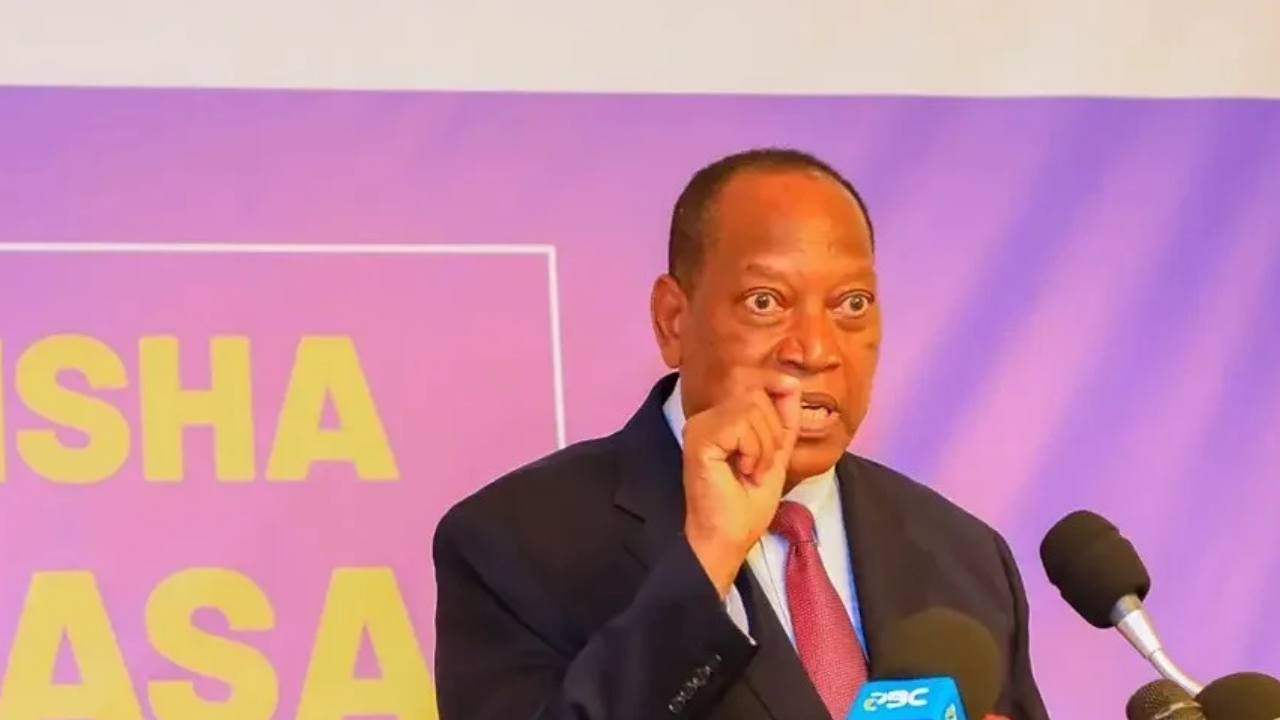
The issue of “Decentralisation by Devolution” (D-by-D) was one among many that took centre stage during a recent interview between The Chanzo’s journalist Khalifa Said, State Minister in the President’s Office for Planning and Investment, Prof Kitila Mkumbo, and Dr Baruani Mshale, Head of Research and Learning at Twaweza East Africa.
The discussion, recorded on April 6, 2026, exposed, among other things, the stark contrast between the government’s stated goals for the Tanzania Development Vision 2050 (TDV2050) and the reality on the ground.
Prof Mkumbo acknowledged that achieving the ambitious goals of TDV2050 requires fundamental institutional reforms, particularly in strengthening local governance.
“It is impossible for things to come from the central level to be done at the local level,” Prof Mkumbo stated. “We must strengthen local government authorities so that many things are done down there, because that is where the people are.”
The Minister outlined three critical areas where power must be devolved: financial resources, human resources, and administrative authority. He argued that budgets for local projects, such as irrigation schemes, should be managed by local councils rather than central ministries in Dodoma.
READ MORE: Vision 2050: Minister Pressed on Gap Between Tanzania’s Development Goals and Grassroots Reality
However, Dr Mshale painted a very different picture of the current reality, drawing on Twaweza’s extensive engagement with local councillors across the country.
He described a system where elected representatives are functionally subordinate to appointed administrators, rendering them incapable of holding the executive to account.
“If you listen to the councillors, they say they cannot fulfil their responsibilities because of their dependence on the council director [sometimes referred to as the District Executive Director, appointed by the president],” Dr Mshale explained.
“If they need to do their work, like a tour or anything else, they don’t have a budget. They don’t have transport. So they depend on that same director and his office to provide them with transport to go and do their work.”
Dr Mshale recounted a striking example from a meeting in southern Tanzania, where a councillor admitted: “The director bought me a suit so I could attend the meeting. How can I then come and hold him accountable when I depend on him even for my clothes?”
This structural dependency highlights a critical flaw in Tanzania’s decentralisation model. While the law technically grants local councils the power to oversee appointed officials, the practical reality of resource control means that power flows in the opposite direction.
Disconnect
The concerns raised by Dr Mshale are strongly supported by extensive scholarly research on Tanzania’s decentralisation efforts.
READ MORE: Preserving Democracy in Africa: Dispelling the Myth of ‘Localising’
One 2023 study found that local councils have “little administrative discretion and decision space over human resources, financial management, and service delivery.”
The research highlights how the “directive attitude” of central government officials actively undermines the ability of local councils to implement their own approved plans and budgets.
The study calls for a comprehensive review of decentralisation policies to safeguard local authorities from the encroaching “directive culture” of the central government.
Similarly, an institutional and legal analysis by REPOA concluded that the constitutional framework for D-by-D leaves LGAs in a “relatively weaker position for exercising more discretion.”
The report noted that arbitrary instructions and circulars from the central government frequently contradict established guidelines, further undermining local powers.
The World Bank has also noted that local governments in Tanzania possess a “very low degree of discretionary power accompanied by weak accountability towards citizens at all levels.”
Accountability
During the interview, Prof Mkumbo pushed back against the assertion that councillors lack the power to hold appointed officials accountable, insisting that the legal framework provides mechanisms for oversight.
READ MORE: Without Accountability, There’ll Never Be Justice. Nowhere
“The council is the employer,” Mkumbo argued. “If something happens, there is a legal process whose end result is these councillors. An investigative committee will be formed, it will investigate, and it will bring the results. So the council has the power to hold any council officer accountable.”
However, Dr Mshale countered that this legal provision rarely translates into practice.
“In all the conversations we have had, and in all the visits we have made, I have never encountered anywhere evidence of the council of councillors being able to use that process and hold any council executive accountable,” he stated.
This gap between legal theory and practical reality is a recurring theme in research on Tanzanian local government.
One 2009 study observed that while the policy promised the transfer of power to local authorities, what actually occurred was merely the transfer of administrative authority, without the corresponding political or financial autonomy necessary for true devolution.
Way forward
The debate over decentralisation is not merely an academic exercise; it has profound implications for the success of Tanzania’s long-term development goals.
READ MORE: A Critical Review of Tanzania’s Development Vision 2050
As the government finalises TDV2050, the effectiveness of local authorities will determine whether national policies translate into tangible improvements in service delivery and poverty reduction at the grassroots level.
Dr Mshale emphasised that the government must change how it measures the success of its decentralisation and citizen engagement efforts.
“It shouldn’t just be that we did this many tours, or that the money allocated for monitoring and evaluation was fully spent,” he argued. “There must be criteria that show: if there were citizen grievances received by the council, how many were addressed?”
For decentralisation to move from rhetoric to reality, experts agree that local governments must be granted genuine political and financial independence and administrative discretion.
Until then, the power dynamic will remain skewed towards the centre, leaving local representatives dependent on the very officials they are meant to oversee.