
Dar es Salaam — The government’s ambitious long-term development plan is facing scrutiny over its relevance to ordinary citizens, as top officials are confronted with evidence of a significant disconnect between national policy and grassroots reality.
The challenge is particularly acute given what observers describe as a crisis of public confidence in the government itself.
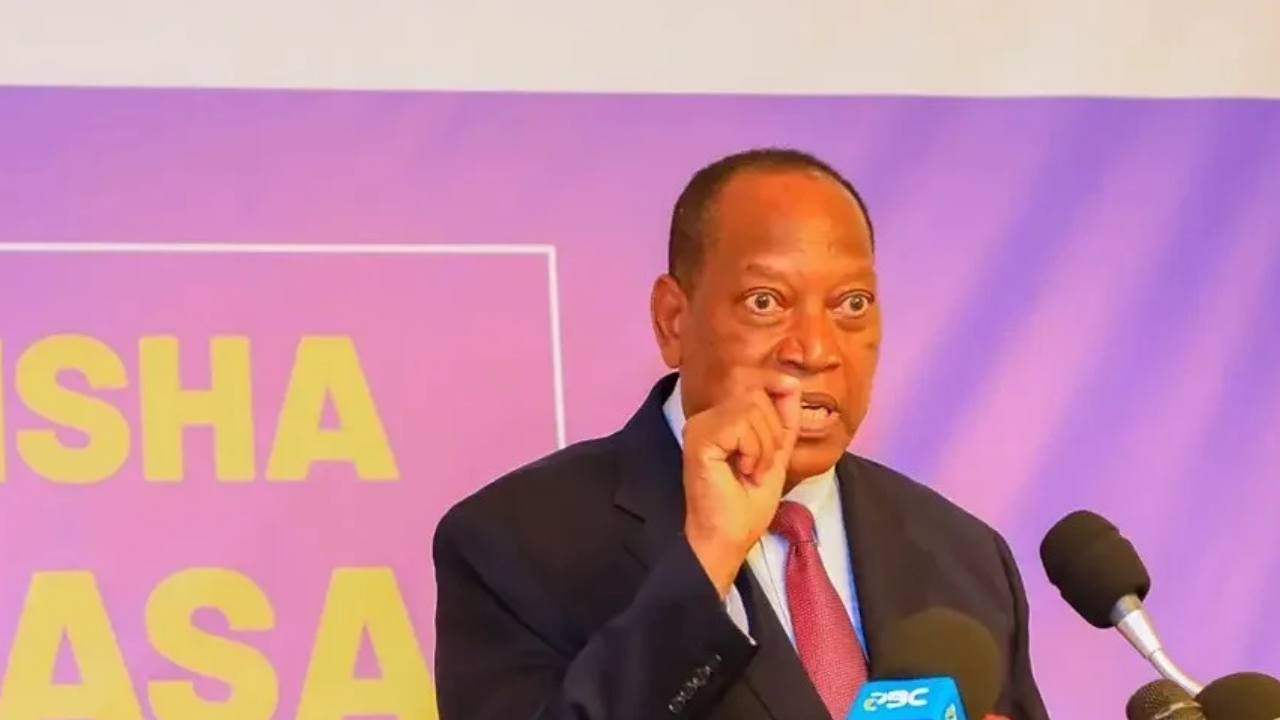
In a wide-ranging interview recorded on April 6, 2026, and published on April 15, State Minister in the President’s Office for Planning and Investment, Prof Kitila Mkumbo, defended the Tanzania Development Vision 2050 (TDV2050) against findings that suggest the plan is largely unknown to the youth it aims to serve.
The interview was conducted by The Chanzo’s journalist Khalifa Said, who pressed the Minister on the government’s credibility and the practical barriers to implementation.
Also featured in the interview was Dr Baruani Mshale, Head of Research and Learning at Twaweza East Africa, a civil society organisation focused on citizen participation, transparency and accountability in governance.
Dr Mshale recently moderated the Dira Mtaani (Vision in the Community) dialogue series, a project by The Chanzo funded by the European Union Delegation to Tanzania, which engaged over 40 young people across four locations in Dar es Salaam and the Pwani region, including Chanika, Kibaha, Mbagala, and Vikindu.
The findings from these dialogues painted a stark picture of youth struggling with unemployment, labour exploitation, and a profound lack of awareness regarding the nation’s development agenda.
READ MORE: Dira Mtaani: Tanzania’s Youth at a Crossroads—Legitimate Hustle or Illicit Shortcut?
More troublingly, they revealed a culture of fear that prevents citizens from openly discussing governance failures and demanding accountability.
Awareness gap
“Out of more than 40 youth we spoke to, I don’t think even ten raised their hands when asked if they had heard of the Development Vision 2050,” Dr Mshale revealed during the interview.
“And even those few who had heard of it only knew it superficially—they had perhaps seen it on television or heard it on the radio, but they did not understand it in depth.”
Despite this lack of awareness, Dr Mshale noted that the youth possessed their own clear, personal visions for the future, often involving basic aspirations, like owning a well-finished home with electricity and running water, and securing a stable income to support their families.
However, their current realities are marred by significant challenges, particularly in securing decent employment.
“They tell you that when they go to these factories, the opportunities are not there,” Dr Mshale explained, referencing the industrial areas in the Pwani region where the government has invested heavily in manufacturing zones.
“There are many, they wake up very early, but only a few are chosen,” he added. “Others complained that bribes are required—financial bribes or sexual favours—just to get a chance at employment.”
READ MORE: Dreams and Desperation: A Tale of Two Mbagalas
This revelation was particularly striking given that the government has promoted industrialisation as a key strategy for job creation. The dialogue participants, many of whom live in close proximity to these factories, described a reality starkly at odds with official narratives about economic opportunity.
Govt’s defence
Prof Mkumbo acknowledged the awareness gap but defended the government’s consultation process, stating that over 1.2 million people were reached during the drafting of TDV2050, with 78 per cent of digital respondents being youth under 35.
He argued that the reach of the consultation process was unprecedented in Tanzania’s history.
“There is no doubt that the word ‘Vision’ might not be known to many youth in the streets,” Prof Mkumbo conceded. “But in terms of content and the overall process, it might be known to many more because the process of writing the vision is the one that has involved the most people compared to any other process we have had.”
But if the consultation process was so extensive, why did the vast majority of grassroots youth remain unaware of the Vision’s content or even its existence?
Dr Mshale’s findings suggest that the consultation process, whilst broad in reach, may not have effectively translated into public awareness or ownership of the Vision among those most affected by its implementation.
The Minister outlined the core pillars of TDV2050: prosperity for all, justice, inclusivity, and self-reliance. He argued that the previous vision (Vision 2025) succeeded in driving economic growth—averaging 6 per cent annually—but failed to significantly reduce poverty or create enough decent jobs.
This failure, he suggested, necessitated a new approach centred on “transformative sectors” like agriculture, manufacturing, energy, and mining.
READ MORE: In Defence of Tradition: Youth Challenge Critics of Coastal Customs
Yet this acknowledgement of the previous vision’s failure to deliver inclusive growth raised a troubling question: what structural changes would ensure that TDV2050 succeeds where Vision 2025 failed?
The Minister’s answer pointed to the need for institutional reforms, but offered limited detail on how these would be implemented or enforced.
Private sector question
However, the interview took a critical turn when Khalifa challenged the Minister on the apparent contradiction between the government’s focus on large-scale, private-sector-led projects and the goal of inclusive growth.
This line of questioning got to the heart of the matter: whether the government’s development strategy can truly deliver for the majority of Tanzanians, or whether it will simply repeat the failures of the past.
Khalifa: “There is a clear disconnect between what is discussed nationally and the reality on the ground. We talk about factories, but these people don’t get jobs there. We talk about agriculture, but the focus is on large-scale commercial farming that doesn’t lift the smallholder farmer. What guarantee do we have that this new vision will bring different results when the underlying philosophy—prioritising the private sector—remains the same?”
This question struck at the core of the debate: whether the Vision represents a genuine shift in development philosophy or merely a repackaging of the same private-sector-focused approach that has left millions behind.
Prof Mkumbo pushed back against the characterisation of factory jobs as entirely exploitative, urging the journalists to visit the factories themselves and witness the employment opportunities firsthand.
READ MORE: ‘Bribes or Bodies’: Tanzania’s Industrial Dream Leaves Youth Exploited and Excluded
“If you go to Mkuranga, I can give you a permit to visit just five factories,” Prof Mkumbo countered. “Go inside and appreciate two things: first, the number of young Tanzanians working there… and second, you will have the opportunity to interview them. The systems are automated now; you find a young person at a computer explaining what they are doing.”
Yet this defensive posture did not address the core complaint from the youth themselves—that access to factory employment is limited, competitive, and often requires informal payments or sexual favours.
The Minister did, however, acknowledge that labour abuses occur and stated that the government has laws in place to monitor wages and working conditions. He also noted that the government has been visiting factories to assess compliance.
Trust deficit
The conversation then shifted to the broader political climate and the issue of public trust—arguably the most critical factor determining whether TDV2050 can succeed.
Khalifa pressed Prof Mkumbo directly on whether the government’s legitimacy has been compromised, particularly following the protests of Oct. 29, 2025, and how state agencies responded to them.
Khalifa: “Prof., do you see the difficulty of implementing this vision right now when the government faces a massive trust deficit from a significant group of Tanzanians who view the government you represent as illegitimate? Do you think your party and the government have anything to apologise to Tanzanians for, to perhaps repair this deficit of legitimacy and trust?”
Prof Mkumbo firmly rejected the premise that the government lacks legitimacy, pointing to constitutional processes and the rule of law.
READ MORE: A Critical Review of Tanzania’s Development Vision 2050
“The legitimacy of the government is obtained in two main ways,” Prof Mkumbo stated. “First, the existing administration must be the product of the constitution and the relevant laws of the country. There is no doubt that the sixth phase administration under President Samia Suluhu Hassan is a product of the constitution and the laws of Tanzania.”
This response, whilst technically correct, did not address the deeper concern: that many Tanzanians question not just the constitutional legitimacy of the government, but its moral legitimacy—its right to govern based on its actions and policies.
Role of CSOs
The Minister also addressed the role of civil society and the media in holding the government accountable, describing development as a “process of struggle” that requires all stakeholders to play their part.
“I am in government, and I am struggling to implement and serve,” Prof Mkumbo said. “Development is a process of struggle, not a walk in the park. It is your job as a journalist to struggle too, to say, ‘Kitila, as the representative for Ubungo, you promised one, two, three, four, five; give us the results.’”
However, Dr Mshale highlighted the practical difficulties faced by non-state actors in fulfilling this accountability role, pointing to a culture of fear and what he described as an increasingly restrictive environment for civil society.
“The contribution of holding the government accountable is the contribution that is not liked [by those in power],” Dr Mshale observed. “If you go and build classrooms, they will be happy. But if you go and question why classrooms need to be built here, and who was responsible for building them, so this problem doesn’t repeat itself… that contribution is not liked.”
He pointed out that the environment in which such accountability is supposed to occur is becoming more hostile, with civil society organisations, journalists, and ordinary citizens who ask critical questions facing risks ranging from legal harassment to social ostracism.
READ MORE: Trust, Power, and Markets: The Hidden Faultlines of Vision 2050’s Climate Promises
Dr Mshale further noted that this fear extends to the grassroots level, recounting an instance in Vikindu where youth refused to discuss land disputes, calling it a “trap question” due to fear of the authorities.
This self-censorship among ordinary citizens is perhaps the most damaging outcome of a climate of fear: it prevents the government from hearing the voices it claims to want to hear.
As Tanzania looks toward 2050, some believe the true test will be whether the government can bridge the gap between its high-level plans and the everyday struggles of its citizens.
This will require not just better policies, but a fundamental shift in the political environment—one that allows for genuine debate, accountability, and participation.
Without such a shift, Dr Mshale warned in the interview, the Vision risks becoming another high-level document that fails to translate into tangible improvements in the lives of ordinary Tanzanians.