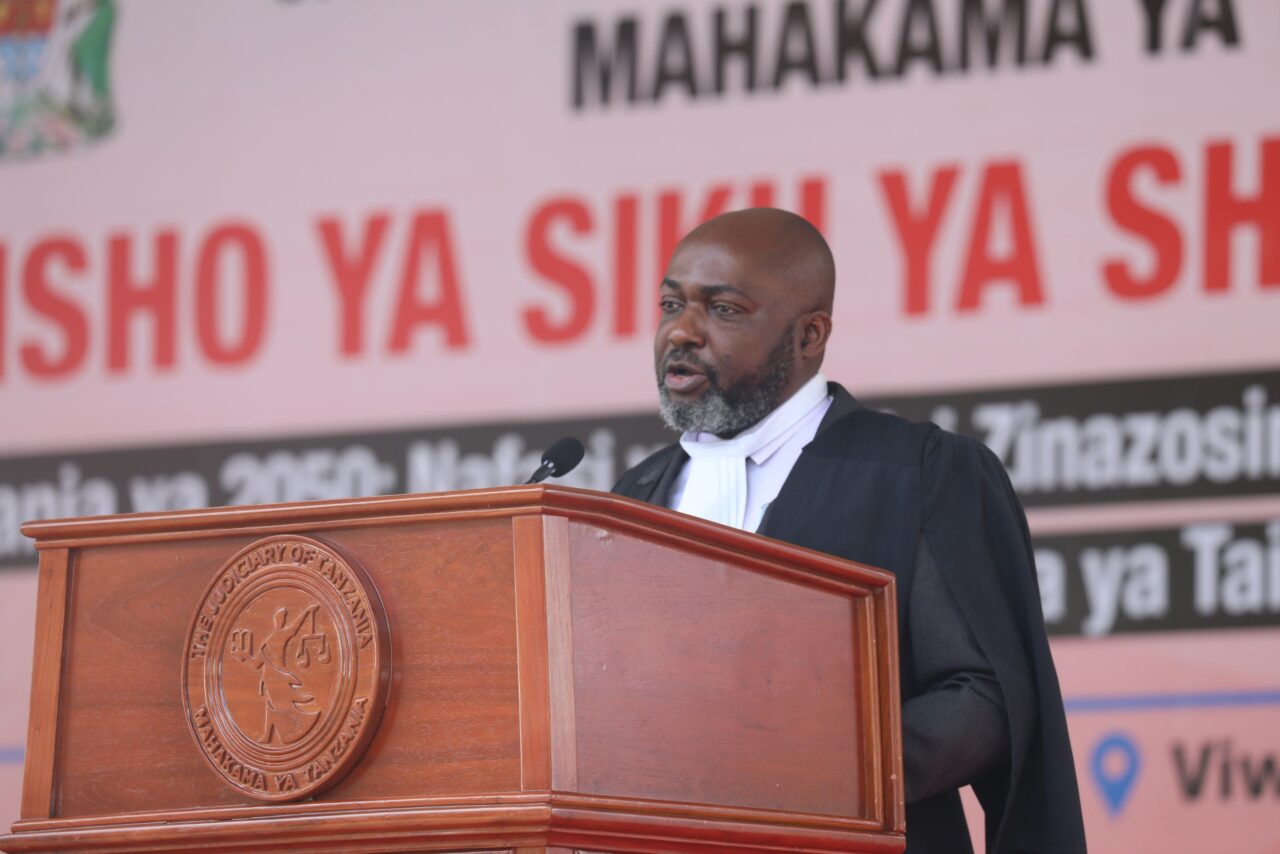

Katavi – The Minister of Minerals, Anthony Mavunde, has ordered the immediate suspension of mining activities along the Mtisi River in the Katavi region following an inspection that revealed severe environmental degradation and regulatory breaches.
The directive, issued on Thursday, May 14, 2026, also mandates a nationwide review of all Technical Support Agreements (TSAs) between local small-scale miners and foreign investors to ensure they comply with the law and genuinely benefit citizens.
During his inspection of the Mpanda Municipality and Nsimbo District Council, Minister Mavunde noted that operations were being conducted contrary to the Mining Act, Cap. 123 of 2010. He observed foreign nationals operating machinery directly, a practice he stated violates the legal definition of technical support.
“We do not allow a foreigner to enter a small-scale mining license and then work as a Tanzanian does,” Mavunde said, adding that the suspended operations lacked necessary environmental management plans and permits from the National Environment Management Council (NEMC).
Technical Support Agreements are formal contracts established under the Mining (Technical Support for Small Scale Miners) Regulations 2025, which came into effect on April 25, 2025.
READ MORE: Tanzania Government Cracks Down on Dormant Mining Licenses
These agreements are designed to allow Primary Mining Licence (PML) holders—who must be Tanzanian citizens—to partner with foreign facilitators who provide mining expertise, modern equipment, and specialised skills not locally available.
The regulations stipulate that PML holders are guaranteed a minimum of 30 per cent of the gross profit after statutory deductions, and that all workers must be Tanzanian citizens, except for those providing specific technical assistance.
Exploited
However, existing research and recent investigations indicate that these agreements are frequently exploited. Foreign investors, predominantly from China, often use TSAs as a loophole to bypass the prohibition on foreign ownership of small-scale licenses.
According to reports, these facilitators gain de facto control over operations, while the local PML holder remains merely a nominal owner.
This practice has led to the displacement of thousands of artisanal miners; in areas like Mwakitolyo, mines that previously employed up to 20,000 local workers are now operated by single foreign entities, resulting in significant revenue losses for the government.
READ MORE: Mining Sector Opens New Doors for Youth with Raft of Opportunities
Controversies frequently arise because local miners often lack the legal knowledge to negotiate fair terms. Minister Mavunde highlighted this issue during his visit, noting that many license holders do not understand their rights or the obligations of the investors under the signed contracts.
Research identifies several key challenges within the TSA framework. There is a significant burden of compliance for PML holders, coupled with weak enforcement of regulations due to the Mining Commission’s limited resources to patrol remote sites.
Furthermore, foreign operators often neglect environmental safeguards, leading to severe water contamination and structural damage to local communities. The lack of genuine technology transfer is also a major concern, as foreign investors primarily focus on maximum extraction rather than skill development.
Proposed solutions
To address these issues, experts and policymakers have proposed several solutions. Strengthening regulatory enforcement and increasing transparency are paramount. The government has already begun taking decisive action; in April 2026, the Ministry of Minerals revoked 40 mineral exploration licenses due to non-compliance, hoarding of blocks, and failure to pay statutory fees.
These revoked licenses are slated to be reallocated to local miners under the ‘Mining for a Brighter Tomorrow’ programme.
READ MORE: Historic Niobium Mining Deal Set to Reshape Global Supply Chain
Additionally, improving financial inclusion for artisanal miners is seen as a critical step to reduce their reliance on exploitative foreign pre-financing deals. In February 2026, the Ministry of Minerals signed a landmark agreement with CRDB Bank to provide affordable credit to small-scale miners.
Educating miners on their legal rights and providing support for contract negotiations are also recommended to ensure that TSAs function as intended—fostering modernisation and sustainable development in the mining sector rather than facilitating “economic colonisation.”