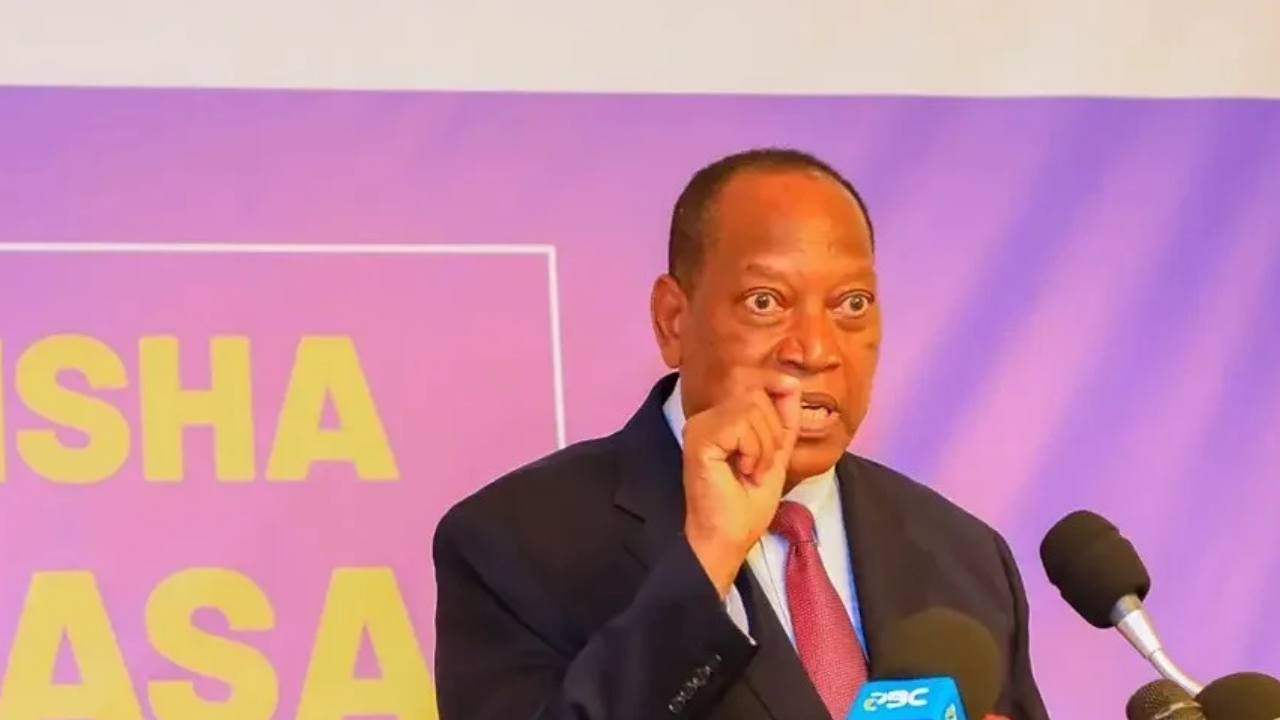

Dar es Salaam — ACT Wazalendo, Tanzania’s second-largest opposition party, has officially announced the formation of a new shadow cabinet.
The move aims to provide an alternative voice and hold the government accountable following the October 2025 general elections, which left the opposition with minimal representation in parliament.
Party leader Dorothy Semu announced the formation of the shadow cabinet during a press conference in Dar es Salaam on May 18, 2026. She emphasised the necessity of the shadow cabinet in the current political climate, where the ruling Chama Cha Mapinduzi (CCM) party holds an overwhelming majority in the National Assembly.
“The election results of 2025 have continued to provide a very thin representation of the opposition in parliament, a situation that increases the importance of political parties continuing to use alternative systems to oversee the government, criticise it, and press it so that it can be accountable to the citizens,” Semu stated.
The newly formed shadow cabinet is the third of its kind since the party passed a resolution in 2022 authorising its creation.
READ MORE: A Decade of ACT-Wazalendo: A Journey Through Triumphs And Tribulations
According to Semu, the previous shadow cabinets have been instrumental in raising citizens’ challenges, driving national debates on fundamental issues, and influencing various policy and operational steps within the government.
“This shadow cabinet has built respect for itself as a platform for alternative arguments, the voice of the citizens, and a part of continuing the struggle to press the government in seeking a Tanzania for all for the benefit of all,” she added.
The 2026 shadow cabinet differs from its predecessors by incorporating experienced members from outside parliament alongside the few elected ACT Wazalendo Members of Parliament.
This strategy aims to broaden the scope of government oversight and enhance performance quality. The cabinet consists of 23 spokespersons, with 21 full shadow ministers.
Notably, the appointments reflect a commitment to gender parity, with women comprising 47 per cent of the spokespersons.
READ MORE: ACT-Wazalendo: A Decade of Democratic Resilience in Tanzania My Generation Witnessed
Key appointments in the shadow cabinet include:
| Position | Name |
|---|---|
| Shadow Prime Minister | Isiaka Rashid Mchinjita |
| Shadow Deputy Minister for Energy and Minerals | Luhaga Joelson Mpina |
| Chief Secretary | Idrisa Abdul Kweweta |
| Shadow Minister for the Prime Minister’s Office (Policy, Parliament, Coordination) and Chief Whip | Ndugu Kaboyoka |
| Shadow Minister for the President’s Office (Planning, Finance, and Social Security) | Ado Shaibu |
| Shadow Minister for the President’s Office (Public Service Management and Good Governance) | Pavu Abdallah Juma |
| Shadow Minister for the President’s Office (Regional Administration and Local Government) | Kulthum Jumanne Mchuchuli |
| Shadow Minister for the Vice President’s Office (Environment and Union Affairs) | Said Ali Mbaruko |
| Shadow Minister for Defence, Internal Affairs, and Citizen Security | Rashid Habib Ali |
| Shadow Minister for Constitution and Legal Affairs | Peter Madeleka |
| Shadow Minister for Foreign Affairs and East African Cooperation | Fatma Fereji |
| Shadow Minister for Health and Social Welfare | Dr. Elizabeth Sanga |
| Shadow Minister for Lands, Housing, and Human Settlements Development | Kiza Hussein Mayee |
| Shadow Minister for Agriculture, Livestock, and Fisheries | Bazilio Kapunda Mbwo |
| Shadow Minister for Education, Science, and Technology | Riziki Shahari Mkwali |
| Shadow Minister for Works, Transport, and Infrastructure | Mtutura Abdallah Mtutura |
| Shadow Minister for Community Development, Gender, Women, and Special Groups | Janet Joel Rite |
| Shadow Minister for Labour, Employment, and Youth Development | Abdul Omar Nondo |
| Shadow Minister for Water, Environment, and Climate Change | Jasin Colneli Awit |
| Shadow Minister for Information, Communication, and Information Technology | Shangwe Mika Ayo |
| Shadow Minister for Industry, Trade, and Investment | Mwanaisha Zuberi Mdeme |
| Shadow Minister for Natural Resources, Tourism, Culture, and Sports | Emmanuel Ntobi |
Semu directed the new shadow cabinet to focus heavily on overseeing accountability within government institutions.
She highlighted the loss of over seven trillion shillings, as revealed by the Controller and Auditor General (CAG) reports, which she claimed had been lost or used without satisfactory explanation and without concrete accountability measures being taken.
READ MORE: Kivulini Talks: Tanzania’s Multi-Party System— Fix It or Forge Ahead Without Course Correction?
“Our nation cannot continue to be built on the foundations of unaccountability, abuse of power, and embezzlement of public resources without a firm voice to question and oversee the interests of the citizens,” Semu asserted.
“For a long time now, leaders within the government have turned this nation into a grandmother’s farm, scooping and using the country’s resources as they wish without fear of being held accountable.”
Semu concluded her address by urging the members of the shadow cabinet to be proactive and relentless in their pursuit of accountability.
“My call to all members of the shadow cabinet is only one,” she said. “Oversee accountability with all your strength; do not be spectators. Do not sleep night and day in fighting for the accountability of leaders, the proper use of public funds, the protection of citizens’ rights, and governance based on law and justice.”