
Dar es Salaam. The Tanzanian government and the private sector have issued a joint declaration committing themselves to closer cooperation in implementing the Tanzania National Development Vision 2050, an ambitious plan intended to transform the country into a high-income economy over the next 25 years.
The declaration recognises that achieving the Vision’s targets will require shared accountability and sustained cooperation between public institutions and businesses. It sets out responsibilities for both sides, including maintaining economic stability, expanding investment, creating decent jobs and strengthening Tanzania’s productive capacity.
Under the agreement, the government has committed itself to preserving macroeconomic stability, improving the business and investment environment, developing infrastructure, investing in human capital and formalising dialogue with the private sector.
Businesses, meanwhile, have pledged to increase investment, create decent employment, lead industrial development, promote innovation, expand exports, empower Tanzanians, observe ethical standards and cooperate with the government in implementing national priorities.
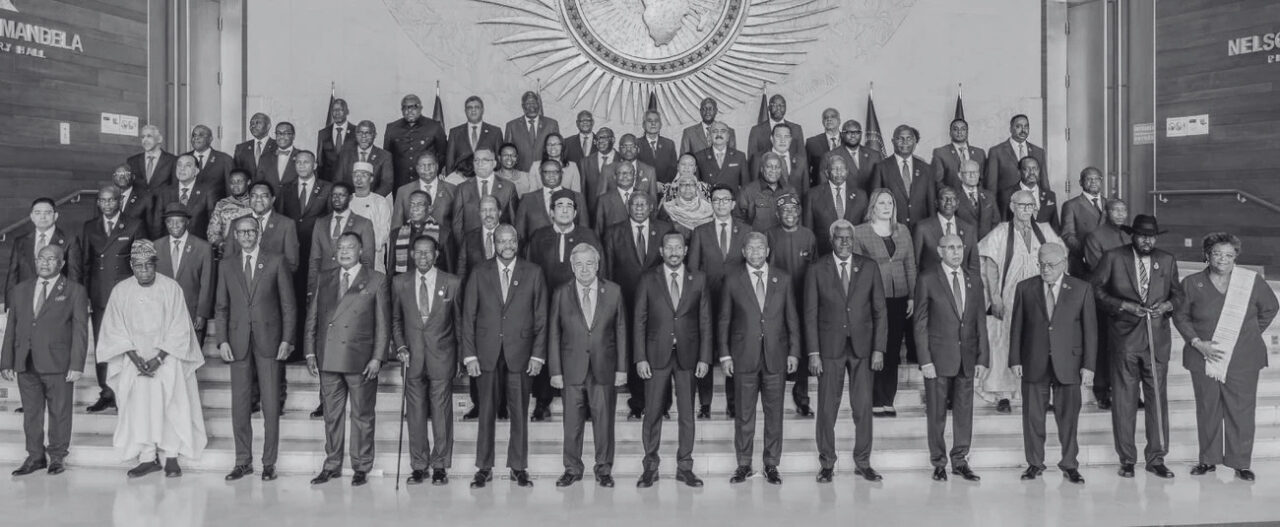
The compact was presented on August 3, 2026, at the State House during the launch of instruments designed to guide the implementation of Vision 2050.
Tanzania hopes to build a one-trillion-dollar economy by 2050, up from its present size of less than $100 billion. The government believes private investment must play the leading role if the country is to achieve the required expansion in production, technology, exports and employment.
READ MORE: Vision 2050: Minister Pressed on Gap Between Tanzania’s Development Goals and Grassroots Reality
President Samia Suluhu Hassan said approximately 70 per cent of Vision 2050’s implementation would depend on the private sector, with the remaining share falling under the public sector.
“The private sector has been assigned approximately 70 per cent of the implementation of the Vision we are discussing for the next 25 years,” President Samia told participants.
“It is therefore my expectation that, in this important development journey, the private sector will play a major role in increasing investment in the country.”
She said the government would continue improving the legal, policy and institutional environment to attract both domestic and foreign investment and facilitate the implementation of the newly launched plans.
The size of the private sector’s assigned role places considerable responsibility on businesses, but it also increases pressure on the government to address long-standing concerns about taxation, regulatory predictability, access to finance, delayed payments and unequal opportunities in public procurement.
Zanzibar President Hussein Mwinyi urged businesses to work closely with the government and direct investment towards sectors capable of accelerating long-term economic transformation.
“This cooperation should be accompanied by investment in strategic areas, the use of modern technology, increased productivity and the development of partnerships that will enable Tanzania to achieve its long-term goals,” President Mwinyi said.
Representatives of local and international business associations welcomed the commitment to cooperation but used the occasion to highlight barriers that could undermine the Vision’s implementation.
Engineer Samuel Marwa, chairperson of the Tanzania United Contractors and Allied Services Association, said local contractors remained disadvantaged despite accounting for an overwhelming majority of companies registered in the country.
According to Marwa, the Contractors Registration Board has approximately 12,400 registered contractors, of whom about 98 per cent are Tanzanian and only two per cent are foreign.
READ MORE: Infographic: Chinese Contractors Lead in Building Tanzania’s Roads
However, he said foreign contractors undertake more than 70 percent of construction work when measured by project value, leaving thousands of local companies to compete for the remaining share.
“We are not even operating on a level playing field,” Marwa said. “Foreign contractors are paid on time because of the costs involved, while we are not paid on time because we are considered local. This has made it extremely difficult for domestic contractors to grow.”
Marwa also criticised perceptions among some public officials that Tanzanian companies automatically lack the capacity to undertake major projects.
“Capacity is not a matter of genetics, as if those coming from outside were naturally created with greater ability,” he said. “They were supported by their countries.”
He called for deliberate measures to build domestic capacity so that, by 2050, Tanzanian contractors could undertake as much as 80 per cent of construction projects by value. Such an arrangement, he argued, would allow more public spending to circulate within Tanzania’s economy.
Torbjörn Jacobsson, representing the European Business Group in Tanzania, said Vision 2050 and the public-private compact could strengthen investor confidence if their commitments were consistently implemented.
“Vision 2050 presents a long and inspiring mission for Tanzania. It demonstrates ambition, leadership and a genuine commitment to partnership,” Jacobsson said.
He noted that international investors make decisions covering decades rather than a few years and therefore consider policy predictability, transparency, consistency and open dialogue between government and businesses.
READ MORE: Ambitious Roadmap for Tanzania’s 2050 Development Vision Unveiled
Professor Kitila Mkumbo, Minister of State in the President’s Office responsible for Planning and Investment, expressed confidence that Tanzania could finance its development ambitions despite a sharp decline in foreign aid’s contribution to the national budget.
Mkumbo said aid accounted for between seven and 12 per cent of the government budget during the fifth-phase administration but had fallen from about three per cent in the 2021/22 financial year to 0.9 per cent.
He described the approach of President Samia’s administration as one of growing fiscal autonomy and economic pragmatism.
Foreign assistance now amounts to approximately Sh563 billion out of the Sh62 trillion national budget, he said, arguing that its declining share has reduced donors’ ability to influence government decisions through aid conditions.
“We are not boasting,” Mkumbo said. “If they gave us the funds, we would be grateful. But if they do not give them to us, that cannot make us start crying.”
He cited an assessment by an unnamed international institution which, according to him, concluded that aid conditions no longer had a strategic effect on government decisions because Tanzania had already incorporated the possibility of reduced or suspended assistance into its public financial management system.
“They will have to find other obstacles,” Mkumbo said. “Aid restrictions can no longer work.”
The declaration establishes a framework for cooperation, but its impact will depend on measurable implementation. Addressing delayed payments, ensuring predictable policies and enabling local companies to compete for high-value contracts will provide an early test of whether the partnership can deliver the economic transformation promised under Vision 2050.