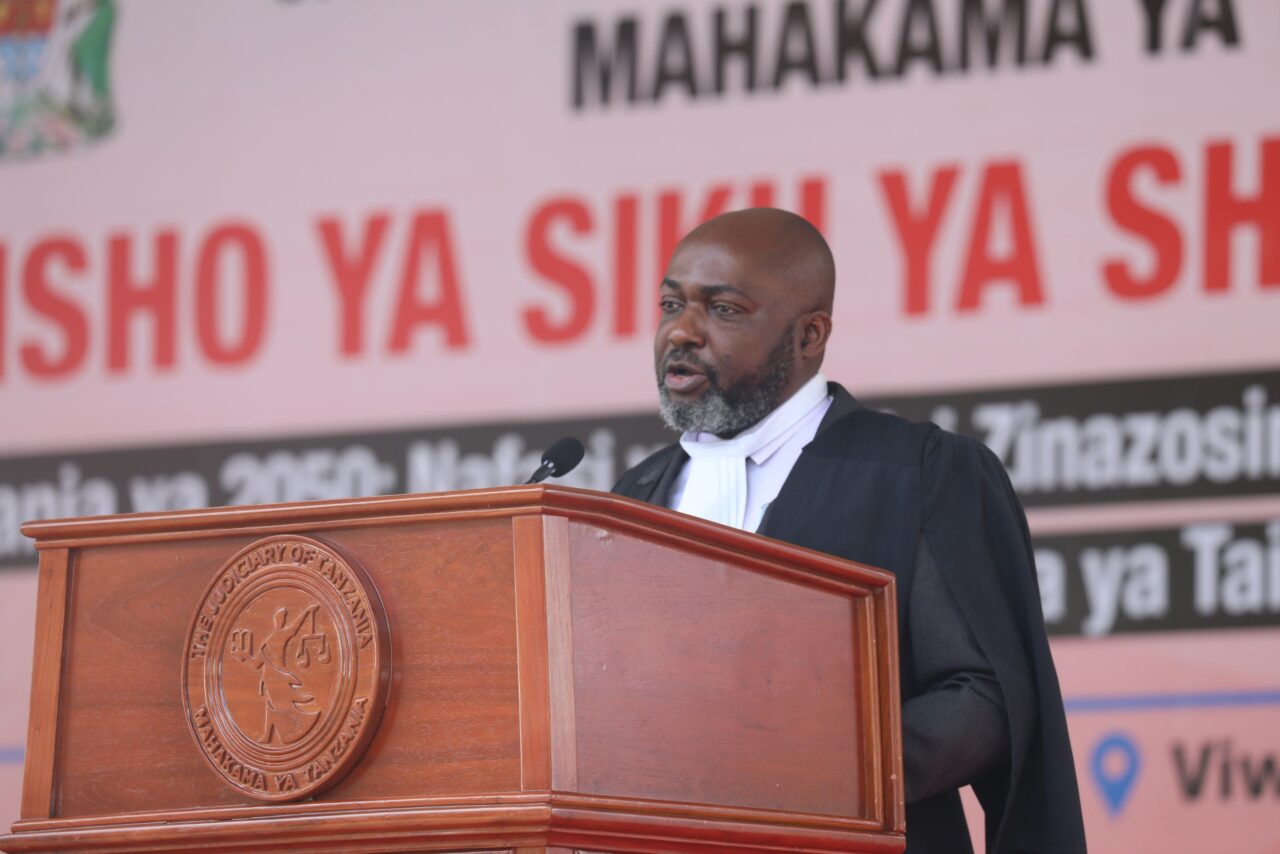

Tanzania has called for urgent reforms to the global financial system and increased climate financing as Vice President Deogratius Ndejembi addressed the 81st United Nations General Assembly.
Representing President Samia Suluhu Hassan, Ndejembi said developing countries continue to face high borrowing costs, rising debt burdens and limited access to affordable, long-term financing, constraints he said were slowing progress towards the Sustainable Development Goals (SDGs).
“When developing countries accelerate progress, they are restricted by high borrowing costs, rising debt burdens and limited access to affordable long-term financing,” Ndejembi said.
He called for expanded concessional financing, greater mobilisation of private investment, improved access to development and climate finance, and stronger representation of developing countries in global financial decision-making.
Ndejembi also urged reforms within the United Nations, saying the organisation must adapt to changing global realities while protecting its development mandate.
“Managing transformation requires reforming the UN to meet the realities of our time,” he said, commending UN Secretary-General António Guterres for championing the UN80 initiative.
He said the reform process should go beyond administrative efficiency to address organisational effectiveness, accountability and representation, while cautioning against changes that could weaken UN country offices and programmes.
With the 2030 deadline approaching, Ndejembi said global progress towards the SDGs remained inadequate and called for improved implementation to ensure development spending produces measurable results.
“Tanzania remains committed to implementing the 2030 Agenda,” he said.
The Vice President also formally announced Tanzania’s candidacy for a non-permanent seat on the UN Security Council for the 2029–2030 term. The election is scheduled to take place in June 2028 during the UN General Assembly.
Turning to the Middle East, Ndejembi reaffirmed Tanzania’s longstanding support for a two-state solution to the Israeli-Palestinian conflict.
“Tanzania is deeply concerned and saddened by the protracted conflict and humanitarian suffering in Gaza and across the Middle East,” he said, calling for the protection of civilians, unhindered humanitarian assistance and renewed diplomatic efforts towards lasting peace.
He said Tanzania supports Israel and Palestine living side by side in peace and security in accordance with international law and relevant UN resolutions, while reaffirming the Palestinian people’s right to self-determination.
“We have been consistent on this for the past 50 years. For us, this is a matter of our foreign policy principles,” Ndejembi said.