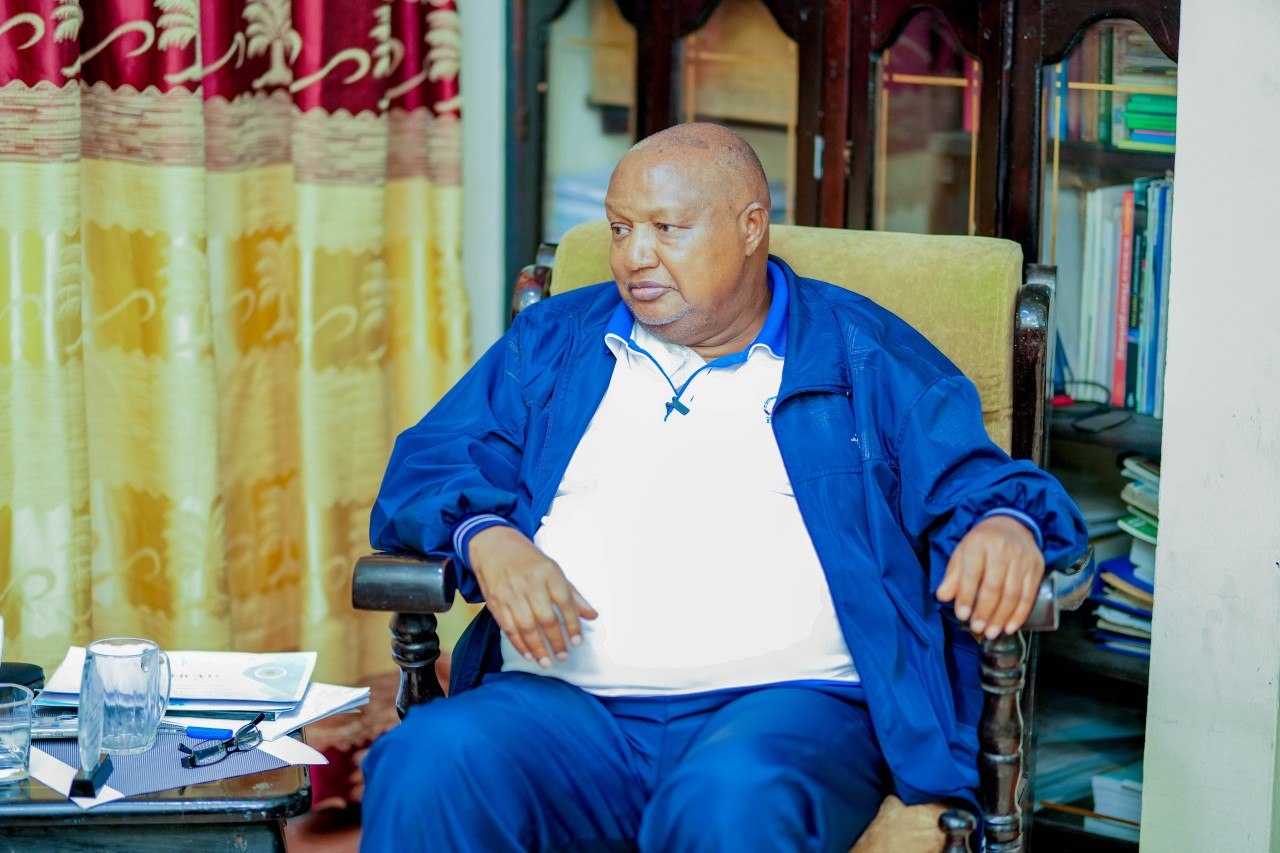

Mtwara – Energy Minister Juma Homera has announced the discovery of an estimated 223 billion cubic feet, or Bcf, of natural gas at the Kasa-1X ST2 well in the Mnazi Bay area of Mtwara, a development the government says will add to domestic supply.
Homera made the announcement on October 27 after a three-well campaign by the Tanzania Petroleum Development Corporation (TPDC) and French operator Maurel & Prom, or M&P.
Mr Homera described the 223 Bcf figure as the result from Kasa-1X ST2 and said the wells would strengthen gas availability.
The figure should not yet be treated as a certified recoverable reserve. In an October 22 technical update, M&P said Kasa-1X had “confirmed the presence of a gas reservoir with encouraging characteristics” and estimated gas volumes associated with the discovery at approximately 200 Bcf gross, or 120 Bcf net to its 60 per cent interest.
M&P did not classify that estimate as gas initially in place, a contingent resource or a proved reserve, and no public explanation has been issued for the difference between its approximately 200 Bcf estimate and the government’s 223 Bcf announcement.
The figures can therefore be read as early estimates rather than as a measure of gas that has been independently certified as recoverable.
The Ministry of Energy had signalled the discovery nine days earlier. In an October 18 statement, Homera said drilling of two development wells and one exploration well in Mnazi Bay had been completed and that the government would announce the quantity found at a planned Msimbati event.
The campaign was designed to do two different jobs. The Petroleum Upstream Regulatory Authority identifies MB-5 and MS-2 as production, or infill, wells and Kasa as the exploration well; M&P operates the block with a 60 per cent interest, and TPDC holds 40 per cent.
The two production wells are already changing the field’s output. M&P says MB-5 and MS-2 are on stream, lifting current Mnazi Bay production to about 130 million cubic feet a day and bringing the combined potential of its existing wells to nearly 200 million cubic feet a day; its processing facilities have been tested at 150 million cubic feet a day.
For Kasa, the company said first production was envisaged as early as November, with an expected gross potential of 50 million cubic feet a day. That is a production plan, not confirmation that the exploration well was already supplying gas when the government announced the discovery.
The find is nevertheless significant because Mnazi Bay is already one of the country’s two producing gas fields, alongside Songo Songo.
In its 2026/27 budget statement, the Energy Ministry said Mnazi Bay averaged 110 million cubic feet a day in the period to March and that the three-well programme was expected to add 45 to 55 million cubic feet a day.
READ MORE: Taifa Gas Steps In as Orca Pulls Out: A Test for Tanzanian Ownership?
Gas from the field is used for power generation, industry, transport and households. TPDC says Mnazi Bay has produced since 2006 and the wider system includes the Madimba processing plant and the Mtwara to Dar es Salaam pipeline, although national distribution networks remain limited to the four regions reached by the transmission route.
TPDC puts the country’s total discovered gas resource at 57.54 trillion cubic feet of gas initially in place, a geological measure that is not the same as recoverable reserves. For Mtwara, the Kasa announcement adds a promising prospect near existing infrastructure, but observers believe the value of the discovery will depend on appraisal, development and the well entering sustained production.
At the Msimbati event, a local representative said two household-connection phases had reached 425 homes and that a third phase was expected to connect 821 more, figures that are yet to be confirmed by the TPDC.