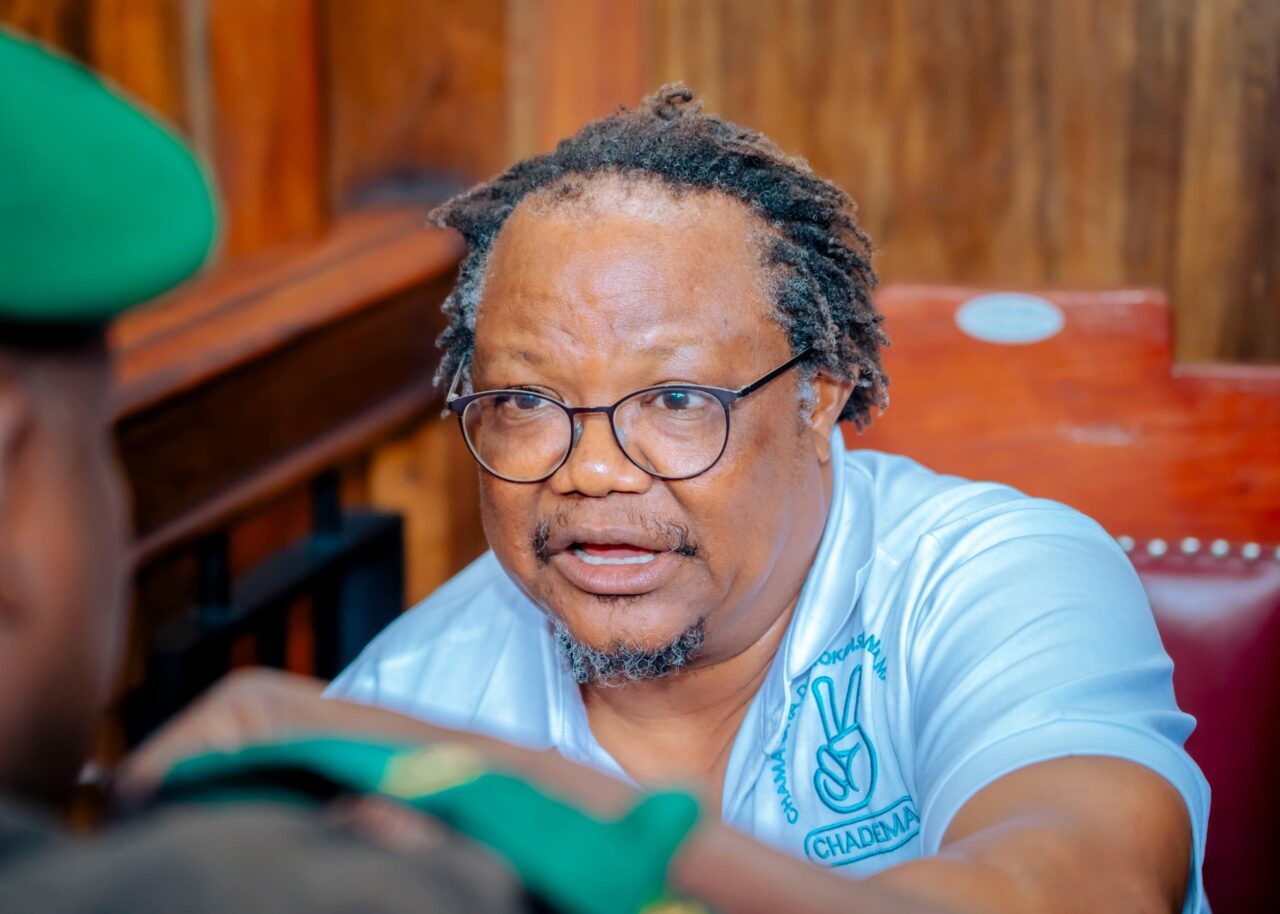

Nairobi, Kenya – Kenya’s Inspector General of Police Douglas Kanja has denied that police arrested or detained Twaha Mwaipaya, but his appearance before the High Court did not establish the missing Tanzanian activist’s location or whether he remained in Kenya.
Kanja appeared before Justice Alexander Muteti on November 3, 2026, following an order requiring him to explain the authorities’ response to Mwaipaya’s disappearance. He said investigations were continuing and rejected allegations that police had unlawfully removed him from the country.
The questioning focused on police custody, the progress of the investigation and the possibility of involvement by individual officers. Kanja denied an official policy of abductions and said any officer found participating in criminal activity would face the law.
“We don’t have the subject in any of our custody in Kenya,” Kanja told the court.
Asked whether Mwaipaya might have been arrested by his officers at some stage, he initially said he was unaware of that. In a subsequent answer, he maintained that Mwaipaya had not been arrested by police and argued that police therefore could not have removed him from Kenya.
Investigation questioned
Justice Muteti framed the immediate inquiry around whether Kanja knew Mwaipaya’s whereabouts, whether police held him and whether officers had arrested and removed him. If he was not in custody, the judge wanted to know whether investigators were looking for him and how far their work had progressed.
READ MORE: Kenyan Court Demands Answers Beyond Police Denial in Mwaipaya’s Case
“Tell us, do you know where he is?” the judge asked.
Kanja confirmed that the disappearance had been reported and said a specialist team within the Directorate of Criminal Investigations (DCI) was handling the case. He did not provide a location for Mwaipaya or identify anyone responsible for taking him during the questioning.
“We have a special team of investigators that investigates these kinds of offences every time they are reported, and that is what’s happening in this particular subject matter,” he said.
Lawyers challenged whether ongoing investigations were producing answers and asked if police had brought abductors to justice. Kanja said investigations involved extensive work and that he would need time to give information about cases that might have been concluded.
The judge corrected a lawyer’s suggestion that Kanja had said no investigations had reached a conclusion, noting that his answer had been that investigations were continuing. Kanja did not identify a completed prosecution during that exchange.
Questioned about the possibility of officers acting as criminals, Kanja said investigators could uncover such involvement and that police personnel would not be exempt from prosecution.
“If it turns out that amongst the criminal elements there is a police officer, he will be treated as such,” he said.
Limits disputed
Kanja’s lawyer, Mr Mwangi, initially argued that the court should hear the substantive application before requiring further answers from the police chief. He maintained that the applicants still had to prove their case and that public interest did not remove that obligation.
Lawyers seeking answers insisted that Kanja’s personal appearance followed the previous day’s order and that the court should proceed with questioning him. Justice Muteti allowed questions about the specific disappearance while limiting attempts to broaden the hearing into other abduction cases.
The judge acknowledged that abductions were a matter of serious public concern, but said questioning beyond the case could offend the rules of relevance or interfere with other proceedings. He also cautioned against disclosing operational details during a live hearing that could inform criminals about investigators’ methods.
Kanja said the National Security Council discussed security concerns, including abductions, but declined to describe its discussions in detail. When asked generally whether Mwaipaya’s investigation was multi-agency, he said it was being carried out by police, specifically the DCI.
Unresolved disappearance
Mwaipaya was reported abducted in Kamulu, Machakos County, on October 25, while travelling by taxi to visit friends. He previously served as national mobilisation coordinator in CHADEMA’s youth wing, BAVICHA, and has advocated constitutional reform and police accountability.
Human-rights organisation Vocal Africa brought the habeas corpus application, a procedure seeking to have a detained person brought before a court. At the November 2 hearing, the judge said a police denial of custody did not adequately address allegations that state agents might have unlawfully returned Mwaipaya to Tanzania.
That hearing included a witness account describing Mwaipaya and his companion as political asylum seekers living in Kenya because of their involvement in CHADEMA politics. The court’s concern about a possible forced return did not establish that such a transfer had occurred.
Kanja’s testimony supplied a personal denial from Kenya’s police leadership and confirmation of an investigation. It did not resolve where Mwaipaya was, who had taken him or whether any officer was involved.