
In this session of Kivulini Talks, small traders and policy analysts debate the hardships small traders face as the city grows, and how the structure of the economy is pushing more people into petty trade. The discussion centres on whether it is possible to strike a balance that lets low-income earners share in the growth and prosperity of towns and cities while keeping those cities orderly and functional.
Participants include Faria Shomari, a small business owner and community organiser, along with Deborah Bero, Stella Mwasa and Asia Masimba, all women who run small businesses around Manzese market. They are joined by Emmanuel Andrew, Alfred William and Gerald Nickson, petty traders from Kariakoo; Dr Baruani Mshale, a researcher and policy expert; and The Chanzo’s analysts Joel Ntile and Tony Alfred K.
You can watch the full programme below or continue reading the transcript.
Khalifa Said: Welcome back, The Chanzo viewers, to our series of Kivulini programmes that we have been doing here The Chanzo meeting with different people to discuss issues happening in our country and elsewhere and to see how we can contribute to finding solutions or a positive direction on those issues.
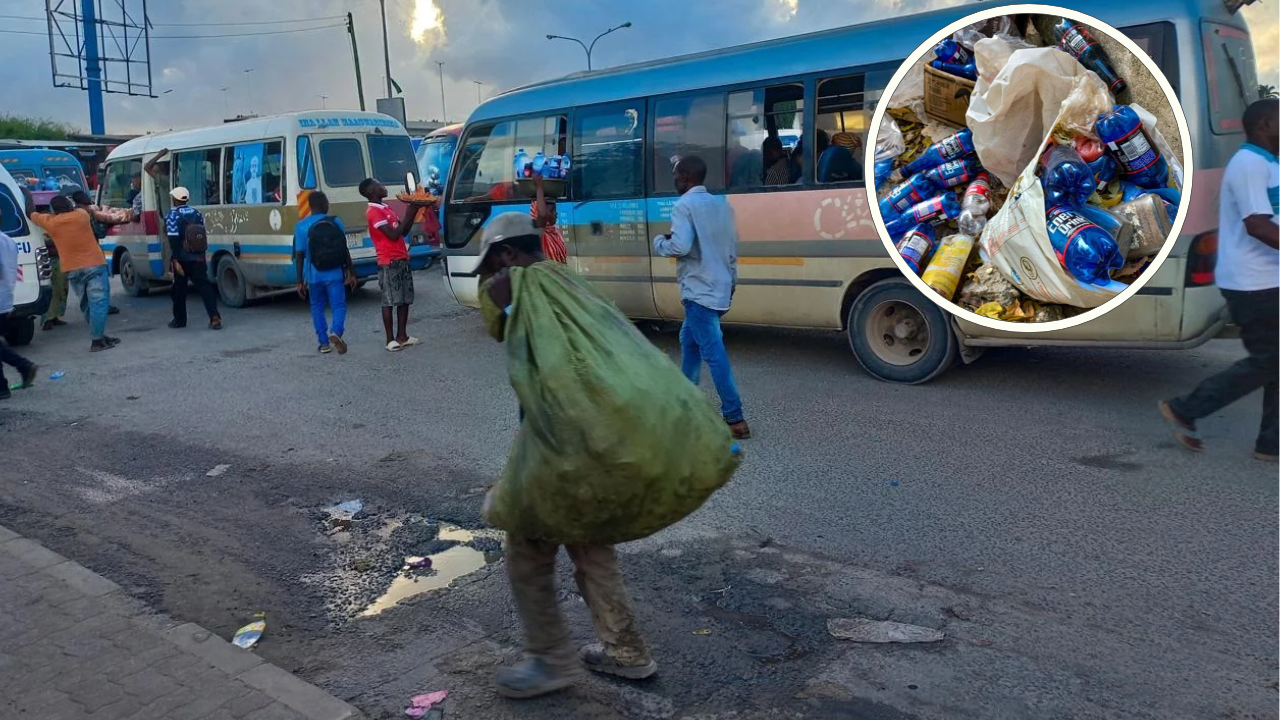
Now, if you have been following closely for several days now, authorities here in Tanzania, in various areas, have been seen conducting an operation to relocate small traders, popularly known as Machinga, from areas which, according to those authorities, are not supposed to be trading areas, and these traders have been ordered to go to areas set aside for such activities.
And we have seen in various parts of the country that these measures have been generating a response that at times has been unusual. We have seen traders protesting, raising their voices against what is going on and calling on government authorities to rethink how they are conducting these operations. The government has been saying that these operations are important to ensure that the city looks presentable but also that traders do their business in areas that are official. But there is another reason that has also been given recently, which is preparing for the El Niño rains which the relevant authorities have warned will come any time from now.
Now, to get an in-depth understanding of this issue and how it has affected or continues to affect small traders and other people here in our country, we decided to meet here, joined by some of the traders who are the target group of these operations, but we also have journalists and analysts who have been following closely what has been happening and what continues to happen, and also experts who can help us analyse and get a broader picture of this issue.
My name is Khalifa Said, and on behalf of my colleagues behind the camera, Ambrose Dawai and Hija Selemani, we warmly welcome you to this conversation. My friends, you are very welcome.
Panel: Thank you.
Khalifa Said: The first part, which I think is the right place to start, is for you to tell us, from your experience, what you are seeing out on the streets, what exactly is happening right now, and you, as traders, as the target group of these operations, how have you been affected or how have people you know been affected, and in what way, because of this whole exercise that is going on right now. Who wants to start? Maybe you, brother, since you have the mic.
Emmanuel Andrew: Thank you very much. My name is Emmanuel Andrew, I am a Machinga [petty trader] in Kariakoo. There was a commotion going on here recently right after the meteorological authority announced that there would be El Niño rains. So after the government announced that situation, that challenge went hand in hand with efforts to get the nation into a clean state in preparation, especially by cleaning drains and areas near the roads. And doing that meant that they touched some traders who were small traders.
The only thing is, the problem I came to see later is that it emerged as if it were the main agenda. I mean, when they talked about dirt, it seemed one of the most important forms of dirt was the Machinga [petty traders] themselves. So this issue ended up creating a bad image, and sometimes you see even on social media people start making jokes of a sort, that there is a strong possibility that even this system that came with the El Niño issue seems like a political thing that was engineered so that the main goal was to remove the Machinga without complaint, because they had already been given a warning.
Now, in a world like this, where many young people are struggling, studying, doing whatever, they understand. So when certain news comes out, people do analysis, and when they do the analysis they come to discover that it may well have been politics, because if you look, this thing was announced to start in September. September passed, and now we are in October, which is about to end, going into November, and we see the sun is fierce and so on.
Now, I cannot complain too much about the authorities, because the authorities did two things which I somewhat understand. The first thing is what they did there, the weather forecasting, which is a prediction. A prediction has two outcomes: either it is right or it is not. So I understand that. But the problem is when it comes to be seen that the area receiving the strongest stance, and very loudly, from government leaders who are appointees of the Honourable President, then it starts to make me suspicious, because I don’t see the emphasis being very strong on the drains; the emphasis is very strong on the Machinga. So for me, on my side as a Machinga, I begin to see it as if it was engineered just to remove the Machinga.
Khalifa Said: Sorry, excuse me a moment, sorry. You said you are a Machinga from Kariakoo. Perhaps you can tell us how big the problem has become there in Kariakoo; for example, how many traders, roughly, like you, have been directly affected by these operations?
Emmanuel Andrew: The first thing we need to understand is that in Kariakoo there are roughly two types of Machinga: there are Machinga who were given tables and then there are Machinga who don’t have tables. If you take them all together, I remember that according to figures from two years ago from the Machinga offices, there are more than twelve thousand Machinga in total, but the Machinga who have tables, I think number about three or four thousand.
Now if you take them all together, when they were talking about removing them, this operation, the first thing of all is that it affects this trader psychologically. Why? At the very same time they are planning to remove the Machinga, there are also banks that have given people loans. Now if banks have given people loans, it means that if that person hasn’t repaid the loan, what state is he in when he is told he will be removed at any time?
And when they said we were leaving, the Honourable Regional Commissioner was sort of joking around, because at one point he was speaking and he said, he said, we will remove them and then give them shop stalls. Yet the way shop stalls are obtained in Kariakoo is well known: you can’t get a stall without paying key money. I mean, that is a business system that traders created themselves and it has become permanent. So if you give them stalls, what does that mean? It means you will give them stalls on the third or fourth floor.
I doubt anyone would come all the way from, say, Mbagala or Kinondoni to look for me, a Machinga, upstairs; what are they searching that isn’t available elsewhere? Because for you to sell goods that people will follow you for wherever you are, regardless of how hard it is to get there, your business must have a winning competitive advantage, I mean the uniqueness of your business must be there. But the things we sell are things that are available anywhere, you’ll find them in every shop. So how can it be that you tell us you will take us to tall buildings? So you find yourself in a situation like that, you have already affected me psychologically. So, so what that means is that…
Khalifa Said: You said there are about twelve thousand traders in total, because in Kariakoo now, if you pass through many streets that used to have Machinga, they’re gone and so on. So out of the twelve thousand, maybe about five thousand have been removed from their businesses?
Emmanuel Andrew: These twelve thousand, I divided them, if you remember, I divided them into two types: there are those who were given tables and there are those who just set up anywhere, I mean the ones with those little mats, they lay out those little mats. Now, those who have their own little tables are few, about… those I said are about four thousand or three thousand.
Now those, they were removed in different ways. First, they are removed at different times; they are not all removed at once, because that could cause a bit of a problem. The very first ones to be removed were at the time when the main market was being opened, so on Tanda Mti Street and on Nyamwezi Street there, which is near the market. Those were removed without any mercy. That one had no option, they had to be removed, because the Regional Commissioner announced that all roads leading into Kariakoo must be clear. So for that reason, those people left without knowing where they were going.
Khalifa Said: Okay. Do you want to contribute?
Faria Shomari: I will contribute a little on the existing government system, especially on the side of involving traders or citizens in the allocation of, I mean in the planning of infrastructure, the planning of cities. First, when the government plans cities it should involve citizens or the stakeholders of the area concerned. For example, traders should be consulted: here we want to do one, two, three, and everyone agrees together. That participation has been absent. How so? Because I, for example, even this Machinga thing, the removal of the Machinga, I don’t think they are consulted. It’s like they are being forced or chased away.
For example, in Manzese there used to be very many traders. There in Manzese there has been tensions two or three times that I remember. The first time, the Machinga in Manzese were chased out to be moved to the Big Brother market. But Manzese is big, and the traders are many; the Big Brother area is small. So some went there to Big Brother but others stayed in Manzese, and that caused a big tension. People got hurt, people were treated badly. At that time the women food vendors had their food poured out. These City council officers would come and pour kerosene on the food of vendors and then they will take cooking pots, they would carry them off in their vehicles. So it had a huge impact. But later things calmed down, it calmed down.
In recent years the Machinga in Manzese started being chased away again to be moved where? to Mawasiliano, the Mawasiliano market. The tension was not small; people were beaten there, people got hurt, some move, others, I mean, just as happened that earlier time, some went to Mawasiliano but others stayed. Now those who went to Mawasiliano, in recent years I’ve heard there was a tension there; a certain District Commissioner went there, another struggle, they are being moved again. I don’t know where they’re being told to go now.
So the way you harass this person, the way you harass a citizen in that style, what environment are you creating for them? If there were joint participation, that we are moving, or leaving here but going somewhere, but we all agree; not leaders or the authorities agreeing, but we, the people concerned, are the ones to say, here it has truly become too much, let’s move to such-and-such place.
Khalifa Said: Thank you very much. Perhaps someone else would like to contribute, because I would also like to know, for example, has it touched you personally? For example, these operations. But for example, as our sister here was talking about participation: you, as traders, was there ever a time you met with these authorities and held meetings with them, discussed things, before being removed from your areas, and things like that?
Alfred William: My name is Alfred Elisha William, I am a small trader from Kariakoo. Allow me to go back just a little, to the year 2021. 2021, an operation was carried out which was about planning the city and organising the Machinga properly. Now in that process I think there were some other small traders, some of whom to this day can’t get capital again. You know, a Machinga gets his capital in very tough conditions. I mean even that hundred thousand or two hundred thousand you see him with, it took time struggling to get that capital. So if it gets ruined, automatically getting new capital takes a long time again. You see, and the effects go all the way to the family, because people are paying school fees, people have children, have this and that.
In 2021 an operation to organise the Machinga was carried out; it was carried out in many areas, there were many. Now, after that operation, I thought that now the matter had ended there. Some Machinga remained at their tables, others were found places that are safe, they were organised and other businesses carried on. Now, although the effects were big on the outset, but we asked ourselves as Machinga and saw that there are areas where, if the government speaks, you yourself can see that these people are right on… these people are operating on a road, there’s no other way for people to pass, so when these people are removed it hurts, because they’re your colleagues, but that’s the law; laws must be followed.
But this second time has come in a different form, a different form, in the sense that I think the place where a Machinga should be is in the markets. I mean, the Machinga leaving the roadside, a safe place for the Machinga [petty trader], it’s in the markets, because the real meaning of a Machinga is a person who is learning business so that later he can become a big trader. I mean, he goes through levels of growth, from small business to big business. Now, to learn that, he must learn by doing, you understand what we’re saying, learning by doing. That means he must be in the place where business is done so that later he goes from being a small trader to a big one.
When you take him out of the market, it means it’s the same as saying today all students should leave schools and go learn somewhere else. You understand? It means you’re taking away the place of learning, you understand, that’s where we do our practicals, we see how business is done, we learn and we grow from one stage to another. And there are some big traders who came out of being Machinga, though many people won’t say it, but the truth is that we have many big traders who started at the bottom just like that and rose until they became big traders, and where did they learn? Right there in the markets. So if there’s a safe place for the Machinga to stay, and the government should consider this, it’s in the markets.
Now the mindset I’m seeing is that just recently I was looking at Tandika; they’ve removed them from the markets, which are their main markets for learning business and growing, and taken them to the outskirts, where, being on the outskirts, we don’t know what their business turnover will be like, we don’t know how they’re working, what difficult conditions they’re facing. The challenges they face are many, and new too; people have loans. So I was thinking this business of removing Machinga from the markets, the ones where they should be learning business, and taking them elsewhere, you understand, or leaving them with no place to work, first of all I don’t see it in a good light, because I believe a Machinga learns business through doing, where he sees big business being done; that’s how they learn and grow.
Khalifa Said: Right, right. Our sister there.
Debora Bero: Thank you. My name is Debora Paschal Bero, I am a small trader. I want to go back a little, as our brother here said, back in those days there was that Big Brother market. The Big Brother market had a very big impact, especially on women. Participation, as our Secretary said; I can say participation exists perhaps for the big people themselves, but not for the small traders. There were people who just woke up in the morning; I was trading there at that time as a food vendor, and we found the stalls simply buried.
What big impact did the women there suffer? It can lead some woman to even develop mental illnesses, because you don’t know how many loans that woman has; she is also puting children in school. There are some women nowadays, they are raising children on their own, we call them single parents. So what that person is going through, or what challenges she faces: she comes in the morning and finds her business has been demolished, the children need to go to school, and as you know, nowadays health services we’re told are free, schooling is free, but when we look at it, for us women of low income, small traders, we say no service at all is free. “Free” is just talk, or “free” is just a sign you find written there at the hospital or you find it at the school. But when we come back to reality, everything needs money.
And when we say small traders, take me, a food vendor, or I sell porridge; I depend on the Machinga being there at the market. I cook my porridge, carry my flasks and go there to sell. Business today, if I find the Machinga has been demolished, it’s not only the Machinga who’s affected; even I, the small trader, have been affected. I’ve been affected; I go back home, I have loans. I’m being chased, I have loans, how do I repay them with? So it ends up that you’re running there, you go home, you’re running, but when you go back to the government you’re seen as borrowing recklessly. Nobody likes to borrow recklessly; one borrows because of challenges like taking children to school.
So this situation, as you say, El Niño, I think it came with a different meaning; it wasn’t about rain, because it happened, but when it happened, other businesses were carrying on. So why this time is it that we should be removed, some places taken here, other places taken there? If that’s what they want, then let them build us factories for traders, so we know we have a factory to go and do business, for the Machinga to do business, and us small traders too, we go and take our businesses there. So we have been affected to a very large extent.
If I take those who were demolished in Kariakoo, I have a brother-in-law whose fate we still don’t know, because he had a big loan and he was demolished there, to the point that his wife, my younger sister, ended up saying, “Sister, I feel like I’m losing my mind.” We don’t know, even now, the money, what do we repay it with? Even now we’re still helping him. So the government should first think this thing through properly, set up trading places for us so we can do business; put a system for Machinga, let markets exist so that we women of low income can also continue with business.
Khalifa Said: Over here someone wants to contribute.
Stella Mwasa: My name is Stella Mwasa, I am a petty trader [Machinga] at Manzese Midizini market. At our market right now there’s road construction going on, but on that road we’re not wanted; it was announced to us that we should make way for the road construction, the Machinga should leave and make way for construction. We said it’s impossible, so we had to set up along the edges of the road; when they pass we let them carry on with their work, we pack up and then we open again.
It has continued; right now there’s a spot where they’ve dug to build a bridge, they’ve closed that road completely, they don’t want people to pass, motorbikes, cars and whatnot; people pass one by one, but we Machinga are there, holding on. They keep on pouring concrete on the road, they announce to us again, saying they don’t want Machinga to put tables over the drains of that road; I mean, Machinga, you figure out where you’ll go. They don’t want tables at the side, over their drains. If we move back, there are people’s shop stalls, and those with stalls also say this is my area, the table I put here is mine, I’ll rent it to you at my price. So we have that challenge.
We sell fruits; some of us fetch fruit from Mabibo to bring there. Now you run into commotion like that, you can’t even open; sometimes the fruit goes bad. We go back and enter right into the market at Midizini itself; there’s the straight stretch, the road from Morogoro Road going straight to Mburahati, and then there’s the inside of the market. Inside the market they tell us it’s full here, no more traders are wanted. We hold on to our road, but I mean we have challenges; we are paying school fees. I have two children; every day I need to give them two thousand, two thousand each so they can go to school. And now the business itself, the challenge is we don’t know where we’re going.
Khalifa Said: Right, right. Thank you very much, everyone. Perhaps, sister, you’d like to contribute? Mm.
Asia Masimba: Thank you. My name is Asia Eso Masimba, I am a small trader. On my side, what I see for us small traders, it reaches a point where we find a person plunges into loans; it’s not that you go into loans because you like it, and not everyone who gets into loans likes it, it’s because of the challenges they go through.
For example, for now, I personally, my small businesses, I sell snacks, I sell small things. The area where I do business, you’re there doing business, you’re told to pay a levy, you pay; you’re told to pay the rubbish fee, you pay; pay for things and so on and so on, you pay. But you find at the end of the day you still end up facing these challenges; you’re told, move from here, head to another area, where you find… remember, when you leave that area you’ve already lost customers; where you’re going, it’s like you’re going to start afresh.
You can’t come… a person can’t be down here and come, as our brother said, a person climbing up a building to get cassava; it’s something that’s impossible. Most customers who pass by, you rely on passers-by; a school child passes, and you hope they’ll buy your product, be it cassava, be it kachori, whatever. But if this government had a special system, as my colleagues who spoke before said, that it reaches a point where for every trader, where they direct us should be a designated place, not that today you’re moved here, tomorrow you’re taken there, tomorrow you’re… I mean you find in the end even you as a person lose hope.
Khalifa Said: Okay, perhaps, Tony, take the mic. The Chanzo, have been following this story closely, and I wanted to hear from you how big is the problem of this operation? How big is this operation, and if you could give it a name, what name would you give it? What exactly is happening here, in your view?
Tony Alfred K: If it’s a name, I would say instead of fighting poverty, we are fighting the poor. And I think in 2021 we went around at that time, when they were being relocated, and we spoke with Machinga in various places. Now at that time, one thing we saw was that for many Machinga, the place they were being moved from wasn’t the place they had been originally. I mean, they had been moved there too, earlier. So you find a person started out here in town, moved, moved again, and ended up in Mbagala, and so it goes. So, and there too you find they’re required to move.
Now, if you look at its scale, it’s as if, as cities grow, as wealth in the cities increases, instead of everyone benefiting, it seems there is a group, a group of very many people, that keeps being pushed to the margins, pushed to the margins. For example, Tandika: they were taken to Tandika because it’s a market; now, now that wealth has made the place lively, they’re being pushed further away. So that’s how it is: the more a city’s wealth grows, it’s as if people, who are searching or people searching for their daily bread are pushed further out, and those who are already well off, who are few, are the ones given those opportunities to reap the wealth.
So if you look at it as a whole, it becomes a kind of economic discrimination. You don’t call it discrimination, but it can’t be that you push people here, there, until they find themselves gathered in one place, all of the same status. Now don’t you see, then they can’t all make a living; even business turnover becomes small.
So maybe let’s look at why Machinga exist. If you look, Machinga exist because of the economic structure we have; we have an economy that grows but doesn’t create jobs. So look at the sectors driving things right now: there are six sectors, sectors that are growing. You’re talking about banking and insurance, you’re talking about mining, water, electricity, entertainment and transport. So out of all these six sectors, the sector that employs the most people is transport, which employs 1.2 million people, but the remaining sectors, if you add them up, employ only 650,000 people. So you have an economy that truly is growing, but the sectors that bring jobs are few. So you see, all these sectors that are growing employ only seven percent of people. So where do people go? They go into informal businesses.
And if you look at the figures NBS released in September, people who do informal business and don’t have permanent premises are about thirteen million; people who do business, this kind of selling, especially at the roadside, are about 2.9 million. Now thirteen million is equal to the country of Rwanda; 2.9 million is equal to the country of Namibia. I mean, that’s… so the problem is not the Machinga, it’s not the small traders; the problem, let’s go back, is the economic structure.
Khalifa Said: We’ll come back to that. Perhaps, Brother Baurani, I wanted to ask you: the government has its reasons. I mean, the government won’t, I think, tell you that we are doing this because we are evil people, that we intend harm to our citizens. It has its reasons, reasons like the ones I mentioned at the beginning, that the use of roads must be respected, these are road areas, not trading areas, but there’s also this matter of preparing for El Niño, heavy rains, we simply must. And I wanted to get your assessment, in your view: the reasons the government gives to justify, or these operations that it is conducting, how much weight do they carry, in your view?
Baruani Mshale: Thank you very much. In my view, I think the reasons given may well carry weight, and even as other contributors have said here, they’ve shown; Alfred said there are people doing business on the road itself, so even they agree that, folks, you can’t do business on the road; this road has other users, these people deserve to be removed. Those reasons carry weight. Then comes this one of preparing for El Niño: cleaning must be done, drains must be cleared so there’s nothing that will block water from reaching the sea and causing floods, because that’s a fundamental reason entirely; we need cleanliness, we need to plan our cities. These are reasons that carry weight, and everyone here has said that they don’t oppose those things, but they don’t agree with the way the process is carried out.
The government itself also, from the little I know, there are times when they know they are breaching even procedures that they themselves have put in place, and they may have their reasons. For example, moving people from market areas, you find that the government has got a grant from a certain donor; they’ve been given a certain timeframe, within one year or two, that infrastructure must be built and completed; if it’s those modern multi-storey markets, they must be built and completed. So they see that starting to hold consultations and involving traders, talking with them, could take time and delay completing the project on time, and they’ve been given the grant to complete the project on time. So they too find themselves forced to breach their own participation procedures in order to complete the project on time, and we’ve seen this.
And perhaps they believe, and here I stress this is my own feeling, perhaps they believe that even if force is used and procedures are breached, when those traders and citizens see the good results of what was done, then they will come to agree, or they will accept and legitimise the breach of procedure that took place. Unfortunately, now, they breach procedures, the standards they set for themselves, and those results don’t turn out to be the results they expected, because those buildings, for example, remain unused.
Examples have been given here; Asia said should a person climb up to which floor to buy snacks, kachori, cassava, when you can just buy them at the roadside? And what’s astonishing is that even these people on the government side, we see their vehicles with those government number plates parking right there at the roadside to buy these goods. Why don’t they set the example that they can get out, leave the car behind, go to that market or the place they’ve set aside for them? But they themselves are the ones we see with their red and blue lights, parking right at the roadside and buying things there while they’ve blocked other people, but when they go back to sit down, they’re the ones who come and say these people should be moved.
So basically, those reasons carry weight, but their implementation doesn’t go the way it should. And lastly, a little addition, is that there is a lack of trust between citizens and the government, that what it is doing and the reasons it gives, are these truly the reasons, or is there something else? I’ll stop there.
Khalifa Said: Okay, okay. Joel…
Emmanuel Andrew: I want to add something
Khalifa Said: Okay, go ahead.
Emmanuel Andrew: Mzee Baruani here spoke very well.
Khalifa Said: Right, Mzee [Elder] Baruani [laughs], he refuses to be called Mzee, he refuses “Mzee”.
Emmanuel Andrew: He spoke very well, and sometimes, if you’re someone who thinks carefully, you could advise the government that the time has come to try going back a little and leafing through the books of the nation’s founders, which they used to write. For example, there’s one book written by Mwalimu Nyerere called Tujisahihishe, “Let Us Correct Ourselves”. Right. I mean, the government of the United Republic of Tanzania cannot avoid that, and if it does avoid it, it could lead the country into very serious harm. Why?
First of all, the government needs to assess itself: why is it that every plan they put in place, citizens tend to run away from it? Let’s start: they built that Magomeni market, all the Machinga keep chickens downstairs. They built the Magufuli bus terminal; all the vehicle owners moved to Manzese and where else there, there at Shekilango, you understand well. They built the Kariakoo market; still, if you go there you’ll find clearly that many traders aren’t comfortable doing business in that market. I know upstairs there are no people at all.
What’s the problem? The problem comes like this: back in the time of Mwalimu Nyerere and his peers, first of all they created a code of ethics for public servants. Now public servants became people who felt they were people who serve, who are accountable to citizens. So because of that it meant that when someone got that position they served people with love. Now the baton changed here in the year 1995, after the introduction of the multiparty system. When multiparty politics came in, politics turned into a business party. So any leader who is in government, it doesn’t matter whether at the level of minister or whatever leader, when he creates, when he creates a strategic plan, the first thing he aims at is, where will I make a killing? Not what impact will it bring to citizens. Isn’t that right, you understand well.
That’s why you’ll find even these markets and these big buildings that they build, to a large extent citizens avoid them. Why? It seems the level of participation, or those economic researchers we have in Tanzania, have become sort of lazy now. I mean they don’t want to do research to find out, now, what is society’s demand regarding markets in Tanzania right now, for these years, and not just these, until the fifty-year Vision comes to an end? If you build Tanzanians a vertical market, you’ll sit in that market alone. They want markets like those markets in Guangzhou. I mean, I don’t know if you understand me well, I mean the market is horizontal. I mean it’s flat, it’s spacious, but people can go in and out with no problem. I mean, at most, it should be just one floor. That’s where we still are; we haven’t got to those very tall markets.
So if you look, you’ll clearly find that it’s as if there’s a certain level of communication that isn’t right between those planners, who I think are in the cabinet and social needs. I mean right now the government doesn’t deal with social needs, it deals with its own private plans. Now when those plans are private and don’t bring results for citizens, that’s when citizens are seen as unruly. Why? It’s like me, for example, let’s suppose I have stomach ulcers, right; I’m not supposed to eat acidic foods, and then you just insist on producing foods with acid. If I refuse to eat that food you’ll think I’m sulking and refusing to eat, but I know the harm if I eat it. So I’m the one who suffers, you don’t suffer.
Khalifa Said: Okay, okay. There.
Faria Shomari: Another thing I wanted to add is about the government. The government has still held on to the colonial system, especially in, in placing people. For example, in the past, during colonial times, people were discriminated against by their colour, and by their colour together with their status. I mean you’d find people of this colour would attend a certain school, those of this colour would study under a tree. But right now here we see, for example, the Machinga or small traders are the ones who start markets before they become big traders; they start a market, they start up that area; once the area becomes lively and people start flocking to it, they are removed, and those who have means are brought in.
And this hasn’t happened only with the Machinga issue; even across the country, in villages, in towns, right now many young people graduating from universities have no jobs. The government has failed to create, to put alternative systems in place, for example building many factories so that when graduates or students finish they can go and get jobs in factories. And then I hear a certain Regional Commissioner saying these Machinga never grow; he’s always been a Machinga. He forgets that the one he saw last year isn’t the one he sees this year; last year’s one has already moved on, has gone far. The one who came this year is the one who graduated from university there and has no job; he’s come there, he’s new, but they see it as if the Machinga don’t grow. So the government should do away with the old system of discrimination, of discriminating against people or discriminating against citizens.
And also, and also even in the villages: villages are started by citizens, they live there, they establish settlements; once the village becomes lively and infrastructure has arrived, those people are removed and these investors are brought in. And it’s the same with farms: citizens clear forests and start farms; later, once it starts to look promising, people are brought in; you’ll be told he has a licence from such-and-such a year. Where was he when the citizens were clearing that area and starting to set up services there? Those people are chased away, their houses demolished, and a person of means is brought in and settles there. So that is discrimination. The government needs to do away with those old systems.
Khalifa Said: Thank you very much. Joel, I want to ask you: what is happening, is it simply fair to say that it’s a natural consequence of cities growing and expanding? I mean, it’s just natural that when you have cities growing, expanding, the population increasing, perhaps these collisions, this friction, will happen. And I wanted to ask you, when that happens, how can we reconcile the interests of the government, which wants there to be order, stability, infrastructure that’s passable, drains that carry water, but at the same time with citizens who depend on those areas to run their daily lives? There are reasons, as Tony said, that we have a big issue, our economy doesn’t generate jobs and so on. But when these collisions happen between the interests of the state in ensuring that infrastructure exists and works properly, and the interests of citizens to engage in activities that earn them income, how can we reconcile them in a way that can be more peaceful and calm?
Joel Ntile: Yeah. Thank you. And fortunately, in answering this question, I think Tony laid a very good foundation for understanding the problem and how this thing works, which is why, as cities grow, as the blessings increase within the city, there’s a certain group of people, a few, being pushed out, and why we see the solution as always pushing that group out. Why don’t we look for a solution that ensures those blessings are shared by all groups as a whole? As our sister Faria said, through participation, by discussing and seeing how we can let this group exist while at the same time not affecting other activities like the ones you mentioned.
And those examples we already have, because there are some areas and some cities, at a time when there was a lot of unrest, if you remember, in 2010 and 2012, 2015, these Machinga issues in various cities, some cities, from around 2018, 2016, began implementing that plan of setting aside designated streets and setting aside designated times to ensure that these people, the Machinga, could do their business at those times. And that model, we saw many cities began copying it; even Arusha, we saw Iringa, Mbeya, and places like Mwanza, a system was put in place to make sure everyone gets something: that if in this lively area there are seven streets, I say from a certain time, from 4 pm to 6 pm, these small traders who are registered, recognised through their associations, will do business in this area under this arrangement, to ensure that those blessings that come from the growth of cities, everyone benefits, not just a few benefiting while the others keep being pushed out every day.
And this, my biggest problem is, why don’t we learn? We’ve talked about examples here from 2021, but there was another one that happened back when 2010, 2010, 2015, there were problems; in Mbeya, for example, it even led to those huge Machinga protests in 2014, I think, if I’m right, 2014 or 2013. But it’s not an issue of yesterday or the day before; this issue has been around a long time, even in Makamba’s time, and for those of us who had started with Bongo Flava back then, you’ll remember even in songs like “Bongo Dar es Salaam”, Professor Jay says it’s like chaos here in town, city council and Machinga. So it’s a long-standing problem, but why is the solution we always use, always the same one of pushing people out of the city? Why don’t we find an arrangement that ensures everyone prospers right here in the city?
And we have examples like the ones I mentioned, that were tried and worked, and we’ve seen, for example, even Dodoma. I’m very grateful that our friend there gave an example of even the type of markets the Machinga want: it’s the Dodoma market. There’s one market there in Dodoma, I’ve forgotten what it’s called. That’s one very good example; The Chanzo has done many stories about that market. It was built, I think, in Mtaka’s time. That market is, is horizontal, flat, it doesn’t go upwards, and if you go to that market it’s packed with Machinga, more than a thousand, more than a thousand, something like that, which recently suffered damage, but it truly is a market that was built there in the middle of town; a horizontal market was built and the Machinga agreed to move from the nearby areas where they had been working and went in to do business there, and it truly is a lively market. So we have examples of solutions that ensure we balance the government’s solutions while at the same time the citizens’ solutions, these Machinga, in ensuring that we can move forward well.
Alfred William: So thank you very much, Joel. So, take the mic, and then, because I want to come back to you as well, as traders, and the question I wanted to ask you is: what is the difference between being given a place and being given a place where you think you can do business? Because the government, whatever the case, for whatever reasons we give here, the government can say, listen, we have built, whether it’s money from donors or our own money, we have built this infrastructure here, these markets here, these buildings here, so the excuse that traders haven’t been given a place to do business, the government can reject it and say no, we built that building there, they’re supposed to go there, but they’ve refused to go there. What’s the difference? The difference between being given a place and a place where you can actually do business? Brother, and then you’ll contribute, because you’ve been quiet a long time.
Alfred William: First, something the government needs to know is that being a Machinga today isn’t like before. I think in Makamba’s time, Machinga trade existed, it existed all those years back too, but now I’d dare to say, if possible, that process of formalising the Machinga, or making Machinga trade an official activity, should just be done, because first, petty trade has taken two forms. The first form: it has become the economic liberation for people at the bottom, lifting them from the bottom to the top. Regarding markets or regarding Machinga trade, given its scale, for the Machinga issue to be solved it needs a well-funded budget and not propaganda, because for a Machinga to do business you must take him to a place where business can actually happen; there’s movement of people, there are customers. Now, to get a place that meets those criteria you have to set aside a budget.
They themselves say that if all of you Machinga go to that place, the buyers will follow you. In business terms, I think we are entering into other people’s field; in business terms, because there’s someone else talking who is, I can say, he’s in a political position, so he doesn’t know about business. In business terms, you go to the customer. If I say it like that you may not understand me, but you will: the customer doesn’t go looking for the product. Let me ask you: if iPhone had put its shop in America and all of you who want to buy a phone had to go to America, would it still be in business today? What shape would the business take? Why does it spread shops across various countries? It’s looking for customers.
When we talk about big companies like those with large capital, they open branches. Right now look at KFC, they’re even in Tanzania. Did KFC look for the customer or did the customer look for KFC? KFC looked for the customer. Now for a Machinga, with his constrained capacity, he needs to find a place where he will get customers. I mean, the purpose of someone coming from wherever to come to Kariakoo, he came to look for customers. The trader looks for the customer, not the customer looking for trader; that does not apply per economic principles. If you want to open any business you’ll look for a place that is easily accessible, you understand, where customers are, so you bring the service close to them so that they pay for that service.
Khalifa Said: Yeah, because another issue is that some of the criticism directed at the Machinga comes from shop-owning traders, because someone says, I have a shop stall here, I pay taxes, I do this, I do that, and then a Machinga comes and sits in front of me selling the very same things that I sell, you understand. Those things, you as Machinga, how do you take them and how can you respond to them? How?
Gerald Nickson: On those, for me personally, I see the government is using force, because, like me, I’m a Machinga…
Khalifa Said: Your name is…
Gerald Nickson: My name is Gerald Nickson, I am a Machinga in Kariakoo. The challenges we face in Kariakoo are many, and we there in Kariakoo, they lump us into a certain group with people who perhaps earn a lot, but it’s not true. And the government, with the decisions it makes to move us, brings that force of saying, leave; like recently the Regional Commissioner came out, Albert Chalamila, and gave us one month, which, the date the other day, was the 24th, we were supposed to be removed, but the leadership sat down and we’ve been designated to be taken to Kigogo Sambusa; that’s where a market is being built for us right now.
Now you, the presenter, tell us: over there in Kigogo Sambusa, it’s outside town. Do you think they’re going to kill us, or that where we’re going, we’re going as traders who will grow, or are we going to be sunk? I think there we’ll go under, because we’re going to start a new life. You see, they’re not helping us in that we’re going to a place where we’ll earn; rather, they’re taking us to a place that isn’t a route, isn’t friendly, of places where we’d do business freely so we can earn the living we earn every day.
Khalifa Said: And then I wanted to ask, do you want to contribute? Yeah, briefly.
Emmanuel Andrew: If I go back to your question, your question was asking that there’s building infrastructure for the Machinga and building infrastructure in a place where there’s business. Mm. Basically, any trader at all, what he’s targeting is earnings. Now if you take him to a place with no earnings, don’t see that person as arrogant or defiant. I mean, he’s not defiant, nor is that person arrogant; he just can’t endure those conditions, because he knows perfectly well there’s a strong chance his dream dies there. So he can’t accept it when he experiences that here, from what you can see of the foot traffic here, it’s impossible.
Let’s take an example like what gentleman there was talking about; if you look, for example, we’re told we’re being taken over there to Jangwani, right, Kigogo Sambusa, eh, Kigogo Sambusa. Now, if you do the maths, it was really simple to make that trader there not regret leaving Kariakoo. That area of Kigogo Sambusa should have been made into a terminal, because even Kariakoo itself doesn’t allow many vehicles in. I mean, if you follow the city by-laws closely you’ll find that certain vehicles like lorries and such big things aren’t allowed in there, because they’re the ones that cause congestion, noise and so on; they shouldn’t be there. Now where do they park? A big terminal should have been built there, because in that area they’re building that bridge, the big one that will help, so that place is no longer impassable. So they’d put the terminal there, and around that terminal they’d put shop stalls or tables all round for people to do business.
Why is it that today we complain about Machinga in Tandika, Mbagala and Kariakoo, but you don’t hear any Machinga complaining from Mbezi, the Magufuli Mbezi over there? Because there they’ve been allowed, they’re building along the road. I mean, just the other day I passed by again, they’re building big stalls, to the point that a person even fits one of those Chinese sliding doors, the, the spring kind, you understand well. Now there, why do the Machinga there not make noise? Aren’t there many vehicles coming in, coming in there from Kibaha, passing there from Bagamoyo, Kariakoo there, Mbagala too?
Khalifa Said: Baru, you wanted to contribute?
Baruani Mshale: I want to add to the question that you asked Joel: when development happens there may be that friction. But the problem we see here in our case is that, yes, there will be friction, some will benefit and some will be affected, but why is it that every time, as Tony said, those affected are people with certain characteristics; it’s always the same ones; why them every single day? This shows us even more that there’s deliberate favouritism taking place.
If you look, for example, at the construction of this infrastructure for these rapid transit buses, the way they’re built, crossing from one side of the road to the other is something that becomes very difficult; it’s as if you’re ready to die just to cross those roads, when a person who lives on this side, there’s a way in which they depend on people who live on the other side; there’s a shop over there, there are businesses over there, there’s that interaction. These roads were designed like that to please the car owner; car owners and those with these vehicles, they can go and make those U-turns, come back to this side, go to that side, and arrive easily, but this low-income citizen, their life gets disrupted; there are people whose businesses have been affected by that construction alone.
Then again you look and see, that’s where I said they breach their own procedures: an analysis was carried out, and there were so-called experts who were paid millions to do an assessment of environmental impacts, social impacts and economic impacts before these projects were done. But you come and find that, yes, they did that, but they reduce the impact for which citizen? It’s the citizen who is perhaps middle class or upper class. In conclusion, they talk about those settlements they demolish, for example, this Mto wa Ng’ombe, where they’ve demolished people’s homes so that floods don’t occur. What about the mansions in areas like Msasani, Mikocheni, Mbweni, which block water from reaching the sea? Why aren’t theirs demolished? They only go and demolish the homes of low-income earners.
So that’s what shows even more that there’s deliberate favouritism taking place, and that’s why citizens are getting angrier, and they have nowhere at all to go and voice their grievances. When they do voice them, they end up being answered with remarks you can clearly see are mocking. Now that’s where you could ask someone, you who say that this Machinga has been small-time for many years and doesn’t grow, where has he who says that grown to? Mm. Why is his work every day the same old thing too? We haven’t seen; let him show us an example of himself growing so that these others, other citizens, can imitate him and grow like him. Thank you.
Khalifa Said: Give Tony the mic, because Tony, I also want to ask you: Baru hinted at it a little there. What are the systemic, structural flaws that are missing from these debates of ours.
Tony Alfred K: I think we have a problem; for example, when I was in school, to this day I ask myself, we were learning about economics, all the examples we used, we were using about America, Britain; they say it’s because they have a lot of data, but if you look here, after finishing I look and think, why, there’s plenty of data here too. So starting from how experts think: they think in terms of developed countries, they think in a way that doesn’t reflect the reality of life.
So he gave the example of Mbezi Luis: there the government has managed to solve people’s problem; people eat, they get their customers, and the Machinga get by, and nobody complains. Now that’s the first example. Now, we’ve often said, I mean, that, we’ve said this group keeps being affected, affected a lot. Now there’s a common example we all see: these petrol stations being built, you know, many are built on road reserves. Now,in Kimara [people houses] were demolished; now petrol stations are everywhere, and those are road reserves.
So if we want people to earn a living, examples exist, it’s possible. The issue is that low-income people, who are many, actually, ninety-five percent of people are in the informal sector. Now I ask myself, for example, the road reserve: you have a road reserve of several metres where you can put petrol stations, but we find it hard to organise the Machinga, who I said number 2.9 million. I mean these are the ones who are on the roadside, 2.9 million, according to NBS.
Khalifa Said: For the whole country or Dar es Salaam?
Tony Alfred K: For the whole country. But if you look at people who do business in places without permanent premises, they’re more than thirteen million. Now these road reserves, which belong to the government, why can’t Machinga be allocated places there and a proper arrangement made, that the stalls should be like this, they should be clean? Cities can be neat, because at the end of the day our development must be for us; it can’t be our development while a large part, a large part of your citizens are being removed from that development. So that’s the first point, that these road reserves, the government, TANROADS, can decide; of course Ubungo have shown the way. Ubungo, I think they talked with TANROADS and said, look, these stalls, we have these guys, we must build for them so they can earn their bread.
So sometimes I see the government wronging its people, but it’s also wronging itself. It wrongs its people, because if a person doesn’t eat, what should they do? They have to struggle, because you have school fees, you have loans, you have sick relatives. And the government also wrongs itself, because it fails to understand that hungry people will inevitably struggle on the streets. So at the end of the day the government must come with a solution. You see these honourables, how we make way for them on the road, they get sirens; we make way for them because for challenges like these they’re supposed to find answers. I mean all the respect they get is because when it comes to this, they must come up with answers so that people eat, people get their daily bread, but cities can also be clean, and it’s possible.
Khalifa Said: I want to ask you: could there be a big elephant in the room that we’re afraid to touch, which perhaps may not be the cause of everything, but is a major cause of everything happening right now, which perhaps contributes to the fact that, when friction occurs as a result of development taking place, we end up biased against citizens? And I’m trying to think, because one thing I was trying to ask myself is, if, for example, our decentralisation policy had been implemented properly, and these people entrusted with the responsibility of running these operations were accountable to citizens, would we see these challenges? Because I think also one of the impetuses, or the force that perhaps gives them the arrogance to say some of these things mentioned here, is because they know that at the end of the day they won’t be going to citizens to ask for votes. Stay with the mic: is there the elephant in the room that perhaps we can put the blame on? Earlier you talked about the type of economy we have; perhaps we can discuss that a bit.
Tony: Okay. But lastly I wanted to give some statistics before I forget.
Khalifa Said: Yes.
Tony: Our sister touched on it there, saying people coming out of universities don’t have jobs. Now the labour statistics NBS have released show that in 2024, 2025, the number of graduates, especially those up to age 24, who finish university and end up on the streets has risen from twelve percent to twenty-one. I mean, people with no jobs; I mean, they get no jobs at all; it has increased. And not only that: unemployed young people, it used to be at… in that age group up to twenty-four, it was six percent in 2024 and has risen to twelve percent. So it’s not that Machinga are decreasing; Machinga will increase.
And why will they increase? It’s because the sectors that employ, I told you, I said it at the beginning, the sectors, the six sectors that are growing economically employ seven percent. Now there are two sectors that employ people in Tanzania: agriculture, and in urban areas it’s trade, where you’re talking about trade, mechanical repairs, and both happen in the informal space. And for last year, the NBS report shows that a large share of people who got jobs went into those informal sectors. So Machinga trade is growing. It’s just a matter of the government deciding to accept this issue and not use theories from New York or from Guangzhou or from Shanghai; this is Tanzania.
Khalifa Said: Right, right, Joel and Baru, I want you to also help me name the elephant in the room, because…
Debora Bero: I was adding a little there about the Machinga; I too, in my view, think the Machinga will increase. Because of what? The factories themselves right now, there are no factories. We had the Amboni factory in Tanga, the plastics one; we don’t see its operations; even now we don’t know where it stands. We have the Urafiki factory, where people could go to the factories; it would be employment that helps them too.
So the Machinga will keep increasing, and women being affected and stress will keep increasing, because of how these people are being shuffled about; now they’ve been told they’re going to Kigogo, and we too have to follow them there. We’ve become like wanderers, like a wandering child looking for who knows where to go. Because when a woman stays put, when she settles into business… our brother talked about following the trader; you have to follow the marketplace. I sell porridge: if I make one flask of porridge here in the neighbourhood I’ll sit with it all day, but if I go there to the crowd, that market, I’ll sell quickly because there’s a crowd there, the people are many. So if I look, even women being affected by stress will continue, and these Machinga roaming about will continue, because our government still doesn’t have a firm position.
Khalifa Said: Joel, take the mic again, and Baru, because I’m still stuck on the elephant in the room, because I want to ask you… perhaps let’s just put my question to you. Given our system, you know, given our economic system, the way we have designed our economy, it will produce people who are spat out of the system, our formal system. I want you to unpack that further. But for you, Baru: Baru, I still believe that many of these problems we’ve discussed here perhaps wouldn’t be this big if we emphasised our policy of decentralisation of power; perhaps, or maybe you can be more liberal in analysing that argument.
Baruani Mshale: Thank you. I think the argument is one about accountability, which we’ve touched on here. Accountability, what does it mean? The government is the one that should be accountable; accountable to whom, and accountable how? Joel talked about it and said there are the interests of citizens and the interests of the government. There shouldn’t be government interests; there are public interests, and the government is supposed to safeguard public interests. But we see, quite realistically, the government itself says it has its own interests: this road must be built here, these Machinga must be removed because of the government’s broader interests, when what we want to talk about is public interest.
So when they talk about government interests it means there’s a legitimacy they get; where do they get it from? There’s that saying that goes, he who pays the piper calls the tune. So who are they going to be accountable to? They’re not going to be accountable to this poor, destitute, low-income citizen, because he has no influence over them; even if he complains he can’t remove them from the positions they hold, he can’t affect them in any way. They need money to run their activities, which you’ll find to some extent may touch on public interests, to some extent touch the interests of some people.
The example Tony talked about: there’s a road reserve, petrol stations will be given room to build there, the Machinga aren’t; or the shop owner, the stall owner, and the Machinga is removed; the shop owner may be allowed in some way to stay there. Why? It’s easy to go after that one to pay levies; TRA go after him, he pays tax, money is raised, the government gets its revenue and does its work. So keeping that one a little happy, that can be done, because the government is going to be accountable to that one, because he’s a source of revenue, but this ordinary citizen, the government sees no reason to be accountable to him.
Our sister at the beginning there talked about the issue of participation and inclusion, and this accountability, we can talk about it within the electoral system but also outside elections. If we had free and fair elections, it would mean that every time we have an election, if citizens are fed up with what’s been done, they can choose an alternative, and if this one comes and messes up, when the election comes they’ll choose another. So that electoral route isn’t there, because we don’t have free and fair elections.
Then comes: how do we hold each other accountable through what other procedures? If there were those meetings at the level of local street governments, at the level of village governments, it would mean people could ask each other there: why is this being done this way, it’s going to affect this person, when it could be done in this way and benefit everyone. But that isn’t there either, and that’s one of the procedures for holding each other accountable. Okay, those aren’t there.
Then it could even be institutions like you, The Chanzo, the media, could also be used as one mechanism of accountability, but we know how our media industry is: it doesn’t go and speak and amplify the voices of the ordinary citizen and their cries, but it will amplify, it will spread what leaders say: leaders have scolded, leaders have said clean the drains, leaders have said this, have said that. What is the citizen saying? That is very rarely covered. So even the media themselves being able to help in overseeing accountability becomes a problem. And other institutions, when you come to the accountability institutions within the state itself, research has already shown that they are weak and fail to safeguard the public interest. So I think it’s the concept and practice of accountability.
Khalifa Said: Okay. So this government ends up being accountable to the one who pays the piper, I mean, who keeps them here in town.
Baruani Mshale: Right. They need that money, they’ll favour that one and not this one, whose interests as a citizen should be safeguarded.
Khalifa Said: Right. Joel, and then I want to come to our sister here, who has been quiet for a long time.
Joel Ntile: You asked about the nature of our economy, I mean that the way we’ve designed our economy, some people will necessarily be spat out, spat out. And now I’m not sure, but as I understood it, the idea of being spat out is those who find it hard to be absorbed into the formal sector, either after finishing university or education and things like that. Now fortunately we’ve talked about only one area, ah, Tony touched on the area of university graduates, and our sister Faria and others: many people finishing university nowadays and finding themselves going into the informal sector because of the scarcity of the sectors that could enable them to enter formal employment.
But let’s also remember the number of Tanzanians depending on agriculture has continued to decline. That too means we have to ask: which sectors are they going into? If you look at ten years ago, ten to fifteen years, it was roughly percent, sixty-five percent of Tanzanians depended directly on agricultural activities, but today if you look at last year’s State of the Economy report, it’s roughly around fifty-nine percent, sixty percent. So you see that, indeed, there’s still a big group leaving agriculture and coming here; now, which sector do they enter here, when we’ve been given figures here that in the formal sector it’s very few areas, or areas that don’t take in many people? So at the end of the day you realise that even those people still, it’s not only those coming out of the formal education system; even those coming from villages who were directly engaged in agriculture are also leaving there and coming to the cities to seek work, and when they come to the cities they go directly into informal sector activities, including Machinga [petty trade].
Now, that’s a problem that presents two faces. The first is that there’s also a challenge on the rural side, in the agricultural sector: investing there; eh, investment in the agricultural sector still seems to struggle to attract or retain many people in that activity as a way of earning an income, and that goes even further if you look even at what we call productivity, or their capacity, the capacity, the production capacity of many farmers is still a challenge, leading to… which stems from various reasons, including many are still using the hand hoe, but also there are issues of climate change and also issues perhaps of investment still not being enough in irrigation farming to make farming easier, so that people can produce, find markets, and earn income, to reduce the pressure of rushing into the cities. So all of that gives that picture.
But, lastly I want to add to what Baru mentioned about accountability, which, if you also look at it within our structure, our system of governance, and our sister Faria gave a very good example: we have a colonial mentality. If you look today, still decentralisation, meaning local government for example, has become like instruments for passing on or enforcing the directives of central government, and not instruments for citizens themselves to discuss, plan and implement matters that concern them.
Today if you look at the side of local street governments, those meetings, whether citizens are really convened; our sister was talking about there being a road being built where they work there in Manzese, but if you ask her, did the street government and the residents, even before construction started, manage to sit together to see how those who earn their income on this road won’t be affected by the construction work going on? And even what we’re seeing right now, if you look at the local government side, what they’re doing in this operation is simply implementing central government directives, and it’s not that these are operations that came out of them planning together with their residents on how they’ll make sure,their municipalities are clean, but also that in their municipalities, people doing small activities in their municipalities will continue to benefit in the way that the residents themselves decide. So those are two areas that I think have challenges.
Khalifa Said: Okay, I wanted to ask you a question, which is: what is going on with small producers, small traders, affects all traders equally, but can you say that women traders face any unique challenges that perhaps their male fellow traders may not face, in your view?
Stella Mwasa: The challenges are there, but they’re nearly the same, because if you say a male trader, he too lacks money; we all struggle, like you set up the table, he has to set up the table and take it down, so the woman does it and the man does it too. So what we were asking is for the government to be able to just provide us with safe infrastructure. You see, like for us over there, that construction, the construction means those tables have to be set up, you take them down; some have those little mats, those little mats need to… once we’ve laid them out, we do business; maybe we’d be told the road construction will finish at six o’clock, you work from six until eight. That would be fine, but those agreements just don’t exist; once a directive has been given, it’s been given.
Faria Shomari: Can I add about the challenges, a little about the challenges? The challenges on that side are greater for women. For example, women and men, there’s a difference in… a man is on his own, he struggles on his own, he has strength, but a woman sometimes has a child on her back.
Khalifa Said:Doesn’t the child have a father?
Faria Shomari: Have you ever seen a father carrying a child at the market, selling? Have you ever seen it? Or as you said, the man is on his own; the man, when he does business there at the market or on the street, he’s on his own, but the woman is there with a child on her back; you see her [poiting at Stella Mwasa], she usually has the child as she struggles with her fruit table and her child on her back. You see, and another one comes from school, hasn’t got home yet, stops first at the market at mum’s place, while she’s facing that road problem; the mother struggles with the table while struggling with the children. So the impact on women is greater than on men; I mean men have it easier, because the woman does everything: children, business.
Debora Bero: I say this: for men and women the challenges are different; women, you know, go through even forms of violence,Why? Because the woman is the main caregiver of family, the woman, woman is the caregiver, even though they say the father is the head of the family; that is what we say out on the streets. But if we take reality, the woman is the main caregiver of the family; without the mother standing firm, the family wobbles. And that’s why nowadays you find some women go through even the challenge of sexual violence; there are women who even think, in business, they have to start sexual relationships with even these market leaders. Another one goes looking for a spot but won’t be given a spot until again issues of sexual violence come in before she gets a spot, and she’s working with her own hands while carrying a child. We see how women walk around in the sun here with children.
So sometimes even when she’s doing business, she isn’t really doing business; in reality, looking back home, she’s left the challenge of the children and also left the challenge of the husband; she goes back, he doesn’t believe you’re coming from business, he believes you’ve come from your other affairs when you go back there. So you have challenges at home, you come to the streets, you have the husband’s challenges, you come again to the market bosses with the challenge of being wanted sexually before you get market spots. So these are two different struggles.
Khalifa Said: Thank you.
Asia Masimba: On my side, I see that the challenges faced by these Machinga we’re talking about aren’t only male Machinga; there are Machinga who are women too who are struggling, and all of them face these challenges, and you find that the woman Machinga is perhaps a single parent, a mother raising children who was abandoned by the father; the mother struggles on her own. So you find perhaps when she’s facing those challenges there, she struggles on her own, she toils in order to fight on. Remember, in the morning she’ll need the children’s needs; she’ll come and check how she left the children, how their day went. That’s the one who’s been chased off, who met those challenges; she goes back home again, she wonders, where do I start? Remember, over there her basin of bananas has been smashed, the cassava pan has been thrown away; she doesn’t know how she’ll start tomorrow.
So that’s where you find her struggling; at the end of the day the mother even finds home bitter. That’s where we come back to the same point: you find some end up getting into things that aren’t proper for the sake of children who want to eat. You’ll go to a neighbour, they’ll help you one day; the second day… Are you going to take them to street chairperson for help? That chairperson, I can’t raise my children, help me? How many can the chairperson help? Although it’s their duty to help their residents, how many can they help? So you find these challenges are challenges that affect them; there are even fathers raising their children alone, and they too are affected the same way psychologically.
Khalifa Said: My friends, thank you very much. We have discussed many things, we have raised many issues and identified several challenges. My last question to you, and this one I want everyone to contribute to, even if briefly: as we’ve seen in this discussion, what’s happening right now, relocating traders, isn’t something new. Joel has told us it goes back to when Makamba was Regional Commissioner of Dar es Salaam, and I think it probably goes back even further than, than that, and it’s fair to say that perhaps this won’t be the last wave, ah, of seeing this thing happen.
But, for example, if we want this to be the last wave, this tussle between town and city authorities and small traders, for this to be the last one, for it not to repeat, not to happen again, what one thing, in your view, will need to change to ensure that, still, he said there are no government interests,but to ensure that, if those government interests exist, they are met, and the interests of, of citizens and small traders are balanced, and there’s no such friction? What will need to change so that this shifting about going on right now is the last, and perhaps fifty years ahead, twenty years ahead, there’s calm, traders go about their activities and the government goes about its own? We’ll start there, we’ll start there, and then finish with Tony over there.What one thing will need to change to ensure that this current wave of relocating, shifting small traders from areas where they’re not wanted, is the last time?
Gerald Nickson: I think for this thing to come to an end, the government should set up for us a place that’s friendly, and take ideas from us, set up markets for us that will be friendly to us. I think that would be… we ourselves would even enjoy our Machinga trade. Thank you.
Khalifa Said: Thank you.
Debora Bero: I think for the government, first, it should remove patriarchal systems, and also let’s go back to Mwalimu Nyerere’s book, the Arusha Declaration; perhaps if we read it we can go back a little and remember.
Khalifa Said: Sorry, explain a little: how does patriarchy affect things?
Debora Bero: It affects us greatly, because right now whoever has something is given more; whoever has nothing even the small is taken, because patriarchy is what dominates; I who have nothing am removed entirely; what little I have is also given to the one who has a lot.
Participant: First, for us to get out of where we are, we must change the mindset of government leaders or authorities in how they think about the Machinga. They should stop thinking of the Machinga as a person and think of Machinga as a system of earning an income that is official. If it thinks that way it will take three steps. The first step is to create areas that will be official and permanent for the Machinga.
Khalifa Said: Now they’ll do… they’ll tell you that already exists.
Participant: Okay, I’m coming to that.
Khalifa Said: Okay.
Alfred William: How do they do it? Right now you’ll take him to Kigogo, a place where you haven’t consulted him on whether this place suits you or not, or whether there’s business here or not. If he sees there’s no business he’ll go back to Kariakoo, you understand. You’ll take him from Buza, you’ll take him, maybe you’ve moved him from Tandika and taken him to Buza; he’ll stay; if he sees there’s no business he’ll come back.
Now what should it do? It should first see this as an opportunity. An opportunity in what way? The government can go through, and I’ve seen many countries do it, through these social security funds, like the ones where we took NSSF and they built a bridge; the bridge lets vehicles through, they pay a little at a time, NSSF got their returns, got their money, their revenue from investing there, and the government get something, and this one too, and the road keeps being used. That means the government can talk with NSSF so they buy areas that the Machinga want, and then those Machinga will pay for those spaces, because you know they can’t fail to, they’ll pay little by little, and then this contractor who built this market gets a certain amount as repayment to him, and the government also takes its percentage, and Machinga trade will happen there; it’ll be a safe place, and it’ll allow more than four or five generations to pass through there, meaning whoever passes through there, when he goes off to open a shop, makes way for another, who comes and grows in his turn; it’ll be that we’ve created a good way of solving the problem permanently.
So, just to add, perhaps I wanted to… I’d like to note that this matter is possible, as I stressed, but it’s about planning and budget. For example, for areas like Kariakoo, if you look for a site, you know Kariakoo sites are somewhat expensive, but if you look for a partner who’ll agree to build right there in the expensive spot, buy it at that same cost, and you set up systems saying, I want to create, say, space for traders, taking traders, ten thousand or eight thousand in this area, and you design it well, the Machinga, you put them there and they make payments monthly or every few days; that money collected can go back to the one who built it, the contractor, I mean, the one who financed that project, and life goes on.
Khalifa Said: Okay, Joel.
Joel: For me, first, it’s when, when we have the orientation of believing that prosperity that come from economic growth or urban growth, should benefit everyone. If we have that mindset, especially among policymakers and implementers, that will help us a lot in removing that mindset that wherever there is growth, we remove these others and give it to the better-off person, so a few can get and benefit more compared with the many others, as was the case, for example, with mining in the Lake Zone. At first that was the approach: that all the areas small-scale miners discovered, they’d then be removed and a big investor brought in, and we saw that caused very many conflicts. But if you look now, the Lake Zone is dominated in very many places by small-scale miners, and the results we’ve seen: very many semi-urban centres have emerged, and, and changes in the lives of people in the Lake Zone in many places have started to be seen, because of the presence of small-scale miners who were left with their areas.
Khalifa Said: Sister there.
Faria Shomari: What should change? First of all, the government should change its systems, move away from colonial systems and look at the situation of young people today, because right now it isn’t governing people who are uneducated; right now the government, the people governed by today’s government, the large majority are educated; there’s no one who lacks intelligence, I mean they have great understanding. That’s the first. And second, the government needs to improve manufacturing sector so as to enable these young people who are heading into Machinga trade to be employed in the manufacturing sector. Third, Tanzania’s resources should be used in the interest of all. Thank you.
Khalifa Said: Brother.
Emmanuel: Thank you very much, but please, let me use just one minute. It’s like this: there’s a book I once read that says if you want citizens to love their country, there must be justice, in the sense of fair treatment. Now if it happens that on the street the Machinga is forbidden, but petrol stations, if you go to Mbagala, are built in the middle of town, which is more dangerous, because that fuel is explosive, it can explode and destroy everything, don’t you see that here you’re not practising good justice? So citizens may end up hating the government, and then the government wonders why citizens hate it, when it’s the one creating conditions that perhaps they don’t sit down and think about. That’s the first thing.
The second is that the government should have systems that speak to each other, systems that speak to each other, meaning that if you look at them, their systems change with the times; it’s not bad to change with the times, but their changes are somewhat questionable. For example, the Machinga were at the Magufuli bus terminal; in 2021 they too were chased away, but then Albert Chalamila came, and they’re building, I don’t know if you follow me, those building there; it means another one will come again and say, demolish, in the sense that what the Regional Commissioner is doing there may be his capacity to think that here they can be placed and there’ll be no problem, and the next one too, when he comes, may think the same. But if the government had started, for example, at TAMISEMI, with directives that this area will be a Machinga area, and everyone who comes will follow the procedure here, that means these systems speak to each other. But here it seems the systems don’t speak to each other.
Third, it has come to a point, I think, where some political leaders now have, have autonomy, I mean they act independently on their own ideas. For example, the matter of moving the Machinga from Kariakoo was once pronounced on by the Honourable President, that when we want to move these Machinga, where will we build for them? We’ll build for them in Jangwani. And then the Regional Commissioner came and said he’ll take them to shop stalls; that means he has overturned the President’s statement without realising it, I mean indirectly he overturned it. And in overturning it there he’s already in conflict with the President, because by protocol, a statement by a top leader shouldn’t be overturned by someone below; it should be overturned by the one who made it. So here he’d already got into a conflict; it’s just that the government decided to turn a blind eye, but he’d already got into a conflict, an administrative one.
And the very last one, let me just finish with this: Machinga are not illegitimate, I mean not illegitimate, in the sense that, first, they have the quality of being discoverers, because in most places the Machinga go, once they become lively, that’s when the big traders go there. Congo Street was started by Machinga; maybe that’s something you didn’t know. Long ago there used to be no big traders there; they were up there somewhere, Mnazi Mmoja, or Posta, you understand. But when they came there, those guys, after seeing the place had become lively, started taking stalls one by one, one by one; they’ve reached the point where they’re playing that game of the camel and the bear, that you get out of your own hut and they move in. That causes a bit of a problem.
Khalifa Said: Sister, briefly.
Stella Mwasa: I would advise the government to build us a market that’s friendly to Machinga, and if possible also give us a stop, so a vehicle coming from wherever arrives, say at Jangwani, drops people off there, and they keep buying our goods, and if possible, even over there in Kariakoo, people won’t go; they’ll stop at our market; let’s believe in that. So we ask for a good market.
Khalifa Said: Do you mean there in Manzese?
Participant: Even Manzese, Manzese, Kariakoo, it’s all the same. Okay. In Manzese there are buildings which are cheap too; right now they may be able to buy and renovate the place well, and we’d keep paying little by little; people won’t go to Kariakoo, they’ll stay with the Machinga, because the Machinga are the ones who bring people into town.
Khalifa Said: Right, right. Mzee Baruani.
Baruani: Okay, thank you. A few words. The first is love, and true love includes being told the truth. First, the government shouldn’t like to be liked so much; leaders very much like to be liked, and they think being liked by being told lies is like true love; they’re told things that please them. Leaders should understand clearly that being told the truth is also a sign of love. That’s one.
The second: we Swahili people say actions speak louder than words. If the government wants to restore the trust of citizens in the government, the government should do so through action and not just statements making promises. The issue of justice has been raised: if people have to be removed to make way for development, if there’s trust and there’s justice, people can endure to some extent. For example, in Nyerere’s time, when he said let’s tighten our belts, people were ready to tighten their belts because there was trust, at least to some degree, but now, if citizens have no trust, you can’t tell them to tighten their belts to endure that difficult transition period while they see you keep buying new, modern vehicles to carry out your activities that are unclear, whose benefit to citizens is unclear. So your actions don’t show belt-tightening, but you want citizens to endure this transition period of friction and clashes. So things must be seen in action; that’s how trust will return, and justice must also be there.
Khalifa Said: Sister there.
Asia Masimba: Thank you. What I’d add, I was saying, if we say the government should just build markets, build us markets, fine, but it should reach the point where those markets are official markets. I mean, it should decide that if we build this market here on the recommendation of our citizens, it’s a market we’ve established as a sustainable market; no more of that upheaval of saying that tomorrow again the Machinga should be moved from here and taken elsewhere. It should reach the point where the government makes decisions that are final decisions: we’ve reached here, and that’s it; the Machinga’s main place will be here, and this is a place that is, what, official for that Machinga.
Tony Alfred K: On mindset, I’ll explain with an example why it’s important for the government to change its outlook. The first example is Mwenge. Mwenge, you remember in the past, right in the middle there were traders; now a very nice building was built and those small traders have been left wandering, and those who were put there weren’t even trading in Mwenge before. So starting from the design of that building, the government should have thought that the design must have a section for the Machinga, and with how big that building is, you could have divided it, half of the ground floor there; all the Machinga who were down there could have gone in there, and they could have given money to the council, the same money that these people pay, actually it could have been even more. So if we started changing our outlook from there it would help.
The second: we’ve seen now the government, online, on social media, they say traders should display TIN numbers, those doing business online, on Instagram and so on. Now if you look, many traders who do business online are Machinga; it’s that social media has made it easier for them; they don’t go on the ground. Now I think the government should see that this social media is helping them with challenges they would have met on the, on the street, that people set up anywhere. So the government, this initiative they’ve come up with, TRA wanting people to display TIN numbers, is good, but they shouldn’t treat it as being about collecting tax; they should treat it as starting by solving problems. The first problem they face is that many aren’t trusted. So I think, for example, TRA and the council can join together and create a database in which this TIN number becomes like how a person with a physical office is recognised; they’re helping them, which is that they’re helping citizens know these are traders who are known, we know their pages. So once you see this number, which is the TIN number, you can check it: these are official traders. So that helps, and people will flock to TRA, who at the end of the day will become taxpayers. So they shouldn’t see it as starting again, the chasing on the streets becoming chasing online too.
The last one, on Kariakoo and other places: There are some countries I’ve passed through, I know there’s a market I saw somewhere in South America; that market, the whole area, I mean the market is a rectangle, they’ve closed it so vehicles don’t pass; you just walk, so vehicles stop outside. When I look at Kariakoo I see a market like that. I mean, there’d be official vehicles that run through; people who don’t like walking ride them. So you park your car somewhere, you take that vehicle if you’re too lazy to walk, you ride, you pay the fare, you get off. Or others walk; you get on there from the start of Kariakoo, you walk around. So all of this area would be a market, I mean a market as it is, business and so on in that place. So it’s a little… it’s possible. But there’s another thing we saw, for example Kigoma did it, where at night you find an area gets closed off; at night it’s closed and traders do their work. I mean, fine, you know clearly that at these hours vehicles don’t pass; you close it and they trade. I think there are many places where the government can do that, so that people get their daily bread. Thank you.
Khalifa Said: Thank you very much. Is it true that there’s nothing that needs to change on our side, us citizens, or is there nothing at all that we can do as citizens? Because from there all the way to there, we’ve put a lot of emphasis on the government: the government should do this, the government should do that, the government… Is it true that we have no power, we have no agency, we have no responsibility that we too should reflect on so the situation can change? Isn’t there anyone who wants to contribute briefly on that? I don’t know if the mic… very briefly, I don’t know if the mic is working, go on, contribute briefly. Ah, didn’t you say you wanted to contribute? Go on, briefly.
Alfred: I think for us citizens, holding ourselves accountable means, for us people at the bottom, it’s true that the government can’t allow business to be everywhere, you understand; we must accept that. But for, for us as we are, something we need to change in the way we run our small businesses: first, we change the way, the way we sell and buy, in this sense. Why do we get into conflict with the government? When the government comes, the big issue is revenue; I mean they, what they’re concerned with, overseeing, is revenue. So what I just ask of people at the bottom: if it turns out there are any projects, big ones the government is doing, building markets and building whatever, we as people at the bottom, supporting it means agreeing to pay those, those levies and taxes that are rightfully due to, to the government. Thank you.
Khalifa Said: Perhaps use this one, you wanted to contribute, very briefly.
Emmanuel: Very briefly, I think a citizen has their duty to the nation, and one of their duties is to obey the law. So if there are laws and procedures set somewhere, we must respect them. The only problem is that they shouldn’t be respected only by certain groups; I mean it shouldn’t seem that the law is very harsh for the person at the bottom but for the person at the top it’s like it’s optional. That’s the first. Then the second: citizens, we shouldn’t sometimes do things just by following emotions, in the sense that, for example, I always fight hard against those traders who, you find, put goods right in the middle of the road; I mean, even for people to pass it becomes a problem. That I never support one hundred percent.
Khalifa Said: Thank you, thank you. Baru, very briefly.
Baruani: I think on the citizens’ side, they’re already doing what’s expected or what they’re supposed to do, because, first, they don’t have, they don’t have a choice; they already must follow those changes that keep happening; they’ll follow the existing procedures, they’ll cry out where they see they’ve been hurt. So on the citizens’ side, I think they’ve already done their duty of showing that this thing is hurting us. So now it’s the other side’s turn to do its duty. Thank you.
Khalifa Said: Thank you very much, my friends, I thank you very much for your views and your contributions, and for your readiness to answer my questions. Viewer of The Chanzo, well, we have nothing more to add; we have come to the end of the conversation we were having here about the operation going on across the country right now, of what is called organising small traders. As you have heard, this is not something new, and there are concerns that this won’t be the last time, but views and recommendations have been given here which, if acted upon, if everyone fulfils their responsibility, we can ensure that we find a lasting solution to these problems that keep occurring.
With that, we have nothing more to add. I, who have been hosting this conversation for you, am Khalifa Said, and once again, on behalf of my colleagues behind the camera, Ambrose Dawai and Hija Selemani, we thank you very much and wish you happy viewing of the other programmes we produce here. And my friends, we thank you very much, and if we send you an invitation another day, don’t hesitate to accept and come and talk with us. Bye bye.