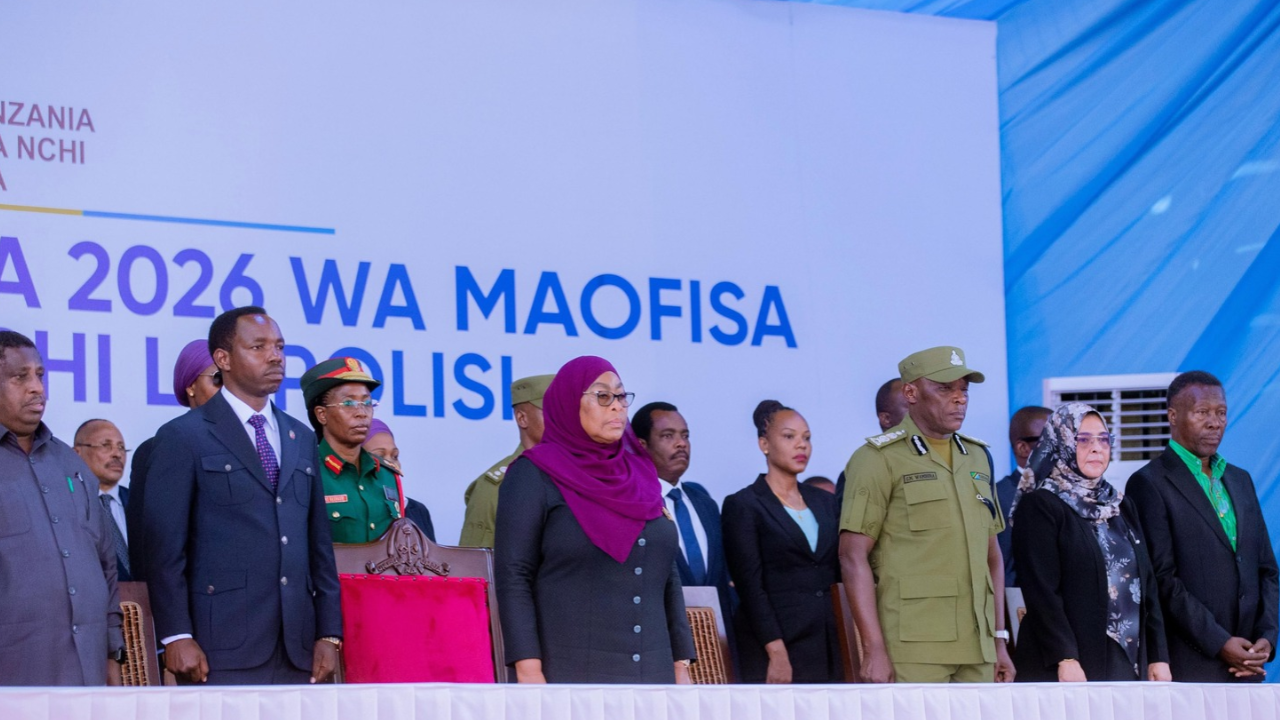

Addis Ababa, Ethiopia – President Samia Suluhu Hassan has announced an initial commitment of 60 specialist-training scholarships for African countries as leaders launched a continental maternal and child health plan, alongside calls for stronger domestic financing and accountability in health services.
The announcements came at the opening of the fifth International Conference on Public Health in Africa in Addis Ababa, Ethiopia, on November 23, 2026. Leaders warned that declining external assistance and recurring outbreaks required African governments to take greater responsibility for financing, supplying and running their health systems.
The African Union Champion’s roadmap for reproductive, maternal, newborn, child and adolescent health covers 2026–2030. President Samia outlined three objectives: zero home deliveries, zero preventable maternal and newborn deaths, and zero unvaccinated children.
She described the home-delivery target as ensuring access to skilled, safe and respectful care in adequately equipped facilities, supported by reliable referral and emergency services. The vaccination objective prioritises children in underserved and hard-to-reach communities.
“The success of this road map will depend on effective national implementation,” she said, calling on AU member states to appoint empowered national focal points and incorporate the objectives into existing health strategies.
READ MORE: Counterfeit Goods in Tanzania: A Crisis Eating Away at the Economy, Public Health
The scholarships will support specialist and advanced training in midwifery, anaesthesia, obstetrics and gynaecology, and neonatal care. President Samia said short competency-based courses and supervised clinical attachments would complement them, helping clinicians, nurses and midwives strengthen childbirth and newborn services.
She did not specify how the scholarships would be distributed or announce application arrangements.
President Samia also disclosed that a survey she planned to launch on November 26 put Tanzania’s maternal mortality ratio at approximately 75 deaths per 100,000 live births. She presented the figure as evidence of continuing progress ahead of the report’s release.
The 2022 Tanzania Demographic and Health Survey estimated 104 maternal deaths per 100,000 live births. That was a retrospective estimate covering the seven years before the survey, rather than a count of deaths in a single calendar year.
To advance the continental plan, President Samia said her secretariat and Africa CDC would convene a high-level dialogue on November 24 to develop practical implementation arrangements. Tanzania and Nigeria would also co-host the inaugural Women’s Health Africa Summit on December 1, focusing on political follow-up, accountability and health workforce development.
She cited approximately 180,000 maternal deaths and 1.18 million newborn deaths across Africa in 2023, warning that preventable deaths remained incompatible with the continent’s development ambitions.
READ MORE: Mwinyi Says Public Procurement System Delays Provision of Essential Health Services
The conference, co-hosted by Africa CDC and Ethiopia and scheduled for November 23–27, centres on moving from health dependency and vulnerability towards African ownership and resilience.
African Union Commission chairperson Mahmoud Ali Youssouf said the continent could not sustainably leave its health systems dependent on other governments’ spending decisions.
“The health of our population cannot depend sustainably on the budgets of other countries,” he said, while acknowledging the value of international solidarity.
He urged governments to implement the longstanding commitment to allocate at least 15 per cent of national budgets to health, stressing that spending must also deliver results. He called for stronger African research and manufacturing, effective early-warning systems and permanent cooperation between countries.
Those priorities underpin Africa CDC’s health security and sovereignty agenda, which combines sustainable financing with local manufacturing, digital transformation, stronger preparedness and a greater African role in global health governance. A separate roadmap on digital health and artificial intelligence was also launched during the opening ceremony.
READ MORE: Tanzania’s Health Insurance Scheme Opens to All Income Groups — But Can It Deliver Care?
Rwanda’s prime minister Justin Nsengiyumva argued that African manufacturers needed predictable markets, with countries pooling purchases and committing to quality-assured African products. International partnerships should deliver technology transfer and skills development, rather than perpetuate dependence on imported medicines and vaccines.
“Preparedness cannot be something we fund only when crisis strikes,” he said, urging governments to finance surveillance, laboratories, trained personnel and emergency response as permanent parts of everyday health systems.
Sierra Leone’s President Julius Maada Bio offered an example of the accountability mechanisms speakers advocated. He said weekly reviews of maternal and child deaths assigned corrective actions to responsible officials with deadlines, while results were published even when disappointing.
Bio reported maternal deaths approximately 34 per cent lower and child deaths 12 per cent lower than in the corresponding period last year, but acknowledged that maternal deaths had increased in Freetown despite improvements elsewhere.
“Our measure of success is definitely not the number of meetings we hold or reports that we publish,” he said. “It is the number of mothers and children who return home alive.”
Africa CDC Director-General Jean Kaseya also warned that insecurity was obstructing efforts to control Ebola in the Democratic Republic of Congo. The discussion linked lasting health protection to institutions that could reach communities, respond across borders and retain capacity after an emergency passed.