
Dar es Salaam — Former Prime Minister Joseph Sinde Warioba has delivered a scathing critique of how Tanzania is handling the aftermath of the October 29, 2025, election violence, calling for full public disclosure of the Commission of Inquiry’s findings and warning that attempts to suppress public debate threaten the nation’s democratic foundations.
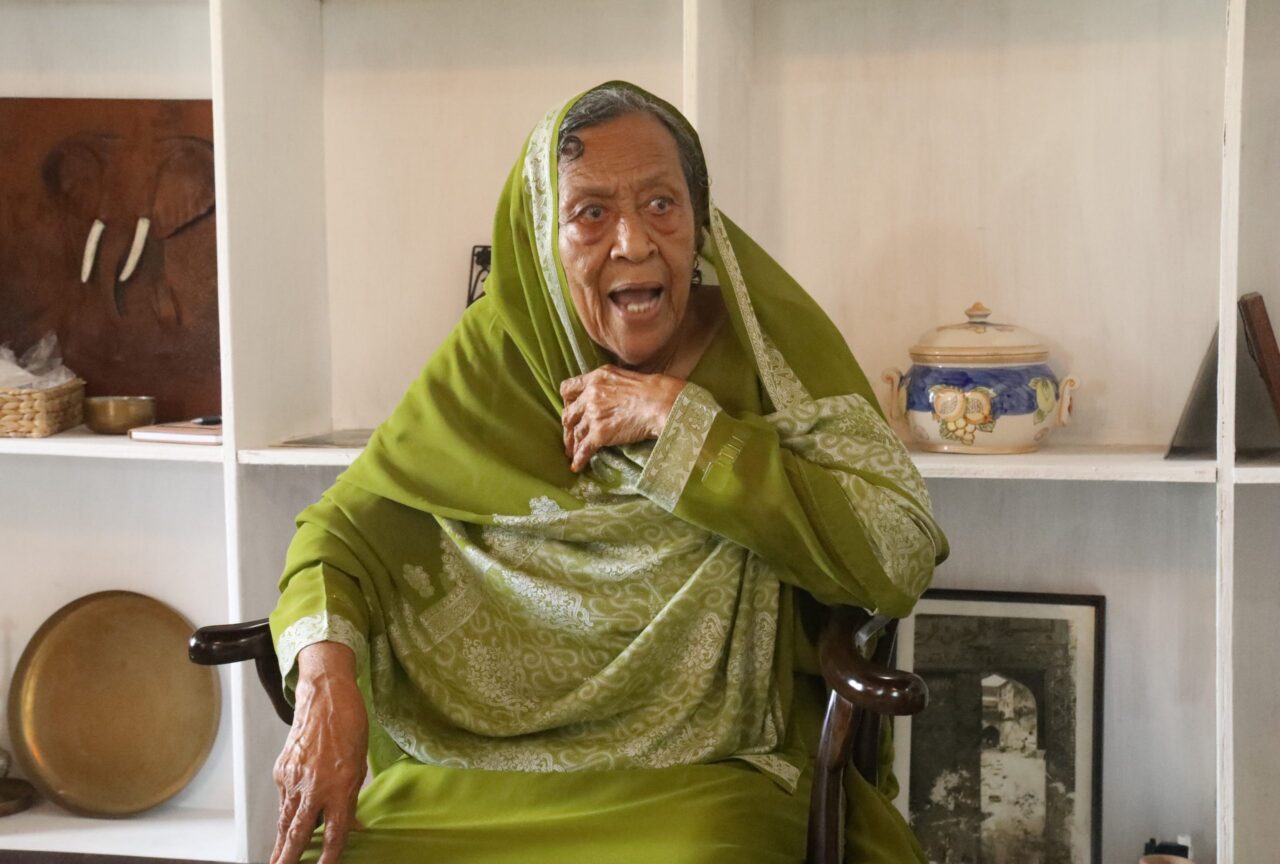
In a nearly three-hour interview with veteran journalist Jenerali Ulimwengu of The Jenerali Ulimwengu Post and Khalifa Said of The Chanzo, conducted on May 9, 2026 and published on May 10, Warioba expressed deep concerns about what he described as efforts to control the narrative around the commission’s report and prevent citizens from engaging in critical discussion of its findings.
“There have been efforts to prevent people from discussing this commission,” Warioba said, describing how two civil society organisations—the Tanzania Center for Democracy and University of Dar es Salaam Academic Staff Assembly (UDASA) —had approached him to participate in seminars but later cancelled or postponed their events after the government signalled concerns.
Warioba, who served as Prime Minister from 1985 to 1990 and has chaired multiple commissions of inquiry during his career, expressed frustration that the Commission of Inquiry’s report, submitted to President Samia Suluhu Hassan on April 23, 2026, has not been made public in full.
While the commission chair made a public statement outlining some findings, Warioba stressed that the complete report with its supporting documents and evidence must be released to allow citizens to understand what happened and why.
READ MORE: Warioba: We Must Return to the Basics (Full Interview)
“I expected the report would be released publicly along with its attachments, because the report itself is brief, but it has attachments,” he explained. “The attachments contain what citizens said, what they experienced, and that would help people understand what the commission found.”
Systemic failures
Warioba’s concerns extend beyond the question of transparency. He argued that the commission’s findings suggest systemic failures that require accountability at the highest levels of government, not just among lower-ranking officials.
He referenced the 1976 witch-killings crisis in Mwanza and Shinyanga regions, when security forces allegedly organised camps where citizens were tortured and killed, leading to the resignation of the home affairs minister and regional commissioners.
“We need to find out who organised this, who gave the orders, and hold them personally accountable,” he said, noting that the commission’s report indicates there were organised groups that recruited participants, established training camps, and distributed funds for the violence.
However, Warioba cautioned against pursuing accountability without clear evidence and proper procedures. When asked whether accountability should begin at the highest levels of government, he responded: “I cannot say who should be held accountable until I have seen the full report and the evidence. But we must start with those who were responsible for these sectors and ensure they are held accountable.”
Speaking about the composition of the commission, Warioba acknowledged that critics had raised concerns about whether a commission comprised entirely of government officials and retired security personnel could conduct an impartial investigation. Yet he defended the commission’s integrity based on his experience with similar bodies.
“I know how commissions work because I have chaired commissions that went to the people and recorded what citizens said,” he explained. “There is no way a commission can hide what people told them. The records show what citizens said.”
He cited his experience chairing the Constitutional Review Commission, which spent 18 months consulting citizens on constitutional reform. “When we went to the people, they told us things that were not in the initial terms of reference, and we recorded all of it,” he said.
A deeper crisis
Warioba’s broader concern, however, is that Tanzania faces a deeper crisis of national identity and values. He traced the nation’s founding principles—equality, justice, unity, patriotism, and peace—back to the 1954 Constitution of Tanganyika and the “Creeds” adopted by the Tanganyika African National Union (TANU) before independence.
“After October 29, we woke up to find a new Tanzania, different from the one we had,” he said. “We need to ask ourselves: how do we restore Tanzania to be a nation of equality and justice, unity and solidarity, patriotism and peace?”
READ MORE: Civil Society Blasts Inquiry Commission Report Over Missing Perpetrators, Flawed Methods
He outlined three critical areas that must be addressed: first, measures to restore peace and security; second, reform of the electoral system to ensure it reflects the constitutional principle that power derives from the people; and third, constitutional reform to address the root causes of the crisis.
On the electoral system, Warioba expressed concern that the current system may not adequately represent the people’s will. He referenced the founding principles enshrined in early constitutional documents, which emphasised equality, non-discrimination, and national unity.
“Our founders took deliberate steps to build a nation of peace,” he said. “They removed discrimination of all kinds—racial discrimination, tribal discrimination, religious discrimination. They built a national culture where people lived together without discrimination.”
He noted that this unity, once a defining characteristic of Tanzania, has been eroded. “If you go anywhere in the country today, you will find people living together without discrimination, but we have lost something,” he said, pointing to the need to rebuild the national consensus that underpinned Tanzania’s stability for decades.
Controlling public discourse
Warioba also criticised what he described as attempts to control public discourse around the commission’s findings. When asked about efforts to restrict seminars and public discussions, Warioba confirmed that civil society organisations had been discouraged from holding events to discuss the commission’s work.
“The government told them that such discussions could cause unrest,” he said, adding that this approach contradicts the principle of open democratic debate. “If people cannot discuss what the commission found, how can we move forward as a nation?”
The former Prime Minister’s intervention comes as Tanzania grapples with the aftermath of the October violence, which left hundreds dead and thousands injured.
Warioba’s call for transparency and accountability reflects broader concerns within civil society and the international community about whether Tanzania’s institutions can credibly investigate and address the violence without appearing to protect those in power.
“The test of a commission is not whether it produces a report that satisfies everyone,” Warioba said. “The test is whether it tells the truth and whether that truth leads to action that restores public confidence in our institutions and our nation.”
He concluded by emphasising that Tanzania’s future depends on whether the nation can return to its founding principles of equality, justice, and unity.
READ MORE: Tanzania’s 2025 Elections: Breaking Down Warioba’s May 3rd Remarks on Justice and Peace
“We cannot move forward if we continue to suppress truth and prevent people from discussing what happened,” he said. “We must have the courage to face the truth, however difficult it may be.”