
The European Parliament’s Committee on Foreign Affairs and Committee on Development have voted against the European Commission’s decision to allocate approximately €156 million to Tanzania in 2026, citing concerns that the Commission has not fully addressed issues raised by the European Parliament in November 2025.
In a resolution that received 81 votes in favour, one against, and four abstentions, the two committees noted that in November 2025, the Commission had suspended the adoption process for the financing plan to Tanzania due to concerns expressed by the European Parliament. However, it was noted that the revised plan did not make significant changes to address EU Parliament concerns.
The resolution states: “Whereas the revised draft Commission implementing decision maintains the same overall amount and broadly the same actions as the previous draft decision, while proposing that the implementation should mainly take place through indirect management rather than direct budget support to the Tanzanian authorities.”
The committees highlighted key issues of concern, mainly tied with Tanzania’s election crisis. It noted that the Tanzanian National Commission of Inquiry investigating the October–November 2025 crisis reported that at least 518 people had died, “but failed to identify those responsible, thereby impeding accountability and justice for the victims.”
READ MORE: EU Parliament Committees Object to €156 Million Funding for Tanzania Amid ‘Democratic Backsliding.’
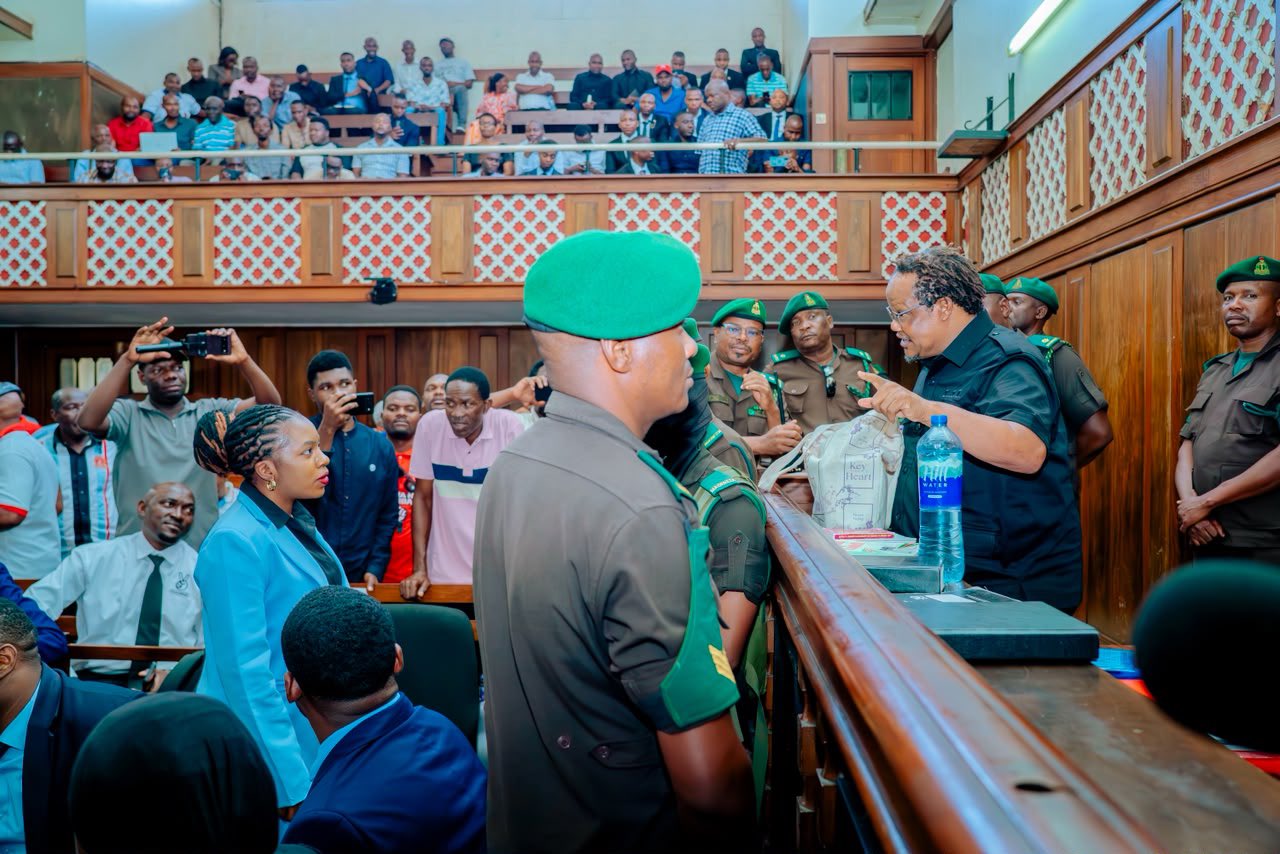
The resolution also cites the Tanzanian authorities’ decision to deny a visit by a delegation from the European Parliament’s Subcommittee on Human Rights in May 2026, as well as the continued imprisonment of opposition leader Tundu Lissu.
The text also signals disagreement between European Union institutions on the Tanzanian issue. Although the committees do not have the mandate to make a final decision on the funding, they have maintained pressure on the European Commission.
“[The Committee] Regrets the fact that the Commission did not suspend, once again, the adoption process of the draft implementing decision upon being informed of the concerns by the European Parliament; deplores the lack of consideration shown by the Commission and EEAS for concerns expressed by the European Parliament in its resolutions relating to Tanzania,” the resolution reads.
Tanzania’s Response
In its response, Tanzania’s Ministry of Foreign Affairs and East African Cooperation said it had taken note of the vote and maintained that it represents a procedural stage that does not impede EU–Tanzania relations.
“The Ministry wishes to clarify the following: First, today’s vote forms part of the internal decision-making procedures of the European Parliament. At this stage, only the Committee on Foreign Affairs and the Committee on Development have considered and voted on the proposals relating to Tanzania,” the Ministry stated.
“Second, the process has not yet been concluded. In accordance with the procedures of the European Parliament, proposals adopted at committee level must subsequently be submitted to the Plenary of the European Parliament, comprising more than 700 Members, for debate and decision. Consequently, today’s vote represents only one stage of an ongoing process and does not constitute the final position of the European Parliament on the matter,” the Ministry noted.
The Ministry further emphasized that relations between the European Union and its partner countries, including Tanzania, are conducted through the European Commission, which serves as the executive arm of the European Union.
READ MORE: EU’s Diplomatic Tightrope in Tanzania: Ambassador Admits to Sanctions Amidst ‘Dialogue’
“In this regard, the recommendations adopted by the parliamentary committees should not be construed as a direct decision determining the future of relations between Tanzania and the European Union,” the statement reads.
At this stage, the practical effect of the committees’ resolution is that the funding remains frozen while the European Commission responds to the concerns raised.
The committees have called on the Commission to withdraw the draft plan and submit a new proposal. They have also maintained that any future revisions should not adversely affect the inclusive provision of basic services, the protection of human rights and democracy, or support for civil society organizations.
Foreign Affairs Crisis
The resolution highlights a growing foreign affairs challenge for Tanzania involving several of its traditional partners, which have historically supported the country’s budgetary and development plans. China remains a notable exception on this, as it has come out to provide an unconditional diplomatic shield amid the crisis.
The EU committees’ resolution comes just days after two U.S. senators introduced a bill seeking sanctions against Tanzanian leaders in response to the killings of Tanzanians during the October–November 2025 election crisis.
In response to the diplomatic pressure, the Tanzanian Ministry of Foreign Affairs has engaged with international partners to present the government’s position. Speaking on May 26, 2026, Minister of Foreign Affairs Mahmoud Kombo told Parliament that the government’s diplomatic outreach began in Brussels following the election crisis.
“The very first place the President sent me was Brussels, because a weighty motion had been passed by the Brussels Parliament.We sat with the Speaker, we sat with the Deputy Speaker, and we agreed to disagree, each party respected the other. They have their position, and they have expressed it in their statement. They have their dignity and we have ours,” Minister of Foreign Affairs Mahmoud Kombo told members of parliament.
In response to the crisis, Tanzania has also sought to hedge its international partnerships, including through the ongoing visit of President Samia Suluhu Hassan to Moscow. While Russia remains a significant global power, its role in investment, trade, and budgetary support to Tanzania remains limited compared with that of Tanzania’s traditional partners.
President Samia is only the second Tanzanian president to visit Moscow since the country’s founding president visited in 1969, underscoring the significance of the engagement.
It is also expected that Tanzania will continue lobbying the European Commission through EU member states in an effort to mitigate the potential impact of future actions.
In Washington, Tanzania is expected to seek an opening with the Executive Branch as pressure from U.S. lawmakers intensifies; items such as the signing of the health MOU, which has hit a roadblock in several African countries, are expected to be showcased as part of the goodwill step from the Tanzanian government to the U.S. higher levels of the Executive.