
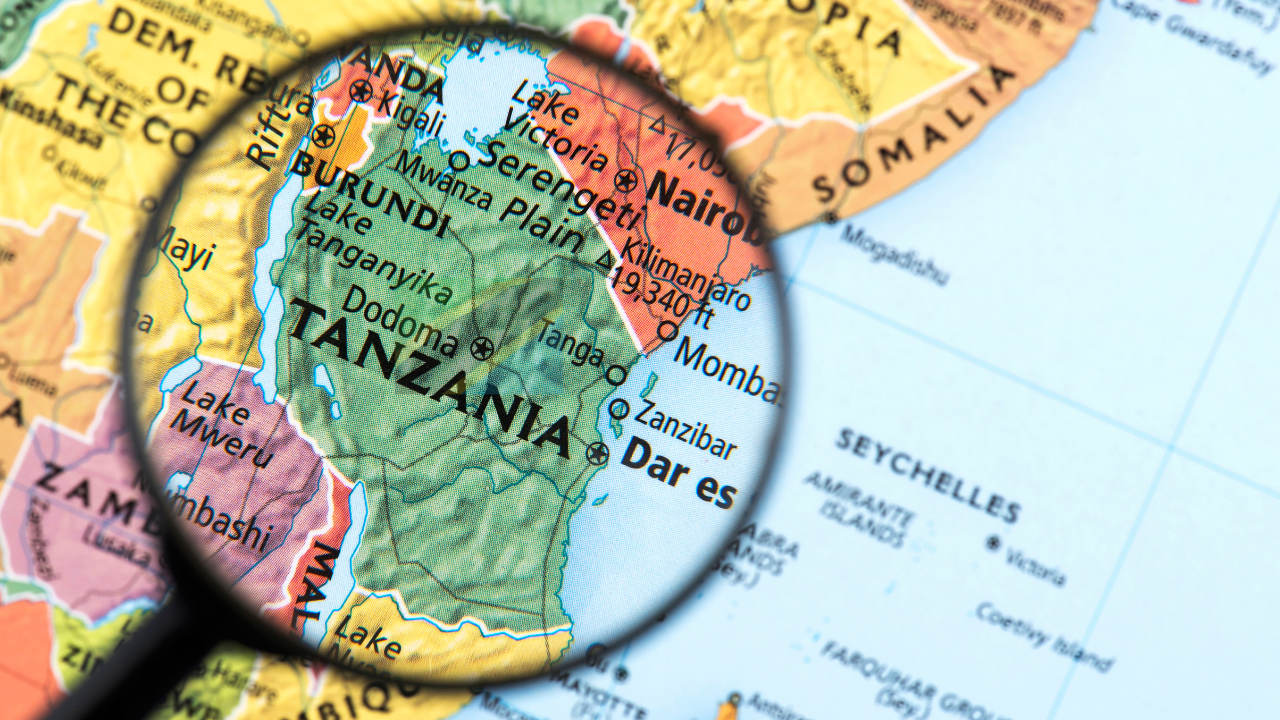
Dar es Salaam – Two prominent United States Senators have introduced a sweeping legislative proposal that could fundamentally alter the relationship between Washington and Dodoma. The proposed law, titled the Reassessing the United States-Tanzania Bilateral Relationship Act, seeks to impose severe sanctions on government officials and suspend critical aid.
The bill was introduced on May 20, 2026, by Senator Jeanne Shaheen, a Democrat from New Hampshire, and Senator Ted Cruz, a Republican from Texas. This bipartisan nature—meaning it has support from both major US political parties—significantly increases its chances of passing through the divided US Congress.
If enacted, the legislation would mandate a comprehensive review of all US security, economic, and diplomatic engagement with the East African nation. It specifically targets the democratic backsliding, political repression, and human rights abuses that characterised the October 29, 2025, general elections.
High stakes
The introduction of this bill comes almost six months after the US State Department announced it was undertaking a “comprehensive review” of its relations with the country. That December 2025 announcement followed widespread reports of extrajudicial killings, mass arrests, and an internet shutdown during the election period.
The material stakes for the nation are extraordinarily high, as the United States remains its single largest development partner. Between 2012 and 2022, total US contributions were estimated at US$2.8 billion, with approximately US$1 billion in direct aid flowing annually.
Furthermore, total goods and services trade between the two nations reached US$1.4 billion in 2024, supported by over US$1 billion in US investments. Perhaps most critically, the US has invested nearly US$7 billion since 2003 through the President’s Emergency Plan for AIDS Relief (PEPFAR), a programme credited with saving an estimated 750,000 lives.
What the Bill demands
The proposed legislation outlines specific, severe consequences if the government does not change course. It authorises the US President to impose targeted sanctions, including visa bans and asset blocking, against individuals responsible for serious human rights abuses and political repression.
These sanctions would target senior officials in the government, the ruling Chama Cha Mapinduzi (CCM) party, the Police Force, the People’s Defence Force, and the Intelligence and Security Service. The bill requires the US Secretary of State to submit a list of these individuals within 180 days of the law’s enactment.
Beyond individual sanctions, the bill mandates the suspension of certain US security assistance, economic and development aid, and trade support. According to the proposed law, this suspension would remain in place until the US Secretary of State certifies that meaningful democratic reforms have been implemented and politically motivated prosecutions have ended.
The legislation also explicitly prohibits Millennium Challenge Corporation (MCC) support until the government demonstrates a renewed commitment to democratic governance. Additionally, it calls for an evaluation of the extent of China’s military, economic, and political engagement in the country.
The senators sponsoring the bill did not mince words when explaining their motivation. They pointed directly to the violence and repression that marred the recent elections as the catalyst for their legislative action.
“Tanzania has long been an important partner in East Africa, but the country’s recent democratic backsliding, political violence and repression cannot be ignored,” said Senator Shaheen, who serves as the Ranking Member of the Senate Foreign Relations Committee. “This legislation makes clear that the United States must stand firmly for democratic principles, human rights and the rule of law.”
Senator Shaheen also highlighted broader geopolitical concerns driving the legislation. “[The Bill] also recognises the broader strategic stakes, including China’s efforts to expand its influence in countries where democratic institutions are under strain,” she added. “The United States cannot afford to remain silent as democratic space closes and instability grows in a strategically important region.”
Senator Cruz focused heavily on allegations of religious persecution alongside political repression. “The government of Tanzania is carrying out a campaign of political repression and religious persecution,” Senator Cruz stated. The Tanzanian government denies these allegations.
Understanding bipartisan legislation
A bipartisan bill represents a rare moment of consensus in American politics. When both Democrats and Republicans sponsor legislation together, it typically signals that the issue transcends normal partisan divisions and commands broad support in Washington.
READ MORE: Kivulini Talks: Tanzania After October 29—Where Do We Go From Here?
The joint sponsorship by Senator Shaheen, a Democrat, and Senator Cruz, a Republican, is therefore particularly significant. These two senators represent different ideological perspectives within the US Congress, yet they found common ground on the gravity of the situation in the East African nation.
This bipartisan approach substantially increases the bill’s likelihood of passage through Congress. While the US legislative process can be slow and unpredictable, bills with cross-party support face fewer procedural obstacles and are more likely to receive votes on the Senate and House floors.
The introduction of this bill on May 20, 2026, marks only the beginning of a lengthy legislative process. The measure must now navigate several critical stages before becoming law.
First, the bill will be referred to the Senate Foreign Relations Committee, where it will undergo detailed examination and debate. This committee, where Senator Shaheen serves as Ranking Member, will likely prioritise the legislation given her leadership role.
If the committee approves the bill, it advances to the full Senate floor for a vote by all 100 senators. Should it pass the Senate, the legislation then moves to the House of Representatives, where a similar committee review and floor vote process occurs.
Only after passing both chambers of Congress can the bill be sent to the US President for signature. If the President signs it, the bill becomes law, and its provisions take immediate effect.
This entire process typically requires several months to a year or more, depending on the political climate and competing legislative priorities. However, the bipartisan nature of this bill may accelerate its progress compared to more partisan legislation.
Government efforts
The introduction of this bill adds immense international pressure to a government already grappling with domestic fallout from the elections. In recent months, President Samia Suluhu Hassan has taken steps to address the crisis, though critics argue these measures fall short of genuine accountability.
Most recently, on May 18, 2026, the government gazetted a special criminal investigation commission to probe the election violence. This three-member judicial panel was formed following recommendations from an initial presidential inquiry led by retired Chief Justice Mohamed Chande Othman.
However, civil society organisations and opposition leaders have largely dismissed these domestic commissions as administrative delays designed to protect perpetrators rather than deliver genuine accountability.
The government has not yet publicly responded to the bill’s introduction, though it will likely face mounting pressure to address the concerns raised by the US lawmakers. The government may attempt to demonstrate progress on democratic reforms and accountability to forestall the imposition of sanctions.
Alternatively, the government may reject the bill as external interference in internal affairs, a position it has taken regarding previous international criticism. Such a response, however, would likely accelerate the bill’s passage through Congress and increase the likelihood of sanctions being imposed.

One Response
The issue here is not about Tanzania’s October 2025 election. That is a scapegoat, why? Because there are many countries doing things even worse than what happened here in Tz. Take Israel for example where they are slaughtering Palestinians with connivance of USA.
Recently, USA bombed hundreds of school children in Iran.
USA supported many African regimes with no human rights whatsoever as long as they allowed it to take their resources. One example Mobutu’s Zaire.
So, the main issue here are the resources they need to take from us and elsewhere like Venezuela, Greenland & the Middle East.