
While debate regarding the Tanganyika–Zanzibar Union is a constant subject of attention, this June it has received renewed focus as topics usually left for informal channels were directly discussed in both the Union Parliament and the Zanzibar House of Representatives.
The debate emerged first in the Zanzibar House of Representatives during budget discussions. But later on, it was also discussed in the Union Parliament, blended together with the contribution from the Zanzibari MP who challenged the unnamed government top leader, labelling them as Judas the betrayer.
The spark of the debate started on June 6, 2026 when the deliberations on the Ministry of Youth budget sparked emotions after several Members of the House raised concerns that people from Tanganyika were taking jobs from Zanzibar youth.
“There are many hotels here in Zanzibar. However, when you visit those hotels, you will find that only a small number of the employees working there are Zanzibaris,” the Vice Chairperson of the ruling party’s women wing, Zainab Shomari, who is also a representative, argued.
“The excuse often given is that young people from Zanzibar are said to lack the necessary education or qualifications,” she continued.
The representatives also reflected on the quality and nature of available work for Zanzibaris, arguing that some jobs and their pay were not attractive. However, the central momentum of the discussion remained focused on claims that jobs were being taken by people from Tanganyika, within the Union.
“There are companies that come to operate in Zanzibar, but unfortunately and quite disappointingly, the people who benefit from the jobs they create are often not Zanzibari… many employees in these companies are outsiders from Mainland Tanzania. This is not right,” Seif Suleiman, representative from Ole, argued.
The most controversial element of the debate came from responses by government ministers. The Deputy Minister of Youth, Hassan Ameir, said the government was planning reforms to address the issue.
“And if you go and see for yourself, Deputy Speaker, it is true that many of those working in those hotels are not local residents. That is a fact, and no one can deny it,” Ameir said.
“Now, our responsibility, as the Ministry responsible for Youth and Employment is to bring about needed revolution,that positions currently occupied by non-locals to be increasingly filled by local people,” he continued.
The Tanganyika–Zanzibar debate intensified further when the Zanzibar Minister of State, Saada Mkuya, made remarks that some interpreted as discriminatory toward Tanzanians from Tanganyika.
“A person who is not a Zanzibari goes to our hospitals and shows Matibabu Card, and unfortunately, those who are there [at the hospital], once he shows the medical treatment card, they just ask for Tanzanian identity card,” Mkuya said.
“With our budget of 8.8 trillion, we will be able to treat 60 million people?” she asked. “And we have seen other people who are not Zanzibaris receiving treatment using Matibabu Card.”
Union Debate and Allegations of Betrayal in Government
The debate remained largely confined to public discussion channels until June 16, 2026, when it was raised in the Union Parliament. The first to do so was Joseph Musukuma, who warned Zanzibar ministers to be careful with their words and called for action from the Zanzibar President.
Another Member of Parliament, Mwita Waitara, also addressed the issue. He linked the Union debate to a statement made on June 02, 2026, when a Zanzibar MP warned of a government leader described as a “Judas,” with many associating the remarks as an attack on the Vice President. Waitara’s choice of merging the Union debate with the “Judas” controversy and choice of words, to many observers, indicated a deeper struggle in the ruling party.
“Therefore, our leaders must be careful with their words so that they do not confuse people. And I suggest, Chairman, that if someone makes strange statements,even on matters of the Union,there were people who used to be removed from their positions immediately if they were seen speaking against the Union and dividing people; action was taken quickly,” Waitara said.
“So what is happening now? If someone can come to this Parliament and tell us there is a ‘Judas’ in the government, let him show us who that person is. If someone has their own hidden agenda, tell them that poison is not tasted. Poison is not tasted, Chairman. This division, this poison is not tasted. He should stop it completely, he should stop it, stop it entirely,” he continued.
On the morning of June 18, 2026, the Prime Minister addressed Parliament to clarify aspects of the Union debate. His main focus was on healthcare access, explaining that residents of Tanzania can use NHIF cards in Zanzibar and emphasizing that the Union remains a brotherly relationship strengthened by intermarriage. However, he did not directly address the “Judas” controversy.
Later that evening, another MP, Jacqueline Ngonyani Msongozi, reignited the “Judas” debate.
“To all those who intend to run for office in 2030, I would like to urge them strongly. Dr. Samia is carrying out her duties. But for supporters and cheerleaders alike, they should use their own sense on things they are being set to do,” Msongozi said.
“Two weeks ago we heard a Member of Parliament in this House use language that was inappropriate—offensive and inflammatory language. Simai’s remarks displayed the characteristics of hypocrisy, scheming and backbiting,” she continued, before being repeatedly interrupted and losing the flow of her argument.
During interruptions from the Chairperson, the government also intervened, arguing that the Prime Minister had already addressed the issue, implying it was addressed by the statement from the Prime Minister on the union. This marked the first time the government indirectly linked the “Judas” debate to Union tensions.
“When the Prime Minister was responding to questions this morning, he concluded on this issue.I would like to ask Tanzanians and Members of Parliament to continue with great strength in protecting, defending, and maintaining our Union. And those who appear to threaten, disrupt, and seek to break our Union, we will deal with them in accordance with the established procedures,” Minister in the Prime Minister’s Office, Ummy Nderiananga said.
She added: “I ask that we focus on contributing to the budget. These other matters concerning the Union, we ask that you give us the opportunity and we will work on them.”
As she was concluding, Government Chief Whip Palamagamba Kabudi cautioned the MP who was still attempting to finalize her contribution.
“The Prime Minister has already concluded that matter this morning, and we as all CCM Members of Parliament have no choice but to maintain discipline in matters such as these. Therefore, I ask the speaker to focus on the budget of the government of Dr. Samia Suluhu Hassan, which contains many development matters for the people of Tanzania, rather than continuing with a matter that has already been dealt with and has its own meetings and procedures,” Kabudi cautioned.
Not Over Yet
Observers following the developments argue that the Union debate is increasingly being used in internal power struggles within the ruling party. Some analysts believe the controversy is far from over and may intensify further.
“Each side was watching the other cautiously. After Zanzibar representative spoke, and here [in mainland] there was a the Judas argument, which was raised couple of weeks ago, strangely, it had gone nearly two weeks without Members of Parliament coming out to make any public statement about it. Once the Zanzibar MPs began speaking about issues of employment and the health of mainland people, it was as if it poured fuel on the fire, allowing MPs to speak out,” analyst William Maduhu told The Chanzo.
“The party, as a party, has not been seen to distance itself from that statement, and that signals that this Judas matter and related issues cannot end here. It is not over; it will explode further down the line,” he cautioned.
When speaking to journalists on June 23, 2026, Simai Mohammed Said, who made the “Judas” speech, maintained that his remarks belonged to the past but remained defiant on the premise of his central argument.
“Most Tanzanians, and you are all mature adults, I trust that when it comes to interpreting that matter, Tanzanians have understood exactly what I meant,” Simai said when asked to say clearly who is Judas.
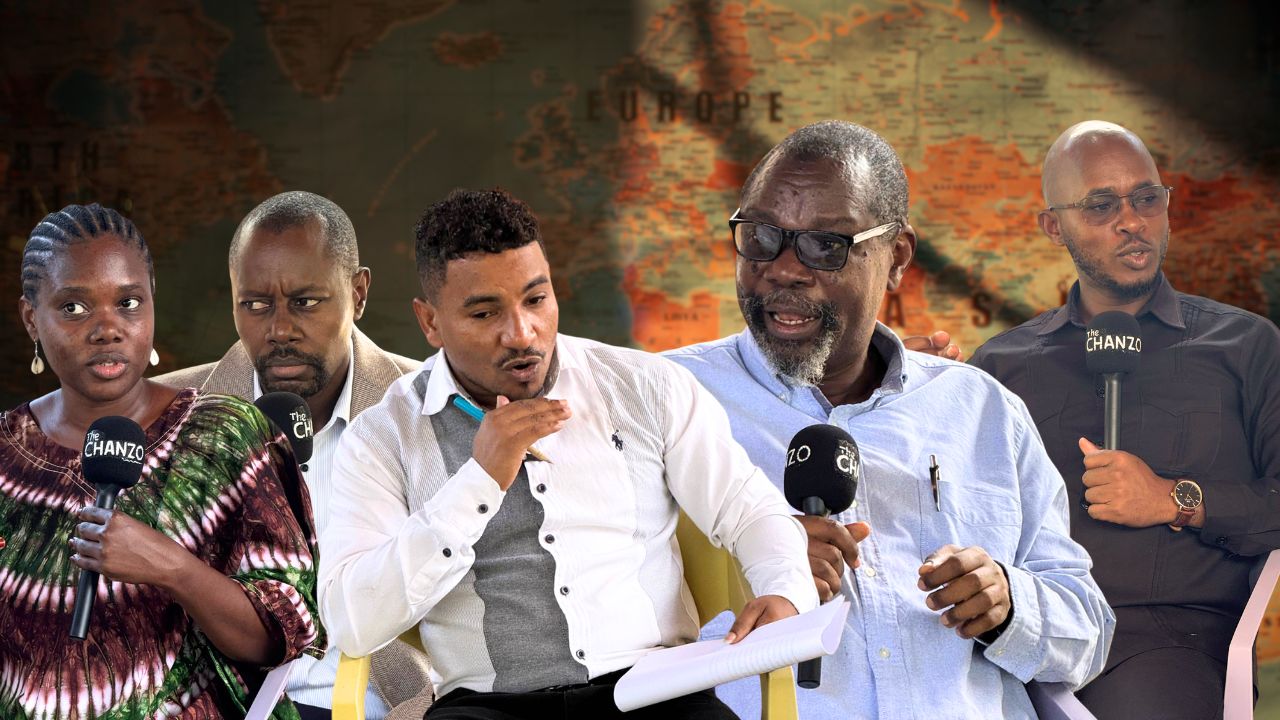
The debate on the state of the Union remains a major topic of discussion in Tanzania at the moment. Speaking in an interview with The Chanzo, Prof. Anna Tibaijuka, a retired cabinet minister, former UN senior official, and former CCM Central Committee member, warned of rising tensions.
READ MORE: Warioba: We Must Return to the Basics (Full Interview)
“It’s no secret there’s great tension between Tanganyika and Zanzibar—this is clear and dangerous. If you don’t discuss grievances, don’t acknowledge they exist, or take one side and ignore the other—injustice,” she stated.
“Young people are demanding a Tanganyika government. Now, a Tanganyika government is a good thing, but it should not end up breaking up the nation as happened in Russia (the Soviet Union),” she cautioned.
A similar warning was issued by former Vice President Joseph Sinde Warioba, who noted that strengthening Zanzibari identity within the Union has, in some ways, weakened the balance of the Union.
“Now, because Union matters have been reduced this way, especially economic matters involving Zanzibar, many Tanganyikans have become very vocal. They now say that Tanganyika itself has effectively become the Union,” Warioba said in an interview published on May 11, 2026.
“They argue that Tanganyika is being governed in partnership because mainland affairs are decided collectively by both mainlanders and Zanzibaris. For example, when discussing mainland agriculture, Zanzibaris are involved. In infrastructure and administration, they are involved. They can even become District Commissioners on the mainland. But when it comes to Zanzibar’s affairs, a mainlander has no involvement at all. So mainlanders now say, we want our own government here. This is a major problem,” he explained.
Most analysts maintain that the Union issue must be addressed in the upcoming constitutional review process.