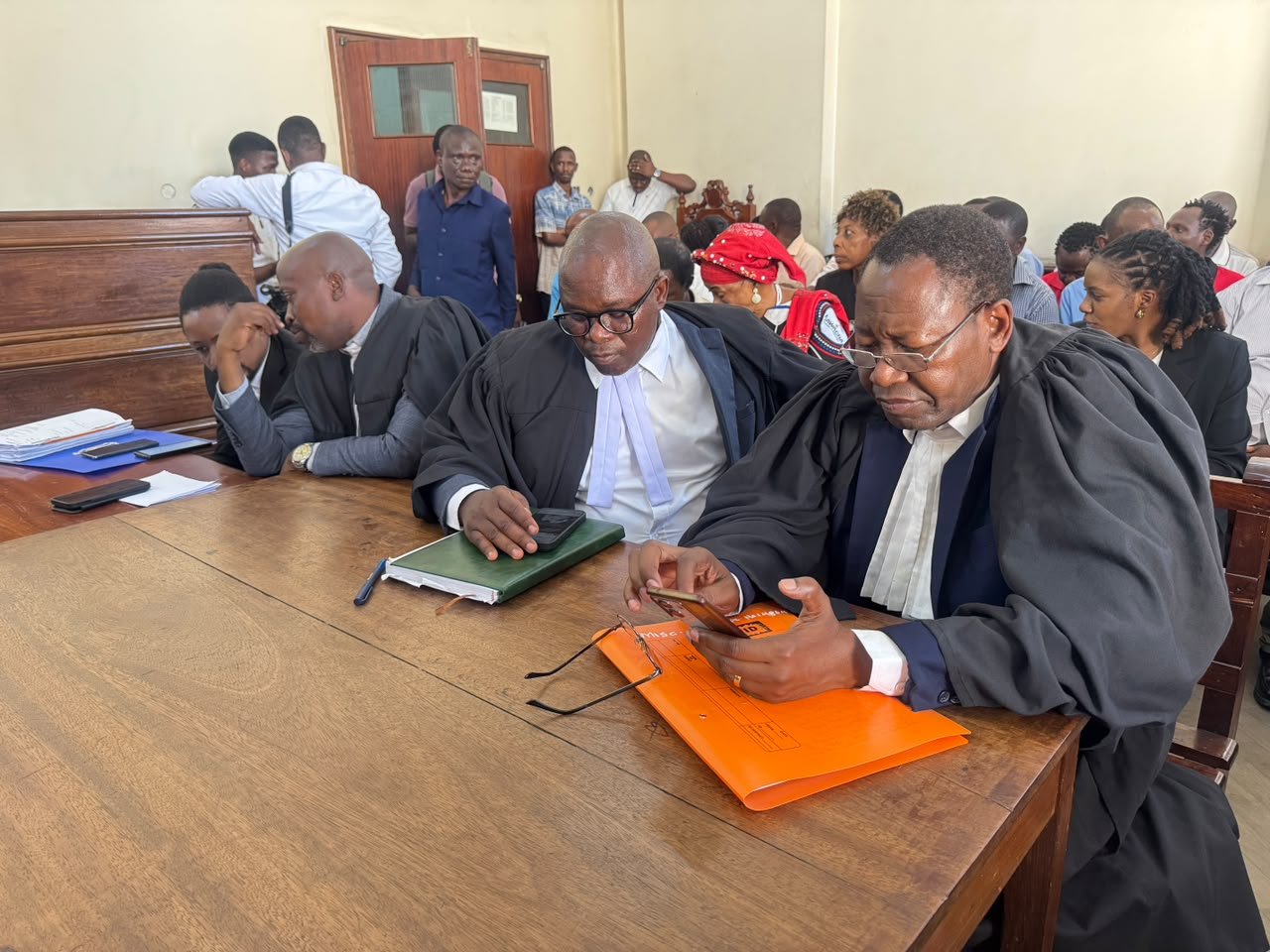

Dar es Salaam — The High Court has found that Tundu Lissu has a case to answer in his treason trial and directed him to enter a defence, after ruling that the prosecution’s evidence was sufficient at this stage to require an answer from the CHADEMA chairperson.
Lissu immediately elected to testify under oath and asked the three-judge panel to issue summonses to 11 proposed defence witnesses, including President Samia Suluhu Hassan, former Vice-President Philip Mpango, former Prime Minister Kassim Majaliwa, the Inspector-General of Police and the head of the Tanzania Intelligence and Security Service.
The ruling follows the prosecution’s closure of its case after calling 17 witnesses and Lissu’s submission that the evidence disclosed no case for him to answer. In the August 17 proceedings, Lissu argued that prosecutors had not proved either a treasonous intention or that he published the video material at the centre of the charge.
READ MORE: Tundu Lissu Treason Trial: High Court Explains Its Reasoning Behind Case-to-Answer Ruling
Friday’s ruling is not a conviction. At this intermediate point in a criminal trial, the court decides whether the prosecution has produced evidence which, if left unanswered, could support a conviction; it does not finally decide the accused person’s guilt or undertake a detailed assessment of each witness’s credibility.
Evidence warrants a defence
Justice Dunstan Ndunguru, reading the decision on behalf of the panel, said Lissu is charged under Section 39(2)(d) of the Penal Code over allegations that he conceived an intention to commit treason and uttered and published words at a meeting on April 3, 2025.
The court said the prosecution called 17 witnesses, including police officers and confidential witnesses. According to the ruling, the prosecution argued that Lissu intended to stop the election by intimidating the government, and some confidential witnesses said they had been influenced by his words.
The judges also considered Lissu’s no-case-to-answer arguments and the authorities he cited on the applicable test. They said the question was whether the prosecution’s evidence, if not answered, could establish the charged offence or a related lesser offence, rather than whether it had already proved the case beyond reasonable doubt.
READ MORE: High Court of Tanzania to Rule Friday on Whether Tundu Lissu Must Answer Treason Charge
Justice Ndunguru said there was no dispute at this stage that the alleged words had been spoken at a meeting in the presence of journalists and other people. The court referred in particular to evidence from the confidential witness identified as P, who said Lissu had made the remarks at the gathering.
“At this stage, the court does not examine the weight or credibility of the evidence,” Justice Dunstan Ndunguru said.
On that basis, the panel held that a case had been established which Lissu must answer. It informed him that Section 312 of the Criminal Procedure Act allowed him to testify, call witnesses or remain silent.
11 proposed witnesses
Lissu told the court he would be his own first defence witness. He then asked for summonses to be sent to President Samia; Mpango; Majaliwa; Inspector-General of Police Camillus Wambura; General John Mkunda; the Director-General of TISS; and the Director of Criminal Investigations, Ramadhani Kingai.
He also sought to call CHADEMA Secretary-General John Mnyika, Deputy Secretary-General Amani Golugwa, party Vice-Chairperson John Heche and communications director Brenda Rupia. Lissu said Heche had attended the April 3 meeting, while evidence from Jambo TV staff had identified Rupia as the person who invited journalists to cover it.
The defence’s proposed witness list goes to the central dispute in the case. Lissu said senior members of the National Security Council and its secretariat could address whether there was a genuine treasonous threat to the United Republic, while party officials could speak to the meeting and its organisation.
“We want to know whether they had information about the alleged treason,” he said.
READ MORE: Treason Trial: Lissu Cross-Examines Confidential Witness Involved in Livestreaming of His Meeting
Lissu also renewed his complaint that prison authorities had, since November 2025, prevented some of the CHADEMA leaders he wants to call from visiting him. He asked the judges to ensure that consultations with his lawyers and prospective witnesses would not be listened to by prison officers or other government officials.
“Otherwise, this will not be a court; it will be a kangaroo court,” he added. “Fair trial will be words only.”
Prosecution opposes
Principal State Attorney Nassoro Katuga opposed the first seven proposed witnesses, arguing that the defence had not named them during the committal proceedings at Kisutu and had not shown that their evidence was material to the treason charge.
Katuga said the prosecution alleged that Lissu formed an intention to intimidate the government, not that the government had in fact been intimidated. He argued that evidence from the President, the former Vice-President and former Prime Minister on whether they felt threatened was therefore immaterial.
“Our 17 witnesses gave evidence on behalf of the government,” he told the court.
Katuga urged the court to consider whether each proposed witness was relevant, competent and capable of being compelled to attend before it issued a summons. He argued that a court should not issue a process that it could not enforce, raising the question of what would happen if a President did not appear.
State Attorney Ignas Mwinuka separately argued that the Presidential Affairs Act did not give the court power to compel the President to attend. Another prosecutor, Job Mrema, pointed to statutory restrictions on intelligence sources and argued that the court had discretion to refuse witnesses whose evidence would not assist it.
The prosecution said it had no objection in principle to Lissu’s proposed CHADEMA witnesses, provided the required procedure was followed. Its objection was directed chiefly at the seven senior government and security officials.
Lissu replies
Lissu rejected the prosecution’s account of the earlier proceedings. He said he had attempted to name defence witnesses before the Kisutu court, but that the presiding magistrate had declined to record them, telling him that he could name them at the High Court.
He said the High Court had subsequently asked him to identify his intended witnesses, recorded the names in its own proceedings and told him he would have an opportunity to prepare his defence when the time came.
“They were named at Kisutu, they were named before you, and today I have named them again,” Lissu told the court. “Decide whether you will give me that right or deny your own record.”
On the question of whether the President could receive a summons, Lissu argued that the law should be read as providing a route through the Chief Secretary or the President’s private secretary. In his submission, serving a summons was distinct from issuing an arrest warrant if a witness later chose not to attend.
“Send them the summonses, and we shall see,” Lissu said.
Katuga objected when Lissu said the prosecution was effectively predicting that President Samia would not come to court. Justice Ndunguru said that was Lissu’s interpretation of the prosecution’s argument and allowed him to continue.
Lissu told the bench that the President, security chiefs and other office holders were relevant because of their roles in national security and because the charge alleges an intention to intimidate the government. The prosecutor’s contention that public servants had already testified “on behalf” of the President had no legal foundation, he argued, adding: “There is no vicarious testimony in Tanzanian law.”
He also said any sensitive evidence could be heard in camera if necessary, rather than used as a reason not to call a witness. The State maintained that the evidence of the senior officials would be immaterial and that the court retained discretion to refuse the summonses.
The supplied notes do not record a separate, detailed decision on the legal objections to each individual witness. But as the judges adjourned, they directed that summonses be issued for the witnesses.
Defence begins
After a short break, the court allowed Lissu to consult his lawyers and four CHADEMA figures — Heche, Mnyika, Golugwa and Rupia — in an arrangement that the judges said would not compromise other security procedures. The party officials then left the courtroom when Justice Ndunguru said they could be called when needed.
Lissu moved from the accused’s dock to the witness box and was sworn in. He told the court that he was 59, a Roman Catholic, a lawyer and CHADEMA’s national chairperson, having been elected to the post in January 2025.
In the opening portion of his defence, Lissu set out his political and professional background. He told the court about his service as a CHADEMA Member of Parliament, his former leadership of the Tanganyika Law Society, his work in constitutional and election matters, and the 2017 shooting in Dodoma from which he said he underwent extensive treatment in Kenya and Belgium.
He said the April 3 speech must be understood against his long record of advocating for electoral reform and his experience in election law. The treason prosecution, he said in his evidence, arose from a political conflict rather than a criminal act.
READ MORE: Court of Appeal Deals Blow to Prosecution, Dismisses Revision Bid in Lissu Treason Trial
“What brought us here is a political conflict; it is a political war, not treason,” he said.
Lissu also made several assertions about international responses to his detention and the case. Those assertions formed part of his defence testimony; they were not findings made by the High Court on Friday.
The judges adjourned the case to Monday, August 24, at 9:00 a.m., when Lissu is to continue giving evidence. Justice Ndunguru said the court expected him to complete his testimony on Monday, but Lissu responded that he could not finish in one day.