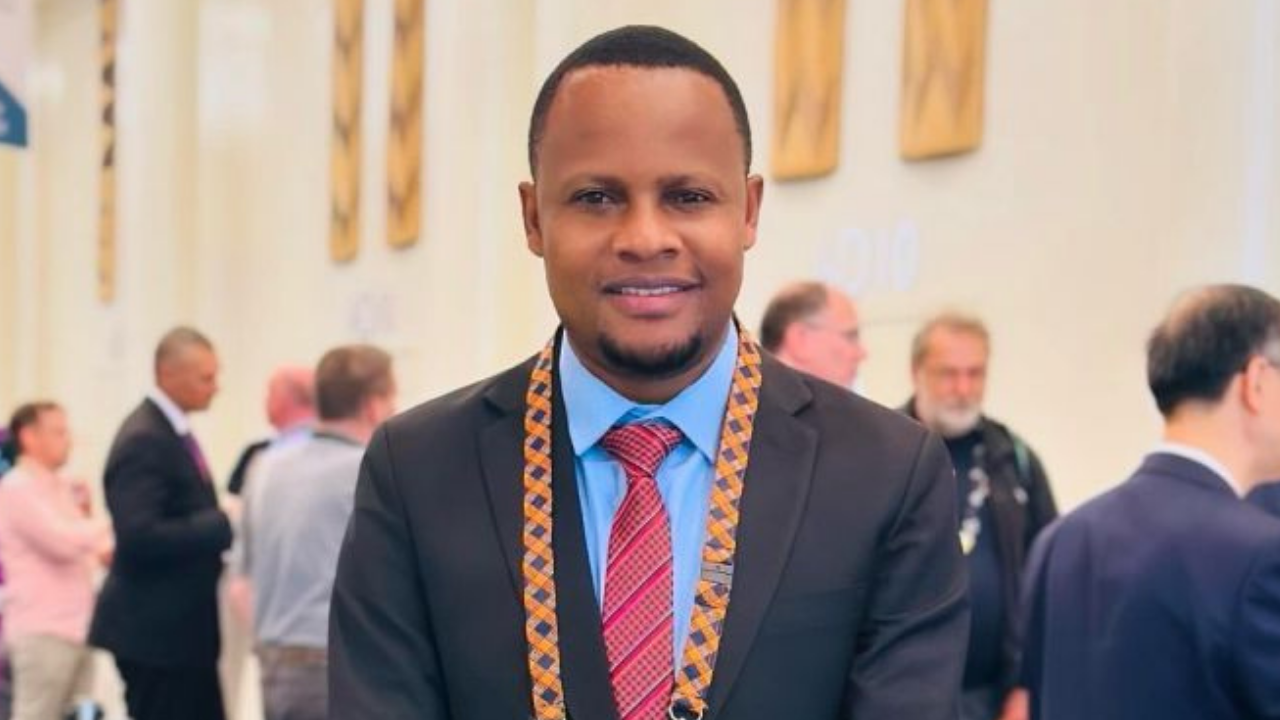

Los Angeles – Tanzanian-born activist Mange Kimambi has filed a lawsuit against Meta Platforms in California, alleging that the company globally disabled her social-media accounts after Tanzanian authorities pressed it to restrict her election-period reporting and calls for peaceful protest.
The 36-page complaint for public relief, filed August 21, 2026, in the Superior Court of California, County of San Mateo, names Meta Platforms Inc. and 25 unidentified defendants. It is case number 26-CIV-06555.
Mange alleges that Meta’s conduct violated California’s Unfair Competition Law and False Advertising Law, as well as the state’s Consumers Legal Remedies Act. The complaint has not been tested in court, and its factual claims are allegations rather than judicial findings.
The case is not a compensation claim. Mange says she seeks no damages, restitution or order requiring Meta to restore any of her accounts, but instead asks for public injunctions that would require the company to disclose how it responds to government demands affecting users’ speech.
In an August 31 statement on X, Mange said she had been advised not to discuss the details while the case is before an American court. She said the lawsuit concerned what she alleges was “deceptive and fraudulent conduct” that suppressed information about killings, disappearances, imprisonment of government critics, media restrictions and corruption.
“Though I am only one person with limited resources, I am prepared to stand and fight giants,” Mange said.
The central allegation
The complaint concerns the removal of Mange’s accounts during and after the October 29, 2025 election crisis, when she was using social platforms to publish civic and political content from the United States.
It says her secondary Instagram account, @mangekimambi80, had about 2.9 million followers, while @wananchiforum, an account she created for news reporting, had about one million followers when they were disabled in December 2025.
Mange’s filing alleges that the Tanzania Communications Regulatory Authority, or TCRA, asked Meta to restrict three Instagram accounts whose content included “calls for peaceful protests” and criticism of the government during the election period.
It cites a Meta transparency-report case study that said the risk of failing to comply included a possible block on Meta’s platforms in Tanzania.
READ MORE: Nation Debates Tanzanian Vice President’s Call to ‘Fight for the New Constitution’
The complaint further alleges that Meta treated the request as an internal Community Standards matter, rather than solely as a request based on local law, and imposed global account removals without identifying the government request to Mange.
It says Meta’s actions disabled or removed her Instagram, Facebook and WhatsApp channels, though WhatsApp was restored in January 2026.
Those assertions go beyond what Meta has publicly confirmed. Meta’s current policy on content alleged to be illegal locally says the company first assesses a government report against its Community Standards and, where no standards breach is found, conducts legal review and human-rights due diligence.
The policy says that where Meta acts based on local law rather than its Community Standards, it generally seeks to restrict content only in the jurisdiction where it is allegedly unlawful and to notify the affected user.
Meta says it may seek clarification or take no action on requests it considers legally invalid, overbroad or inconsistent with international human rights standards.
READ MORE: Tanzania Issues Nationwide Protest Ban, Escalates Crackdown Ahead of Independence Day
Meta’s Transparency Center says its human-rights assessment considers legality, legitimacy, necessity, proportionality and external risks, including the possibility that a government could block or throttle Meta services.
The published policy does not establish what occurred in Mange’s case, which is the central dispute in the lawsuit.
The filing argues that the company’s stated approach was misleading if Meta in fact removed content globally under Community Standards labels after foreign-government pressure.
It says a user deciding whether to place their audience, business or political speech on Meta’s platforms would regard the difference between a local restriction with notice and a global account removal as material.
Meta’s stated explanation
Meta has previously said the accounts were removed under its recidivism policy, which prohibits people from creating new accounts similar to accounts previously removed for breaching its Community Standards. The explanation was reported when the accounts were disabled in December 2025.
READ MORE: Tanzanian Police Refute Claims of Container Full of Heavy Weapons Entering the Country Illegally
“We don’t allow people to create new accounts that are similar to those we’ve previously removed for violating our Community Standards,” a Meta spokesperson said at the time.
Mange disputes that explanation. Her complaint says @mangekimambi80 was created around 2016, was linked to the same contact information as her older account, and that a Meta representative in a separate 2024 small-claims proceeding said she could continue using it because it had not broken the company’s rules.
The complaint says Mange won US$7,500 plus costs in that 2024 San Mateo small-claims case after Meta declined to produce requested communications relating to her main Instagram account.
The new action expressly states that it makes no claim on that judgment or on the first account, which the complaint says had about 7.8 million followers before it was removed in April 2024.
Meta’s January 2026 restoration of Mange’s WhatsApp account did not come with an explanation, the complaint says. Her two Instagram accounts remained disabled, according to the filing.
Why the case matters
The case is built as a consumer-protection and transparency challenge, rather than a case seeking a court finding on the conduct of the Tanzanian government or the October 2025 violence.
READ MORE: Instagram Emerges as Tanzania’s New Political Battleground Amid X Shutdown?
Mange argues that Meta made public representations about human-rights safeguards, geographic limits on local-law restrictions, notification to users and the availability of enhanced support through Meta Verified, then did not follow those representations in her case.
If the court agrees, Mange asks it to prohibit Meta from making the representations unless its practice conforms to them.
She also seeks corrective disclosures, notice to users when government pressure materially influences enforcement, identification of the requesting authority where legally permitted, fuller transparency reporting, publication of government takedown requests, and an end to marketing Meta Verified as providing enhanced or human support unless such support is supplied.
The complaint also seeks attorney fees, litigation costs and an independent audit of compliance if injunctions are ordered. It does not, however, ask the court to order the return of Mange’s accounts.
The lawsuit follows a period in which Mange’s digital platforms became closely tied to political events in Tanzania. She announced in June 2025 that she was leaving entertainment-related work to focus on activism, and her pages later circulated leaked documents, public-interest material and election-related content.
At the same time, she faces a separate criminal case in Tanzania. Prosecutors allege she laundered Sh138.5 million through unaccredited journalism and intimidation, while Mange has dismissed the allegations; the case had been adjourned while investigations continued.
The civil case in California will now turn on whether Mange can prove that Meta’s public statements and its actual conduct diverged in the way alleged.
For the moment, the filing places the company’s handling of government requests for content restrictions, and the notice it gives users about them, at the centre of the dispute.