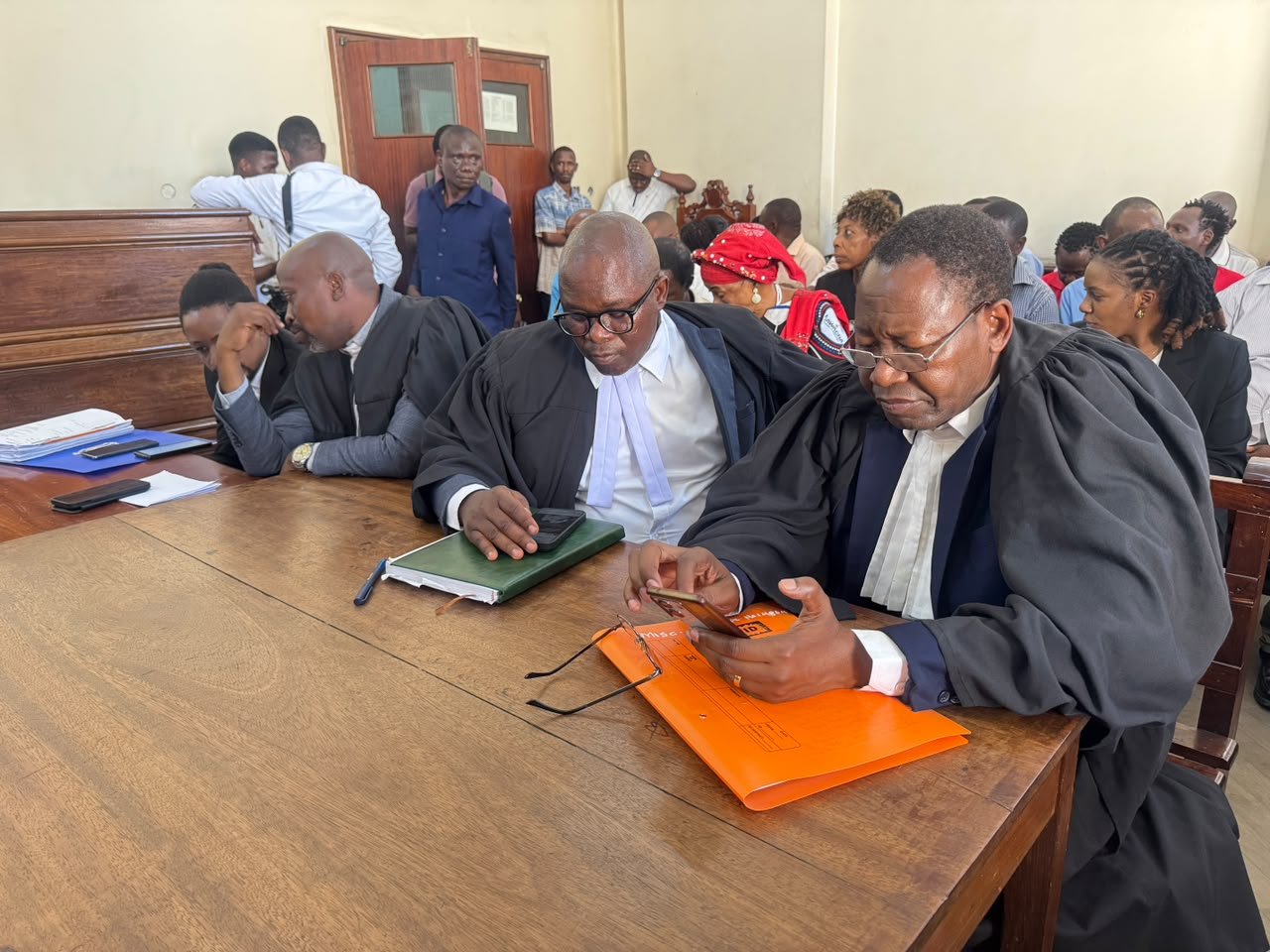

Dar es Salaam — CHADEMA communications and publicity director Brenda Rupia told the High Court on Tuesday that Tundu Lissu neither organised the April 3, 2025 meeting at the centre of his treason trial nor published the speech on Jambo TV, as alleged by the prosecution.
Rupia, the fourth defence witness, said she personally drafted the public notice for the meeting, invited journalists and attended the full session. She said the words cited in the charge were read in under two minutes, whereas Lissu’s address lasted between two and two-and-a-half hours within a meeting lasting roughly three to three-and-a-half hours.
Her evidence sought to counter two central elements of the prosecution case: that Lissu manifested an alleged treasonous intention through publication on Jambo TV, and that the disputed statements should be read independently of the rest of his address.
The prosecution began cross-examining Rupia late in the day, and the hearing was adjourned to Wednesday, September 9, at 9 a.m.
‘Not more than two minutes’
Rupia resumed her evidence-in-chief by describing the April 3 meeting at CHADEMA headquarters in Mikocheni. She said six senior party leaders spoke, with Lissu serving as the main speaker.
She estimated that Lissu spoke for between two and two-and-a-half hours. When he read the wording cited in the charge sheet to her in court, Rupia said it took no more than two minutes to read.
Tundu Lissu: “How long did my speech take at this meeting?”
Brenda Rupia: “Between two and two-and-a-half hours.”
Lissu: “How long did the words I have read from the charge sheet take?”
Rupia: “Not more than two minutes.”
Lissu then read the quoted words clause by clause and asked whether they expressly referred to the Government of the United Republic of Tanzania, the President, Vice President, Prime Minister, Cabinet, Attorney General, Director of Public Prosecutions, regional or local government leaders, or any security service. Rupia said none of those references appeared in the wording read to her.
Tundu Lissu: “If someone tells you these words threaten the Government of the United Republic, what do you say?”
Brenda Rupia: “I do not think that is true. They do not threaten the government of the United Republic.”
Rupia also said the quoted wording did not tell listeners to break the law, assault voters, cut off voters’ fingers, attack election supervisors, burn polling stations or buses, or kill police officers.
READ MORE: Court Gives Lissu Treason Trial 14 More Days as Defence Calls CHADEMA Communications Chief
The prosecution has referred to violence surrounding the October 2025 election during its case; Rupia said the charged extracts did not contain instructions for any of those acts.
Meanings of disputed expressions
The witness told the court that she did not regard the phrases “this position signals rebellion,” “we will stop the election,” “we will disrupt the election” or “we will mobilise rebellion” as criminal by themselves. She described uasi as opposing or strongly rejecting something.
Rupia said kukinukisha was informal, street-language usage meaning to make something smell — either pleasantly or badly. Her example of a pilau dish giving off a smell prompted laughter in the courtroom.
Tundu Lissu: “What does tutakinukisha mean, in your understanding?”
Brenda Rupia: “We will make it smell. When we cook pilau, it smells too.”
Lissu: “Is making something smell an offence under the laws of this country?”
Rupia: “It is not an offence.”
Rupia said the wider Jambo TV video she saw online ran for between two-and-a-half and three hours, and that the specified phrases were not the only words Lissu said in it.
She said she attended much of the prosecution evidence but did not see the full video played in court, and had seen no evidence other than witnesses’ testimony to show that Lissu himself uploaded or published it on Jambo TV.
Tundu Lissu: “The state says I published the video on Jambo TV.”
Brenda Rupia: “That is impossible because Tundu Lissu is not an employee of Jambo TV.”
Court lets testimony on post-arrest detentions proceed
Lissu then moved to ask Rupia about what she said happened to CHADEMA leaders after his April 9, 2025 arrest. State Attorney Nassoro Katuga objected, describing the question as leading.
Lissu argued that the arrests had arisen in the evidence of both sides and that a question about whether detentions occurred did not suggest a simple yes-or-no answer. Katuga cited Sections 159 and 160 of the Evidence Act on leading questions.
Justice Ndunguru said the governing rule for evidence-in-chief was that a witness should narrate what she knew. The judge directed the defence to proceed on that basis.
Rupia said that after CHADEMA was barred from activities on June 10, 2025, party leaders began to be arrested. She said she was stopped at Namanga border on July 12 while travelling through Nairobi to Germany for a communications-skills training programme.
The witness said she had been appointed to attend the training before the ban on the party. She told the court that she was driven in a Probox vehicle at high speed to Longido and then Arusha, before an Arusha Regional Police Commander transferred her to another vehicle for an overnight journey to Dar es Salaam.
Rupia said police took her first to Oysterbay and then Central Police Station, where she was told she had been sought over a public statement she issued on July 2.
She described the statement as concerning a post attributed to David McAllister, an EU Parliament member and chair of its Foreign Affairs Committee, alleging a plan to poison Lissu while he was in custody.
Brenda Rupia: “The first thing George Bagyemu said was, ‘I have been waiting for you; I will keep you inside for more than two weeks.’”
She said her passport and phone were taken and had not been returned, that police searched her home, and that she was held at Central Police Station for four-and-a-half days without being taken to court or charged. Rupia said she did not consider the publication of the July 2 statement an offence.
READ MORE: Lissu Defence Brings Election-observer Claims and Arrest Accounts Into Treason Trial
Rupia said Leonard Magere, CHADEMA’s human-resources officer, was arrested at Julius Nyerere International Airport on the same night, while travelling to London. She said Golugwa and a party vice-chairperson had also been detained, and that none of those named in her evidence had been charged in court.
The G-55 reference
Returning to the April 3 address, Rupia said Lissu discussed defects in the electoral system, the laws that CHADEMA believes require amendment, problems in earlier elections and the party’s campaign to explain No Reforms, No Election to the public.
She told the court that part of the speech responded to a group she called G-55, which she described as people in the party who wanted to contest the election and had said on social media that the party’s reform position amounted to rebellion.
According to Rupia, Lissu explained that uasi in that context meant opposing an election that was neither free nor fair.
Tundu Lissu: “In the whole speech of two-and-a-half to three hours, did you see an intention to threaten the government?”
Brenda Rupia: “I saw no intention to threaten the government in that speech.”
Asked how long she had known Lissu, Rupia said 13 years. She described him as a leader who fights for democracy and rights, and who had repeatedly faced harassment and detention because of his political positions.
Tundu Lissu: “If somebody tells you that the person you have described is a traitor, what would you say?”
Brenda Rupia: “The words I have used show he is a patriot — very patriotic, with great love for his country. A person who loves justice is unlikely to be a traitor.”
Lissu then concluded his examination-in-chief.
State questions expertise, etc.
State Attorney Winniwa Kasawa began the cross-examination by questioning Rupia’s professional background. Rupia said she did not have journalism training and had worked as communications director for about one year and five months, having been appointed in March 2025.
READ MORE: Lissu Defence Says CHADEMA’s Election Campaign Grew From Alleged Poll Failures
She said she did not perform her communications role merely by habit, though she did not initially list all of its functions. When asked for the meeting-context meaning of kukinukisha, she again used the pilau illustration, saying it meant making people aware that the party wanted electoral-system changes.
Winniwa Kasawa: “In the context of the April 3 meeting, what did kukinukisha mean?”
Brenda Rupia: “If you cook pilau, everyone knows it has been cooked. By kukinukisha, we wanted everyone to know that we wanted changes in the electoral system.”
State Attorney Cathbert Mbiringe asked whether Rupia was an independent witness, noting that she was a CHADEMA member appointed as a director and was subject to party structures. Rupia replied that her interest was in justice being done.
Cathbert Mbiringe: “You are a witness with an interest to serve, not an independent witness.”
Rupia: “I am a witness with an interest in justice being done.”
Mbiringe also asked Rupia to produce proof of who owns Jambo TV and proof of the arrest of Magere. Rupia said she had not produced such documents, but said a police public statement about Magere existed.
State Attorney Thawabu Issa then put Section 39(2)(d) of the Penal Code to Rupia and asked whether she had authority to say Lissu had committed no crime. Rupia replied that courts have final authority but that she was entitled to state her own view.
Thawabu Issa: “You said he committed no offence. Do you have that authority?”
Brenda Rupia: “Article 107 says [the court has] final authority. I have authority to speak, but the court has the final authority.”
READ MORE: Mnyika Rejects Bid to Link CHADEMA’s Reform Campaign to Election Violence
Rupia defined treason as betraying one’s country or seeking to overthrow the government, and said none of the conduct she had read in Section 39 applied to Lissu. Issa said he had asked only for a reading and translation of the provision, not for her conclusion about the accused.
Debate over publication
After the break, Issa pressed Rupia on her claim that media content is owned by the outlet that records it. He used examples of popular musicians and asked whether a person’s words cease to be theirs merely because a broadcaster plays them. Rupia replied that the outlet owns the content it uploads.
Thawabu Issa: “When what Lissu says is broadcast by Jambo, who owns it?”
Brenda Rupia: “It becomes theirs. They are the owners of the content they uploaded.”
Job Mrema then examined Rupia on the functions of CHADEMA’s communications directorate, her lack of formal journalism education and the party’s ideology of nguvu ya umma — people power. Rupia said the directorate communicates with the public through its staff, social media, statements and invitations to journalists.
Mrema asked whether she supported Lissu’s disputed remarks. Rupia said she had supported them at the April 3 meeting and still did. He then put to her that disrupting the 2025 General Election would violate the Constitution; Rupia disagreed.
Job Mrema: “You supported the words in the charge sheet. Is that act consistent with Article 3.1.3 of CHADEMA’s constitution?”
Brenda Rupia: “You cannot be right.”
In one light exchange, Mrema challenged her suitability as communications director because she lacked formal media training. Rupia asked where the CCM secretary for ideology had studied journalism. Justice Ndunguru asked the witness to leave that line of argument aside, prompting laughter.
READ MORE: Mnyika Tells High Court Lissu’s Speech Carried CHADEMA Policy, Not a Private Plot
Katuga took a brief turn at the end of the day. He asked whether kukinukisha was slang used by young urban people. Rupia said it could be, and said the phrase could mean making something smell or emit a fragrance.
The case was adjourned with Rupia still under cross-examination. Justice Ndunguru said the prosecution would continue its questions on Wednesday morning, followed by any re-examination the defence might require.