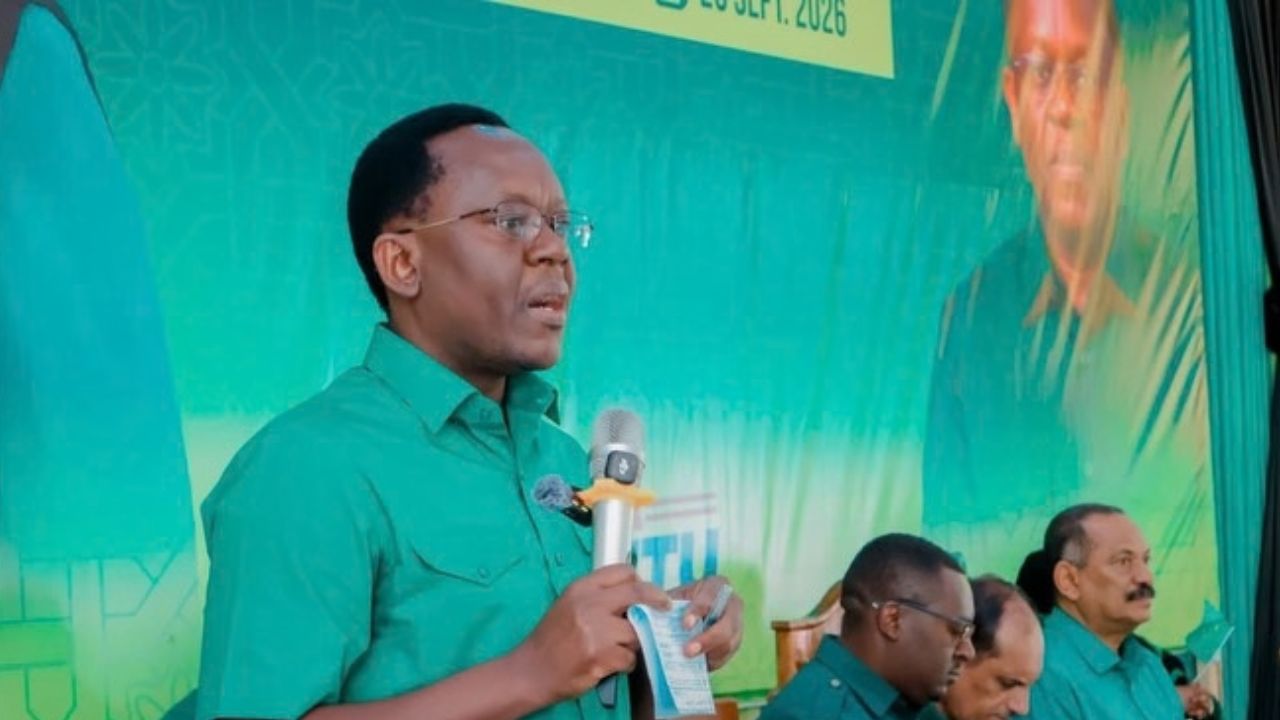

Dar es Salaam – Home Affairs Minister Patrobas Paschal Katambi has called on bodaboda and bajaji leaders to help identify offenders, while describing motorcycle taxi work as a legitimate contribution to the economy that must not be associated with preventable crashes or crime.
Katambi made the appeal during a September 22 working visit to Oysterbay Police Station in Kinondoni, where he inspected motorcycles being held as exhibits in various cases and directed that long-held vehicles be processed through legal procedures.
The Minister said some motorcycles were used in theft and other offences, and asked transport leaders to report suspected offenders rather than remain silent. That, however, is an enforcement concern, and not a finding that bodaboda operators, as a group, are involved in crime. The Chanzo could not locate any nationwide police series that measures offences committed by commercial motorcycle riders.
Motorcycle taxis are a regulated private-hire service. Current LATRA regulations require licensing, roadworthiness documentation and two code-marked helmets, while a 2024 amendment limits a motorcycle to one passenger and prohibits carrying a child younger than nine.
The legal framework also requires third-party insurance and a valid driving licence. A LATRA survey across seven urban centres found that passengers value boda boda transport for reliability, affordability and access, while many riders reported using the work to support dependants’ schooling and household incomes.
READ MORE: We Can Ensure Everyone’s Safety, Including Bodabodas’, If We Regulate Our Selfish Ways
Katambi linked the appeal to the burden of road injuries, saying medical treatment for crash victims costs the government between Sh1.5 billion and Sh2 billion a month. He also cited figures on patients, motorcycle injuries and lack of insurance that were reproduced in the police statement.
But the minister fell short of providing the hospital data, period or cost method needed to independently assess them. He did, however, reveal that between 7,000 and 9,000 patients a month are admitted at Muhimbili National Hospital and the Muhimbili Orthopaedic Institute.
The broader evidence confirms a serious, though differently measured, road-safety problem. Tanzania Police Force data recorded 322 motorcycle crashes, 287 deaths and 311 injuries in 2025, within 1,347 reported road crashes nationally.
A 2019 to 2020 Ministry of Health, Muhimbili University of Health and Allied Sciences and World Bank trauma registry found road crashes accounted for 40 per cent of trauma cases at 13 selected facilities, with motorcycle riders and passengers making up 33 per cent of road-crash victims.
The registry is not a national surveillance system, but it highlights why riders, passengers and pedestrians remain central to road-safety policy.
READ MORE: It’s Easy Blaming Bodaboda Drivers for Accidents, But Is It Fair?
Katambi said enforcement would follow public education, referring to the 2014 driver-licence point system and its 2025 amendments. The 2025 regulations give a licence 15 points and deduct points for, among other offences, helmet breaches, unlawful pillion riding, drink or drug driving and operating without insurance.
Breath testing is already authorised under the Road Traffic Act, which allows an officer to require a driver reasonably suspected of drink driving to take a breath test.
Katambi also spoke about road cameras. The Home Affairs Ministry’s 2025/26 budget speech said a digital Highway Patrol project on the Dar es Salaam to Dodoma corridor was expected to begin in that financial year, but no official confirmation of operational mainland camera enforcement was made.
Katambi clarified that the government’s priority is to enforce existing safety and licensing rules fairly, while recognising a sector that provides mobility and livelihoods. The available evidence supports action against particular offences and dangerous conduct, not collective suspicion of bodaboda drivers.