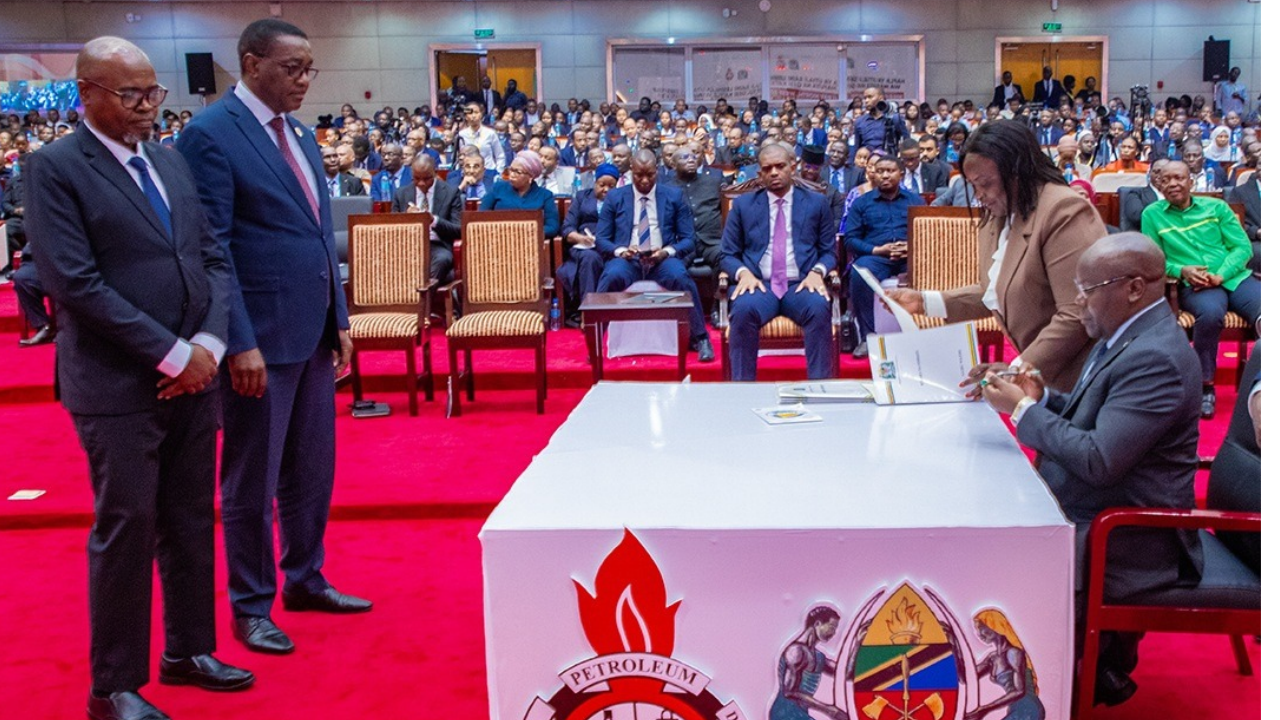

Dar es Salaam — The opening of a three-day commemoration of 70 years of civil-society registration on October 28 placed two competing accounts of the sector side by side: the government’s description of organisations as partners in unity and development, and its insistence that close monitoring is necessary for security and compliance.
Home Affairs Minister Patrobas Katambi represented President Samia Suluhu Hassan at the Mlimani City event, which was billed as a forum for organisations, religious leaders and state institutions to reflect on civil society’s contribution to social welfare, national cohesion and development.
In an opening presentation, Registrar of Societies Emmanuel Kihampa said the government had moved registration and management online through the Registration and Management Information System (RSMIS).
He portrayed the change as an easier route to registration and accountability, while making clear that verification, inspection and supervision remain central to the office’s work.
The numbers
There is no single official total for the sector in the country. But the Ministry of Home Affairs told Parliament in May this year that 12,966 societies were registered on the Registrar of Societies’ electronic system, covering religious and non-religious societies in Mainland Tanzania.
READ MORE: President Samia to Grace 70th Anniversary of Civil Society Organisations in Tanzania
The same statement recorded 126 new registrations between July 2025 and April 2026, 350 inspections in eight regions and training for 2,500 leaders.
That, however, is not a count of every civil-society organisation in the country, or even a verified count of every active body. Non-governmental organisations and community-based organisations are tracked separately under the NGO legal framework.
The official NGO Information System lists 8,630 registered NGOs, as well as 5,943 suspended and 4,795 deregistered organisations. It does not display a date for those dashboard totals, and the figures should not be added to the societies register because the systems govern different types of entities.
The distinction was part of Kihampa’s history lesson in the hall. Over the decades, labour unions, political parties, sports bodies and NGOs moved into separate registration arrangements, while the 2019 amendments further separated societies from NGOs, trusts, companies, cooperatives and other legal forms.
Under the NGO Act, NGOs include CBOs and can work on social, economic, cultural and environmental development, good governance, law and order, and human rights. Societies registered with the Home Affairs ministry, meanwhile, include faith institutions and member-based professional, cultural and welfare organisations.
Beyond services
At Mlimani City, institutions used exhibition booths to present health, education and community services. Civil society also helps people organise, engage public institutions and, through research and advocacy, scrutinise public decisions.
READ MORE: President Samia’s Warning Linking Activism and Terrorism Sparks Debate in Tanzania
But the latter role is often the more difficult one. The National Council of NGOs describes its own mandate as including representation, networking, lobbying, advocacy and self-regulation, alongside capacity building and information sharing. Those roles place civil society both beside the State and, at times, in a position of asking hard questions of it.
Kihampa’s answer to the regulatory concern was digitisation as well as reassurance. He said the Registration and Management Information System, or RSMIS, now allows organisations to seek registration services online rather than travel to the Registrar’s Dodoma headquarters.
“The purpose is to ensure that the organisations that are doing their work properly, in accordance with the law, can carry out their activities without any challenge,” he said. For the government, then, verification is presented as an enabling measure, not a restriction.
Space contested
The law nevertheless gives the State wide supervisory powers. The Societies Act allows the Registrar to request information and audited accounts, inspect organisations and cancel registration on specified grounds, including non-compliance or operating outside declared objectives, with an appeal to the Minister.
The NGO Act likewise requires annual activity and audited-financial reports and provides procedures for suspension or cancellation. It requires notice and an opportunity to respond before the Registrar recommends suspension, but it also gives the Registrar and NGO Coordination Board extensive monitoring and enforcement roles.
READ MORE: LHRC Reports Police Seizure of Staff Devices Following Hotel Incident in Dar es Salaam
Independent monitors say those rules can be burdensome in practice, particularly alongside limits on political activity, funding disclosures and local operating permits. The International Centre for Not-for-Profit Law has documented such concerns, while CIVICUS rated Tanzania’s civic space “Repressed” in April 2026.
At the anniversary’s opening, the official response was not a promise to loosen those controls. It was an argument that monitoring, when applied to compliance and safety, is compatible with a civil-society sector that officials want to see help deliver unity, public welfare and national development.