
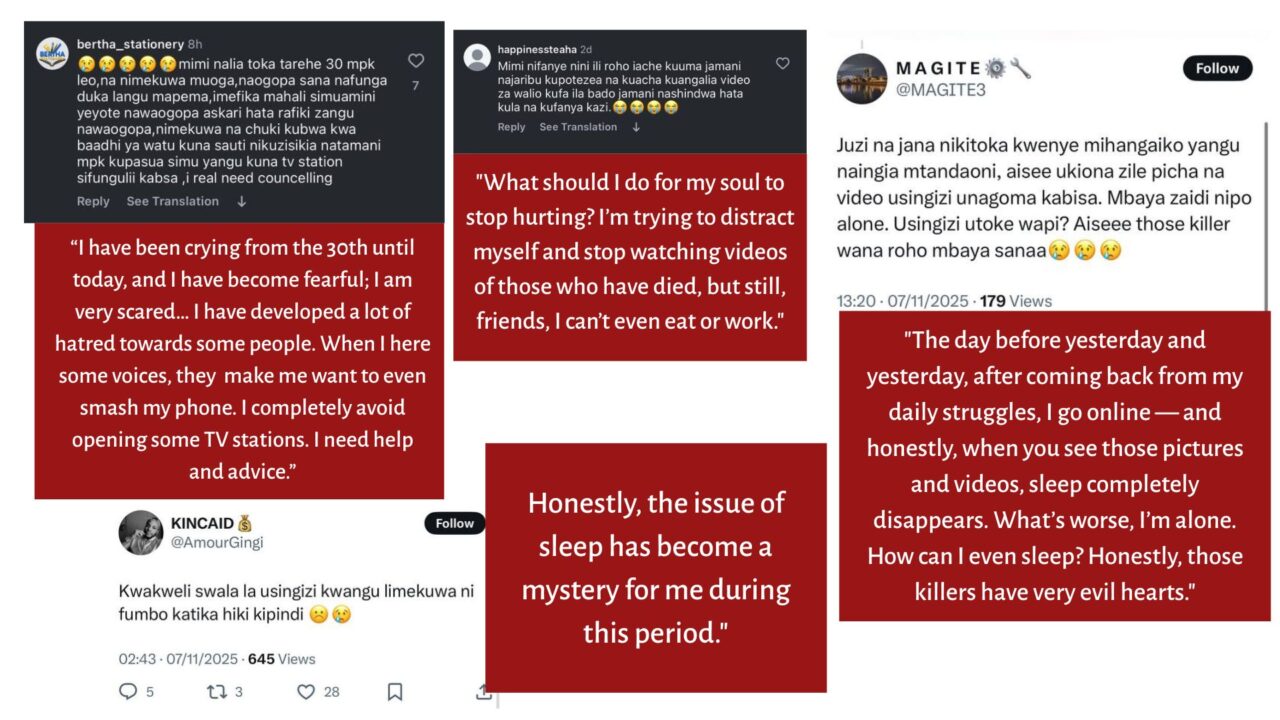
At first, people would occasionally complain about disrupted sleep patterns since October 29, a problem worsened by widespread images of death and funerals across the country. Over time, however, many have realized that they are not alone, with numerous others experiencing similar struggles—and few solutions available.
“I thought it was only me. Honestly, sleep has become such a struggle. The moment I fall asleep, scenes of killings fill my mind,” one X user complained. “What should I do so that my soul stops hurting, honestly? I try to distract myself and avoid watching videos of the dead, but still, I can’t even eat or work,” explained another social media user on Instagram.

Several psychologists have taken to social media to help people understand and cope with their bodies, minds, and emotions during this period.
“During times of fear or stress, the hormones that are released make the body alert and active. That’s why a person may try to sleep but can’t—they can’t fall asleep because the brain is telling the body that there’s danger,” Psychologist Jacob Kilimba explained to The Chanzo.
Kilimba noted that these reactions do not necessarily occur because of something happening in the present but can be triggered by past incidents or lingering information.
READ MORE: Calls for Independent Inquiry Mount in Tanzania After Deadly Post-Election Violence
“When an incident occurs somewhere, some people may be new to situations like hearing gunfire or explosions, others receive certain types of information, and others watch videos, and so on,” he explained.
He continued: “Psychologically, that affects a person because those memories and pieces of information, when stored in the brain or in a person’s thoughts, instruct the body to react according to what those memories or thoughts are communicating.”
Several psychologists who spoke with The Chanzo confirmed an increase in people seeking help, some of whom have underlying conditions that have been intensified by trigger incidents. Organizations such as churches and businesses have also been sending individuals to psychologists as the country grapples with multiple funerals in the past week.
“If you’re with someone who feels that way, understand them, because one of the things that really hurts is not being understood. And for you who are personally going through it, the first step is to understand yourself. One of the hardest parts is not knowing why you feel the way you do,” Kilimba told The Chanzo when asked how people can cope.
“Remind yourself that the way you are feeling is because something is still lingering in your mind. Then gather all the thoughts left behind by the event. Learn to identify which ones are real and true, and which ones are just results of the trauma,” he continued.
READ MORE: Tanzanian Government Issues Travel Advisory Confirming Return to Normalcy After Election Unrest
“Then begin creating alternative thoughts, new ways of thinking that can help you. And if you find that you still can’t manage, it’s advisable to seek professional help,” he concluded.
Some social media users have reported resorting to the use of alcohol as a coping mechanism and a way to find hours of sleep, something that psychologists have discouraged, as it can open up new challenges, including alcoholism.
When The Chanzo asked some online commenters what intensifies their worries, many mentioned videos shared since the internet was restored. Shared almost every 30 minutes without repetition, these videos weigh heavily on viewers, with many thinking of their loved ones and fearing that a similar tragedy could befall them.