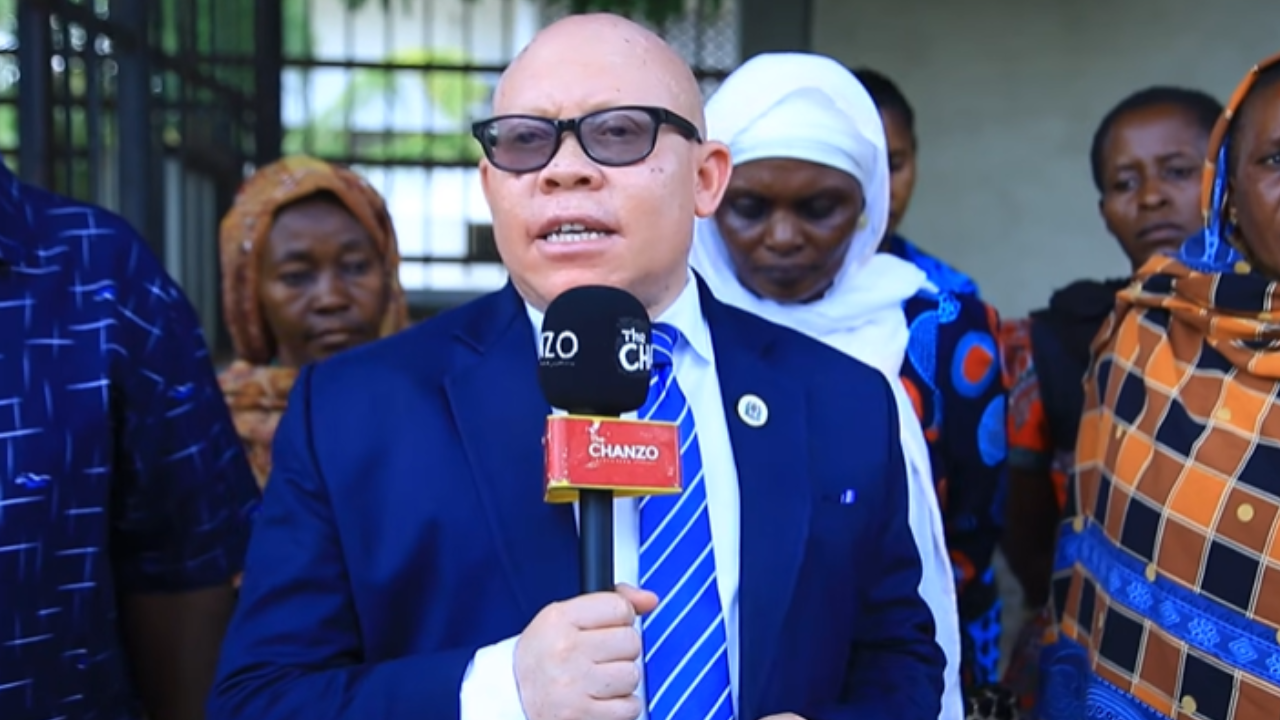

Below is the transcript of the second episode of Kivulini Talks, in this program we discussed the issue of reconcilliation. The program was moderated by The Chanzo’s Khalifa Said and featured Aleki Nswila, a psychologist by proffession, Dorcas Francis, a politician she run for Kawe constituency in the last election, Muhemsi Mwakihelwo, social justice activist, analyst and writer, as well as analysts from The Chanzo; Tony Alfred K and Joel Ntile. You can watch the full episode below or continue to read here.
Khalifa Said (moderator): Welcome again viewers of The Chanzo and our followers on various platforms where The Chanzo publishes its content. We meet once again in a continuation of our special program which we recently launched called Kivulini Talks.
Today we are going to talk about the whole issue of reconciliation. in our previous episode we looked at Tanzania after October 29Where Do We Go From Here? and some people or stakeholder suggest that we take the path of reconciliation. We have heard various government leaders including President Samia Suluhu Hassan and several of her aides.
We have heard other people outside government urging the issue of reconciliation and we are going to askw hether this is the right pathto take following what happened on October 29 and other events. And whether the whole concept of reconciliation has lost its meaning and is now being used more for political purposes, my name is Khalifa Said and I will be moderating this discussion.
I would like us to begin with the issue of definition or meaning in our context as Tanzanians and where we are right now and also in the context of the reconciliation process which President Samia Suluhu Hassan initiated after taking office in 2021.We remember she came with the 4Rs and one of them was reconciliation. In our context and in the context of these six years of reconciliation what is reconciliation, what exactly is reconciliation in our context?
Muhemsi Mwakihwelo: I think the context of Tanzania and especially from the experience of these six years, the concept of reconciliation has become a concept used to calm down anger especially from various non-government groups against the authorities in power.
That is what experience has shown because theoretically the word itself is a good word morally, when you look at it ethically,meaning that whether reconciliation should be there or not, it is easy for a good person to say let there be reconciliation.
But in a situation where we do not really examinewhich groups are in conflict because for reconciliation to exist there must be groups that are in conflict that have disagreed in one way or another. But if we do not go deeper to find outwhich groups exactly are in conflict, in what way we want people to reconcile or groups that have hurt one another and disagreed and instead we just say let there be healing without going deep into the concept itself. I think it becomes simply a way of covering things up so the wrongdoer can pass.
Without deliberate efforts not only to reach the groups to make sure that the issues which led them to fight each other are addressed and eventually resolved. So in this view I think for six years it has been a trend of covering things up so that there are no complaints, no nois, no pressure especially on the rulers from different non-ruling groups.
Khalifa Said (Moderator): Joel,maybe let me add something here for example,Muhemsi says that reconciliation is used as a cover-up, how does that rveals itself in your view.
Joel Ntile: From the experience we have had for more than thirty years now since we reintroduce the multi-party system, I did not want us to start only with these six years so by interpretation, reconciliation has been like issues of sharing power among political groups that are in conflict, that has been the experience.
And it has been clear from the way you see some politicians pushing this agenda, but the opposition a big challenge or positive thing emerging in this current interpretation of reconciliation is that it has lost that meaning to the public and the public now has another interpretation of reconciliation.
Khalifa Said (Moderator): Dorcas I want to know how is this thing they are talking about manifesting itself, Joel has taken us back more than thirty years, but we have these six years what are you seeing that shows what these people are saying.
Dorcas Francis: First before I go into what they are seeing, you asked the first question,what is reconciliation. If we say reconciliation is dialogue or discussions that lead people to agree and reach consensus on a certain issue and then my fellow speakers earlier questioned whether people show true intention of reconciling.
But what exists now and the situation we are in, the issue here is power maintenance,in Kiswahili protecting authority Niccolò Machiavelli says power is earned, power is maintained, power is protected. I see this as something that exists in our society right now. When we talk abou treconciliation,it is that people are trying to maintain the power they have by any means. That is what I can say.
Khalifa Said (Moderator): That is very good,but I still want you to help me and perhaps my viewer there, maybe Brother here and Tony also when you get the chance how does it manifest what exactly are we seeing happening right nowthat makes us conclude that mmh this is not reconciliation, or perhaps you accept. I speak this way because they say it is being used as a cover-up but what do you see that makes you conclude that this attempt is a cover-up and not reconciliation.
Aleki Nswila: Thank you, from how my fellow speakers discussed this issue and how they viewed this issue, it is true that for some time you may see as if they are saying cover it up so the wrongdoer can pass. This is because when we look at Tanzania we are used to thinking that Tanzania has one system, a society of people who love one another, a society of people who are united, which used to be a center of peace.
But people now look deeper and view Tanzania from an angle of what they want their nation to be or our nation to be, something they need, they need reconciliation with true intentions. When we say reconciliation is about agreement, it is true we need Tanzania to move forward, from one place to another.
If we reconcile, will things change? People want to see accountability in reconciliation, people want to see inclusiveness in reconciliation, people want to see truth in reconciliation, people want to see justice in reconciliation. You cannot say today we reconcile, but the same things that caused us to fall into that challenge, into that confusion, we repeat them today.
Khalifa Said (Moderator): Brother here has spoken about genuine intentio nlet us go back to 2021 when President Samia assumed office in March…in retrospect did you see that there was intention, was there genuine intention in 2021?
Tony Alfred K: From where we are now, I think it was more politics; because if you asked me at that time say in 2021or 2022, I would have told you the intention was sincere. But now we are at the end, we are four years afterward, the results show that there was no truth in that intention.
Khalifa Said (Moderator): And at the same time now, I want you to explain, it is important that we also see where we slipped because for example you mention that in 2021, the intention seemed genuine, until 2022, but later things began to shift, where did we slip? What were the missed opportunities in your view?
Tony Alfred K: I think where we slipped was the change in our politics to a large extent I can say politicians especially those in power forgot how to do politics or became lazy in doing politics, and focused too much on using force. The more you continue to use force in politics, you change the political system, from politics of persuasion to politics of force, and in politics of force there is no reconciliation.
You may say there is reconciliation but the political system of using police, of using security forces makes the condition of reconciliation impossible, so I think our politics shifting towards politics of using especially security organs has completely undermined the ability of politicians to practice politics. Now, when you talk about politics, you know people often believe it is about lies because of our experiences, but politics is not that, politics is a way for citizens and those in power to meet and it has its tools, there are political parties, that is where politics takes place.
So we moved away, there is laziness in doing politics to dwelling on using those institutions and that is what brought us here, in my opinion.
Khalifa Said (Moderator): Thank you very much Tony, Dorcas, where did we slip? What went wrong, in that reconciliation process we initiated in 2021?
Dorcas Francis: One wise person said those close to you are not always there because they love you as a leader, some are there because they want to continue protecting their own interests. I think also even that saying,Nyerere used to say whenever he wanted to step down they would tell him to stay, they say“stay”not because they love you but for their own reasons.
So you can see, even the presidency is an institution as a whole isn’t that so?It is not run by one or two people alone where we slipped is where people became more selfish, they thought of themselves.
Khalifa Said (Moderator): Who are those people?
Dorcas Francis: Leaders with authority yes,those with authority, because even where they were supposed to advised properly, because you think of yourself and your position, you twist things and that is why we have reached where we are.
Khalifa Said (Moderator): Alright, Muhemsi, where did we slip? Because I think this is the foundation that will help us move forward.
Muhemsi Mwakihwelo: We did not mean what we said or we had a shallow meaning of what we were saying, for example you spoke about 2021, didn’t you? for me that slipping goes back no less than thirty or forty years but taking it from 2021when 4Rs were being spoken about, the goal was to satisfy who? People who were oppressed in the previous administration, so that they regain their positions, because if we talk about reconciliation in society, who are the participants of that society?
I will give you an example, that shows that we did not mean what we were saying; right around October 2022, the Minister of Lands at that time stood at Mbarali,right?and spoke about abolishin gfive villages with immediate effect and 41 hamlets; more than twenty thousand people affected in a moment where about ten or eleven month earlier reconcilliation was declared.
Now we know we are talking about political parties and civil society kingpins, we are not talking about for example people whose five villages were abolished, people like them their tomorrow-how do these decisions affect such people, do we have any mechanism so that tomorrow a minister cannot again say, I abolish five villages?
In my view we are stil lin the same environment so even now there is nothing we are going to address in that concept.
Khalifa Said: Joel I want to add here and ask you a question, Muhemsi has explained that things were already happening and I want to ask you were there already warning signs that should have made us question the logic but perhaps we were carried away and therefore ignored some things in line with the speed of the government?
Joel Ntile: I think the intention was the key thing on analyzing where we stumbled, majority of us believed there was genuine intention, but if you look back now after five or six years, you realize that what was called reconciliation was actually a way, I don’t know the best Kiswahili word-to consolidate power, for the new leader to consolidate her administrative authority.
At that time but there were also signs indicators that existed then which we ignored, unfortunately one of them Muhemsi mentioned, in 2021–2022, there was a big wave of statements like that especially on land issues, on that side not long after we saw such things Ngorongoro and also in cities there were complaints many complaints from a large group of people being removed from their rights in cities, especially street vendors.
So that alone was enough to show us we needed to question more deeply, whether there was genuine intention of reconcilliation in the broader sense of including all citizens not just a few political groups for the purpose of consolidating administrative power.
Khalifa Said (Moderator): At that time, why do you think we ignored these signs?
Tony Alfred K: It is about hope, there is a time-first let us appreciate the goodness of the people our society,as brother here, the psychologist said- it is a society that- I will not say it is too good, to say we are holy, but there is a certain goodness that we show to each other. And when the new President came in those circumstances, many people were showing that goodwill, to give her strength so that she could correct some of the mistakes. So, some mistakes were happening, they seemed like adjustment period, because everyone,when you are in a new job there is a period of adjusting.
Khalifa Said (Moderator): So what about the issue of accountability, reconciliation can it go by itself without being accompanied by truth on one side and accountability on the other. And just to give context, my question is this; for example brother,do you believe, if we had true reconciliation and perhaps there had been truth and accountability what happened on October 29, 2025,would it have happened?
Aleki Nswila: In my view,it would not have happened, what happened was because of issues of accountability, if we had systems that show accountability for leaders, I believe citizens would not be shouting and when we look at this, there was heavy criticism especially from opposition parties criticizing the ruling party until it reached a point where the main opposition party decided to withdraw from the election.
We should have examined what issues led them to withdraw from the election and we also saw that their concerns were highlighted. After seeing that situation, did they sit together to solve those challenges at the table? All of that is part of accountability.
Khalifa Said (Moderator): Someone could be right in saying that the fact that we had what happened on October 29 people marching and there are confirmed reports of many people being killed and many others injured and still recovering from their wounds now would someone be right to conclude that what we had means we did not have true reconciliation. Would someone be right to reach that conclusion?
Dorcas Francis : It depends, because the nature of a human being is driven by the context. At that time, even if genuine intention existed perhaps someone had already made up their mind and would still act but that does not justify tha tif we say there is reconciliation,then reconciliation means even when people fight wars in the world diplomatically they must return to the table. It is the nature of human beings—whether marriage or family whatever you do,you must return to the table and resolve your differences.
But that should ensure it does not happen again. So we can say even though human nature cannot be fully determined but to a very large extent we can say that the lack of genuine intention also contributed.
Khalifa Said (Moderator): Muhemsi,for example if we had put a demand for truth and accountability on the table what would you like for example to see—what kind of truth and what kind of accountability would you like to see?
Muhemsi Mwakihelwo: The question is tricky but the important thing I think is truth and accountability despite their importance are not the only things to save the public,society and everything ,because truth alone—for example if I say truthfully that I oppress you, that does not mean that truth removes the problem of oppression—it is just true that I oppress you, the main point I believe about truth and accountability in their broader sense, I think people should be accountable for the things or the issues that give them that authority.
For example,if I am a leader basically my first accountability will be to what enabled me to become that leader whether it is a person or a group of people or whatever so I think the first kind of accountability must be to analyze more clearly:accountable to whom and who is accountable to whom.
We are in a society governed by the state of Tanzania, a state that is led or controlled by a group of people, a group of people whose authority does not necessarily come from the majority of the people. So I think the first accountability is to reach a point where the majority in the country can have power,I repeat,power to be able to force those in authority to obey their demands, their feelings and aspirations. Outside of that,there is no accountability that can solve challenges like those we faced on the 29th. Otherwise it will just be that accountability or that truth is spoken to show that people have sympathy instead of actually intending to solve the challenges we had.
Khalifa Said (Moderator): We once did a program here about Tanzania after October 29, where are we going and the speakers gave their opinions about how satisfied or dissatisfied they were with how the nation responded to what happened. When you look at how the government specifically responded to what happened on October 29 and the other events that accompanied it. Do you see genuine intentions to bring reconciliation based on how the government is responding.
Joel Ntile: From what we have experienced since 2021 until 2025, from October 29 until now, in the way the government is responding, this time it alerts us early that something will not go right, like it did in 2021. Because in 2021, humanly,as Tony said there was a large group of people who had hopes about that direction. But some things happened and we ignored them thinking that the intention was still there,let’s give it time, but now with what is happening-you clearly see that there is no need to give it more time, it is time to keep reminding each other.
If we continue in this manner, what we are expecting as Tanzanian-true reconciliation, not the kind of“cover it up and let the wrongdoer pass,”real reconciliation. We see that there are doubts and some things that shows; look the statements of top political leaders, about how those events happened. When they speak in public just the other day we again saw on one international media outlet the Government Spokesperson also talking about the issue of reconciliation,and when you look now the way he views it, meaning from his position as spokesperson or as government is different from how the rest of us might see it, based on the discussions taking place in society.
Khalifa Said (Moderator): Tony, if I extenda bit further from what Joel said, because we have seen President Samia Suluhu Hassan taking some steps based on what happened,for example she formed a commission to investigate these events which is continuing with its work and she promised that once she gets the results of this reports he will form another commission for reconciliation. Do you see genuine intention that we can get something from these processes that are taking place?
Tony Alfred K: In my opinion,as I see it up to now still reconciliation for those in power is not a priority and especially the spokesperson’s statement when speaking to the BBC tha the said reconciliation is optional. Those who don’t want it,we will continue with those who want it, now ereconciliation everywhere in the world is people are reconciling because they disagree on some things. So when you say it is optional that means there is no reconciliation it is just a game.
Because for example when you look at reconciliation in South Africa, those people had problems for more than a hundred years but it reached a point where they had to meet and talk, you cannot start reconciliation by saying it is optional and why some people boycott reconciliation it is because people already see that it becomes like a show just for taking pictures. After taking pictures you continue with other things, that’s why you remember the idea of reconciliation existed before the election,that we would reconcile and what were we reconciling about-October 29 had not yet happened, there were no demonstration, so maybe it was still just a show, you take pictures, you post that you reconciled and continue as usual. Reconciliatio happens because you have no other option, I believe given how our societyis, the government has no other No option,it must reconcile.
Khalifa Said (Moderator): I wanted to ask the brother here abou tthe habit of shifting blame, for example when you hear the President say that those involved she says were people from outside the country, NGOs political parties and so on. The President already seems to have answers for everything that happened, when you listen to the President especially in assigning blame, do you think from there, we can get genuine intention for reconciliation? From a position where you show that you know what happened, you know who was involved and what should be done to them. Do you think national reconciliation can come from that position?
Aleki Nswila: It is true,the question you asked me, we have seen that situation and when we need reconciliation regarding genuine intention and what is happening, there are times when it becomes somewhat difficult. Because already some people are being attacked, for example if you say that outsiders are the ones who were hurt. But remember there is another who is inside the same nation and was hurt.
For reconciliation to happen the first thing is that we have to agree that these things happened inside our country, what do we do? who are the victims, who are not victims? Those who are victims,let us know how we can help them.Let us tell them how we can move forward together, without leaving them behind, not that we call for reconciliation and then leave the victim behind and go reconcile with whom we must know who was affected so that together we can build and move forward that way.
Khalifa Said (Moderator): Joel, Tony touched on it and I wanted us to discuss briefly, we are not the first country to want reconciliation right? I mean there is no need to reinvent the wheel, people say there are countries that have already engaged in processes like this, we have countries like South Africa our neighbor, Kenya has already engaged in such processes.
Processes like this in your view and from your reading what do you think we as a country can learn from these processes and what obstacles do you think we should try to avoid so that we ensure this process produces results that in the view of most citizens will be seen as just.
Joel Ntile: We have examples right here okay,you know we have thirty years of multiparty politics, we have learned many things, we have learned a lot about reconciliation. Zanzibar has experienced reconciliation more than once and other various political processes with a reconciliation orientation have also happened a lot, even in mainland Tanzania and Tanzania in general.
Now when you look at all this processes, they give us lessons that, now we must not repeat the first fundamental one is the concept of reconciliation being interpreted as bringing together rivals, certain political groups that disagree and then sharing power with them and then you say reconciliation has been achieved in society, so this is something we must learn a lot from what we saw in Zanzibar.
The first agreement failed, the second agreement came with that interpretation that to bring reconciliation is to share power between rival groups so socially as a country we are reconciled so Zanzibar taught us that reconciliation in its broader meaning is not sharing power between rival political groups, meeting taking photos as Tony says and then sharing positions.
Now the key thing we must focus on, which other countries focused on despite their challenges; South Africa and various other countries is one thing:to understandthat reconciliationas is about social consensus, a national consensus aimed at citizens themselves to establish good systems of self-governance, and also accountability. Those who are entrusted with leadership authority within the government to run thingsso that becomes the major foundation of reconciliation alright, but secondly,reconciliation is that social agreemen,which will build our capacity as citizens individually to protect our republicanism as a nation. So that is the most fundamental thing that I see, we must focus on very seriously at this time as we move forward as we approach this issue called reconciliation.
Khalifa Said (Moderator):Dorcas, what role does the international community play in making possible these things that Joel has told us here, okay,I understand that one of the people or institutions that wanted or participated was the Commonwealth we saw the Commonwealth appoint the former President of Malawi,Lazarus Chakwera, we do not know where that process has reached, we do not know what stage they have reached but in your view since the international community is an important part of our country’s development,there are donors, there are friends, what do you think their role is in ensuring that this reconciliation process comes first,but also becomes genuine reconciliation as Joel and of course all of you have tried to show.
Dorcas Francis: First of all because we as a country are not an island,we are not isolated, we have signed various treaties in the international community, that we will protect peace, human rights issues and many other things,and that is why you will see that the Commonwealth or the UN and other institutions may want to chip in but at the same time there is one element in all these issuesof international relations that of national sovereignty of 1648. There was a meeting that brought about this thing called national sovereignty that you will see the international community has the power to say okay,we will appoint even President Chakwera to go to Tanzania to hold talks,he can come but at the same time we also have that it becomes like protectionism, that we are a sovereign state.
That role of international organizations exists but there are elements now in the democratic and diplomatic arenas that make a country say when you come here and we tell you we have the element of national sovereignty- we are an independent country, we know what we want to do, people have voted, a government has been formed-there is no need to teach us how to run our affairs.
Tony Alfred K: May be we can learn from the history of Tanzania. Tanzania has never cared when a country claims it is independent while oppressing people, people it could help. At least in past years, the first foreign mission of the People’s Defence Force, right after it was formed was to Mozambique and there they were fighting an independent country. If you talk about sovereignty, Mozambique was run by the Portuguese who were under NATO that was an independent country, but Tanzania did not care; it sent troops,and remember it was a very new army after 1964, when it was formed. If you lookat what happened in Uganda that was also similar. I have gone to look at extreme examples that Tanzania has takenin intervening in internal affairs of other countries, but if you look here in the Great Lakes region, we have participated in many dialogues-Rwanda and elsewhere.
So there are issues of important humanitarian concern where the argument of sovereignty is weighed against the fact that inside your country there are people who have complaints that must be listened to, you cannot ignore them just because you hold power in that country, we come as fellow human beings to help you see the weight of their arguments even though they lack power.
So we must accept that there are times when other human beings with good intentions must look in and help,and for our country I think- I do not believe, we should be interfered with,but we should be supported-helped so that the government can listen to different views.
Ideally, I believe Africa, should take up that role but as you see in many places in Africa,it is as if leaders in different countries,when they talk about sovereignty they mean the freedom to abduct their citizens, to kill their citizens, they do not mean freedom to bring development or expand people’s freedoms. So it is questionable why African leaders-I would believe they should be like Nyerere now running to help Tanzania properly.
Khalifa Said (Moderator): My final question to you which I would like everyone to contribute. What I I have gathered from you is that ,according to how things are happening and together with what is being said by those in power and how they do other things, we still do not see, that there is genuine intention to bring reconciliation, national reconciliation and national consensus, so my question with which I would like us to conclude this program is if the situation continues like this. What kind of country do you think we will build in the future.
Joel Ntile: Thatis very dangerous, especially when we look at the global level geopolitics, when you look at regional and global politics it is very dangerous for a nation to be in this kind of division that is something that I thought thatour people in authority, since they also have a history, their party,if it still exists as a party has a long history of being in powert. This current situation should have alarmed them greatly, to fear and to see how to unite the nationso that it becomes truly one. So that we can as citizens build that consensusof self-governance and bring ourselves development, but also defend ourselves or navigate these regional and global politics as they are unfolding.
Muhemsi Mwakihwelo: Joel has talked mainly about the role of the state but also the ruling party for example in Tanzania should really reflect on what is happening. But I think Tanzanians,especially the majority should carefully watch this direction because these people we are talking about as state leaders and CCM leaders, if things get worse than they are now, they may not be the biggest victims, so I think it is the right time for normal people to start seeing themselves as a class in society that is more vulnerable than all others and to protect themselves against dangers that may come.
Also-there are people outside Tanzania who would like to take advantage of Tanzania,so it is not only about looking at people who are not doing enough inside but also looking at those people who would like to take advantage of Tanzania in the coming days.
So I think we will have a society that Tanzanians should reflect on themselves like this especially the majority in our society.
Dorcas Francis: If things continue the way they are, without any meaningful changes for example,on election day people will not go at all to vote,they will be afraid, because when we talk about our everyday issues we must also go into the matter of choosing and being chosen isn’t that what we want,to go and install leaders. I have experienced that election, so I know it will not be something good but still people will have that fear and also hatred towards the state and the citizens,it will not be a good thing, it is bad because we as Tanzanians were not raised like that.
Aleki Swila: What I see, we may get a big wound that will be very difficult to heal. You can clearly see signs of division or there is already division and that division we alone will not be able to handle,and even if a solution comes,it will also come with great pain. You know Generation Z,even psychologically Generation Z, are people with sharp minds when you lead Generation Z, make sure you go with answers to their questions, not that you go with authoritarian systems.
We know that they area technology generation, of science and technology, it is a generation that knows the truth. Meaning before you even present your argument, they already know the trut, so when you go twisting things, that is why these things are happening, let us agree that the generation we have is a generation that needs truth and transparency. If we do not do that,we may destroy our nation.
It is different from the past, before,radios did not exist, phones did not exist, you could say anything, based on the knowledge you had, nowadays educated people are many.
Let us recognize this first,whether in villages or cities they understand the truth. Young people have TVs, older people have TVs, even small children nowadays if you ask who the President is they answer you. But in the past they failed to understand that issue they only knew it was still Nyerere.
The foundations left by Mwalimu Julius Kambarage Nyerere we must return to them. Nyerere sought various ways to unite the nationhe emphasized greatly the issue of justice, that a nation that does not follow justice, that nation will cry and grind its teeth. Thank you.
Khalifa Said (Moderator): Tony,you wrote a good article which emphasizes the importance of reconciliation before going into elections. You presented arguments on why we need reconciliation, the dangers the nation will face, if we do not get reconciliation, we went to elections without reconciliation and what happened-happene. From the perspective of statecraft, nation building, the entity of Tanzania, if things continue like this,what is your biggest fear?
Tony Alfred K: First of all let us look at these over sixty years of Tanzania, how was Tanzania built. You understand this notion we say Tanzania is a peaceful country, we did not get independence through violence,but peace, I can say the builders of the Tanzanian nation looked at how things were in the past and decided to attempt to build a nation where-when we disagree,we talk, and I will explain why.
Before independence blood was shed in this country, if you look at the Maji Maji war120,000 people were killed-Ukraine now is fighting and has not reached that, Gaza they say 70,000 people have been killed, and it is a small place, now 120,000 people and at that time there were no means of collecting data.
If you go back to how chiefs were overthrowing each other, and taking over. During the German era if you look at Arusha people were lined up and hanged, Moshi,meaning this country before independence,so much blood was shed.
So the builders of the new Tanzanian nation, Nyerere and his colleagues, when they came in,they were making an attempt to build a country where when we want to change things,we talk-that is why you remembert o prove this this attempt was provenby how Nyerere left power.
He was not forced by anyone, he stepped down, of course there were already rumors-but this proved it-another thing is how we got multiparty politics.
So the foundation of this country is that people talk. Now if the current government wants to change that foundation and does not accept true reconciliation, you change the entire system of Tanzania.So what is coming in the future, we and the government do not know. But it will be something difficult,and what I fear is that the governmentwill find itself needing to use a lot of force.
Now, all our institutions were not created in a system where their job is to oppress citizens from start to finish, 24/7they were created in a system where politics is debated-people disagree-they go into politics, they do politics, police continue to fight criminals.
But now if you say that security organs must only fight citizens, that system is new and Isee that it will collapse and especially politicians who are in power will come to realize they are not the ones holding power. That is if they go into a system that removes reconciliation, they will come to realize those holding power are those who use force on their behalf.
So that is the new Tanzania, that I see.
Khalifa Said: Okay, okay-I truly thank you very much for your views for your analysis. To our viewer, we have been here with my colleagues discussing this whole issue of the reconciliation process. On behalf of my colleagues behind the camera we thank you very much and wish you to continue following, other programs and other content that we produce here, thank you very much.