
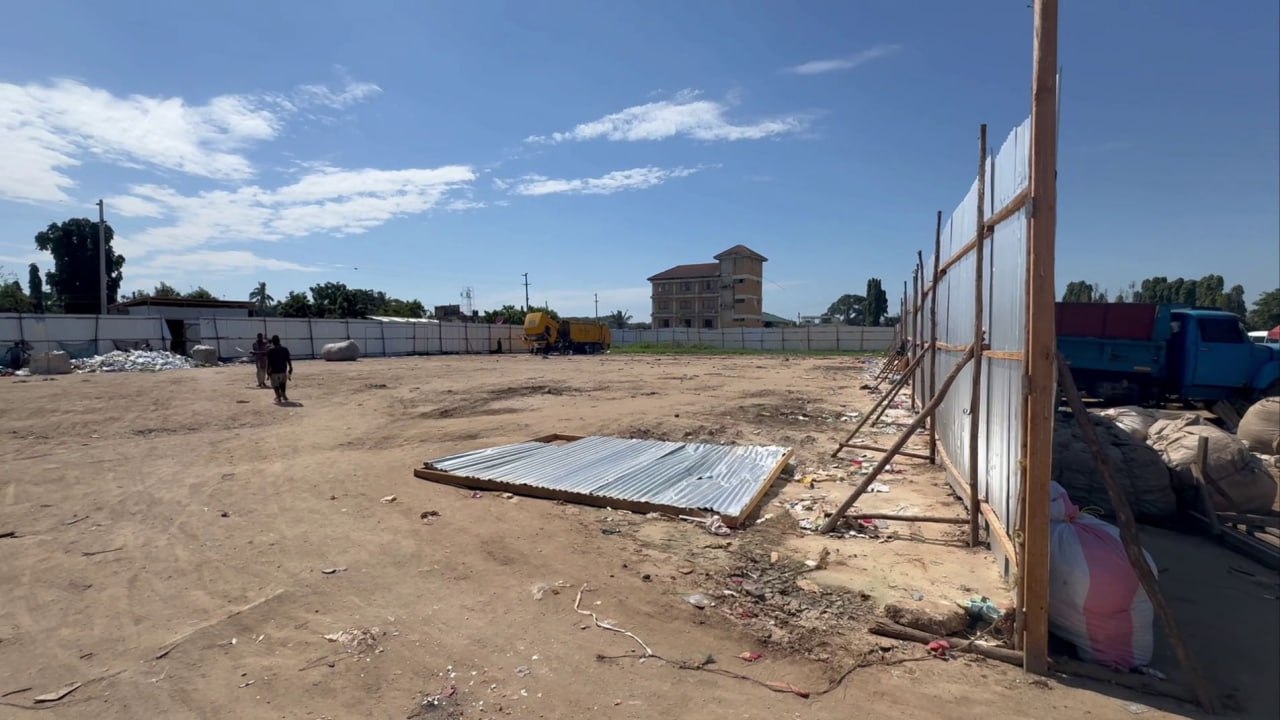
Dar es Salaam. Anxiety is growing among residents and informal workers around the historic Biafra Grounds in Kinondoni Municipal as sections of the open public space continue to be fenced off for private development.
Many fear the project will cost them their livelihoods, deprive the community of one of its few remaining recreational spaces, and erase a landmark that has shaped generations of residents.
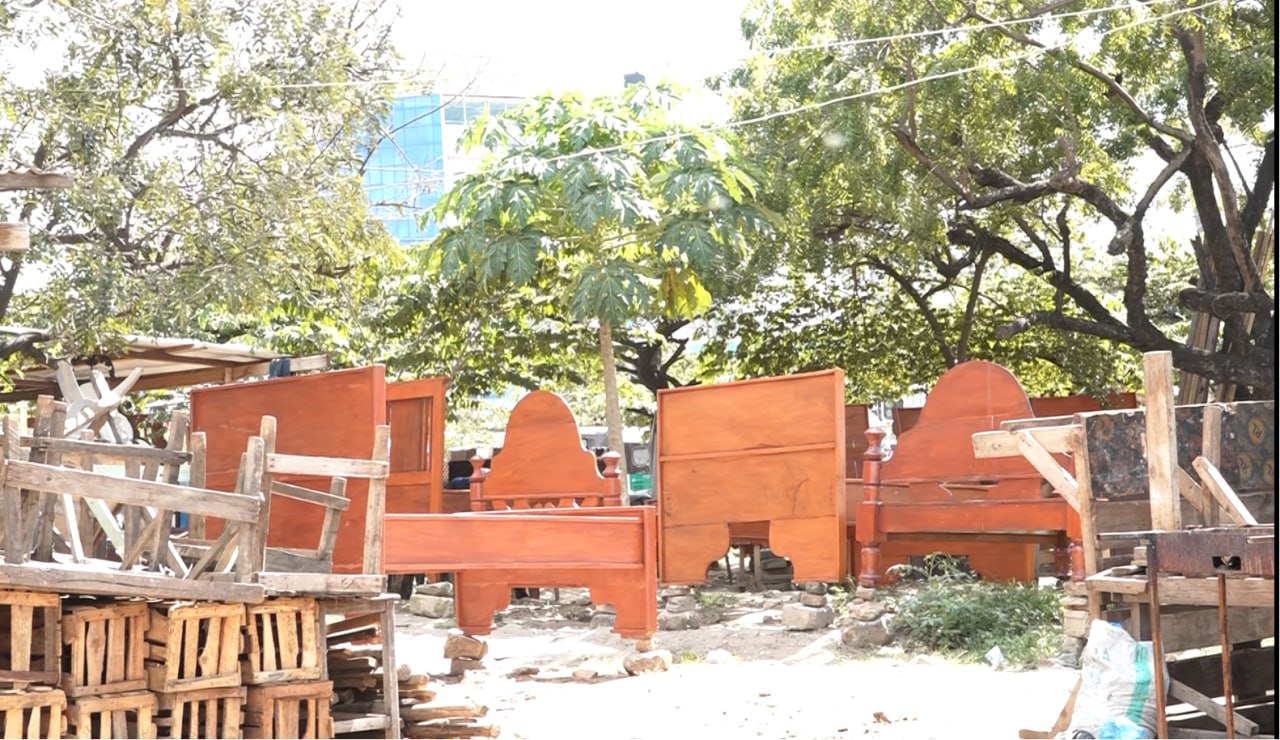
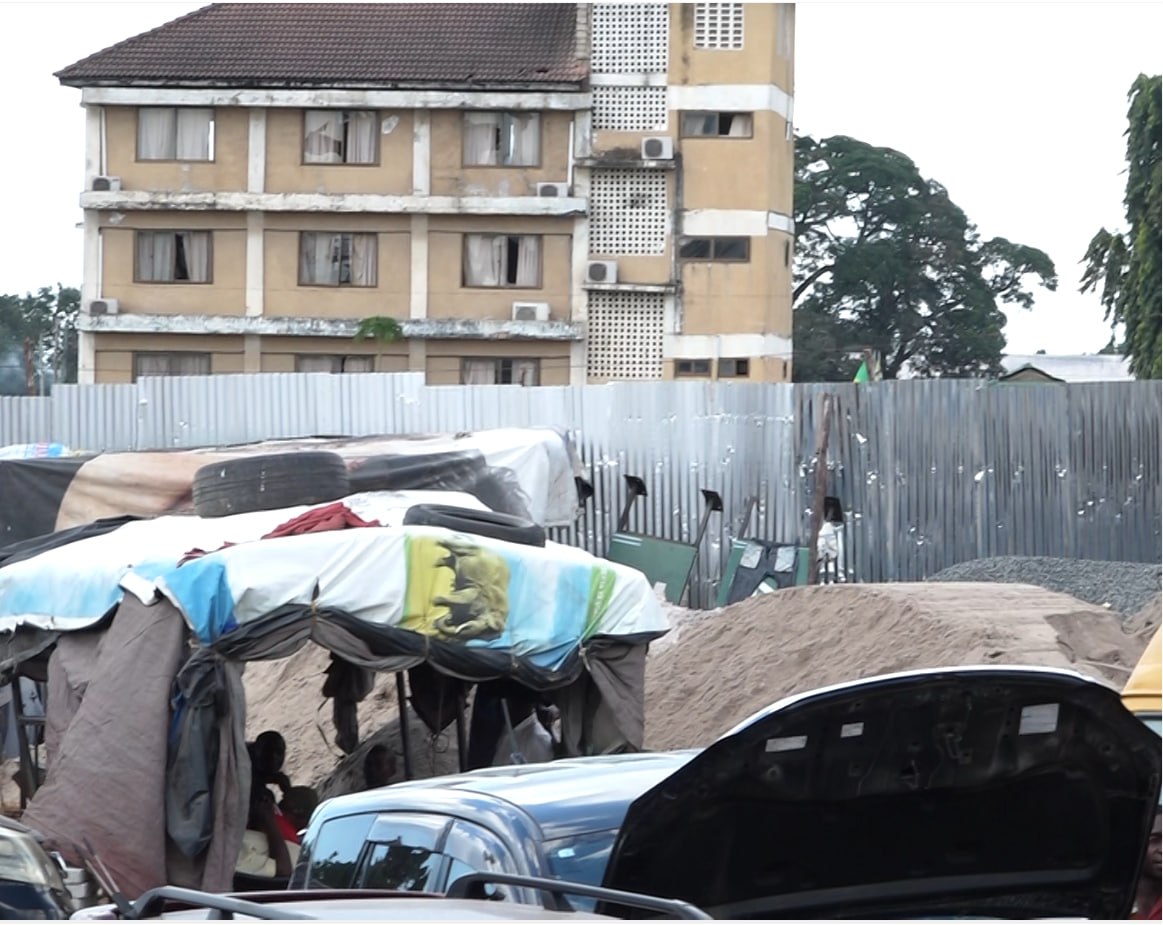
For decades, the grounds have served as a football pitch, a public playground and a workplace for hundreds of mechanics, garage operators, food vendors and other informal traders. Residents say the space has gradually shrunk as portions of the land have been allocated for commercial development.
“They first took one section, then another, and now they want to extend it to the very end,” said Kinondoni resident Juma. “We don’t want to lose the football ground or the places where we earn our living.”
Residents allege that the development has unfolded in phases, with one section reportedly earmarked for a gas station. Each expansion, they say, has reduced the space available for sports, small businesses and other community activities.
For mechanics who have worked around the grounds for years, the shrinking space has already taken a heavy toll.
“If they remove us from here, where are we supposed to go?” asked mechanic Baraka John. “This is where we have struggled every day to earn enough money to feed our families.”
Rajabu Ramadhani, another mechanic, said the fencing has driven away customers and left many workers struggling to survive.
READ MORE: Government Halts Coco Beach Eviction, Assures Traders Area Not for Sale
“Since the area was fenced off, many of our customers no longer come because they believe the whole place has been taken over,” he said. “Business has collapsed. Sometimes we have to pool together money just to buy food.”
Residents estimate that more than 200 informal workers have depended directly on the Biafra Grounds for their livelihoods. Many now question whether the investment will deliver tangible benefits to the surrounding community.
“We are told this is an investment, but how will local people benefit if we lose both our jobs and our playground?” one resident asked.
Beyond the economic impact, many residents say the Biafra Grounds hold deep historical and cultural significance. Several lifelong residents recalled playing football there as children, while others remembered that parts of the area once served as fishing grounds before Kinondoni became densely urbanised.
“I was born here and I am now 61 years old,” one resident said. “This has always been our football ground. We grew up here. Today someone wants to remove us from a place that has always belonged to the community.”
The concerns have been rejected by the ruling party, Chama Cha Mapinduzi (CCM), which manages the property after it was allocated by the local authority.
The CCM Dar es Salaam Regional Secretary for Ideology and Publicity, Ally Bananga said the land belongs to the ruling party and that it has the legal right to develop the property.
“If you own land and decide to build on it after allowing people to use it temporarily, what is the problem?” Bananga said. “The property belongs to CCM, and the party has the right to do whatever it considers appropriate with its asset.”
However, Kinondoni Municipal Mayor Songoro Mnyonge acknowledged that questions remain over how the land has been managed.
READ MORE: ‘We’re Being Kicked Out Like Chickens’: Mbagala Residents Decry Forced Evictions
Speaking to Wasafi Media on June 25, 2026, Mnyonge said the municipality allocated the land to CCM about 20 years ago for sports development.
“The plot was requested by CCM to promote sports,” he said. “According to the town planning map, it is designated as a playground. I admit there were shortcomings in how the conditions attached to that allocation were implemented.”
For residents, however, the debate extends beyond ownership documents and development plans. They argue that the Biafra Grounds have long functioned as a community asset—a place where children played football, families gathered, and hundreds of people earned a living.
As uncertainty over the future of the grounds continues, residents are calling on the government to intervene and ensure that any redevelopment preserves the public character of the site while protecting the livelihoods of those who have depended on it for decades.
For many in Kinondoni, the struggle is no longer simply about a piece of land. It is about preserving a place that represents their history, identity and daily survival.
Ibrahim Mgaza reports for The Chanzo from Dar es Salaam. He’s available at ibrahimmgaza39@gmail.com.