
Moshi, Kilimanjaro – On July 3, 2026, The Chanzo’s Khalifa Said sat down with Bishop Dr Glorius Shoo, the retired bishop of the Tanzania Assembly of God in Kilimanjaro Region, for a wide-ranging interview about the state of the nation.
Bishop Shoo, who also co-founded the New Life Foundation focusing on education and child welfare, offered a searing critique of Tanzania’s political trajectory. He argued that a culture of deception and threats, beginning in childhood and extending to the highest levels of government, has stripped citizens of hope and created a dangerous environment of resistance.
In this conversation, published on July 16 and slightly edited to enhance readership, Bishop Shoo discusses the October 2025 election violence, the systematic dismantling of the political opposition, and what President Samia Suluhu Hassan must do to restore national cohesion:
Khalifa Said: Bishop Dr Glorius Shoo, we thank you very much for accepting our invitation to speak with us. Welcome. As I understand it, you are a retired bishop of the Tanzania Assembly of God church in Kilimanjaro. You also co-founded and run the New Life Foundation, which is involved in education matters, poverty reduction efforts, and disability rights advocacy. What are some of the things you do that perhaps I haven’t mentioned?
Bishop Glorius Shoo: I think that’s generally it. I have focused more on helping children. I do training for people who work with children. Most of my education is about children’s matters. I conduct training on children’s studies, from developing children’s curricula, speaking with children, teaching children, preparing lessons for children, and teaching child-rearing practices.
Khalifa Said: From that experience and expertise, what do you think is not well understood about children? What is being done that you would say is not the right way we should be handling children, especially in the context of education?
Bishop Glorius Shoo: One major bad thing done to children is lying. Lying is a culture that destroys a child’s development and learning capacity. Our culture has taken the view that deceiving a child is not bad. A parent or sibling wants the child not to go outside, so they say there’s a lion or a dog out there. But eventually the child discovers this is a lie. It delays their learning.
The second problem is the deception we practice as a nation. Leaders stand up and tell blatant lies publicly. Everyone knows they’re lying. Children learn something very bad. They grow up to be irresponsible people, dishonest people, and we destroy future generations. Lying from home, lying from us spiritual leaders and national leaders, is among the things we need to address.
Khalifa Said: What about corporal punishment?
Bishop Glorius Shoo: That’s another problem. The Bible says a parent should discipline their child. But there’s nowhere you see us being encouraged to punish children with a cane. The training that comes from fear doesn’t last. The same applies to the nation. There is no way fear-based education has ever succeeded. Threats only bring temporary results. We must start thinking of alternatives, a reward system, a hopeful system. That brings better results than threats.
Khalifa Said: What do you think pushes people at both levels, the parent-child level and the leader-citizen level, to lie and use threats?
Bishop Glorius Shoo: I confess that I have participated in all of that. I’ve used threats with children. I’ve lied to children. I’ve used threats even with those I lead. It happens when you don’t have a solution, and you feel intimidated, so you buy yourself time to find a solution. The second thing is insecurity. That insecurity deceives you into thinking you need to use force. When you lack confidence, you must use threats, you must use force. But when you’re confident, you treat them as they should be treated.
This issue of insecurity goes all the way to society. Lying is a sign of cowardice, and that cowardice is caused by insecurity. Anyone who is insecure is a liar.
Khalifa Said: How does this manifest at the national level, for example?
Bishop Glorius Shoo: It’s very clear now. There are many leaders, there are state institutions, where you ask yourself, all these threats, all this force, don’t you have any other language? For any leadership, whether state institutions or government leaders, we just need to learn influence rather than force. When force continues to be used, it creates resistance. There’s no day a threat will be removed by a threat. The way to remove a threat is to provide a solution. It’s to provide direction. It’s to provide hope. When you meet a human being whose hope is lost, that person can do something very bad. They have nothing to lose.
Khalifa Said: And what is happening right now in our nation?
Bishop Glorius Shoo: Every single day, citizens’ hope is being lost. Citizens are starting to lose hope in state institutions. Citizens are losing hope in the pillar of justice, the judiciary. Citizens are beginning to lose hope in the parliamentary pillar. Now, if you remove all that hope, you create great resistance everywhere.
Khalifa Said: And where are we now? Do you think we’ve reached that point?
Bishop Glorius Shoo: We’re beyond that point. Our nation has arrived at a place where people’s hope is gone. A very simple survey, go online. Read the comments. The comments you read on social media represent what’s happening in people’s hearts and minds. And it’s shocking enough that we’ve reached this point, insults, harsh words, celebrating when a leader faces difficulty, and celebrating when a leader dies. It’s not the right place for us to be as a nation.
Khalifa Said: How did we get here? What tripped us up, in your view?
Bishop Glorius Shoo: What brought us here is one big thing. We were known as a listening government; we listened to advice, we listened to opinions. The second thing, we were known as a multi-party system. What we did was remove listening. So when someone gives ideas today, they start fearing what will happen to them tomorrow.
The second thing regarding not listening, we have killed opposition, and we think killing opposition is a virtue. I’m not from an opposition party, I’m not from the ruling party, I don’t belong to any party. But we understand why the world put these systems in place. The multi-party system was the political and governmental system. We’ve killed it. We think it’s a virtue to fill parliament with members from one party. The result is that we only praise the government. The result is that we don’t hold the government accountable. Because there’s no one telling the truth. We have created a nation of hypocrites, and we’ve filled every place with hypocrites.
Khalifa Said: But how was that accomplished?
Bishop Glorius Shoo: We used the door of the existing constitution, which has many weaknesses and shortcomings, we used it to get where we are.
Khalifa Said: And what about the lack of strong opposition against such things? Do you think that has encouraged or created an environment for the situation to worsen?
Bishop Glorius Shoo: That’s what I said, we’ve killed opposition. Not that there is no strong opposition, it exists and is very strong, but we are killing it. As we speak, the chairman of a major opposition party is in prison. Every person, even a small child, knows what kind of case that is. If we understood the value of opposition, we would do something very quickly to ensure we return the country to the right path.
Khalifa Said: Someone else might feel that’s possible in an environment where those in power might be driven by fear of losing power. Do you think these things can be reconciled?
Bishop Glorius Shoo: That’s the truth, opposition dies or is killed mistakenly because there’s a party saying we will stay in power forever, and we don’t want to leave. But the way to not lose power is not by killing opposition. If you want to stay in power, start listening to what citizens think you should do. Do them. You’ll stay in power. That’s the best way. If you don’t do that, it doesn’t matter if you use bullets; it doesn’t matter if you use threats. History teaches us. Just and balanced thinking has never been extinguished.
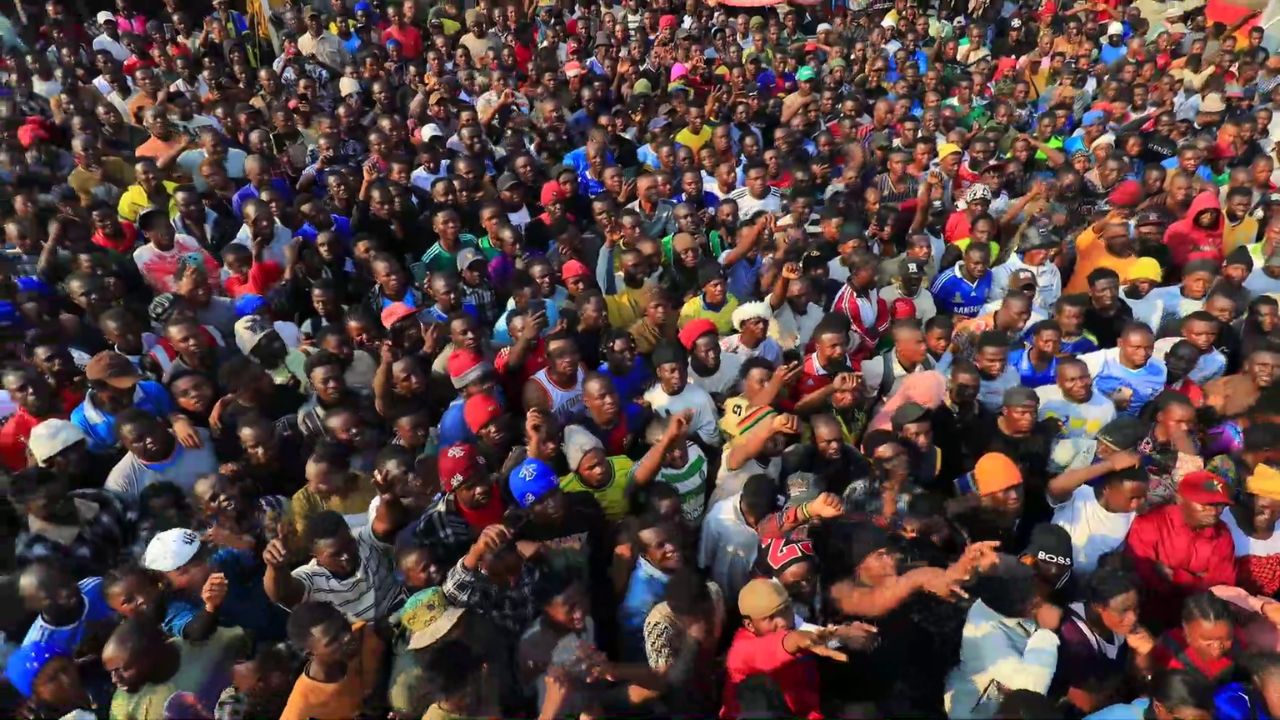
Look at what happened on October 29. Many people died. I won’t go into numbers, but I’ll say many, because even those mentioned by the Chande Commission are many, more than the students in my school. A whole school was killed. The Chande Commission mentioned 500 and something. Imagine, people equivalent to a whole school, wiped out. This is where we should come and say the nation is bigger than our parties. The nation is bigger than our politics.
Khalifa Said: October 29, it’s good you mentioned it. Could it have been avoided?
Bishop Glorius Shoo: We could have avoided it. I am among those who raised the alarm. I used proper procedures. I spoke with my senior leaders about the pillars of this country. As a citizen, I approached them. And when they resisted, I did something in writing, advising them. I spoke with heads of state institutions, I spoke with senior leaders of the ruling party. I asked them to look at ways to do things.
Khalifa Said: And what did you tell them?
Bishop Glorius Shoo: I told them this. The pressure that exists, the talk on the streets, clearly shows this election will be difficult because the noise is loud. Make some reforms, or postpone the election. Without those reforms, given the pressure in people’s hearts and minds, there’s no way they’ll stop demonstrating. Some of them responded and told me nothing would happen. Another told me the Constitution doesn’t give us any room to make more amendments.
Unfortunately, I wasn’t there on October 29; I had travelled. I went outside the country. While I was abroad, one of those I had spoken with called me and said, “Bishop, we’ve heard your opinions, but we want to tell you that the election will go well, and I’ll call you on October 29 at 9 PM after the election ends to tell you it’s ended safely.” I said okay. That was that. You know what happened.
Khalifa Said: I know.
Bishop Glorius Shoo: Instead of correcting themselves, those of us who had warned, those of us who raised the alarm, saying “please”, I started hearing threats. “You’re being sought.” I was in America, and people told me, “Don’t return, don’t return, you’re being sought.” After that, when the normal channels were blocked, there was a Maria Space, that’s when I entered the Maria Space. I entered because I knew that voice would reach further. Instead, I was branded an instigator.
Khalifa Said: You were called and told not to return?
Bishop Glorius Shoo: Yes, I was called and told, “Don’t return to the country.” I told them, “Please”, I sought out some of those who were after me, not those doing the seeking, but those who sent them. I told them, “Listen to me, not all blood is to be touched. Some blood, if you touch it, even you will perish.” Because it’s justice. I have no political party. I am a friend of the government. I am a friend of the nation of Tanzania.
Khalifa Said: So you don’t agree with the government’s theory that what happened on October 29 was sabotage, that people were planning to overthrow the government? Do you think it was anger and frustration that citizens had before the election?
Bishop Glorius Shoo: I don’t think I should answer. I think it’s obvious. It’s very obvious. We saw on videos what they were singing. We hear what they were saying. The Chande Commission’s report has explained that among the things that caused the killings of October 29. It’s very clear what happened.
Khalifa Said: Now it’s July 2026, about nine months have passed since October 29. Do you think in how we do things as a country, we’ve learned anything from what happened?
Bishop Glorius Shoo: There’s the issue of learning and the issue of understanding. We’ve learned, I don’t think there’s anyone who hasn’t learned. But have we understood? I think that’s still lacking. Perhaps what would show we’ve understood, the first thing is the issue of hope. We need to build a nation that builds hope. When a councilor stands and speaks, people should hear hope. When a member of parliament speaks, people should hear hope. When a minister speaks, people should hear hope.
We need to stand somewhere and stop complaining. The opposition blames the government, blames systems, blames the judiciary, blames the police force, and so on. But government leaders stand and blame the opposition, blame the diaspora, blame people outside. No one sits down to provide a solution. The government is the one that should be accountable to us, not the opposition. And how is it accountable to us? By giving us hope, by telling us what solutions they have for the problem.
I’m kindly encouraging government leaders at all levels to learn and start giving hope. We shouldn’t see them complaining and saying, “We don’t use force, we ask them not to keep complaining, not to keep telling us about threats.” Tell us why the person instigating is instigating. What are the reasons? Three things. First, a new constitution. Second, an independent election commission. If a new constitution can’t be achieved, at least an independent election commission. Those are the things being complained about. Don’t say people are instigating when you don’t solve that. Solve those issues, and if someone instigates, then they should be dealt with.
Khalifa Said: Do you think Tanzania is facing a crisis of leadership?
Bishop Glorius Shoo: I don’t know what to say about that, but the way to say it is that Tanzania is facing a big problem because, since opposition has died, or we’ve tried to kill it, it exists, but we’re trying to kill it. Opposition is very strong. We think we need to give leadership positions to people who have been given the opportunity to lead. That’s another question too, the issue of legitimacy. People in some villages ask their chairman, knowing, “Who elected you, and when were you elected?” That itself is a crisis. So we’re at that point, the last election, and many others, have truly not been elections.
Khalifa Said: You’ve talked about the need for a new constitution. The president has promised a new constitution. Do you think the environment we’re in right now is the right environment for getting a new constitution?
Bishop Glorius Shoo: I think a new constitution could be obtained even tomorrow morning. But how is it obtained, not out of thin air. The way not to create it out of thin air, first, is to agree with the truth that the nation is in a crisis. What crisis? We’re in a place where complaints are many, people’s hope is lost. People have fled the country, people continue to be abducted despite all the noise. Citizens live in fear; they don’t know if tomorrow they’ll arrive home without being abducted. So it’s not a safe place.
How do we return to getting a new constitution? We must realise, accept, ask for forgiveness, true forgiveness from deep in our hearts. Let them say, “My brothers and sisters, I ask for forgiveness.” Forgiveness for what? “I had a duty to protect you, and I didn’t protect you.” And asking for forgiveness takes courage. Asking for forgiveness takes maturity.
Khalifa Said: And what impact is this crisis, the one affecting us as a country, having on the welfare of individual citizens?
Bishop Glorius Shoo: Many things are happening. First, poverty is not something that can be treated in one day. Poverty is treated progressively, you start with small things. The first way to treat poverty is education. Education removes poverty. That’s the first way. The second way that removes poverty is good leadership. When there’s good leadership, poverty will be removed. If proper education exists, good leadership exists, another thing is what Nyerere mentioned, clean politics. Clean politics meaning democracy. If you allow these things to be in order, poverty will disappear.
And why do I say poverty is connected to what you’re describing? This situation is destroying and creating poverty. First, no one has the desire to continue studying because even if they study, they won’t get a job, the employment systems have been broken. Another thing, will we teach children to be self-reliant, to do business? We are not an island. We need cooperation. For any country to develop, we need cooperation with other nations. This situation has brought us conflict with some major nations, that have investors, tourists, partners, not just government partners but other organizations that affect the economy. Those partner organizations will close. Poverty continues to increase.
Khalifa Said: And perhaps you’re also concerned because this bigger crisis is producing other smaller crises. For example, you must be following the issue of Muslims and Christians, I’m sorry to say, and Zanzibar.
Bishop Glorius Shoo: Yes, my brother. That concerns me, beyond normal concern. You know some government leaders might be laughing at what’s happening, thinking they’ve found defenders. We’ve seen religious groups emerge saying, “We will protect and kill, we will slaughter.” They’re sending a very bad message, not to the citizens they’re threatening, not to the government being told it’s being protected. They’re sending a very bad message to the public and the international community. They’re telling the world that the Tanzanian government and its institutions have no ability to protect their people. They need help from religious groups. They need help from individuals to balance things. And when we keep silent, when we hear these noises and remain silent, it means we assent. We consent. We’ve said it’s okay. Tanganyika and Zanzibar are becoming very tense because of that.
Khalifa Said: Because there are a few politicians, and let me say, I may be wrong, but let me say, I don’t believe at all that our president is the one instigating these things.
Bishop Glorius Shoo: I believe the president did not start all these things we’ve mentioned. There are big eaters who know the way to continue eating, the way to continue stealing, is to do all these things, because if the country isn’t destabilized, they’ll continue to eat. But the president could condemn that. That’s where her role comes in. She can show herself, what I want to say is I don’t believe she started it. That’s why I want to come to making a request, that she condemns those people.
Khalifa Said: On that same point, some of President Samia’s supporters strongly believe all this noise is happening because she’s a Muslim, because she’s Zanzibari, and others say because she’s a woman. Do you think there’s any truth to that?
Bishop Glorius Shoo: What they forget is that she’s not the first Muslim. We had a Muslim after Nyerere, who was loved, celebrated, respected, and given the name Ruksa. Mzee Ruksa was Muslim. Could it have been because of Islam? No.
We say it’s because she’s a woman. Let’s leave the presidential level. Our parliament has had speakers. We had Anna Makinda, who was a woman, that was a huge job. We had Tulia Ackson, who was a woman, that’s a huge job. I was here in Kilimanjaro region. There have been regional commissioners, not one, but two. There was Mama Ngoe. She was a woman. There was Ana Mgwira. She was a woman. Among women who did great work in Kilimanjaro, the ones remembered are those two. So where does the issue of women come from?
It’s not about Islam. Kikwete was Muslim. It’s not about being Zanzibari. Ali Hassan Mwinyi was Zanzibari. There are people saying that now Tanganyika is emerging simply because the president is Zanzibari. It’s not true. The current President of Zanzibar, Hussein Mwinyi, is Zanzibari, but he was a minister here, Minister of Defense. When he was a minister here, why did no one complain about the Minister of Defense being Zanzibari?
Khalifa Said: So in your view, these are distractions from the real issue.
Bishop Glorius Shoo: I’m saying there are people using these opportunities to benefit themselves, so they pretend to be friends of Mama Samia because, whatever level they’re close to her, I don’t know, but truly they don’t wish our president well. Doctor, the situation could become very bad.
Khalifa Said: We’ve looked at how crises intersect, and at the beginning, you spoke about the importance of hope and the story of hope. For you personally, what gives you hope that a better Tanzania is possible despite these difficulties we’re currently facing?
Bishop Glorius Shoo: There’s something small that gives me hope, which is not what I said I would say; what gives me hope right now is history. History is my hope. History tells me that since the world was created, no regime has ever succeeded in silencing people’s voices. Never. And it will never happen. You cannot go against the current. You can flow where the current is going, but if you say you’re going against the tide, what will happen is you’ll be swept away by that current. So let me say, I ask my leaders, there is no way the will of the majority will be extinguished by a few people who don’t see the importance of standing with democracy, who don’t see the importance of upholding the rule of law, who don’t see the importance of distancing themselves from actions that are complained about by citizens.
Khalifa Said: My very last question. Put yourself in President Samia Suluhu Hassan’s shoes, the leader is there, many pressures, pulled this way and that. You’ve mentioned benefactors pulling, opposition pulling, and those who benefit also pulling. Put yourself in President Samia Suluhu Hassan’s shoes, and you want to fix the situation of this country. What would your prescription be? What would you do, for example?
Bishop Glorius Shoo: The very first thing I would do tomorrow morning is remove Tundu Lissu from prison, first thing. Not because of people’s pressure, but because of the importance of balance. Just that, I would remove Tundu Lissu. First thing tomorrow, before dawn, I would remove him. Second, I would call for reconciliation after removing Tundu Lissu. Third, I would stand and condemn, with courage and strength, actions that violate democratic governance and the rule of law. I would shout and say, “If one more person is abducted, you will answer to me.”
Khalifa Said: Bishop Dr Glorius Shoo, I thank you very much for your time. Is there anything you would like to say that I haven’t asked about?
Bishop Glorius Shoo: Something I would like to say, I promised it’s about the issue of hope. It’s about encouraging. I encourage citizens, I encourage my leaders. I encourage citizens that we should not fear to tell the truth because if our government doesn’t hear the truth, we’ll be led by hypocrites and sink our nation into a bad place. So I encourage citizens to speak the truth, just as I’ve said here.
I encourage our parliament to reach a place where they have compassion for citizens because the message our parliament sends is like saying, “We don’t represent you.” So I ask them, if they believe they represent citizens, let them listen to citizens.
My hope that I want to express is that it’s still possible, we haven’t gone to a bad place yet. It’s possible that every minister who stands, instead of threats, provides solutions. People say they want to demonstrate. They say, “Okay, the solution isn’t that, the solution is this, we won’t break you.” Let us see, come, write a letter, come here, let me see you. Tell them the solution is this: “My brothers and sisters, this is not the right way, the right way is this.” Don’t give threats.
Let a minister stand instead of blaming the diaspora, instead of blaming instigators, and say, “What is the government’s plan?” If I don’t talk about the opposition, if I don’t talk about CHADEMA, and I decide to speak about answers to what CHADEMA is demanding. I say, “Citizens, don’t worry about the new constitution, it’s like this. About an independent commission, it’s like this.” Because these things being complained about, some of them, we’re telling blatant lies and everyone knows they’re lies.