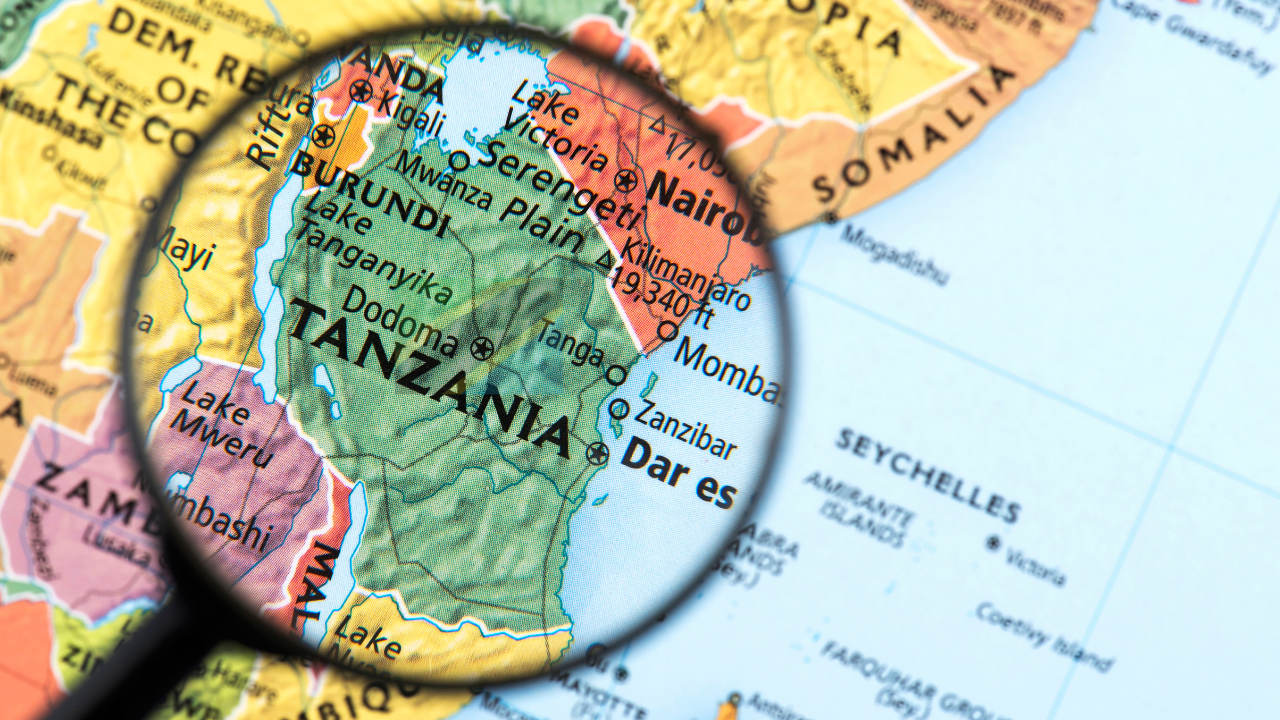

Tanzania has joined 23 other African countries in signing a Memorandum of Understanding (MoU) with the United States under the America First Global Health Strategy (AFGHS), an initiative introduced after the United States significantly reduced traditional foreign assistance through multilateral programmes.
According to information released during the signing, the agreement aims to strengthen Tanzania’s health system, improve digital health infrastructure, expand disease surveillance and enhance national health security.
Over the next five years, the United States is expected to invest approximately US$1.3 billion in Tanzania’s health sector, while Tanzania will contribute about US$1.8 billion. Yet despite the scale of the commitment, the full text of the agreement has not been made public.
That alone should invite public interest.
The Promise of a New Partnership
Since its launch last year, the America First Global Health Strategy has attracted both praise and criticism. Supporters argue that it marks a shift towards government-to-government partnerships that strengthen national ownership, encourage greater domestic investment and reduce long-term dependence on externally funded health programmes.
Critics, however, contend that it represents a departure from multilateral approaches to global health in favour of bilateral arrangements more closely aligned with the strategic, economic and geopolitical interests of the United States.
The debate intensified after reports concerning similar agreements signed with countries including Ethiopia, Kenya, Mozambique, Nigeria and Uganda. Some agreements reportedly appeared online only briefly before being removed, while media reports like the one by The New York Times suggested that American health assistance to Zambia had been linked to broader strategic interests, including access to critical minerals.
Among the most debated issues are biological specimens and health data.
The Question of Health Data
A Human Rights Watch analysis of several AFGHS agreements signed by African countries found that some require partner governments to provide the United States with access to data and other information necessary to conduct compliance audits at selected health facilities, laboratories and public health programmes. According to the analysis, failure to comply with such obligations could affect continued assistance under those agreements.
This does not necessarily mean Tanzania’s agreement contains identical provisions. However, it raises legitimate questions that can only be answered if the agreement is made publicly available.
During the signing ceremony, Tanzania’s Minister for Health Mohammed Mchengerwa stated that the country did not agree to provisions requiring the sharing of biological specimens. That clarification addressed one important concern. However, another equally significant question remains unanswered: what, if anything, does the agreement provide regarding health data sharing?
Without public access to the MoU, Tanzanians cannot independently determine whether it contains provisions governing access to, transfer or use of health data. That uncertainty matters because health data has become one of the world’s most valuable strategic resources.
Health Data as a Strategic Resource
The COVID-19 pandemic demonstrated how disease surveillance information, pathogen data and digital health records underpin quick vaccine development, biomedical research and pharmaceutical innovation.
Today, health data is not only a public health asset but also a strategic resource that increasingly shapes scientific knowledge, economic value and technological advancement. Decisions governing its collection, use and transfer should therefore be guided by openness, informed public debate and clear safeguards.
This is why transparency matters.
African countries have long shared public health information through multilateral mechanisms coordinated by the World Health Organization. The issue, therefore, is not whether countries should share health information, but under what rules, for whose benefit and with what safeguards for national sovereignty and people’s rights.
What distinguishes the AFGHS is not necessarily data sharing itself, but its greater reliance on bilateral agreements between the United States and individual governments. Whether this represents a new funding model or a broader shift in global health governance deserves informed public debate.
Will the Partnership Build Local Capacity?
The America First Global Health Strategy also states that American foreign assistance should promote U.S. companies and innovations abroad, including through the procurement of goods and services from American firms.
While this objective is consistent with the strategy’s emphasis on advancing U.S. national interests, it also raises important policy questions for partner countries pursuing industrialisation, technological development and greater economic self-reliance.
Tanzania has described the agreement as a pathway towards strengthening domestic ownership of its health sector and self reliance. Yet if procurement increasingly favours foreign suppliers, how will the partnership contribute to developing Tanzania’s pharmaceutical industry, digital health technologies and biomedical research capacity?
More broadly, how will it contribute to Africa’s long-standing aspiration to build resilient regional manufacturing, scientific innovation and health systems that are less dependent on external actors?
READ MORE: Trump 2.0 and U.S. Withdrawal from the Paris Climate Treaty. Does Tanzania Have Any Reason to Worry?
These questions are not arguments against international cooperation. Rather, they reflect the principle that genuine partnerships should strengthen local institutions, expand domestic capabilities and create shared value instead of reinforcing structural dependence in a sophisticated way.
This debate should therefore not be framed as a choice between international cooperation and national sovereignty. Africa needs strong global partnerships to confront pandemics, strengthen health systems and accelerate scientific progress. At the same time, those partnerships should be transparent, mutually beneficial and consistent with domestic policies, democratic, accountability and the continent’s development aspirations.
The Tanzanian government has maintained that it negotiated a more favourable agreement than several of its African counterparts. If that is indeed the case, publishing the MoU would strengthen rather than weaken public confidence. Transparency would enable Parliament, researchers, civil society, health professionals and citizens to assess whether individual rights are protected and whether the agreement adequately safeguards Tanzania’s national interests.
Joel Ntile is a writer and co-founder of The Chanzo. He can be reached at joel@thechanzo.com or @JoelNtile on X. These are the writer’s opinions and do not necessarily reflect the viewpoint of The Chanzo. Want to publish in this space? Contact our editors at editor@thechanzo.com.