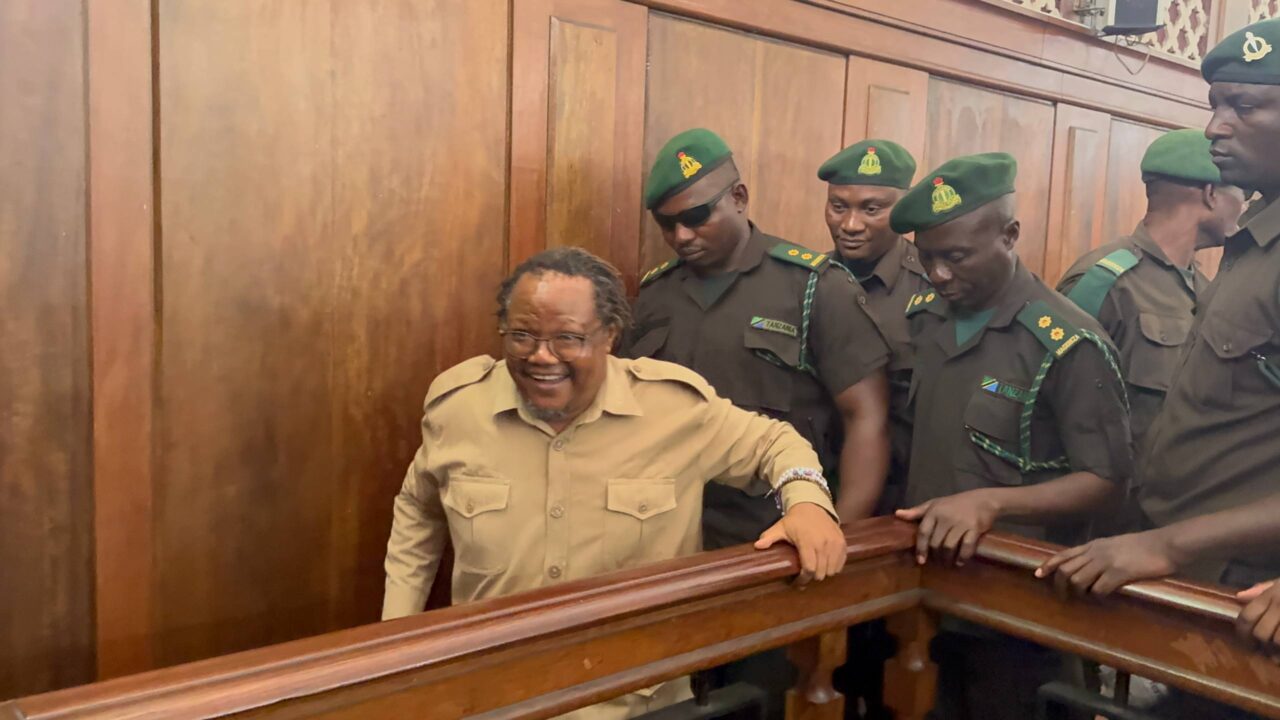

Dodoma – The alleged abduction of David Joseph Mghanja (Djumbe), an aide to detained opposition leader Tundu Lissu, triggered a parliamentary confrontation on Monday.
While lawmakers demanded accountability, the government downplayed the incident, characterising it as one of many crimes currently under police investigation.
During the consideration of the Ministry of Home Affairs’ budget on May 25, 2026, Ado Shaibu, the ACT Wazalendo MP for Tunduru Kaskazini, raised Djumbe’s case to demand clarity on the state’s strategy for curbing political violence.
“Our country is witnessing a disturbing trend of abductions, disappearances, and physical assaults,” stated Mr Shaibu, who also serves as ACT Wazalendo’s secretary-general.
“The most recent victim is Djumbe, an assistant to the CHADEMA chairperson,” he continued. “What is the government’s policy on these incidents? What concrete steps are being taken to ensure these acts are stopped completely?”
Djumbe was reportedly abducted and tortured on the night of May 20, 2026, by individuals claiming to be police officers. Eyewitnesses and party officials stated he was forcibly removed from his vehicle in the Bunju area.
This incident is the latest in a wave of disappearances and political violence that has strained the East African nation, drawing sharp criticism from human rights organisations and prompting U.S. lawmakers to propose sanctions against senior officials.
In response, Home Affairs Minister Patrobas Katambi defended the police’s investigative processes. He noted that while many cases are under review, some allegations have been dismissed for lack of evidence or reclassified as politically motivated fabrications or personal disputes.
“These are purely criminal matters,” Katambi informed Parliament. “Several cases attributed to abductions were actually found to stem from business rivalries or personal and family grievances.”
Katambi’s assertion that many claims lack a factual basis stands in stark contrast to domestic reports documenting 758 disappearances between 2023 and 2025, as well as UN expert findings of more than 200 enforced disappearances since 2019.
Concurrently, Dar es Salaam Regional Commissioner Albert Chalamila told reporters that security in the commercial capital remains stable.
During his address, Chalamila offered an implicit defense of Faustine Mafwele, the senior police commander recently sanctioned by the U.S. State Department for the alleged torture of foreign activists.
Chalamila argued that accusing Mafwele of involvement in abductions without a completed investigation undermines the rule of law, adding that criminals target individuals regardless of political ties.
Mafwele, 47, is a career officer who currently serves as a Zonal Criminal Officer, a powerful position that places him at the forefront of regional law enforcement operations.
He has been dubbed the “Torturer-in-Chief” by critics. Multiple victims, including activists Agather Atuhaire, Boniface Mwangi, and Edgar Mwakabela, have publicly identified Mafwele as a central figure in their abductions and subsequent abuse.
The U.S. State Department sanctioned him on May 21, alleging that officers under his command detained, tortured, and sexually assaulted Atuhaire and Mwangi.
However, Chalamila dismissed these claims as “unfounded,” suggesting they hinder rather than help the search for the truth. “How can an officer share findings with the public when some have already decided on the answers before the investigation is even complete?” he asked.
Chalamila did, however, acknowledge the severity of Djumbe’s case, stating: “We condemn the incident involving Mr Djumbe as we condemn all such matters. Safety and the sanctity of life transcend party lines, whether one belongs to CCM, CUF, or CHADEMA.”