
When did colonialism end? Most Tanzanians would probably answer, “December 9, 1961.” Politically, they would be right. That was the day Tanganyika gained independence from Britain. The colonial flag came down, our own flag went up, and the country began the difficult journey of governing itself.
More than six decades later, pieces of Tanzania’s history remain scattered across Europe in museum storage rooms, private collections, and dusty archives that many Tanzanians have never seen.
Ironically, someone studying our past in Ljubljana, Berlin, or London may sometimes have easier access to parts of Tanzania’s history than a student in Tabora, Tanga, or Iringa. This is a reminder that colonialism did not only take land, labour, and resources. It also took custody of memory.
This reality came into sharp focus through the project called Tracing Colonialism: Tanzanian Collection in Slovenia and an exhibition, Tanzania: Between the Shadow of Colonialism and Contemporary Perspectives, at the Slovene Ethnographic Museum in Ljubljana.
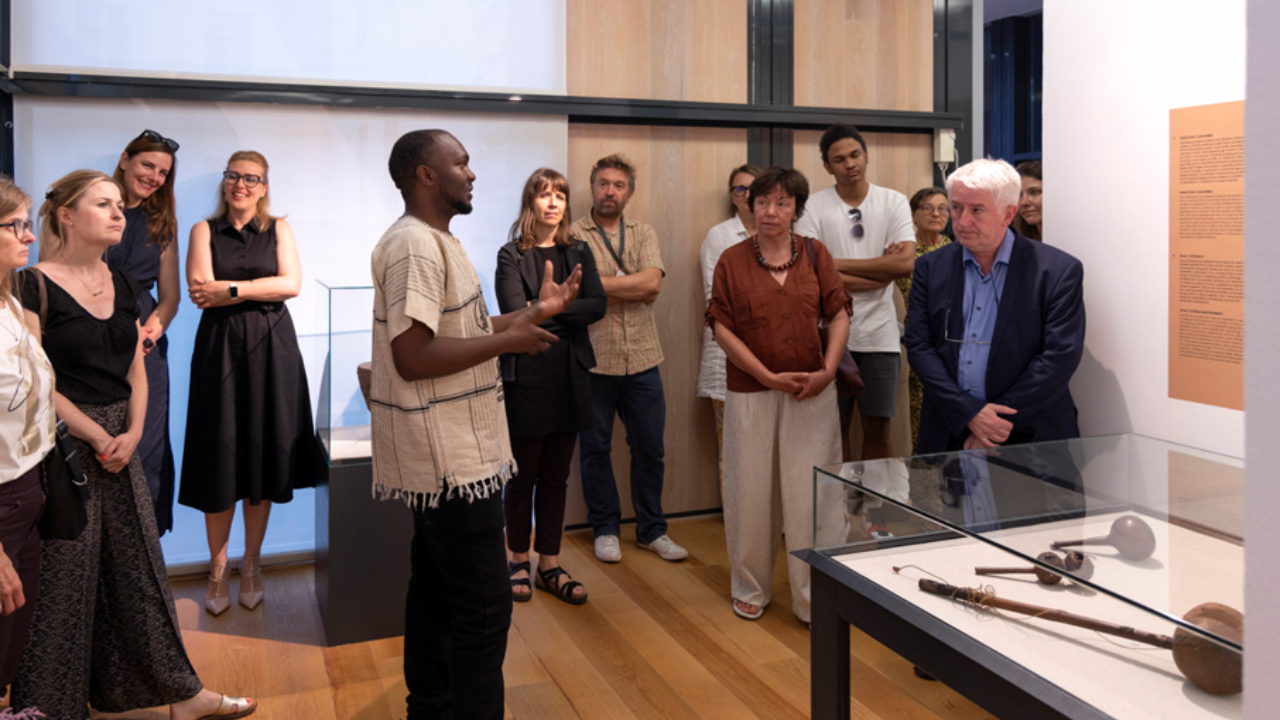
The exhibition features a selection of cultural objects from the collection of a Slovenian who lived in colonial Tanganyika from the late 1930s, Stanko Grom, comprising more than 150 objects, alongside selected archival images drawn from his archive of over 4,000 photographs.
The project brings together Tanzanian and Slovenian researchers to investigate how the collection was assembled, what it reveals about colonial life, and whose voices were left out. Many Tanzanians have never heard of Stanko Grom, yet he documented parts of colonial Tanganyika so extensively that thousands of photographs now sit thousands of kilometres away from the communities they portray.
A living force
The global scatter of Tanzanian history in foreign museums highlights that history is never just about the past. Instead, it acts as a living force that shapes how a society understands itself, directly dictating what communities choose to proudly remember or quietly forget.
As international pressure mounts for the return of looted heritage, the mystery of how many unrecorded Tanzanian stories remain locked away in overseas archives underscores a critical, ongoing struggle for national identity and cultural ownership.
Kenyan writer Ngũgĩ wa Thiong’o argued that one of colonialism’s greatest successes was not military conquest but control over knowledge. Colonisers did not simply occupy territory; they claimed the authority to tell Africa’s story. Museums became part of that project, collecting African objects whilst interpreting African lives through European eyes.
Today, museums across Europe are rethinking collections acquired during colonial rule. Debates about restitution have become increasingly prominent, with institutions acknowledging that many objects were collected under unequal relationships of power. Yet the discussion often revolves around ownership alone.
READ MORE: Salama Binti Rubeya: A Woman’s Life, a Nation’s History
One of the Tanzanian researchers involved in Tracing Colonialism, museum educator and curator Eliabu Mbonimpa, argues that the issue extends far beyond Slovenia. Cultural objects and archival photographs held abroad are not merely museum exhibits; they embody Tanzania’s history, identity, and indigenous knowledge. They preserve memories of communities, traditions, and experiences that risk disappearing if access remains limited.
His observation shifts the conversation away from the politics of possession to memory. During his research, Mbonimpa expected museum archives to provide the most revealing insights into colonial Tanzania.
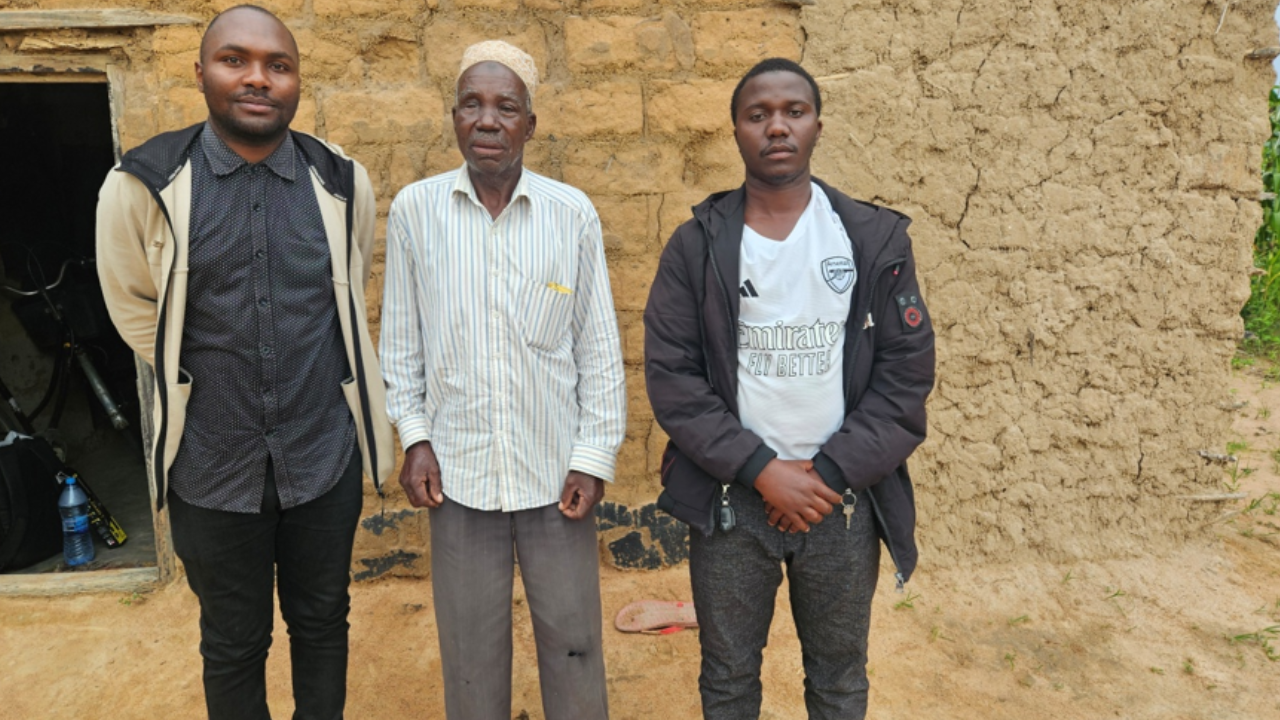
Instead, he found the most disturbing evidence on the ground. In Tabora, he visited what was once a thriving sisal plantation established during colonial rule. Today, much of it has been reclaimed by forest.
But the human consequences remain. Former plantation workers still live with physical injuries sustained during years of harsh labour. Colonial buildings continue to stand in Kizengi as quiet reminders of exploitation and colonial presence.
The area’s ethnic diversity itself reflects how workers from different communities were brought together as cheap labour to sustain colonial production.
Photography as evidence
The photographs in Slovenia acquire new meaning; they are no longer nostalgic snapshots of another era. They become evidence of economic systems that transformed communities, landscapes altered for imperial interests, and lives that were documented but rarely understood from the perspective of those who lived them.
READ MORE: The UN Named Slavery a Crime — Now Who Pays?
This is why the exhibition deliberately avoids allowing colonial photographs to speak for themselves. Instead, local communities are invited to interpret the images, restoring voices that were largely absent from the original archive.
Colonial photography was rarely neutral. Behind every photograph stood someone deciding what deserved to be recorded, whose face would appear in the frame, and what story the image would eventually tell. Africans often appeared as subjects, not storytellers.
Tanzania is busy building its future by tackling unemployment, driving industrialisation, and managing a growing population amid climate change. Some people think looking at museum collections in Europe is a distraction from these urgent needs. However, true development cannot happen without history, because a nation must know its roots to successfully build its future.
Take cotton production, for example. Introduced under German colonial rule to supply European textile industries, cotton remains one of Tanzania’s major cash crops. Yet much of it is still exported in raw form, whilst finished textile products are imported back into the country. The colonial economic logic—Africa supplies raw materials whilst others create value—has proven remarkably resilient.
Colonialism, then, survives not because colonial governments still exist but because some of the structures they established continue to shape our economy, our institutions, and even our understanding of ourselves.
READ MORE: Re-membering a Nation: New Handbook Reclaims Pan-Africanism for the Grassroots
Repatriating knowledge
Museum collections are simply another part of that unfinished story. For Mbonimpa, the immediate goal is not simply repatriating artefacts but repatriating knowledge and ensuring that communities connected to these collections can access, understand, and eventually reclaim the histories embedded within them.
A returned object without a returned story achieves little.
If there is one lesson Tanzanians should take from the project Tracing Colonialism: Tanzanian Collection in Slovenia, it is that our history is far richer than many of us realise, and much of it is still waiting to be rediscovered.
That responsibility cannot be left to European museums alone. It belongs to all of us who believe that understanding where we came from is essential to deciding where we are going.
Because colonialism does not survive only through old buildings or forgotten plantations. Sometimes, it survives through silence. And silence is broken only when a nation becomes curious enough to reclaim its own story.
Mariam Gichan is an archaeologist and journalist based in Dar es Salaam. She’s available at mariamgichan@gmail.com and +255 754 215 690. The opinions expressed here are the writer’s own and do not necessarily reflect those of The Chanzo. If you are interested in publishing in this space, please contact our editors at editor@thechanzo.com.