

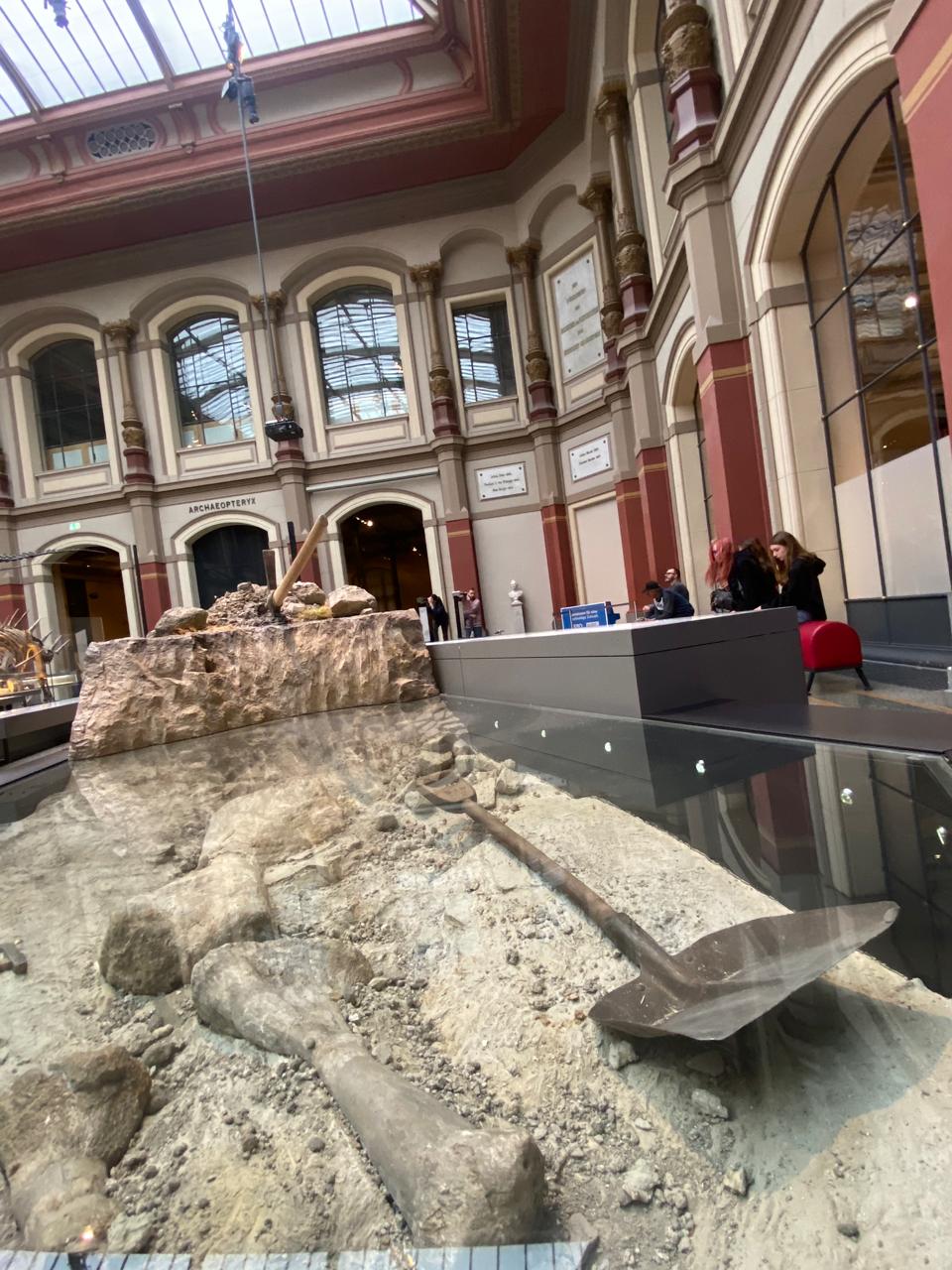
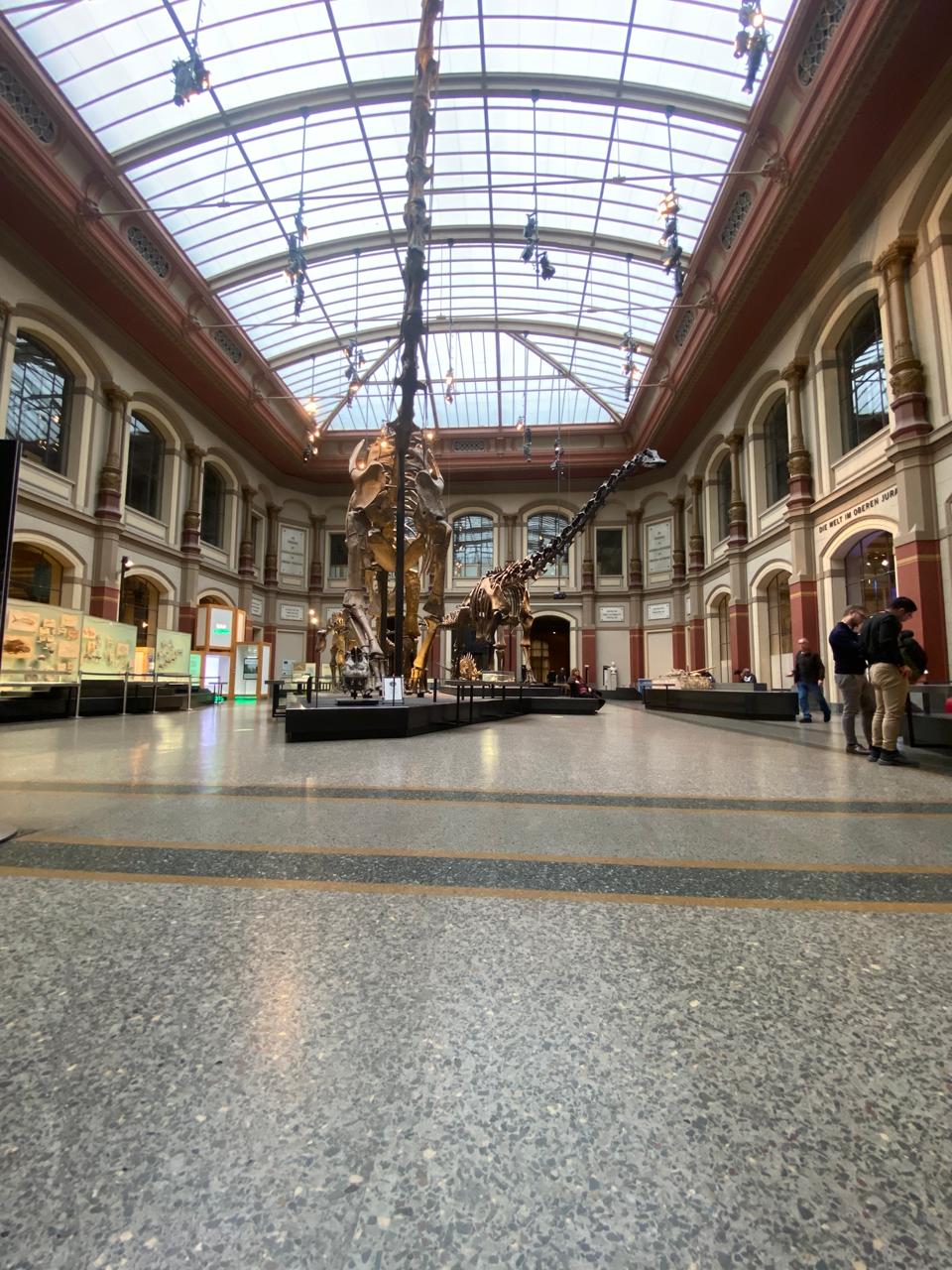
Standing beneath the towering skeleton of Brachiosaurus brancai at the Museum für Naturkunde in Berlin is an inspiring experience. But it is also a confronting one. Not only because of the dinosaur’s immense scale, but because of what that skeleton quietly reveals about distance, access, and a long-standing imbalance in who gets to learn, interpret, and benefit from Tanzanian heritage.
The dinosaur, known worldwide as the “Tendaguru dinosaur,” comes from southern Tanzania, from one of the most important paleontological sites ever discovered. Between 1909 and 1913, during German colonial rule, excavations at Tendaguru unearthed thousands of dinosaur fossils dating back more than 150 million years to the Late Jurassic period.
These discoveries reshaped global understanding of prehistoric life and placed Tendaguru firmly on the scientific map. More than a century later, Tendaguru remains far more visible in European museums than in Tanzanian classrooms, universities, or public museums. Tanzanian students often learn its name in passing, as a footnote rather than as a living site of knowledge, debate, and pride. This contradiction should concern us.
Shared achievement
The Tendaguru excavations were never the achievement of European science alone. African workers, many from the Ngoni and Wamwera communities, were central to every stage of the process. They identified fossil-bearing layers, excavated massive bones by hand, prepared them for transport, and carried plaster-wrapped fossils for days on foot to the port of Lindi. From there, nearly 800 crates were shipped to Germany.
Despite this labour, African contributors were largely erased from scientific narratives. Only a few names survive in archival records, such as Abdallah Kimbamba, Boheti bin Amrani, Seliman Kawinga, Mohammed Saidi, and others. Early German palaeontologists occasionally used informal names like Abdallahsaurus or Mohammadisaurus, but these did not survive official scientific classification.
READ MORE: Tanzanian Families Appeal to the Govt to Expedite Repatriation of Ancestors’ Remains from Germany
Instead, most formal names honoured German scientists, patrons, or colonial figures. One dinosaur species, Dysalotosaurus lettowvorbecki, still bears the name of Paul von Lettow-Vorbeck, a German colonial commander whose military campaigns caused immense suffering across East Africa.
International taxonomic rules prevent renaming such species. But the continued presence of these names raises unavoidable ethical and educational questions, like whose history is celebrated, and whose is silenced?
Some progress
There has been some progress, though. In 2007, Australodocus bohetii was named in honour of Boheti bin Amrani, a Tanzanian fossil preparator. In 2019, Wamweracaudia keranjei recognised both the Wamwera community and fossil preparator Mohammadi Keranjei.
These decisions did not rewrite history; they acknowledged a truth that had long been ignored, that African expertise was fundamental to Tendaguru’s scientific success.
This complex history is often better explained in Berlin than in Tanzania. At the Museum für Naturkunde, Tendaguru is presented with remarkable honesty. Exhibitions openly address colonial labour systems, nationalist scientific ambitions, and the political use of palaeontology during empire.
Visitors are told that Tendaguru fossils were once described as discoveries made on “German soil,” a narrative designed to legitimise colonial rule. Today, the museum does not hide this past; instead, it teaches it.
Tanzania lacks the infrastructure, conservation capacity, and funding to host major fossil collections or large-scale exhibitions. These concerns may be real. Fossils are fragile. Museums are expensive. But this argument is incomplete. Scholars have long warned against using present limitations to justify permanent exclusion.
In their Geoheritage article, Finding Solutions for Managing, Protecting, and Promoting Tendaguru Paleontological Site in Tanzania, Maximillian Chami, Adson Ndyanabo, and Holger Stoecker argue that efforts to reclaim or access Tendaguru fossils must go hand in hand with investment in infrastructure like building roads, bridges and a museum information centre, education, and community participation.
Reproducing colonial patterns
Using lack of capacity as a reason to delay action risks reproducing colonial patterns, where African heritage generates global knowledge elsewhere while local communities remain spectators. If Tendaguru could educate Europe in the early 20th century, it can educate Tanzanians in the 21st.
Tendaguru offers far more than spectacular dinosaurs. It is a gateway to teaching deep time, climate change, biodiversity, scientific labour, and colonial accountability. It sits at the intersection of science and the humanities. At a moment when Tanzania is rethinking education, heritage, and decolonisation, Tendaguru is not an outdated colonial excavation; instead, it is a contemporary challenge.
READ MORE: Germany ‘Sorry’ for Colonial Wrongs It Committed in Tanzania: President
Tendaguru should not be easier to encounter in Berlin than in Lindi. The fossils may physically reside abroad, but their scientific, educational, and ethical meaning belongs firmly to Tanzania.
If heritage from Tanzania can educate the world, then it can and must educate Tanzanians, especially students. Anything less is not a technical failure. It is a choice. And it is a choice we can still change.
Mariam Gichan is an archaeologist and journalist based in Dar es Salaam. She can be reached at mariamgichan@gmail.com or on +255 754 215 690. The opinions expressed here are the writer’s own and do not necessarily reflect those of The Chanzo. If you are interested in publishing in this space, please contact our editors at editor@thechanzo.com.
One Response
I think the author misplace the blame here. There are no public museums of natural history or archeology in Tanzania. The only “museum” I have seen is a tiny collection in remembrance of early medical work in Sikonge. Most natural history collections from Tanzania are donated to Nairobi because they have museums. Tanzania does not have any museums or a tradition of studying or caring for such collections. Build museums, educate staff, and most material will come to Tanzania.