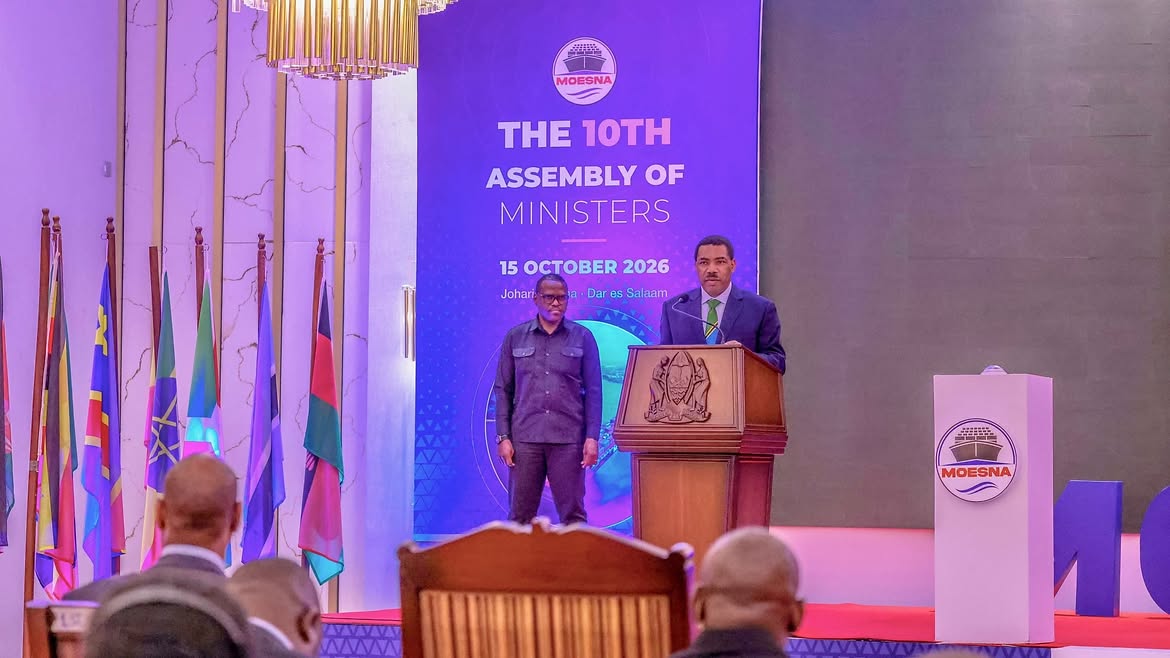

Addressing parliament on April 20, 2026, the Minister of State in the President’s Office for Youth Development, Joel Nnauka, made remarks about a proposed Youth Bank, describing it as a strategic institution.
Having studied the historical approaches that thinkers and practitioners have used to address poverty and youth empowerment, I feel compelled to offer a perspective.
Muhammad Yunus, a Bangladeshi economist, once said, “The only place where poverty should be is in a museum.” He arrived at that conviction after developing the Modern Microfinance Model, which became the foundation of Grameen Bank in Bangladesh.
Yunus won the Nobel Peace Prize in 2006 for this innovation, and the model has since spread globally, including to Tanzania, where the government applies it through the Youth Development Fund administered by district councils.
The lesson from Bangladesh is critical: poverty was not addressed by the bank itself, but by the model that guided it. Yunus recognised that poor people lacked conventional collateral, yet they possessed something equally valuable, mutual trust.
READ MORE: Tanzania Approves First 1,961 Beneficiaries for Ambitious Sh200 Billion Youth Empowerment Scheme
His solution was to organise borrowers into groups, built on the premise that people would only vouch for those they genuinely trusted, and that it would be virtually impossible for an entire group to default simultaneously.
Collateral conundrum
This principle remains alive in Tanzania today: when one group member fails to appear, the others are held collectively accountable. The point is that Muhammad Yunus did not simply establish a bank and give it a sympathetic name. He invented a model.
Tanzania already has several banks named after the communities or sectors they claim to serve, think of agriculture, commerce, or microfinance, yet the naming does not guarantee that the institution primarily serves those constituents.
I am not arguing against the idea of a bank per se; I am calling for a serious rethinking of the model that will genuinely benefit young people.
Prime Minister Mwigulu Nchemba proposed using academic certificates as collateral. Whilst creative, this idea presents significant problems. First, many young people are not university graduates, and such a requirement would immediately exclude a large portion of the intended beneficiaries.
Trust deficit
Second, in the event of default, would a person forfeit their academic credentials? Third, and most fundamentally, an academic certificate says very little about a graduate’s financial capacity, creditworthiness, or business viability.
READ MORE:Government Issues Sh200 Billion for Economic Empowerment of Youth and Women
Lack of access to capital is the most frequently cited barrier facing young people.
Other challenges include skill gaps, an unfavourable business environment, and limited market linkages. Since this discussion centres on finance, I will focus there. The problems young Tanzanians face are not entirely unlike those that confronted Yunus’s borrowers in 1970s Bangladesh, but one critical variable has shifted.
Where Yunus’s model relied on interpersonal trust, we now live in an era of deep trust deficits. This reality places the Grameen model at a crossroads when applied in contemporary Tanzania.
Scholars such as Jeffrey Sachs have advanced ideas that echo Milton Friedman’s view that productive economic relationships need not depend on trust between individuals.
Mobile money solution
If trust can no longer be assumed, what alternative social infrastructure does Tanzania have? The answer is social media and mobile money. Telecommunications companies in Tanzania are already offering micro-loans based on mobile money transaction histories.
The model is straightforward: the more consistently a customer transacts, the more creditworthy they appear, and the larger the loan they qualify for over time.
READ MORE:Dira Mtaani: Tanzania’s Youth at a Crossroads—Legitimate Hustle or Illicit Shortcut?
These companies are not banks, yet they have effectively built credit-scoring systems without formal collateral. The proposed Youth Bank could build directly on this infrastructure.
Specifically, the bank could encourage young people to conduct their financial activity through mobile money platforms, accumulating transaction scores that determine their eligibility for funding.
This approach has two immediate advantages beyond simple credit assessment: it functions as a nudge toward a cashless economy, which benefits government revenue collection over the long term, and it is already familiar to the majority of young Tanzanians.
Aggregating credit profiles
However, one structural challenge must be addressed. In Tanzania, network coverage is uneven, and many people switch service providers depending on their location.
Currently, companies such as M-Pesa, Tigo Pesa, and Airtel Money calculate creditworthiness based solely on transactions within their own networks.
Since a young person may hold multiple SIM cards across different providers, the Youth Bank should work with the Bank of Tanzania and the Tanzania Communications Regulatory Authority (TCRA) to establish a mechanism for aggregating mobile money scores across all service providers.
READ MORE:‘Bribes or Bodies’: Tanzania’s Industrial Dream Leaves Youth Exploited and Excluded
A unified credit profile, linked to a person’s verified national identity rather than their phone number alone, would produce a far more accurate and equitable assessment of financial behaviour.
This approach also requires robust regulation of SIM card registration to prevent fraud and identity manipulation. The loan would ultimately be disbursed in the individual’s name, not to a phone number, making verified identity non-negotiable.
Importantly, a mobile money credit model alone is not a complete solution. Access to finance matters, but so does the quality of the business idea receiving that finance. Due diligence on business proposals must remain part of the process.
The Youth Bank should not function as an unconditional cash transfer; it should serve young people with viable, assessed business ideas. In the end, the argument is simple: it is not about the bank, it is about the model. Get the model right, and the institution will follow.
Francis Nyonzo is a Fulbright Alumnus, an economist and theorist whose research interests span the digital economy, development economics, social justice, and human rights. He is available at francisnyonzo@gmail.com. These are the writer’s own opinions and do not necessarily reflect the viewpoints of The Chanzo. Do you want to publish in this space? Contact our editors at editor@thechanzo.com for further clarification.