
Dar es Salaam — Tundu Lissu on Wednesday called CHADEMA vice-chairperson (Mainland) John Heche as his fifth defence witness, opening testimony that sought to place the party’s No Reforms, No Election campaign in the context of what Heche described as years of electoral irregularities, violence and unsuccessful efforts to obtain redress.
Heche told the High Court that CHADEMA’s Central Committee adopted the position on December 3, 2024, after the party concluded that the local government polls held the previous month had been neither credible nor safe for opposition candidates.
He said the April 3, 2025 meeting at which Lissu made the remarks now in issue was convened to explain that decision to party aspirants.
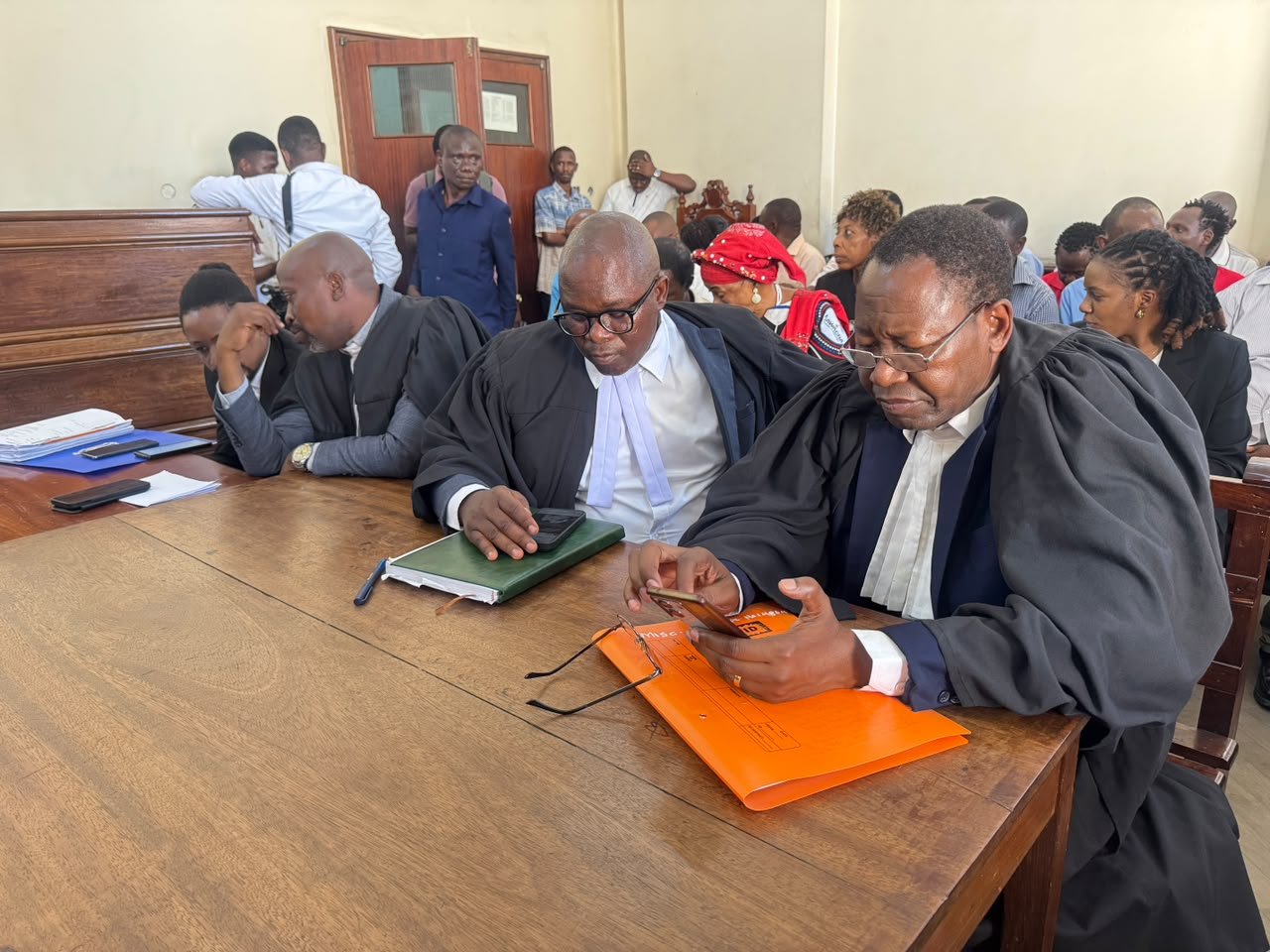
The evidence came after Lissu’s fourth witness, communications director Brenda Rupia, completed two days in the witness box.
Under cross-examination, Rupia accepted that she supported the disputed remarks and that Lissu’s speech was intended to advance CHADEMA’s demand for electoral reform, while maintaining that the charged words were not treasonous and that the party’s intended method was political education and non-participation, rather than violence.
READ MORE: CHADEMA Communications Chief Disputes Claim Lissu Published Alleged Treasonous Remarks
The three-judge panel adjourned the case to Thursday, September 10, at 9 a.m., with Heche still giving evidence-in-chief.
Alleged poison plot
The morning session opened with Principal State Attorney Nassoro Katuga continuing the cross-examination of Rupia. He focused first on a public statement she issued on July 2, 2025 concerning a post attributed to European Parliament member David McAllister, alleging a plan to poison Lissu in prison.
Rupia said she had made inquiries and established that the material had originated from McAllister. She said she did not identify any person who allegedly planned to poison Lissu and had not named a suspect in the statement.
Nassoro Katuga: “Did you identify who wanted to poison him?”
Brenda Rupia: “The statement said there was a plan to poison him; it did not name a person.”
Katuga asked whether she reported the alleged planned offence at a police station, whether she knew that failing to report a crime could itself be an offence, and whether spreading false information online is criminal.
Rupia said she had given information to the public and police so that they could investigate, but said she was not a lawyer and asked to read the relevant law.
She acknowledged that she did not know the alleged perpetrators, saying they were unknown people. She also agreed that neither Lissu’s arrest nor her employment with CHADEMA gave her immunity from arrest or prosecution.
The prosecution returned to the evidence in which Rupia had described as uasi, or rebellion, and stated that the No Reforms, No Election campaign sought to change the political system.
Katuga put a Kiswahili dictionary definition to her that described rebellion as breaching the law to change the political system.
READ MORE: Court Gives Lissu Treason Trial 14 More Days as Defence Calls CHADEMA Communications Chief
Rupia disagreed that this meaning matched her evidence. She said CHADEMA was a political party that brings people together, rather than simply an unlawful group, and maintained that the party’s campaign was directed at oppressive laws.
Publication, words and intention
Katuga also asked Rupia about the April 3 video, including Lissu’s clothing, the flags behind him and what she recalled from prosecution witnesses who had described the recording.
Rupia said she had watched the video online and remembered Lissu wearing fatigues, but did not remember every detail of the speech or every point made by prosecution witnesses.
The state put to her that Lissu wanted his speech to reach the public and would ordinarily use media outlets for that purpose. Rupia said she did not know whether Lissu intended the speech to go to the public, and rejected the suggestion that media were the only way for a politician to communicate.
Katuga then asked what the phrase “we will mobilise rebellion” meant and who it was directed against. Rupia said it referred to oppressive laws, not to people exercising their rights or to the government itself.
Katuga: “When he said, ‘We will mobilise rebellion’ and ‘We will stop the election,’ did he mean to stop laws or the people participating in the election?”
Rupia: “They were aimed at changing oppressive laws.”
Katuga: “Laws are not the ones who take part in elections. Who takes part?”
Rupia: “People take part.”
Pressed further, Rupia said that stopping an election meant preventing the whole process from taking place. She accepted that “we will stop the election” and “we will disrupt the election” were complete sentences with meaning.
At one point, Katuga asked whether Lissu had provided methods by which people could stop, disrupt or kukinukisha the election. Rupia initially answered that he had given methods, but later said she had not described the methods in her evidence.
Katuga: “Did he give ways of stopping the election?”
Rupia: “He gave ways of stopping the election.”
Katuga: “Did you state in your evidence what those ways were?”
Rupia: “I did not state them.”
Rupia accepted that tearing ballot papers, burning infrastructure and cutting voters’ fingers would disrupt an election or breach peace. But she said she did not recall Lissu advocating any of those acts and agreed that other parties had a constitutional right to contest elections.
She also agreed that listeners have a right to interpret a speech as they see fit. When Katuga asked whether they had the right to act by any means they chose to prevent an election, she answered yes, although she said she had not listened to the evidence of a prosecution witness who allegedly said he had prepared to assault people on polling day.
G-55, electoral participation and ‘No Reforms’
The prosecution asked Rupia about G-55, a group within CHADEMA that she said disagreed with the party’s No Reforms, No Election position and considered it a form of rebellion. Rupia said the group remained party members at the time of the April speech but left later.
Katuga put to her that the policy meant CHADEMA would not take part in an election until reforms occurred. Rupia initially rejected that formulation, but then said the position was: “Without reforms, there is no election.”
READ MORE: Lissu Defence Brings Election-observer Claims and Arrest Accounts Into Treason Trial
The exchange became lighter when Katuga asked when the campaign process had begun. Rupia answered 2024, then asked to amend the answer. Justice Ndunguru said a witness could make a correction in re-examination, not during cross-examination, and directed the questioning to continue.
Katuga: “The process of ‘No Reforms, No Election’ began in what year?”
Rupia: “2024.”
Rupia: “I would like to change [my answer].”
Justice Ndunguru: “The witness can change it during re-examination, not in cross-examination. Let us continue.”
The prosecutor also asked whether Rupia had investigated Lissu’s claims that he was denied parliamentary benefits and whether the chairperson therefore harboured resentment against the government. Rupia said she had not investigated the benefits issue and did not know whether he held such resentment.
Re-examination narrows defence account
When the prosecution said it had no further questions, Lissu began re-examination. He first asked Rupia to clarify the “methods” she said had been mentioned for stopping the election.
Tundu Lissu: “When you said I mentioned methods of stopping the election, what did you mean?”
Brenda Rupia: “I meant you said one way was not to participate in that election; then we would have made things ‘smell’ properly.”
Lissu also asked Rupia to clarify why she said the party’s messages had been directed against oppressive laws. Rupia said that when the term uasi has more than one meaning, she used the meaning of opposing oppressive systems.
The defence attempted to elicit an explanation that Rupia had phoned McAllister to verify the July 2025 post. Katuga objected that the alleged call had not been raised in either examination-in-chief or cross-examination. Lissu conceded it was new matter and asked the court to strike it out; Justice Ndunguru agreed.
READ MORE: Lissu Defence Says CHADEMA’s Election Campaign Grew From Alleged Poll Failures
Rupia further explained that, in her view, an election could be prevented if people chose not to attend and vote. She said the speech was intended to encourage people to understand CHADEMA’s position, so that they could make their own choices.
Tundu Lissu: “You were asked whether people had the right to do as they saw fit. What did you mean?”
Rupia: “If people did not go to the election, they would already have stopped the election.”
Justice Ndunguru then discharged Rupia.
Heche begins defence
After an afternoon adjournment, Lissu called Heche, 45, who said he has been CHADEMA’s vice-chairperson (Mainland) since January 22, 2025. He told the court he was elected at the party’s national General Assembly for a five-year term and had served on the Central Committee since 2011.
Heche described the Central Committee as the executive organ of the party’s Governing Council. He said it has 29 members, including party office holders, leaders of its wings, zonal chairpersons, members elected by the Governing Council and some appointed by the national chairperson.
He said the April 3 meeting was for people seeking CHADEMA nomination to contest in the 2025 election. According to Heche, the purpose was to explain why the party had adopted No Reforms, No Election after the 2024 local government elections.
Tundu Lissu: “What was the purpose of that meeting with aspirants?”
John Heche: “To explain the party’s ‘No Reforms, No Election’ position — why the party had taken that position following the decision made in December 2024.”
Heche said the Central Committee, then chaired by Freeman Mbowe, sat on December 3, 2024 and concluded that the local government polls were not elections but, in his words, “destruction and killings.” He alleged that more than 80 per cent of CHADEMA candidates were disqualified, while some were killed.
READ MORE: Mnyika Rejects Bid to Link CHADEMA’s Reform Campaign to Election Violence
He said the party’s reform demands included constitutional and legal changes to reduce the President’s role in appointing electoral commissioners and election administrators. He compared the existing arrangement to allowing one football team to appoint the referee in a match against its rival.
John Heche: “It is like Simba and Yanga playing, then Yanga appoints the referee.”
Alleged election violence
Lissu then asked Heche about his experience in elections as a former Tarime town councillor, Tarime Rural MP between 2015 and 2020, campaign organiser and participant in several by-elections.
Heche alleged a pattern of violence, candidate disqualifications, restrictions on party agents, interference with campaign schedules and the use of fraudulent ballots.
Heche said that, during an Arumeru East by-election around 2012 or 2013, CHADEMA ward secretary Msafiri Mbwambo was killed. He further alleged that people believed to be CCM members were responsible and that no one had been convicted.
He also referred to the 2018 killing of CHADEMA ward chairperson Daniel Yona in Kinondoni; the shooting of student Akwilina Akwilini during a Kinondoni by-election; the killing of CHADEMA parliamentary candidate Alphonce Mawazo in Busanda in 2015; and the deaths of party supporters in Tarime in 2020.
READ MORE: Mnyika Tells High Court Lissu’s Speech Carried CHADEMA Policy, Not a Private Plot
The witness said that following the 2018 Kinondoni events, he, Mbowe, Mnyika and other CHADEMA leaders were prosecuted on various charges, convicted and fined. He said their High Court appeal succeeded and the court ordered repayment of the money, which he said had not been returned.
John Heche: “I paid Sh40 million. I still have not been repaid, despite the High Court saying the money should be returned.”
Heche also gave an emotional account of the 2018 death of his younger brother, Suguta Heche, whom he said police arrested in Sirari, handcuffed behind his back and killed.
He alleged that a police officer was later transferred rather than prosecuted, and said he believed the incident was intended to punish his family because of his CHADEMA role.
The prosecution had not yet cross-examined Heche on any of these claims when the court rose. The case proceeds on Thursday, September 10, when Lissu will continue with the examination-in-chief of Heche.