
The Presidential Commission to Investigate the Events of Violence and Breach of Peace that Occurred During and After the October 2025 General Election issued several recommendations, most of which are yet to be implemented, just days before the first anniversary of the crisis. One of them, listed among the commission’s twelve short-term recommendations, is the establishment of a national day of mourning.
“The Government should set aside a national day of mourning to remember more than five hundred Tanzanians who died in the violence during and after the General Election,” Commission Chairperson, retired Chief Justice Mohamed Chande Othman, said on April 23, 2026, while presenting the report.
The Commission identified at least 518 people who died during the crisis, 490 men and 28 women, most of them from gunshot wounds. At the time, the Chairperson emphasized that the Commission’s death toll was neither final nor conclusive.
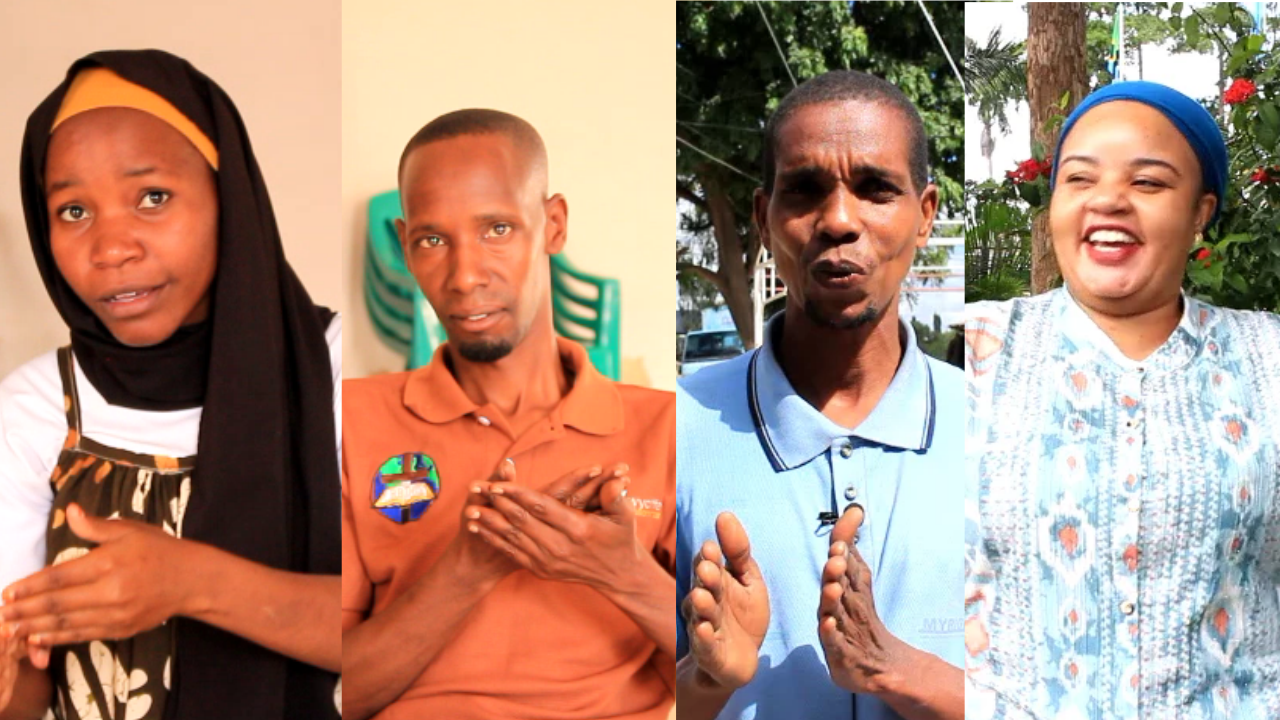
In a vox pop conducted by The Chanzo in three regions, Dar es Salaam, Kigoma and Dodoma, most respondents supported the Commission’s recommendation.
“First of all, when I remember that day, sometimes even when I’m asleep, I wake up, because those were terrible days. At that time, so many frightening things were happening,” Christopher Michael, a resident of Dodoma, told The Chanzo.
“I think it would be a good thing, because many people lost their lives. So it would be good to remember them so that those mistakes are not repeated, because if we don’t remember them, those same mistakes could happen again,” he added.
In its recommendations, the Commission also proposed that the Government develop a strategy and allocate resources for psychological and social support services and conduct a rapid assessment of the psychological and social impacts in areas affected by the October 2025 violence.
“A day of remembrace would be better, because it would help the next generation, those not yet born, know that something happened. They will know that in a certain year and a certain month something happened,” Andrew Gwiro, a resident of Kigoma, told The Chanzo.
The crisis began when citizens’ demonstrations on October 29, election day, were met with a security crackdown that lasted five days, leaving thousands injured, many dead, and others remaining missing including dead bodies which disappeared from hospitals and other areas.
Some of those who spoke to The Chanzo said the day of remembrance would also be an occasion to reflect on present-day issues and to build a culture of genuinely resolving grievances before they escalate into crisis.
“We remember that day as a difficult day in the lives of Tanzanians. As we understand it, Tanzania is a country of peace, but that peace disappeared, and where we are now, we do not have enough of it,” Sylivesta Malick, a resident of Dodoma, explained. “We ask that this day be remembered, and that the people who lost their lives be remembered. There should be a special day to remember our beloved brothers and sisters who lost their lives on October 29.”
Although the crisis lasted five days, Tanzanians commonly refer to it by a single date, “October 29,” which has come to stand for the events as a whole. Tanzanian media will comonly refer to the crisis as ‘what happened in October 29 or events of October 29’, it is also an elusive way of not speaking directly about the killing by security organs. Accordingly, most of the people who spoke to The Chanzo proposed October 29 as the day of commemoration.
“In my opinion, there should be a commemoration to remember those who were lost on the 29th. When that same date, the 29th, comes around, they should mark it, saying: ‘Today we remember such-and-such a date, we remember those who were lost that day.’ The October 29th should be set aside,” a resident of Dar es Salaam explained.
Others, however, felt the events were too painful to commemorate, arguing that a day of remembrance could reopen wounds and stir anger among those who have since moved on.
“In my view, I don’t support that recommendation, or I don’t agree with that idea, because reminding me of it could stir up more pain, and sometimes even more anger,” Paul Lugano, a resident of Dar es Salaam, argued. “So let it remain in the books, let it stay as it is now. People have calmed down, people have cooled off, people have forgotten. I think it should just stay that way; there’s no need to set aside a day to remember them.”
According to the Commission’s report, the crisis stemmed from long-standing, unresolved challenges in society. These fall into three broad categories.
READ: Funerals Without a Body: A New Kind of Grief in Tanzania Following October 29 Unrest
First, political issues, including demands for a new constitution, the state of democracy in a multiparty system, grievances within political parties, and demands for reforms to the Independent National Electoral Commission and the electoral system as a whole.
Second, economic issues, including the cost of living, unemployment and unequal access to jobs and economic opportunities, an unfriendly business and investment environment, a proliferation of taxes and levies, and an unfriendly system for charging and collecting them.
Third, social issues, including an erosion of values and declining patriotism, and the failure to address public grievances such as corruption, embezzlement of public property, and the abduction and disappearance of people.
“It is important to remember the events that happened at that time,” Isaya Tutuba, a resident of Kigoma, told The Chanzo. “My advice is that it should be preserved as a memorial that serves as a lesson, with citizens being educated that events like those must never happen again.”
“These are not events we are used to as Tanzanians; our country is a country of peace. So my advice, and my wish, is that we truly remember those events, and that people are educated on how to avoid such events, because they were not good events,” he added.